Dr Rachel Clarke
Terminally Ill Adults Bill
 I know … I know … we’ve been here so many times, haven’t we?! Big sigh. But I have to stay fair- and open-minded on the subject.
I confess, every time the topic of Assisted Dying comes under widespread scrutiny my mind and my heart are torn yet again. Because I can appreciate the sense and sincerity and wisdom offered from both sides.
So, on Friday I listened carefully to yet another debate in parliament on the subject. The courage and compelling emotional truth from those with first-hand experience of living with terminal illness; the pain of those who’ve watched loved ones die in harrowing circumstances; the eloquence of doctors coping with the lived reality for their patients; the fear of and for disabled people and the vulnerable; the frustration of those who’ve worked tirelessly to bring the bill to the lawmakers … it was all there on view. Moving and compelling. At times, though, when seats rapidly emptied, or colleagues interrupted or chatted together during speeches, or fidgeted with their mobile phones, I got a sense of a little less respect and empathy and solemnity than last time – perhaps it was a matter of time/patience/deja-vu? – but nonetheless the critical issues were certainly covered by the exchanges.
And then came the all-important vote.
Defeat.
By 16 votes.
And this time the House of Lords can’t be blamed; the elected members in the Commons did this all on their own.
Another bill will surely be introduced at some point in the future, but that’s it for now.
However, what I personally take away from this latest stage is gratitude that so much emphasis was placed on the need for better palliative care. I know of a number of patients/friends who were given exemplary end-of-life care, but I also know only too well it’s a post-code lottery. Whilst there are many pros and cons attached to the question of assisted death, there are no contraindications for the matter of medical and social support at the end of life: every single person deserves the best. There can be no second chance.
 And NHS Specialist in Palliative Medicine, author and campaigner, Dr Rachel Clarke, (one of my heroes) summed it up perfectly in her eloquent open letter to the Prime Minister, Andy Burnham, the day after the vote. The issue that united everyone she said was ‘the appalling underfunding of palliative and social care which inflicts so much avoidable suffering on people with terminal illnesses‘. She called it ‘a national disgrace’ that only 25-33% of hospice care is government funded. She told him that if he saw what she sees he would recoil: ‘Do you know that I sometimes have to have end-of-life conversations with patients who are dying on trolleys in hospital corridors – because there is nowhere else to put them?‘ And given that the Burnham family have been bereaved this very week, I suspect this would have even greater impact.
Dr Clarke appealed to him, begged him indeed, ‘as a decent man‘, to put an end to this intolerable situation, to make dying people a government priority … ‘You are the Prime Minister’ … ‘this is something you have the power to change’.
If the heat and passion and persistence fuelling this ongoing debate does nothing more, I for one hope it leads to this improvement at least. And swiftly.
ٍ
The Story of a Heart
The exquisite engineering of a beating heart has yet to be matched
by anything built by human hands
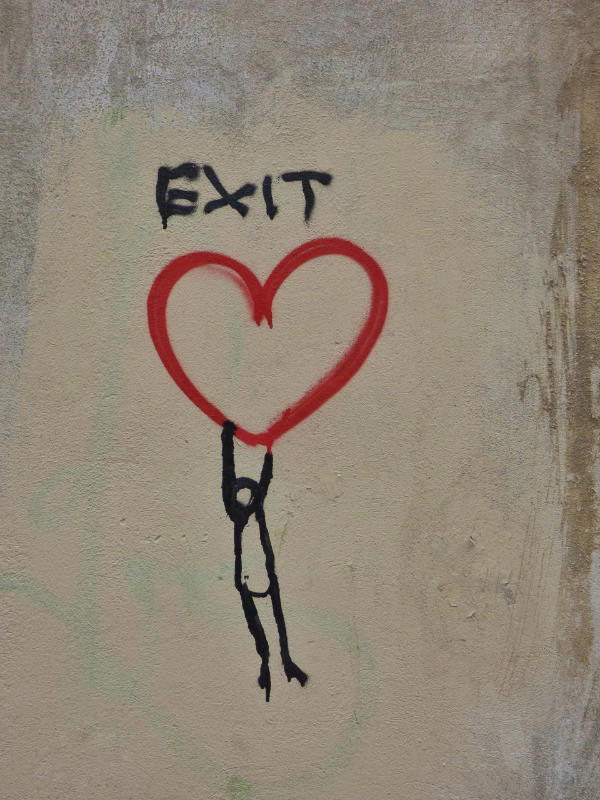
Eight months ago I wrote about Dr Rachel Clarke narrating the story of a young girl, Keira Ball, involved in a devastating car crash in the Westcountry, whose heart was given to a 9 year old lad, Max Johnson, in the north of England.
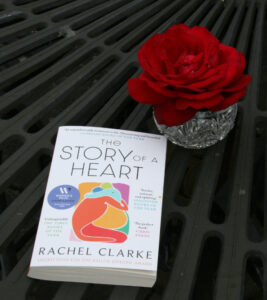 I’ve just been readiing the book from which those extracts were taken: The Story of a Heart. It has been reviewed in glowing terms:
Rachel Clarke is a physician who is also an uncommonly good writer.
Profoundly moving and at the same time wildly inspiring. A beautiful humane book.
This unconventional narrative biography fizzes with respectful, indefatigable and eloquent respect for life.
This is the most beautiful and riveting book: written with such humanity, empathy and knowledge, such tact and drama and eloquence.
And it’s all of those things. The author personally interviewed the families and a number of the principal players in the evolving drama, and the resulting poignant narrative takes us inside their lives, their thoughts, their actions, bringing the whole experience vividly to life…
…the vivacious active Keira, riding her beloved horse, giggling with her sisters, enchanting everyone with her radiant smile. Now, after the accident, still outwardly a beautiful unblemished little girl with golden curly hair and a perfect child’s face, radiant with the promise and potential of youth … luminous. … She looked so perfect, not broken at all.
…an underweight, ashen-faced Max, with huge eyes and white blond hair, his massively enlarged heart making even breathing a struggle, the prospect of simply not waking up at times more attractive than this precipitous decline.
…the essential aloneness of Keira’s dad, Joe, with no one to share the full unravelling horror of his youngest daughter’s prognosis, the awful consequences, the momentous decisions, because his wife is still unconscious in an adult ICU following the accident.
 …the courage and brisk approach of Keira’s 11 year old sister, Katelyn, so utterly confident Keira would want her organs donated. Yet, subtly checking the heart below her hand on her sister’s chest; watching for the least sign of sentience while the doctors test for brain stem function.
…the mounting horror for Max’s parents hearing the scary diagnosis and grim statistics relating not just to his current medical condition but also to the risks associated with heart transplants, success rates, life expectancy, prospects of comorbidity.
…the impact on staff –
the ICU nurse receiving Keira into a small rural hospital in Devon;
the radiologist scanning her brain intimately, confirming unequivocally that all mental activity has ceased;
an unnamed compassionate nurse tucking a teddy, soft and cuddly, in beside Keira’s inert and unresponsive body.
…the harrowing moments for Loanna, Keira’s mum, being wheeled from the adult ICU where she is still recovering herself, to spend uniquely precious time with her little girl for the first and last time.
She was absolutely broken.
…the reverential moment of honour while a theatre full of staff pause to pay tribute to this small person who is giving incredible gifts to other desperately sick children around the country.
…the silent and lonely vigil of Joe, watching from the shadows as his daughter’s precious organs are loaded into a fleet of four ambulances to be driven to the recipients.
He has chosen, simply, to bear witness.
…the surgeon calmly dealing with a powerful arc of blood from an unexpectedly severed artery in Max’s chest while he is disconnecting the damaged heart, the minutes of viability of the new heart ticking inexorably by.
…the abundance of invisible kindnesses that prepare Keira’s body ready for her family afterwards, restoring her from surgical donor back to cherished human being. All the rituals signifying You are loved. You mattered then, and you matter now, and you will matter always, and forever.
 A fusion of pharmacology and engineering has kept the little girl in a kind of limbo, and her organs in an optimal condition; and then maintains that foreign body functioning in the chest cavity of an unrelated young boy. But the language of medicine, though relentless in its detail, omits certain facts. In so many significant ways, Rachel Clarke has captured these softer aspects of dedicated care and respect for life, whilst not neglecting the science. Alongside the personal story of Keira and Max, she weaves in medical information and historical precedences. She pays tribute to those past and present who together have made the miracle of this shared heart possible. And she occasionally dips into the deep ethical questions of the status of patients whose brain stem has ceased to function: are they being kept alive by ventilators or are these machines pumping oxygenated blood around corpses? What defines the essence of life?
It’s a masterpiece, richly deserving of all the accolades and awards it has received.
Drama illuminating medicine
As you know I’m a great fan of fiction and drama being used to bring the issues of medicine to a lay audience. It was my raison d’etre for writing my own fiction. So I was immediately grabbed by a series on BBC Radio 4 this week in which Dr Rachel Clarke brings one such topic to life: organ donation and transplantation.

Screenshot
‘This is a tale of a boy, and a girl and a heart they share.’ It tells of 9 year old Keira, fatally injured in a car accident, becoming the donor for nine year old Max, a lad with a desperately diseased heart. It’s harrowing in parts, and I wept listening. A doctor herself, Rachel Clarke is someone I’ve long admired (she’s been mentioned several times on this blog) and her voice is pitch-perfect for this story. She knows all about walking alongside people in their darkest hours, about conveying devastating news, and about putting one’s own feelings to one side in order to do an immensely difficult job.
 Intriguingly the narration weaves in historical detail about medical innovations that preceded this modern day miracle, making it possible, but those breaks provide welcome relief from the heart-wrenching emotion of the main story.
A couple of years ago I was personally involved in a transplant situation, and the profound emotions generated are not something I feel able to talk about. This programme offered space and privacy for a cathartic reaction, so I’m doubly grateful.
Three months and counting
Milestones are useful hinges for reflection: three months ago this week the first Covid-19 death was reported in the UK. Since then, as per the official statistics yesterday, in this country there have been a further 39,727 deaths recorded where the deceased had a positive test for the virus. Say that again slowly – THIRTY-NINE THOUSAND SEVEN HUNDRED AND TWENTY SEVEN DEATHS. Not to mention the legion of unconfirmed cases. These are indeed unprecedented and calamitous times, so it seems fitting to consider something quite different here. Not a book; not a scientific paper; not even a film. But a newspaper article.

A beautifully written article in the Review section of the Guardian on Saturday, and one of the most sobering and moving pieces I’ve read in the proliferation of writings about this devastating disease. I wasn’t surprised to find that, before going to medical school, the author, Dr Rachel Clarke, was a current affairs journalist and documentary maker.
Her usual habitat is palliative care medicine in a hospice, but during this crisis she’s been working with patients dying of coronavirus. Politicians and journalists speak ‘loftily, from afar, an Olympian perspective’, she writes, and listening to them can feel like ‘a mathematical abstraction, an intellectual exercise played out in curves and peaks and troughs and modelling‘. But where she is, in a hospital, dealing with real people caught up in this horror, ‘the pandemic is a matter of flesh and blood.‘ And she is utterly appalled by the gloss the politicians have been putting on the devastation and loss.
Used as she is to comforting, hugging, being up close and personal, the very execution of her job now cuts her to the quick.
‘In PPE, everything is sticky and stifling. Voices are muffled and smiles obscured. Sweat starts to trickle into your underwear. Even breathing takes more effort. Behind our masks, we strain to hear each other speak and are forced to second guess our colleagues’ expressions. Being protected entails being dehumanised.’
Approaching relatives of the dying is immensely painful and counter-intuitive.
‘I am a doctor with neither name nor a face. My hospital badge is hidden from view and my eyes – the only part of my face still visible – are obscured by a layer of Perspex. So much for the healing presence of the bedside physician. I scarcely look human … Everything about this is wrong.’
She illustrates her experiences poignantly with reference to a single encounter with an 89-year-old man slowing drowning in his own secretions. His sons, bewildered and afraid, enter the other-worldly scene only for the last farewell. Her own emotions plummet as she watches helplessly, unable to offer the human warmth that is her instinctive response. Neither she nor they, want this elderly gentleman to be a mere statistic – a number reported in the next day’s death toll. He is so much more than that.

Dr Clarke and her colleagues at the frontline know for sure that the soundbites trotted out at the central podium in Downing Street each day have not been borne out by the reality in the Covid wards or the care homes. Social isolation, PPE, testing, lockdown – the deficiencies and delays and shortfalls have appalled them; the article captures the discordance perfectly. Once lockdown was established, and the quarantined population were trying to manage its fears using ‘the unconventional strategies of baking bread and stockpiling toilet rolls’, the medical staff were reeling. Fearlessly, urgently, frenetically, they threw themselves into delivering high-quality pandemic medicine. They could only look on in disbelief as staff were obliged to fashion PPE out of plastic bags, patients were sent into care homes without tests to establish their Covid status, and restrictions were being lifted in the absence of the necessary infrastructure for proper testing and tracing.
The country may be letting its collective breath out cautiously as the numbers decrease, but they are still battling this deadly enemy. They feel sick as the politicians declare the success of their strategies; they know at first hand the stupendous costs of delay and deficiency, the real tragedy of thousands upon thousands of deaths and bereavements. They were, they still are, there, ‘up close with this dreadful disease‘, seeing ‘the way it suffocates the life from you‘. For them political judgements ‘were grotesque‘. They themselves are ‘exhausted, stunned – shellshocked, even‘. Clarke’s verdict? The loss of so many vulnerable citizens is ‘entirely and inexcusably wrong … no one is expendable‘.
I certainly don’t envy any of the people who must make these decisions, but putting a spin on the devastation, peddling untruths and half statistics, making false promises, doesn’t engender trust or confidence. And as Dr Clarke says, ‘The point of our response to corona virus is not to flatten curves, ramp up headlines, protect the NHS or invent mathematically nonsensical equations: it is to prevent unnecessary dying’. And there you have it. The heart of the matter. Summed up by someone at the very kernel of this global catastrophe.
She’s the author of Dear Life, paperback version due out in September this year. It’s top of my wish list.
NB. To be fair, First Minister Nicola Sturgeon, in her daily updates for Scotland, always stresses the tragedy of every single death.