Jodi Picoult
Some you win …
Ahah, just when I’d got back together with Jodi Picoult and her clever novel, Mad Honey (reviewed in a post three weeks ago), the balloon bursts again. Big time.
I ordered another of her books with high hopes, and settled down to a good read. But alas, t’was not to be. No matter how fast I knitted, no matter how much I applied my mind! Reminded me yet again that each book has to stand alone, and just because I’m entranced by one doesn’t mean I’ll love everything by that author.
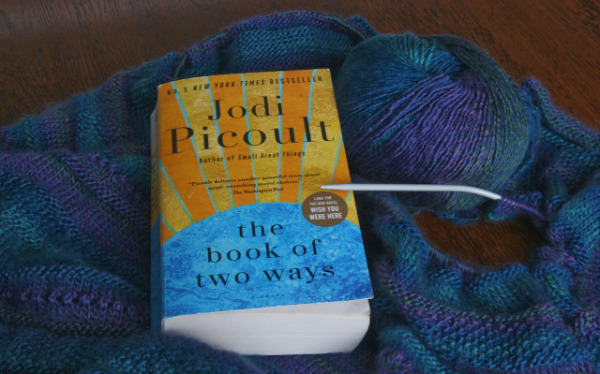
The Book of Two Ways tells the story of Dawn McDowell/Edelstein at two points in her life. The first is a young Dawn, a post grad Egyptologist working amongst the tombs of the Pharaohs and rulers, falling in love with an English earl in the dirt of the necropolis. The second, fifteen years later, is Dawn when she’s a mother and death doulah, accompanying clients on their last journey on earth, briefly returning to the site of the Egyptian excavations, reconnecting with the man who stole her heart.
As ever the author has done a phenomenal amount of research and background work. She’s even included hieroglyphs and ancient drawings in the book – how, I’ve no idea! But in spite of my admiration for her diligence, I struggled.  I found the main character annoyingly hypocritical and dysfunctional. To my mind there was way, way too much technical detail about quantum physics and ancient Egypt and its languages and customs, for the purposes of a novel. Though I’m certainly particularly interested in terminal care and its management, I found the detail even here excessive and off-putting. I had to take frequent breaks and steel myself to persist to the end. As so often with Picoult, the psychological musings and insights didn’t fit with my own experience of ordinary people and how they think. And finally we don’t get to know Dawn’s decision about the two men in her life … ever! The very thread that kept me reading the last seventy pages!! The balloon I mentioned at the beginning deflated with an annoying splutter.
Shame. I wanted to get lost in it, but couldn’t.
Mad Honey
I’m a longstanding fan of Jodi Picoult who writes about the big issues in society in an engaging and challenging way, but it’s a while now since I read one of her novels.  What’s more, this one, Mad Honey, is unusual in that it’s co-authored with Jennifer Finney Boylan, another established writer, who is new to me. Hmm, I wonder why.
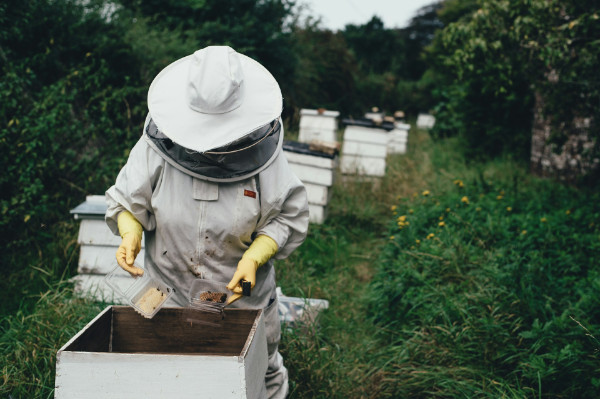
It weaves an intricate tale told through the eyes of two narrators. Olivia McAfee is a professional beekeeper who escaped from an abusive marriage with her six year old son, Asher. Now he’s six feet tall and in his last year of high school. He’s kind and handsome and sporty and very much in love.
Lily Campanello is his girlfriend who has also escaped from trouble. Her mother, Ava, a Forest Ranger, fled with her to the old family home, and Lily tells anyone who asks that her father is dead. Lily is an extremely accomplished cellist with an extraordinary ability to soak up information on a wide range of subjects and use it to good effect.
Asher and Lily’s relationship is a rather volatile one characterised by great sweetness and tenderness, but also bouts of not speaking. Both find it hard to trust after what has happened in their past. Both are hiding deep secrets and fears. Both need time out to consider their options.
Then one day Olivia gets a phonecall telling her that Lily is dead. Asher is found cradling her in his arms, stained liberally with her blood. He says he found her at the foot of the stairs unresponsive, and that he moved her to the living room. His fingerprints are found in her bedroom though he swears he didn’t go upstairs that night. There are signs of a struggle in that room. His last text reads, THIS ENDS NOW, I’M COMING OVER. He is subsequently arrested on a charge of murder.
As the case against him builds, Olivia realises that Asher has kept a lot from her, and she begins to fear that, though she had physically removed him from the influence of his father, maybe he has inherited something of his violent and controlling traits. Asher is appalled to see her doubt and excludes her still further. But he does allow her to bring in her brother, Jordan McAfee, as his defence lawyer. There follows a nail-biting court case where Asher appears to be his own worst enemy.
In traditional Picoult style, the authors give us a wealth of information about bee keeping and music and animal and human behaviour, but it’s not until P204 that we learn what social issue they are really addressing, and why this particular second writer was co-opted.
WARNING: THE FOLLOWING PARAGRAPHS CONTAIN SPOILERS. So if you intend to read the book please stop at this point.
It’s the forensic pathologist who drops the bombshell whilst giving his evidence in court: Lily had no uterus or ovaries. Why? Because she had transitioned from being a boy, Liam, and had been through the full treatment with puberty blockers and surgical procedures to give her outward female sexual anatomy and characteristics. Very successfully too. As the surgeon who carried out the operation put it: The plumbing works and so does the electricity.
In typical Picoult fashion the challenges and truths emerge by way of succinct thoughts and statements from the characters who are pondering the arguments. Here are a few illustrations that stopped me in my tracks.
Lily: I don’t think it’s an invisible chromosome, or the inability to get pregnant, or anything else, that makes people so cruel to transgender folks. I think what they hate is difference. What they hate is that the world is complicated in ways they can’t understand.
Olivia: In college zoology classes I learned there are plenty of animal species that change sex. It’s called sequential hermaphroditism. Clown fish are all born male, but the most dominant one becomes a female. Wrasses work in reverse, with a female able to transform her ovaries into testes in about a week’s time. The slipper limpet, when touched by other male limpets, can become female. Male bearded dragons can change sex while still in their eggs, if exposed to warmer temperatures. Spotted hyena females have what look like penises and have to retract them into their bodies for mating. Coral can go from male to female or vice versa. Common red frogs spontaneously change sex in the wild.
In other words it’s perfectly normal.
Olivia: I haven’t really thought about what it means to be trans … because I have had the luxury of not having to think about it.
Olivia: (of a person she knows who looks ands ounds like a man but identifies as female): She seems – I hate how this sounds – like a work in progress? Like a subcategory of woman? But even saying that makes me feel like I’m judging, when I don’t mean to.
Olivia: If you want to understand something, you first need to accept the fact of your own ignorance. And then, you need to talk to people who know more than you do, people who have not just thought about the facts, but lived them.
It’s a complex and difficult topic especially when it involves young children and irreversible changes. When I tackled the subject through fiction myself (in Inside of Me) I worked closely with people who had themselves changed sex, but there are still critics who say no one can or should embark on such an undertaking unless they have lived experience of transitioning. Jennifer Finney Boylan has. Here’s hoping this novel helps more people to understand.
The Covid pandemic – fact and fiction
 It’s some years since I read a Jodi Picoult book, but this one, Wish You were Here, seemed to challenge me to overcome my personal reservations about fictionalising the horrors of Covid-19 – all that fear and death and loss and trauma. So I swallowed hard and bought it, and I read it immediately before I could chicken out. OK, yes, I have hangups here which might prejudice my review; I declare them openly.
The story is set at the beginning of the pandemic and features a couple separated by it. Diana, an art specialist, is marooned on an island in the Galápagos that has closed down almost completely against the virus, while her doctor boyfriend, Finn, is marooned in a hospital in New York City as Covid rushes through and over them like a tsunami.
Virtually cut off from her former life, Diana finds herself examining everything that has brought her to this point, and wondering just what the future holds.
… you don’t often get to pause and reflect on [your life]. It’s just really hard to sit in the moment, and not worry if pause is going to turn into stop.
In a strange way, being stripped of everything – my job, my significant other, even my clothing and my language – has left only the essential pert of me, and it feels more real than everything I have tried to be for years. It’s almost as if I had to stop running in order to see myself clearly, and what I see is a person who’s been driving towards a goal for so long she can’t remember why she set it in the first place.
Thus far, so Picoult! She’s famous for her psychological takes after all.
Half way through I’m getting bored. It all feels too contrived. The medical updates Finn sends to Diana smack of an author wanting to cram the facts she’s learned during her research into her story somewhere. We’ve all had our fill of what Covid did in real life and that so recently; we know the facts. And surely no man worth his salt would bore his girlfriend with so much inappropriate information in an email when she’s on holiday … would he? So I was beginning to consider abandoning the book … when, uh-oh, page 183, and Picoult changes the narrative in one fell swoop.
I won’t spoil the story-line for others, but suffice it to say the rest of the book gave me a second wind because I was mentally revising the impressions of the preceding half. But a big bit of me was thinking, Did she just commit the cardinal sin on a par with ‘It was all a dream’? Even if not, it’s the impact Covid has had on our lives that dominates. However, Picoult is adopting a fairly unusual angle – the psychological legacy, and this might well be appealing to readers coming from a different background from mine.
So, what did I conclude? Well, I was interested to read she too was reluctant to write during her time of quarantine and isolation, and I have to admire her ability and determination in rising above that resistance. But I’m afraid my personal reservations about making this real-life horror into a made-up story so close to the lived experience prevented me from really entering into it. The actual emotional and mental trauma has been too great. Sorry, Jodi, this one wasn’t for me.
A Spark of Light: Jodi Picoult
Among the stacks of files for possible novels-I-might-write-some-day is one labelled ABORTION – a hot potato and one with evolving ethical and legal and philosophical issues.
I’ve personally lived through major change as a clinician in this area of practice. When I was in my early twenties, deliberately terminating pregnancy was illegal, and we midwives saw at first hand the damage done by so-called backstreet procedures carried out by unskilled hands. Then in 1967 the law changed to allow abortions to be carried out by trained professionals in certain circumstances. And gradually, over the years, those strict criteria have been relaxed. Nowadays, social circumstances and personal preference can be used as reasons to proceed; the mother’s mental well-being is invoked. But somehow a novel on the subject has slipped farther and farther down my priority list.
It remains a much more controversial issue in the States. Girls/women procuring an abortion have been incarcerated in prison for murder/homicide; professionals have been killed by ardent pro-lifers; centers offering the procedure have been attacked. (Jodi Picoult lists some of the sobering statistics in an appendix to her book on the subject.)
 So perhaps it’s better that an American author has picked up the gauntlet and run with it. And I’d have said, Jodi Picoult was a natural choice to do so. She’s one of the four authors closest to my own genre of writing, and I’ve read (and own) pretty much all her books.
 In A Spark of Light – just published – she’s tackled many of the issues I planned to include. The scene is The Center – formerly The Centre for Women’s Reproductive Health – the last standing abortion clinic – in Mississipi. The building is a hideous orange scar on the cityscape, everything inside it is run down, shabby, used. It’s protected by a perimeter fence, a border patrolled by zealous vigilantes /activists demonstrating outside it and against it.
Into this centre of controversy strides a very angry man with a gun and a personal agenda. He cold-bloodedly shoots some of the women and a male doctor before taking others hostage. His murderous rampage is fuelled by rage, because it’s in this place that the life of his own potential grandchild was taken; all he can think of is exacting revenge on those who were responsible.
Police negotiator Hugh McElroy is drafted in, initially unaware that his own teenage daughter and his sister are inside The Center. The two men establish contact. When he discovers that Bex (his sister) has been shot and seriously wounded, and that his girl Wren is being held hostage, it all becomes horribly personal.
The story unravels backwards in hourly increments. Hmmmm.
Picoult explores profound questions. Just where does the right to life end and the right to choose take over? When does killing for a cause (war, unwanted pregnancy) become murder? How can black and white legislation deal with the multiplicity of greyness that is people’s lives and experiences and beliefs? So far, so appropriate.
But sad to say this book did little for me. Sorry, Jodi.
Stylistically it simply doesn’t work. It starts with the shooting and unravels back to the reason each person is in that building at that time. Had I cared about any of the characters I’d have been interested in their backstory; but they were either too unbelievable or two-dimensional. As it was, with each chapter giving snippets about each one, I struggled to hold their identities in my head.
I was more concerned with how far the shooter would go, but then, blow me, after all that effort to follow the threads, the ending falls very flat. Promising story lines are left in limbo.
The agenda glares through the narrative, both visible and contrived.
The cod psychology is both intrusive and pervasive.
Everyone philosophizes and juggles competing ideals and thoughts and wise reflections, makes profound statements, encapsulates deep existential ideas in succinct phrases – completely unbelievable … especially in a crisis like this!
So disappointing.
So why do I offer such a negative review? Because the experience reminds me of the burden on authors – myself included. My own next book has the potential to disappoint my readership. I’ve strayed outside my comfort zone with this story and just this week one of my critics has pointed out many flaws – even questioned the appropriateness of the genre! It’s on hold at the moment, but in the new year I’m going to have to forensically dissect it and try to up my game.
Oh, and I dare to criticise Picoult on two counts. I’ve given her plenty of positive publicity in the past. And she’s rich and famous and confident enough not to be derailed by my humble opinion!!
Exotic island or private library?
Some writers fly off to exotic islands or remote mountains; some hide away in huts miles from any internet connections or distractions; some spend six months trawling through microfiches and dusty archives. All in the name of authenticity and accuracy. To get in the zone.
Me, I’m knee deep in books which might inform the two stories I’m currently working on. Trips to special locations remain somewhere in the hazy future.
The hypocrisy and mores and prejudices of the upper classes? Julian Fellowes‘ Snobs or Past Imperfect will do nicely, thank you.

A bit of terror and psychological trauma? Harlan Coben or Robert Goddard are my go-to choices.


A blend of ethical dilemmas and fiction? Diane Chamberlain, Jodi Picoult, Heather Gudenkauf will keep me out of mischief.


Everyday life in bygone eras? Biographies about Dickens, Jane Austen, et al are guiding me nicely.


I can pick up and put down, browse or flick, all while I weave in and out of domestic responsibilities and grandparental excursions during the summer season. All without roaming further than my study/library door. No jet lag, no tummy upsets, no grappling with weird currencies and incomprehensible languages and dodgy local mores. And I’m still free to whip into town for Festival performances and assorted exhibitions. Perfect.
Martin Luther King: ‘I can do small things in a great way.’
As regular visitors to my blog will know I’ve read all of Jodi Picoult’s books (the single authored ones at least) and I was delighted when her style changed from being rather formulaic to more varied. Her twentieth one, The Storyteller, was an absolute triumph, as I wrote three years ago.

So I simply had to read her latest offering: Small Great Things. I confess, I’m not much enamoured of her title, but she had a very valid reason for choosing it. The Reverend Martin Luther King Jr once said: ‘If I cannot do great things, I can do small things in a great way‘, and this book is all about the things Dr King fought for. A fair defence.
As ever Picoult combines a compelling storyline with an important and challenging issue, in this case racial discrimination and prejudice, still, it seems, a major problem in the US. And as usual it’s well-researched, cleverly constructed and both thought-provoking and insightful.
Ruth Jefferson is a law-abiding, hard-working, academically able midwife (known as a labor and delivery nurse in the US) and widowed mum. It’s racial discrimination that brings her before the courts indicted for murder. The opening chapters lead gently into the scenario. When Ruth comes on shift and takes over from a colleague, part of her caseload includes a new mother, Brittany Bauer, and her newborn baby son, Davis. She sets about doing routine tests on the baby boy but his father, Turk, registers a strong objection to a woman of colour touching his child. Ruth’s boss, Marie, who has half her years of experience but has been promoted over her, makes a snap decision to stick a hot-pink Post-it on the baby’s notes: NO AFRICAN AMERICAN PERSONNEL TO CARE FOR THIS PATIENT. So when the child collapses in front of her what is Ruth to do? At the time of his death she is one of several people in attendance, nevertheless she is the one the parents blame; the only black member of staff.
Picoult portrays the Bauers as ugly characters, aggressive white supremicists who think nothing of beating up Jews or homosexuals or black people. Humiliating others, hounding them, oppressing anyone who disagrees with their take on the world – that’s their modus operandi. It makes quite shocking reading.
By contrast Ruth and her son are peaceable God-fearing Christians with strong moral values. And her lawyer, Kennedy McQuarrie, is a sympathetic happily married mother-of-one who has devoted her life to helping the downtrodden and under-privileged. I think my editors would advise blurring the lines between good and evil rather more but that’s a literary quibble. And unseen unexpected characteristics do emerge towards the end.
Picoult’s trademark multiple-points-of-view are useful for opening the eyes of the reader to the nuances of language and the many ways in which society can discriminate, and I loved the way Ruth took her lawyer on an ordinary shopping trip to show her what it felt like to be a black woman in a white society. And Kennedy’s own deliberate exposure of herself to the scary experience of being in a minority.
But best of all, this time Picoult adds a lengthy note saying how much she herself was chastened by what she learned while researching and reading for this book. Her career as a novelist has been driven by outrage and a desire to make people aware of injustice, inequality and victims’ stories. This time it’s particularly powerful because it has touched her personally. She was ‘exploring my past, my upbringing, my biases, and I was discovering that I was not as blameless and progressive as I had imagined.‘
‘So what have I learned that is useful? Well, if you are white, like I am, you can’t get rid of the privilege you have, but you can use it for good. Don’t say I don’t even notice race! like it’s a positive thing. Instead, recognize that differences between people make it harder for some to cross a finish line, and create fair paths to success for everyone that accommodate those differences. Educate yourself. If you think someone’s voice is being ignored, tell others to listen. If your friend makes a racist joke, call him out on it, instead of just going along with it. … I didn’t write this novel because I thought it would be fun or easy. I wrote it because I believed it was the right thing to do, and because the things that make us most uncomfortable are the things that teach us what we all need to know. As Roxana Robinson said, “A writer is like a tuning fork: we respond when we’re struck by something … If we’re lucky we’ll transmit a strong pure note, one that isn’t ours, but which passes through us.”‘ There speaks honest conviction.
And of course, she teaches us in a most engaging way, which is why she is rightfully an ongoing best-seller. Small Great Things is a real page-turner. The author makes no claim to literary pretensions but she does drop in her customary occasional delightful turns of phrase.
The prosecutor is ‘about as jolly as the death penalty‘.
Ruth’s mother was a strict parent: ‘I remember how once, she put out a place setting at the dinner table for my attitude, and she told me, Girl, when you leave the table, that can stay behind.’
 ‘The science of creating another human is remarkable, and no matter how many times I’ve learned about cells and mitosis and neural tubes and all the rest that goes into forming a baby, I can’t help but think there’s a dash of miracle involved, too.‘ (I’ve delivered countless babies myself and I never lost this sense of wonder and awe either.)
The lawyer asks her junior: ‘How old are you anyway?’
‘Twenty-four.’
‘I have sweaters older than you.’
An author who always has something important to say and a way of leaving her characters tucked into your consciousness long after you’ve closed her covers.
Points of View
My new novel is told through the eyes of three different narrators, and I’ve spent a lot of time and thought juggling with the options as to how best to present them. State the name at the beginning of each point of view? Designate chapters? Make the first paragraph by each person tell its own story? Leave the reader to fathom it out? Or what? In the end I went for the narrator’s name at the top of each chapter, as, for example, Jodi Picoult and Diane Chamberlain do. And as I did in Over my Dead Body.
After all, I don’t want my readers to be confused or struggling, do I?
Nor though, do I wish to underestimate their intelligence. Hmmm.
 But then, this week I’ve been reading Penelope Lively‘s Moon Tiger and I’m gobsmacked. Not only does she not give any such readerly assistance, but she changes POVs within chapters without warning, inserts flashbacks, omits punctuation willy nilly, doesn’t even break up dialogue. Surely this is pushing the boundaries a bit too far? And yet … well, I’m keeping up. OK, I’m having to concentrate, but it soon becomes clear who’s speaking. Sometimes it’s the once beautiful and famous historian, Claudia Hampton, now elderly and dying, lying in bed waiting for the end but thinking of bygone days. Sometimes it’s her young self, travelling, falling in love, working in exotic places, reporting wars and other civilisations. Sometimes it’s her only brother and adored adversary, Gordon. Sometimes it’s her daughter’s father, Jasper, charming but untrustworthy. Sometimes her colourless and conventional daughter, Lisa. Sometimes her one true love, Tom, found and lost in war-torn Egypt. A mad confusing medley you might think, and not the place to flout all the usual literary conventions. It certainly wouldn’t suit a lot of people I know. Probably not most who read my books in fact.
But hey, let’s not get too sniffy. After all, Moon Tiger won the Booker Prize in 1987. And Lively herself has been made a Dame for her contribution to literature!
That’s literary fiction for you. Rules? What rules?
Dickensian arguments
I imagine lots of authors dream of having their books turned into films. What better way to bring them to the attention of thousands? Get those sales figures sky rocketing. Reach a different kind of audience. Become famous. Get rich.
And yet adaptation is a topic that generates strong feelings in the other direction. Books are always deeper and somehow better … films rarely square with imagined characters … I’m always disappointed when I see the film; It never lives up to the book version … along those lines anyway.
I’d certainly fear the loss of essential elements in my own novels were Hollywood to come calling (less snorting on the back row). That’s not to say it’d be a big ‘No’, but we all have a keen sense of the ‘big idea’ (as they say in the advertising world) behind our stories. We know our characters inside out, we’ve lived with them, inside them even, for years, and we want filmmakers to be true to them. But there are no guarantees.
Allow me to illustrate. Years ago I read Jodi Picoult‘s book, My Sister’s Keeper, and enjoyed it. This time she was exploring my field of interest, raising awareness, doing superbly what I was trying to do in my own little corner. Then I saw the film and was terribly disappointed. The characters weren’t at all as I knew them. In particular the lawyer, Campbell Alexander, to whom the main character, Anna, turns for help in suing her parents for rights to her own body. Campbell’s a key figure in the book and we’re in suspense throughout wondering … why does he have an assistance dog? What is his problem? Why does he give every person who inquires a different answer? But his humour, his ingenuity, his vibrancy, is completely missing in the film. So for me that didn’t work.
However, for lots of people who only saw the film, it could well have been their first and only introduction to the challenges surrounding creating saviour siblings. That has to be good. Many will never know what literary pearls they’re missing. Those who subsequently read the book, will only find their awareness enriched.
I would argue that books and films are different art forms, trying to do different things, reach different audiences. There’s something special about immersing oneself in the written word, conjuring up scenes and characters in one’s imagination, feeling the emotions as they slowly, slowly unravel on the page. But stand – or should that be sit? – back and watch the skill of actors who do the hard work, the interpretation, for you – watch the effect of the brooding silences, the shy glances, the touch of hands – in seconds they can convey a world of feeling hard to describe in pages of words. And we’ve seen that par excellence in the current dramatisation of War and Peace on BBC One on Sunday evenings at the moment.
Now, I admit, I don’t know what I’m missing by watching Andrew Davies‘ TV adaptation of Tolstoy‘s epic tale; I’ve never got around to tackling the tome itself. But I like to think it has now become more accessible to me. If Davies has been sufficiently true to the original I’d have a better sense of the story lines, the context, the many interwoven characters. Maybe one day ….? But of course they will now look like their film counterparts from the outset!
I have read Dickens and Austen and Trollope, those classics which are trotted out and reinvented time and again. They may be regular features on the school curriculum reading lists but I for one never tire of them. So I was delighted to see a brand new take on our old favourite, Dickens, currently showing on BBC One too: Dickensian.
This is no rehash of the same story. It takes a bold leap and weaves together lots of his characters and story-lines. And sews them into a classic murky London setting with plenty of pea-soupers, dim lantern-light, Christmas snow and doubtful morals. Delicious.
So, for example, we all know Miss Havisham, jilted on her wedding day, forever wearing her bridal gown. In Dickensian we see a plausible back story; she’s being wooed by an unscrupulous scoundrel. We know it’ll all end badly, but we’re fascinated to watch the seduction, the power the seducer also wields over her weak homosexual brother, her struggle to be a businesswoman in a man’s world. She takes on extra dimensions in the process.
Other old favourites are exactly themselves as we know and love them. Sarah Gamp – a gin-swilling ‘medical person’, wheedling a tipple out of anyone who crosses her path. Ebenezer Scrooge – the quintessential miserly curmudgeon, but in this production, fleshed out, in action, antagonising all he comes into contact with. Bob Cratchit – absolutely true to the original with his huge heart and devotion to his family. Fagin, the Artful Dodger, Nancy, Bill Sikes, the motley band of child pick pockets – they’re all there, scurrying around in the nether regions of Victorian London, relying on their wits and criminal loyalties to avoid the noose and the inspector’s wrath. Mr and Mrs Bumble, Inspector Bucket, Jacob Marley … a cast of hundreds. Just like Dickens’ stories.
It’s compelling stuff. Some reviewers have questioned whether it’s worthy of 20 episodes; apparently audiences have tailed off significantly. But for me it has rekindled my love of Dickens, made me want to start all over again reading the books! So I’m not one to scoff at film adaptations. Hollywood, if you’re listening ….
Portable magic!
Famous American author, Stephen King, has described books as ‘a uniquely portable magic’ – and he wasn’t referring to the news this week that inmates are smuggling books into prison laced with hallucinogenic drugs! No, books have a unique potential and power to open up worlds and horizons and opportunities. They can transport us into another dimension altogether. They can influence our mental wellbeing, our opinions, our relationships, our empathy with others. British novelist and journalist, Matt Haig, goes further: he maintains that books saved his life, rescuing him from severe depression.
With that in mind, I look up at my own shelves and suddenly the feeling of you-should-tidy-these becomes enough-to-keep-me-sane-for-decades.
 Yes, OK, I know I should tidy and sort them, but somehow reading them always seems so much more attractive and urgent. And I am doing a kind of sort – transferring the to-be-read to the now-read sections.
As part of my mental tidy up I decided to return to a familiar author and complete her set of novels. They fall into the same kind of genre as Jodi Picoult: family relationships, moral quandaries, suspense, secrets – on the face of it a similar vein to my own kind of writing. And as you know I like to keep up with ‘the competition’.
Diane Chamberlain is the lady in question. With a background in social work and psychotherapy, she certainly understands how people tick and I like her light touch; she doesn’t labour the psychology or force information upon the reader. But what I didn’t know until now is that she goes a stage further than most writers: she sometimes puts herself into a light trance to get inside the heads and hearts of her characters … Wow! Risky stuff, but a unique take on living inside one’s characters! And perhaps it’s that awareness and sensitivity that come through in her novels.
Before the Storm tells the story of the Lockwood family struggling to deal with postnatal depression, tragic deaths, Fetal Alcohol Syndrome and betrayals. Because of the damage to his brain caused by his mother’s drinking, 15-year-old Andy’s take on the world is simple and black-and-white. Then one day he gets trapped in a serious fire in a building full of teenagers. Somehow he manages to use his initiative and guide other children to safety through a window in the men’s toilets, and to his naive delight he’s hailed as a hero. But it’s not all happy ever after. Several people die in the fire, some are terribly damaged, whole families are wrecked. What’s more, adulation turns to suspicion and hatred when Andy is suspected of setting the fire himself. The Lockwood family regroup, Andy’s sister, mother and uncle join forces to keep him out of prison, but rescue comes in the end from a most challenging source. Guilt and grief abound. Told through the voice of all four main protagonists it’s an interesting and thought-provoking read. Just how far would I go to protect my children? How well do I really know them?
 Secrets She Left Behind is a sequel to Before the Storm, but fear not, I won’t reveal any spoilers to the earlier novel. In Secrets Chamberlain cleverly unravels other dimensions in the lives of the characters at the heart of the story about the devastating fire. Central to the plot is Sara Weston, whose son Keith was terribly burned in the blaze, whose best friend Laurel has every reason to shun her, and whose poverty stands in sharp contrast to the wealth and privilege of the Lockwoods. Now Sara has mysteriously vanished leaving a raft of secrets behind her. There’s a huge over-weighting of deceit in this sequel, with a rather improbable number of people leading secret lives; relationships and dynamics distorted by the cycle of revelations; and individual members struggling to come to terms with the past and create new futures – all in the claustrophobic confines of a tiny island community. Boundaries between good and bad, perpetrator and victim, become blurred. And again the reader is left questioning: Just how far would I go to forgive those who ruined my life? How would I react to betrayal and rejection?
I must confess I was expecting a very different denouement in Secrets She Left Behind. That, however, would have been a different book. Nevertheless imagining the ending I would have given it gave my writing-brain a healthy work out.
 The Shadow Wife tells the story of Joelle D’Angelo aka Shanti Joy Angel. Divorced and childless, Joelle is grieving for her dearest friend, Mara, who has suffered a catastrophic brain haemorrhage after giving birth. Shocked to her core, Joelle turns to the only other person who understands her pain, Mara’s husband, Liam, for comfort. But gradually their relationship changes and after one illicit night, Joelle finds herself pregnant. Determined not to compound her mistake, Joelle decides she must leave her home and job as a social worker and begin a new life elsewhere, but before she goes she makes one last ditch effort to help Mara recover. She turns to Carlynn Kling, a lady with mysterious powers of healing who saved Joelle’s own life when she was a baby. The interweaving of two timelines in this book is cleverly handled and the unravelling of the past sits perfectly with the present. A good read and a tender tale of love and loss and loyalty. Could I live with the choices these characters faced? How would I react if my parent rejected me? Or if I fell in love with my best friend’s husband? Or if a tiny lie could transform my future immeasurably? I don’t know. But this book has challenged me to think about my own moral code and my boundaries.
There, that’s the Diane Chamberlain section complete and re-filed.
Children – ill, abandoned, adopted, murdered, massacred
‘It’s not fair!’
How often have we all heard that lament? Especially from children. If a sibling gets a bigger slice of cake; if a schoolmate gets them into trouble; if a parent doesn’t humour them … But there can surely be few scenarios more legitimately unjust than a baby having cancer.
Olivia Stanca who died this past week in a rooftop hospital garden in London after her life support machine was switched off, was born with adrenal cancer. How cruel, how unfair, is that? It spread to her liver. She was just one year old when she died.
In her short life she had survived two rounds of chemotherapy but was very vulnerable to infections. Having pulled out all the stops, in the end the medical staff at Great Ormond Street regretfully said there was nothing more they could do for her. Olivia’s story reached the papers only because her parents fought against medical opinion for her to be kept alive, desperately wanting to hang on to their little girl, but eventually this past week even they bravely conceded that it was simply not possible. As their lawyer said, there are no winners in this tragic scenario. Indeed.
But thinking about this little family and all they’ve endured made me reflect on books I’ve read recently about children. So I thought I’d share my thoughts on three of them as my little tribute to all families everywhere, like the Stancas, who are grieving today. Three books moreover by the same author, herself a mum, which I read consecutively – a useful way of getting a feel for a particular person’s writing … if you don’t get too jaded by the third one, that is!
 In previous posts I’ve shared with you my enjoyment of several writers who tackle challenging issues similar to the ones I dabble in – Jodi Picoult, Diane Chamberlain, Lisa Genova. This time it’s Heather Gudenkauf who gets the ‘fans of Jodi Picoult will devour this‘ sticker. She’s a classroom teacher living in Iowa, who tucks writing novels into free moments between work life and bringing up three children of her own. Already I’m impressed.
These Things Hidden tells the story of three girls bound together by circumstance and horror, of a prison sentence, of a childless couple whose lives are transformed when a baby is abandoned in a fire station and becomes theirs to adopt.  Parental love swells as little Joshua grows up, overcomes his phobias and tantrums, and takes his place in the swell of children starting school. But all is not what it seems. Gradually a back history emerges … mental instability, fractured relationships, murder and intrigue … that keeps the pages turning from beginning to end and the brain whirring. What makes a good parent? How much should any one person be asked to sacrifice for their nearest and dearest?
A school shooting forms the core of One Breath Away (definitely shades of Jodi P here!) Parents are waiting at the gates in agony, news of what’s going on inside patchy and conflicting – parents with unresolved issues, parents who didn’t say proper goodbyes, who are not dressed for publicity. And then – horrors – there’s the mother who thinks the gunman could be her son. Inside, the lone gunman is holding a classroom full of 8-year-olds at gunpoint.  Intrepid teacher, Mrs Oliver, tries to bargain with him: if she correctly guesses why he is there will he let the children go free? ‘Yes,’ he replies, ‘and for each wrong answer I get to shoot one.‘ But the blame, the gunman says, will lie not with the teacher but with a single police officer: ‘you get to live with the knowledge that the death of these kids and their teacher is all because of you.‘ Gudenkauf maintains the suspense through short sharp chapters to the very end. We’re left wondering how such tragedies can happen. How would we respond if our child/grandchild was held hostage by a madman? How would we weigh the lives of other people’s children against the welfare of our own families? It’s a bit like the question: should we ever pay ransoms to terrorists? Would you pay up if your son/daughter was the one held hostage? … isn’t it?
In The Weight of Silence two six year old girls go missing. One of them, Callie, has selective mutism, Petra is her best friend and her voice. Her mother Toni grows increasingly frustrated … and scared.  Suspicion mounts. Her brutal husband seems to be missing; the man she has loved since childhood is behaving oddly; her son is convinced his sister is in the woods; there are two sets of footprints in newly raked soil but one of them is made by a man’s boot. The whole neighbourhood is on the alert. And then suddenly mute Callie rushes out of the trees, alone, and utters just one word, a word that conjures up a scenario too appalling to contemplate. Just how far would any of us go to protect our families? How loyal would you be to your abusive partner? Who would you believe?
As with all Jodi Picoult lookalikes, Gudenkauf’s novels are the staple diet of book clubs. Meaty topics, haunting questions, a tense plot, literary challenges. Plenty to get your teeth into. But it’s all just fiction. The last thought must be with real live parents who really are enduring loss or life-or-death struggles with their children. My heart goes out to them.