belief
Jubilate
 …challenges accepted notions of sickness and health, duty and sacrifice, the nature of miracles and the workings of grace
…convincingly, and imaginatively, interrogated faith, belief and the gritty struggle to live with grace
…combines a moving story of love against the odds with a moral debate on the nature of faith… a highly readable novel, full of humour and warmth… a novelist with the courage to tackle groundbreaking subjects
…the ethics of choice, and how we care for one another, are made to matter
… exposing the frailty in us all
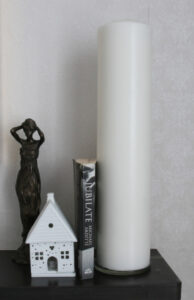
Yeah, that sounds like my kind of reading! The book is Jubilate by Michael Arditti. And the reviews are glowing.
At the heart of the novel is a touching love story. Gillian is a dutiful Catholic wife approaching middle age. She accompanies her brain-damaged and errant husband, Richard, on a pilgrimage to Lourdes where she falls in love with Vincent, a lapsed Catholic and now agnostic investigative journalist and documentary film-maker bent on exploring, perhaps even exploding, the myths around miracle cures in the shrine’s 150th anniversary year.
The narrative spans just 5 days.The voices of Vincent and Gillian alternate with five chapters from each perspective – hers backwards from Friday to Monday; his forwards Monday to Friday.

Gillian joins the Jubilate, an independent pilgrimage of about two hundred people, on the recommendation of her mother-in-law who’s constantly hoping for a miracle cure for her son. Vincent is filming the events, wanting to shed light on their activities and motivation and experiences. Both are deeply vulnerable with great sadnesses and frustrations in their lives. Their mutual attraction is instant and powerful, their fundamental differences challenging and provocative. Can mutual respect count for more than agreement?
But alongside their immediate personal emotions, both are grappling with deep existential questions:
How can God – if he exists – allow random illnesses, especially in innocent children?
This amazing world – created or the product of chance?
Was the world created simply to reflect the Creator’s glory and give endless praise?
Does an awesome God really care about the small sins of insignificant people – like their adultery?
Does God punish people in ways that fit the crime/sin?
What makes us human? When does life cease to have meaning?
Where does duty end and sacrifice begin?
How do you decide between God’s intervention and coincidence?
Arditti makes no attempt to answer all their questions, but he does capture the atmosphere of an iconic place that encourages contemplation, and allows for miracles other than medical healing.
The Sin of Certainty
I’ve been thinking a lot about my childhood lately in my reflections on my sister’s life. One important element in that upbringing was faith. We were brought up to espouse a fairly narrow set of doctrines, and to live within pretty rigid boundaries. This gave us a very firm set of moral values but, I now think, shrank God to a size our finite minds could comprehend.
In my adult life I’ve unravelled all this and now have a very different understanding of what’s important, and what holds up in the face of the challenges and tragedies that come our way in our day to day existence. And perhaps it’s this journey that inclined me towards a book by Peter Enns called The Sin of Certainty: Why God Desires our Trust more than our ‘Correct’ Beliefs.
 Peter Enns is an American Biblical scholar and theologian, and he has a delightfully readable, self-deprecating style of writing. He, too, grew up within a narrow set of beliefs, and indeed, was so wedded to his particular brand of Christianity that he studied theology and taught it with absolute confidence for decades. But gradually life knocked holes in his certainty about what was right, and this book explains why his outlook is now much changed.
You need to read the book to appreciate the evolution of this thinking, but suffice to say he asks how we can reconcile belief with the absurd reality of life? He doesn’t shy away from the big fundamental issues like:
– the collision of the Bible and science
– the portrayal of God as violent, vengeful, blood-thirsty, immoral, mean, and petty in the Bible
– the problem of injustice and suffering
– the issue of many faiths and denominations
– the problem of Christians treating each other badly
… and so on.
Questions that will resonate with many of us, I think.
And Enns concludes that there is no way our human minds can come up with all the answers. Far from being encapsulated in a creed, God is shrouded in mystery. Rather than relying on our own intellectual capacity to explain and believe, he concludes, we need to learn to trust. Trust in a God who is infinitely bigger and more awesome and more loving than anything our finite minds can conceive of. And trust regardless of what challenges come our way. Trust anyway. What’s more, he discovers, letting go of certainty can lead to us being much nicer people! And hey, I’m all for moving towards a world populated by nicer people.
Maybe my purpose on earth isn’t to be the thought police first and love others after all their ideas line up as they should. Maybe my first order of business is to risk my own sense of certainty about God and love others where and how they are no matter how they do on my theology exam.
I’ve hopefully learned (feel free to keep me honest here, people) that being right and winning isn’t the endgame here. Loving as God loves is.
He has replaced the old arrogant way of buttoning everything up, with a different way of re-imagining thinking about God and faith. A seven point plan:
1. Embrace modern understanding.
2. Accept we can’t get our minds around God.
3. Let go of certainty.
4. Adjust our expectations about what the Bible can deliver.
5. Be aware of God-moments.
6. Realise God is not a crutch.
7. Accept that struggling with faith is normal.
Right book, right place, right time.
Curiously, it’s one of the few books I’ve read twice!