Robert Goddard
Psychiatric scandals
We’ve probably all heard about the historical barbaric treatments and unauthorised clinical trials and experimentation meted out to psychiatric patients, which led to big inquiries and the radical reshaping of modern medical ethics on issues like informed consent and autonomy.
Vulnerable mentally ill people were systematically destroyed with mind-altering drugs, extreme forms of electro-convulsive treatment, operations on their brains, and horrific research on mind control. Many of these procedures were irreversible; patients were seriously damaged; some died. Unscrupulous clinicians went to extreme lengths to disguise or cover their tracks. Governments were complicit in the name of national security and international competition.
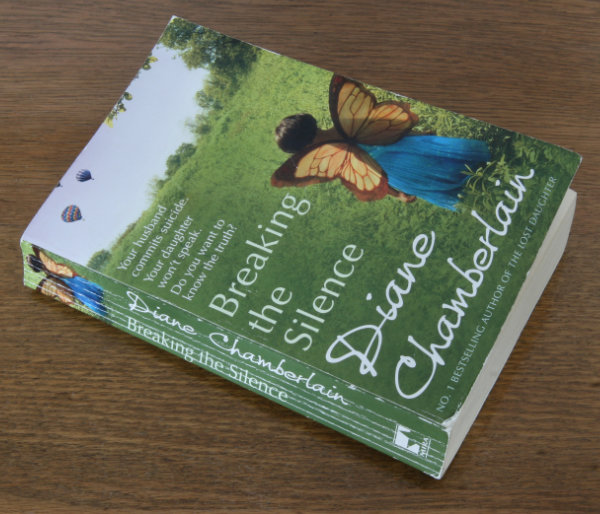
It’s a topic that offers big potential for novelists. Diane Chamberlain is one such. In Breaking the Silence, she’s woven the issue through the eyes of a psychiatric nurse, Sarah, in the 1950s, who finds herself in an advanced facility where the lead clinician has a reputation as a genius offering cutting edge therapy, and conducting innovative research, but who is in fact unscrupulous and maniacal. Alongside this is a present-day tale of a young girl, Emma, who’s in the house alone with her stepfather when he shoots himself dead. The child, believing her chattering made him do it, simply stops speaking, and her mother, Laura, and therapists struggle to unlock the key to her extreme response. When Laura’s father, begs her on his death bed to visit an elderly lady in a retirement home who has Altzheimer’s, the scene is set for these two time-lines to converge.
 Though the story appealed on the grounds that it explores medical ethical issues, from a literary point of view I read it at the wrong time. Successfully dovetailing two stories, two time-frames, requires a deft touch, and it was a shame I read it too soon after Robert Goddard‘s Painting the Darkness. (reviewed last week) His writing is so brilliant and he has woven a first person account into a third person narrative with so much more immediacy and verve, never losing momentum. However, Chamberlain is herself a psychotherapist, so she handles the medical aspects of her storytelling with more assurance and I enjoyed that element of the book.
Painting the Darkness
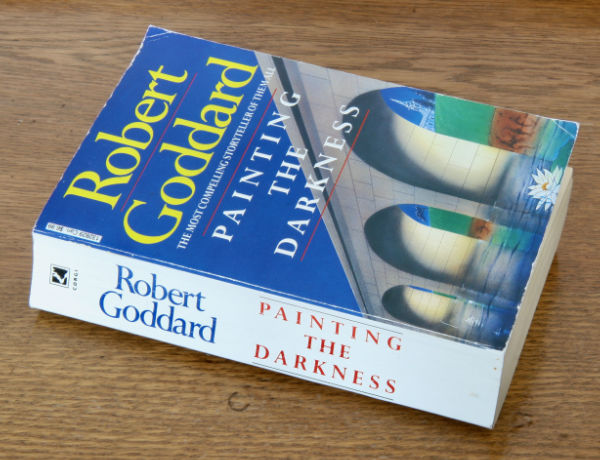 Robert Goddard is a master of language and of intricate historical skulduggery. In Painting the Darkness he’s drawing on the tried and tested theme of a stranger turning up claiming to be the long-vanished heir to a baronetcy and an estate in the nineteenth century, but boy, there’s nothing hackneyed about his take on this storyline! It’s 577 pages of unflagging engrossing suspense.
The year is 1882. William Trenchard is sitting smoking his pipe in the autumnal garden of his family home, on a Sunday afternoon, when the garden gate creaks open to admit a tall slim stranger. He has no idea of the impact this man will have on his life, but an hour is all it takes to turn the previous ten years of his life upside down, and set in train a path to ruin and destruction.
The man, James Norton, has come to reveal his identity as Sir James Davenall, former fiancé of Trenchard’s own wife Constance, who was thought to have inexplicably taken his own life eleven years ago, mere days before the scheduled wedding, when he was only twenty-three years of age. He also claims to be the rightful heir to the family estates which went to his younger brother Hugo. So determined is he to prove his case that he visits his alleged mother, brother and lawyer cousin, his doctor and old nanny, as well as his former fiancée, seeking confirmation.
In spite of his family resemblance, and his intricate knowledge of their family history and James’ life from boyhood to alleged suicide, all except the nanny initially refute the suggestion this stranger is their long dead relative, and yet … a nagging doubt remains in Constance’s mind. This in turn puts uncertainty into Trenchard’s head: maybe he doesn’t know his wife as well as he thought he did. Now both are harbouring secret thoughts and information unknown to the other. And little by little a rift widens between them; both erode the boundaries of trust.
The alleged James Davenall reveals more of his hand. All the money, all the status and prestige attached to the baronetcy, his own reputation, are as nothing compared with the love of his life. He will stop at nothing, accept no offers or compromises, in his efforts to win her back. But … he would give up every claim if Constance herself asked him to. Selfless devotion? … or a clever and disarming strategy?
As Norton repeatedly out-manoevres him, William Trenchard is driven from simply trying to protect his marriage to a full blown obsession to prove the interloper is an imposter; an obsession that leads to his own incarceration. The family lawyer, also a Davenall, takes up the case … they pursue it through the courts … the repercussions spread through the extended family. Terrible secrets are unearthed; conflicting claims and interests lead to fearful consequences. And the real truth is more shocking than anyone could ever imagine.
It takes a high level of skill to juggle time and place and an ever-evolving plot and a large cast of characters to this level of brilliance, but Goddard never puts a foot wrong, never eases up on the tension. Even when we eventually learn the truth about James Norton/Sir James Davenall we are unprepared for such a devastating unravelling revelation.
And as ever his writing is impeccable. I’ll share just two excerpts by way of illustration, both descriptions of minor characters in the story.
Sir Hardinge Stanley Giffard, Queen’s Counsel, Member of Parliament for Launceston and Solicitor-General in the previous Conservative administration, had about him, both actually and metaphorically, many of the attributes of the bull-terrier. Short and stoutly built, with a pugnacious air that age and a succession of legal triumphs had matured into a menacing certainty of manner, he was, in court, wig and gown and meticulous mastery of a complex brief, an awesome spectacle.
Mr Justice Wimberley had entered the bench from his door behind the throne before the usher had completed his announcement and now squinted querulously around at the rows of awkwardly rising figures. He was a small, orderly, fussy little man with a bobbing, egg-shaped, sharp-nosed head that gave him, in full judicial regalia, something of the appearance of a startled and ill-tempered moorhen. He peered distrustfully at the crowded court, as if to suggest that he had expected – and hoped for – a scantier audience, then took his seat with a resentful tug at his robe.
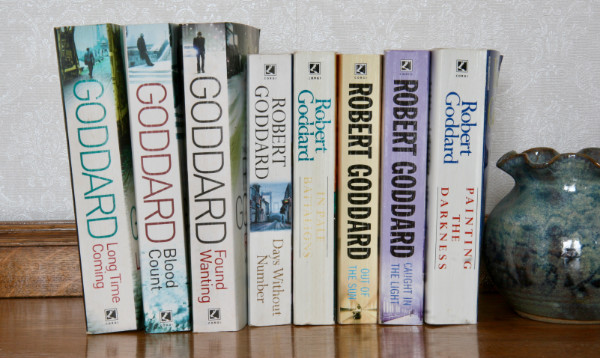
One of Goddard’s very best and most compelling novels in my opinion.
Linguistic flair
 I’ve long been a fan of Robert Goddard‘s writing. His first novel, Past Caring, published in 1986 remains one of my all-time favourites.
He’s widely acclaimed as a ‘master of the clever twist ‘, ‘second to none when it comes to duplicity and intrigue’, a ‘master of manipulation’. He chooses difficult historical contexts and multiple geographical locations and languages, but manages to keep the suspense and tension going till the very end, somehow convincingly weaving authenticity together with fiction. But what’s seldom mentioned is his skill with language.
Found Wanting, which came out in 2008, is a complex roller coaster of a tale centring on the possible survival of Grand Duchess Anastasia Nikolaevna, the youngest daughter of Tsar Nicholas II, the last emperor of Russia. The family were executed in 1918 by Bolshevik revolutionaries, as we all know, but rumours continued to circulate that Anastasia escaped. Goddard has spun another yarn about a woman who claimed to be the royal escapee.
 Far too many thrillers are sloppy with respect to grammar and language, so for me the joy of this book lay in the lovely turns of phrase scattered throughout Found Wanting. A few examples will best illustrate what I mean.
[The pelican crossing] bleeps and blinks in service to the dark-suited men and women crossing in both directions who are bound for their desks and work places in the ministries either side of Whitehall. Many already have their security passes dangling round their necks, their identities surrendered and declared, their working weeks about to begin in variations on an institutionalized theme.
In short, he possessed charm in abundance. But even abundance can be exhausted.
His top-floor room, set in the mansarded roof, gave him a wide-ranging view of numerous other roofs, but nothing else. The panorama of louring sky, domes, gables, slates, gutters, chimneys and fire-escapes was a metaphor for his plight. He could see a lot, but none of what really mattered.
Birgitte gave him a faintly sympathetic smile that hinted at a vivacious persona she left at home every morning.
‘Straub,’ said Lund, in a tone that suggested it was Danish for drain blockage.
A delight to read and savour.
Long Time Coming
It’s bonanza time this month! I’ve been indulging in a second Robert Goddard mystery. Why? Well, I’m recovering from a fall and damaged jaw, and somehow the other two authors I tried simply didn’t have the power to deflect attention away from the pain and awkwardness of my situation.

Long Time Coming worked that magic.
As always with Goddard, it’s intricately plotted with a background of historical accuracy – this time the Irish situation and conflicts in the 1940s – plenty of false trails, deceit, betrayal and skullduggery. Throughout the novel, two different timeframes alternate: 1940 and 1976, with a flashback to 1922 and a forward projection to 2008 at the end to bookend the narrative.
We’ve poked a stick in an anthill, you and I. Stand still too long and we could get badly bitten.
Stephen Swan is a geologist working in the USA in the oil industry. When he returns to Paignton in Devon to check how his morther is coping, two years after his father’s death, he’s told his uncle Eldritch Swan is not dead as he’d always been told, but alive, just out of Portlaoise Prison in Ireland after 36 years, and currently staying in his mother’s guesthouse! His crime seems to be shrouded in mystery, but by accepting release from political internment, which implies renouncing principles which were once held dear and firm, he becomes a pariah to the men he’s served and fought alongside.
Now assorted people – an Irish journalist, a solicitor, an unknown client – are hinting at a lucrative deal if Eldritch will tell his story, but he’s adamant he will not.
Stephen is appalled to discover from his uncle that slave labour in Congolese diamond mines long before he was born had indirectly furnished his father with the unexpectedly large inheritance that had allowed him to buy the Paignton guesthouse and live in comfort. Stephen feels tainted by association with those long ago decades of oppression and exploitation, massacres and mutilations. And now his uncle is asking him to become involved in searching for proof that some famous stolen artwork painted by Picasso belongs to the daughter of Eldritch’s old boss.
I loved the description of Picasso’s work:
… nudes twisted out of shape; portraits with dismantled features; still lifes in which nothing was still; collage-like assemblies of disparate objects; colourful explosions of form and figure.
It’s then that Eldritch shares enough of his past to show Stephen an audacious and sophisticated plot/crime committed as Europe went into the war in the early 40s, that had remained undetected and was quite unrelated to the accusations that put him in prison unjustly. Only trouble is, Stephen quickly sees that he can’t actually rely on anything his uncle says.
 As the story unravels, Stephen begins to piece together the truth, and as his own position is compromised and threatened, and his emotions engaged, he discovers that there are circumstances where expedience must take precedence over justice. That Governments and diplomats and the IRA work to different rules from normal civilised society. That lives and freedoms are sometimes deemed expendable. That silence is sometimes a price worth paying. And his uncle has been, and still is, a victim of them all.
As ever Goddard’s skill as a storyteller blows my mind. Not only is he a master of language, but the way in which he keeps so many threads, all anchored by history, interwoven and overlapping, coherent and sound, is astounding. And alongside all the dark elements he even incorporates a gentle romance. When it comes to duplicity and intrigue, he is indeed in a class of his own.
Blood Count
Robert Goddard is a master at convincingly weaving fiction through a period in history, and can always be relied on to give a compelling picture of a time and place alongside his intricate plotting.
 Blood Count is set in the 1990s during the Bosnian War and the subsequent pursuit and trials of the principal war criminals. Interlacing the fictional characters with the real, and authenticating their lives with reference to actual places and events known to us through our newsfeeds if not our own travels, brings them alive.
Thirteen years ago, successful transplant surgeon Edward Hammond performed a life-saving liver transplant on a Serbian gangster, Dragan Gazi. He was paid an eye-watering amount of money for doing so. Gazi is now standing trial at the international court in The Hague (ICTY) for horrific war crimes – persecution, deportation, imprisonment, expropriation, extermination, and the slaughter of thousands of people in the Balkan civil wars. Hammond feels a heavy burden of guilt for having saved the life of such a man, paving the way for him to commit such atrocities.
Now he faces blackmail by ruthless people. Unless he tracks down Gazi’s hidden ill-gotten fortune for daughter, Ingrid Hurtado-Gazi, his reputation and career will be ruined by allegations of his having been complicit in the murder of his wife, Kate, mother of his daughter, Alice.
But the search for the man holding Gazi’s money leads Hammond deeper and deeper into Europe and a dark world of blackmail, torture, assassination and death. He himself spirals further and further into a tissue of lies and deceit, and what started as a search for a missing accountant becomes a battle to stay alive as the body count rises.
You’re a frightened man with a lot to be frightened of.
The picture that unravels reveals horrors he had never envisaged, and gradually the intention to comply with Ingrid’s greedy demands in order to save his reputation, metamorphoses into something much worthier: handing over concrete evidence of terrible crimes to the authorities. Because, before his arrest, Gazi had hidden cassettes covering his nefarious actions between 1995 and 2000 in Belgrade as an insurance policy, and they come into Hammond’s possession. But by this time he’s a wanted man himself, stripped of all the advantages of status and wealth and reputation, and somehow he has to evade his remorseless hunters, and deliver the crucial evidence to The Hague.
Just to complicate things still further, there’s someone else who has a vested interest in these tapes: Zineta, the mother of Gazi’s illegitimate son, who was taken away by his father and given up for adoption. She’s desperate to see her boy again. In the tapes, she sees her chance to blackmail the man who was instrumental in the abduction. And once more Hammond finds himself being double-crossed and facing psychopaths who will stop at nothing to get the evidence that incriminates them. His own moral compass is again in question.
The previous eleven days had changed him. He could never go back to what he was before. He had become an exile from himself.
Gradually, gradually, a more accurate picture emerges. And though a top villain is apprehended, and a serious security risk avoided, Hammond is left fretting and regretting the appalling price that has been paid for this outcome.
 The battle to win back his principles and do the right thing gives him a temporary sense of freedom that’s been hard won, but that integrity looks very much like stupidity when pitched against the devious cruelty of an unscrupulous and amoral group of people. Again and again, in true Goddard style, just when the main protagonist thinks things are resolving, betrayals and counterplots take him and us further away from a conclusion.
Once again Hammond becomes instrumental ln saving the war criminal, Gazi – unwittingly and unwillingly maybe, but no less crucially. But he is enveloped in shame: Gazi’s captivity has lasted less than a year. How can he ever explain all this to his unsuspecting daughter, Alice, whose peace of mind was the prime reason he became embroiled with one of the most notorious perpetrators of ethnic cleansing in the former Yugoslavia in the first place?
It’s a disturbing read bringing to life the atrocities committed in the Balkans, but as usual, told with Goddard’s skill and thoroughness and flair.
Master of suspense
With a number of appointments scheduled this week involving lengthy waits, I turned to one of my favourite authors for a book to slip in my bag to absorb my attention. And once again Robert Goddard was not found wanting, doing what he does so brilliantly yet again in Out of the Sun – an apt title for so much skullduggery and conspiracy and dark doings.
 Harry Barnett gets a call out of the blue to say his son David Venning is in a coma at the National Neurological Hospital. But … Harry didn’t know he even had a son! David’s mother Iris is adamant she didn’t call him, and she’s equally sure only she and David knew Harry was his father.
Then it transpires that David was found in a locked hotel room following an overdose of insulin, and the notebooks containing his groundbreaking work are missing. He’s a diabetic anyway so suicide is not an unreasonable option, but there are far too many questionable aspects surrounding this case, not least relating to two other scientists who also worked for the same company as David, Globescope (a Washington-based socio-economic forecasting corporation) who have died in suspicious circumstances – one under a train, the other from carbon monoxide poisoning. And then there’s the fact that all three of them, as well as four other top-ranking academic-prodigies/employees, were sacked from Globescope recently, and the others are all now in hiding.
Unravelling the mysteries surrounding the son he never knew consume Harry, taking him to foreign lands, and into danger as well as unfathomable realms of mathematics and sciences he’s never even heard of. Everyone agrees David was obsessed by his discoveries; on the brink of something earth-shattering some would say. But Harry’s instincts take him down completely the wrong path and nearly get him killed. And when he does finally begin to understand just who was behind the murders he finds himself facing moral quandaries beyond his imagining, and surreal experiences that defy logic.
Conspiracy. Concealment. Confusion. They were the prevailing echoes.
Interwoven with the tensions is a tender but tentative love story, and a thread of moral questions about if and when it might be appropriate to remove the mechanical ventilation from David, and who should decide. The specialist is confident that there’s no realistic prospect of recovery from such a profound coma, and those who know him as an outstandingly clever mathematician agree he would certainly not want to be living life with severe brain damage. However, Harry’s heard there’s a new wonder drug that might save him and he’s part of the race against time to procure it … but he’s not the one footing the bill for David’s medical care.
With short snappy chapters, a racing twisting plot, blind alleys and shocking revelations aplenty, this proved to be exactly the right choice for filling in all those tedious waiting times, even if I was completely out of my depth with the mathematical complexities which lie at the centre of the plot. I can only take my hat off to an author who tackles such immensely complicated topics with such skill.
A favourite author revisited
Having struggled through A Year of Magical Thinking, I needed something gripping to refresh the parts literary prose simply doesn’t reach for me. And what better distraction than one of my favourite authors, Robert Goddard. I keep a row of his novels for just such moments of rescue.
 As luck would have it, Set in Stone begins with reflections on a death! And instantly it resonates with me far more profoundly than Magical Thinking did. Anthony Sheridan’s wife Marina is found at the foot of a cliff not far from their home in Cornwall. The authorities question whether it was a suicide, but Tony knows Marina was in robust mental health and assumes she was so caught up in enjoying the flowers that she trod unwarily near the cliff edge. She was, after all, in her personal element, having recently moved to the house and the county of her choice and dreams. The prologue perfectly captures the mood and style:
I can’t see you, Marina. I can’t hear you… More than anything I love you. I will always love you. … It’s as simple and desolate as that. I don’t need to chase your ghost. It’s here, at every moment, beside me. It’s almost tangible. But not quite. You’ll always be just out of reach. I can’t touch you. Ever again.
But I can talk to you. And maybe, just maybe, you can listen. I wish I could tell you a different story, though. I wish I could tell you your death was just a single outbreak of meaningless misfortune. I wish I could wipe away the events it set in motion and have you back, alive and contented, to love and be loved. But wishing is all it comes to. It changes nothing. There is only one story I can tell you. And this is it.
 And the book is written as if he’s speaking to her. It’s a powerful technique in the hands of a master.
Following Marina’s death, Tony is bereft. and instantly puts the house on the market, before going to stay with Lucy, Marina’s sister, and her husband Matt. He’s slightly taken aback by her likeness to Marina especially when she wears some of her sister’s favourite clothes. But he’s also intrigued by Otherways, the architect-designed circular house they have recently bought, with its own moat and lake, complete with a macabre history: a woman was murdered in the garden; her husband was hanged for the crime; and her brother-in-law defected to Russia after spying for them for years. What’s more, Lucy has recently befriended the now-elderly sister of the murdered woman who was herself briefly engaged to the spy.
Little by little Tony is drawn into the secrets and horrors of this house. The more he learns the deeper he gets into questioning everything related to it; even exactly how Marina died. She and Matt and Lucy were all keeping secrets he knew nothing of. His own personal life spirals into chaos. He has vivid dreams which subsequently mysteriously materialise in real life. When Matt goes off on business for a few days, he and Lucy, alone together in Otherways, are drawn together intimately as if this was always preordained. He forsees accidents and deaths. And he becomes increasingly conscious of a haunting feeling of other presences in this cursed house. Eventually, wracked with guilt, he leaves Otherways before Matt returns, but it doesn’t leave him, and he begins to follow up on links to its previous owners and their secrets with horrific consequences, putting his own as well as others’ lives in danger.
Goddard is a master at creating suspense and unravelling a multi-layered story. In this book he weaves together complex political intrigue, spine-chilling paranormal phenomena, and psychological depths that keep us guessing to the last page. Just whose version of events is the true one? A brilliant diversionary read.
Literary genius
 One of my most favourite novels is Past Caring by Robert Goddard, and since reading it I’ve collected a goodly number of his books on my shelves. They’re lengthy and intricate and absorbing though, so I only select them when I have the luxury of enough time to opt out of other commitments, or when I want a literary treat, or escape from reality.
The weather cancelled a couple of diary engagements recently so I seized the opportunity to indulge in a Goddard feast.
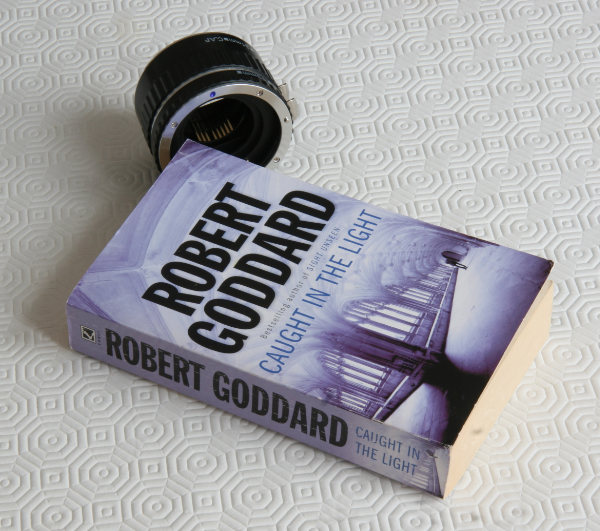 This time it was Caught in the Light … and I’m instantly captivated. He manages to convey an atmosphere of period brilliantly, moving effortlessly between the seventeenth century and the present. His plotting is spellbinding, layer upon layer of intrigue, and whether it’s a sinister menace, or a romantic interlude, or a psychological minefield, he grabs your attention and compels you to keep those 445 pages turning. A truly superb storyteller.
 Photographer Ian Jarrett is in Vienna for a few days on an assignment when he meets and falls in love with a stranger in a red coat standing against a snowy background: Marian Esguard. So utterly captivated is he that he returns to London, leaves his wife, tells his daughter, and goes to meet Marian. But she never appears. She seems to have completely vanished. What’s more the six films of photographs he took are blank. What is going on?
So fixated is he that he vows not to take another picture until he can photograph Marian again. So, not only has he lost his wife and home, and his lover, and his dreams, now he is without a job. His single-minded search for her takes him back into history, and into a dangerous world of unscrupulous men and dabblers in the darkness of a disordered mind.
I became a ghost, hunting a ghost, haunted by a past I couldn’t forget and a future I couldn’t give up.
 He is joined in his search by a Harley Street psychotherapist, Daphne Sanger, who is looking for the same woman, a client who spun her a very different story. Given the circumstances she agrees to breach her ethical code of conduct and share a vivid account of what this missing woman is enduring. Lies and deceit and betrayals abound. Everything swirls dangerously out of control. A man is strangled. Jarrett is caught up in this web of deception, trapped between the enigmas of the part and the greed and revenge of the present.
As the real truth unravels, and his existence is reduced to the narrowing circle of his search for his missing obsession, he becomes increasingly cagey.
There was secrecy bedded in my soul now, a furtiveness about my every word and thought.
And just when you begin to believe he’s about to realise his dream, the entire picture blows up in his face, and he has to acknowledge that he’s a mere puppet in an elaborate plot, his whole life being demolished around him. No one seems to be who they claim to be, yet he is the one who seems pathologically paranoid and deluded … except that he knows for sure he’s not, and he’s utterly determined to call the chief tormentor to account. And to save his sixteen-year-old daughter. But he’s at the mercy of a ruthless enemy who will stop at nothing to exact revenge. Murder, kidnap, suicide: it just keeps getting worse.
 I’d love to reveal the amazing detail of what is really going on, but I absolutely can’t risk spoiling your enjoyment of this incredibly complex story. It’s a masterclass in writing. And whether its the origins of photography, or 17th century historical detail, or the medical facts around haemophilia, or the underpinnings of psychological derangement, the author writes with authority and assurance, never flaunting his research, but weaving fact and fiction together seamlessly with a sure hand.
As critics have already said, when it comes to duplicity and intrigue, Goddard is second to none. He’s a master of manipulation … hypnotic … unputdownable … spellbinding. Genius.
Missing presumed dead
 Thiepval. The Memorial to the Missing of the Somme. ‘A massive, brick-arched statement of our collective conscience.’ Bearing the names of 73,412 men without a grave, ranked and filed for war.
 My uncle’s name is etched into that stone: NEVARD HP. I never knew him, of course; neither did his youngest sister, my mother; he was killed, in the week of his 21st birthday, in 1916, before she was even born.
  I have a rose in my garden called Somme, planted to mark the centenary of his death; it’s in flower right now.
 So, the name Thiepval has a special resonance for me, and that drew me to In Pale Batallions, a novel by one of my favourite authors, Robert Goddard. Thiepval forms the starting point for a mystery in the family of Leonora Galloway.
When we first meet her, she’s a recent widow, visiting the site for the first time, accompanied by her daughter, Penelope. Together they look at her father’s name commemorated on the massive stone monument, and check the records inside:
HALLOWS, Captain the Hon John, son of Edward, Lord Powerstock … aged 29 years.
But … the date of Captain John’s presumed death is recorded as 30 April 1916 … Leonora wasn’t born until 14 March 1917 … Penelope immediately suspects a simple wartime romance and illegitimate birth. Could this be the cause of the rift between them and her mother’s aristocratic heritage? But no, her mother, says, she has always known John was not her real father; Olivia, the second Lady Powerstock, made sure of that! But only now that her husband is dead, does Leonora feel free to confide in her daughter, tell her who she really is, and what she has discovered about her history.
Part 1 it told through the voice of Leonora. Hers was a lonely unloved childhood. The Powerstock title having ended with John’s death on the Somme, her mother, Miriam, having died of smallpox when Leonora is only a few days old, she is brought up by her paternal grandparents though neither money nor title ever finds its way to her. When her grandfather dies, his second wife, Olivia, becomes Leonora’s sole guardian, a vicious woman who loses no opportunity to taunt Leonora with her mother’s sullied reputation and her own illegitimacy, turning Leonora into an unpaid domestic servant in her own home, isolated from the world outside, timid, reclusive and introspective. Until, that is, the war happens, and soldiers are billeted at the family home. Captain Tony Galloway brings love and trust into her impoverished life, and when the war ended, they marry.
Two children later, Leonora is in the kitchen alone when a tall, sombre, rather shabbily dressed man appears at the door. ‘It’s about your father’, he says. Now that the second Lady Powerstock is dead, this man, Lieutenant Tom Franklin, John’s fellow officer in the Great War, who had actually met her mother and her grandparents, is free to tell her the truth about her family, about what happened thirty-seven years ago. And it’s this key witness who takes up the story in Part 2.
Feeling acutely the loss of his friend, John, Franklin jumps at the chance to convalesce in the Powerstock ancestral home, but nothing there fits with expectation. Everyone seems awash with carefully guarded secrets: John’s father hiding himself from the world in self-imposed exile in his study; his stepmother behaving with abandonment and contempt of Lord Powerstock; his beautiful wife pregnant by another man. The whole edifice of ancient British honour, and what John was fighting for, seem a sham. And yet images of John, the rightful heir to this place, seem to haunt Tom everywhere, awake or asleep.
Then the murder of a thoroughly unlikeable American guest of Lady Powerstock precipitates Tom into the role of prime suspect. But the police, under pressure from powerful sources, choose instead to brand an innocent convalescing officer who has taken his own life, as the murderer. Officially case closed, but Tom needs to know the truth – besmirching a reputation, even posthumously, goes totally against the grain. What he finds is intrigue and deception beyond his wildest imaginings; truths the family simply can’t afford to have unearthed.
Leonora takes back the narrative in Part 3. Now in possession of the facts behind her existence from this surviving witness, she has questions of her own to pursue. How did she end up in the care of the Powerstocks? Who really was the murderer of the odious American guest? What other secrets are still to be revealed? The Powerstock’s family solicitor refuses to give her answers. Tom Franklin has vanished without trace … until, that is, she receives an eerie posthumous message from him fifteen years later.
Leonora’s husband … then Olivia, Lady Powerstock, add their evidence … then the murderer himself …. and a scruffy painter in Cornwall! Each time, just as you feel you are grasping the truth, another witness snatches it away, takes you down a different path. Immensely clever plotting and elegant writing. Indeed, its the kind of devilishly convoluted plot that makes you want to go back, with the benefit of hindsight, and read it again just to marvel at its cleverness and see the clues you missed. But at nearly 400 pages of densely packed text that’s a rather daunting prospect.
 For me, personally, reading In Pale Batallions, there was something more than exquisite writerly skill on display. It’s many many years since I first discovered Robert Goddard’s Past Caring, which has remained top of my 100 favourite books. He is a past master at taking the reader deep into a story that just keeps on unravelling. But this time I entered more profoundly into my uncle’s death on the Somme than I ever have before. With his death only ‘presumed’, my mother used to dream of one day seeing him walking down the street.
  In Captain John Hallows it felt as if he was walking off the page. And it seemed so very appropriate to be feeling this precisely 1006 years later.
Not only so, but curiously enough the story also takes Leonora to the Isle of Wight, where my father’s family come from, as well as the West Country, where I grew up, and Goddard’s hauntingly familiar descriptions of those quaint houses and narrow streets transported me there too. Bewitching.
Exotic island or private library?
Some writers fly off to exotic islands or remote mountains; some hide away in huts miles from any internet connections or distractions; some spend six months trawling through microfiches and dusty archives. All in the name of authenticity and accuracy. To get in the zone.
Me, I’m knee deep in books which might inform the two stories I’m currently working on. Trips to special locations remain somewhere in the hazy future.
The hypocrisy and mores and prejudices of the upper classes? Julian Fellowes‘ Snobs or Past Imperfect will do nicely, thank you.

A bit of terror and psychological trauma? Harlan Coben or Robert Goddard are my go-to choices.


A blend of ethical dilemmas and fiction? Diane Chamberlain, Jodi Picoult, Heather Gudenkauf will keep me out of mischief.


Everyday life in bygone eras? Biographies about Dickens, Jane Austen, et al are guiding me nicely.


I can pick up and put down, browse or flick, all while I weave in and out of domestic responsibilities and grandparental excursions during the summer season. All without roaming further than my study/library door. No jet lag, no tummy upsets, no grappling with weird currencies and incomprehensible languages and dodgy local mores. And I’m still free to whip into town for Festival performances and assorted exhibitions. Perfect.