World War II
The Night Gate: Peter May
I do love a main protagonist in a series to exhibit unusual characteristics. Peter May‘s forensic expert, Enzo Macleod, has a white stripe in his dark hair running back from one side of his forehead, and one brown eye, one blue eye – both physical manifestations of Waardenburg syndrome. The faulty gene has skipped a generation but reappeared in one of his grandsons as hearing issues. What kind of a mind conjures up something as obscure as that?! Love it. And it’s only one of many trademarks that single this author out as exceptional. I’m a big fan.
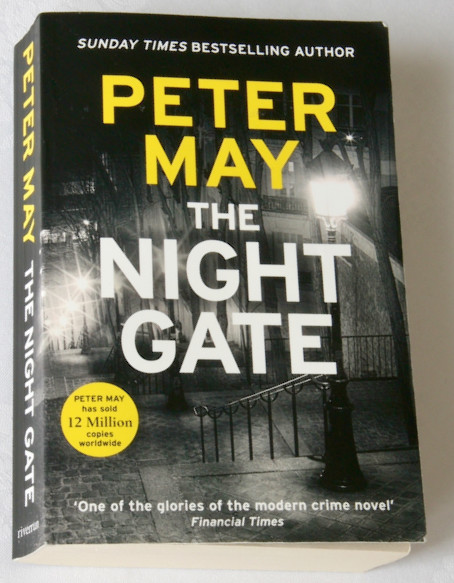
Another skill he excels at is evoking different places in different countries. In The Night Gate, we flip from Scotland to France to Germany by means of deft descriptions and a few local words. From the desolate windy shores of the Outer Hebrides to the dusty heat and rural charm of the Occitanie region in SW France, we’re in the hands of a writer who knows where he is.
By now, Macleod is officially retired, but missing the challenge and buzz of his old job. So he can’t resist a request to consult on two murders which have been discovered in a tiny medieval village, Carennac, on the banks of the river Dordogne. One is 75 years or more old: a storm has uprooted a tree and its roots have lifted a tangle of bones and leather and assorted remains of a ranking officer of the Luftwaffe with a bullet hole in his skull. The other is contemporary: it’s the 2020s, pandemic time, and Emile Narcisse, an art dealer from Paris, is found with his throat cut in the rustic kitchen of an elderly woman, Anny Lavigne, in the same village as the WW2 German’s body was discovered.
Immediately suspect for the fresh murder is Hans Bauer, a young German in his twenties, director of a small private art gallery in Germany, who has a history of violent outbursts, and is known to have visted the old lady that day. And incriminating evidence is indeed found placing him at the scene of the murder. But just what is his connection to both these bodies? It all seems too coincidental, and Enzo hates coincidences. So he begins to dig deeper.
The dead man, Narcisse, he discovers, was phenomenally wealthy, a huge name in the world of international art, who came to public recognition when he uncovered a haul of looted Nazi art in an apartment in Geneva, Switzerland. He’d done all he could to return the priceless works to their rightful owners, and where no heirs existed, sell them to museums and art galleries or private collectors. So what had brought a man such as Narcisse to the modest home of an old lady in a tiny backwater village in south-west France?
It’s Anny Lavigne who provides valuable insights which fill in the backstory to the historic case. She tells Enzo so much about what happened in occupied France in the 1940s; a story she’d heard time and again from her mother. How Hitler commandeered an art historian, Paul Lange, to procure the most famous painting in the world, the Mona Lisa, and hide it somewhere until after the war, when it would be given pride of place in the museum Hitler planned to have built in his hometown Linz in Austria. How General de Gaulle knew of this plan and enlisted the help of another art historian, half-French Georgette Pignal, who had personally helped to pack the precious painting and send it into the country for safekeeping from the Germans. Now she was being given full responsibility for guarding it, but she was to tell no one.
 So she’s shocked to discover that Paul Lange, now a German officer, knows exactly what her mission is. She feels nothing but hostility towards him, but he appears unoffended, even mildly amused by her blatant venom and embarassment at being seen in his company. However, her bosses instruct her not to cause any offence to the Germans, so she reluctantly agrees to being wined and dined every Friday night by Lange. He proves himself to be always the gentleman, making no effort to seduce her, and gradually she learns to trust him.
But others too have designs on the famous painting and we get sucked into an increasingly complex vortex of desire and greed and subterfuge. Who will acquire it? And at what cost to those who thwart them?
The fact that so much of the backstory is historically accurate gives added heft and credibility to this tale: the evacuation of art from the Louvre during WW2 to various chateaux around France; the appropriation of countless works of art by the Germans, including burning some of the canvasses; the courage of named individuals in cataloguing the stolen paintings and tracking them down in order to restore them to their rightful owners after the war; the bravery of the resistance fighters. And the cost in lives.
The plotting is tightly and unerringly woven like an underground map with tracks and links and connections steering the reader to a powerful conclusion. And through it all Peter May drops his trademark literary gems which make his writing sing.
Leaves fell like snow in his headlights. September was stating its case for an early winter.
Depression fell over her like a shroud shaken free of its folds, black and all-enveloping.
Moonlight bled through stained glass to sprinkle dead light among the pews.
Compelling, thrilling, and one to haunt me for some time to come.
I Know This Much To Be True
I can’t begin to comprehend the horrific damage inflicted by the teenager who went on a murderous rampage in Southport last summer. Nor the effect of a lifetime of contemplating the gravity of his crimes while he lives out his sentence of at least 52 years in prison before he can even be considered for parole. But I’ve been exercised by news reports that say he’s autistic and mentally ill and has a long history of problems he’s inflicted on so many families, including his own.
And then there’s the man with paranoid schizophrenia who killed three people in Nottingham in June – we now know he didn’t get the essential anti-psychotics he needed to prevent him becoming violent.
Details from both cases, and the deficiencies in their management, make horrific and deeply troubling reading, If only … If only …
So, an advert for a novel about a young man with paranoid schizophrenia – I Know This Much is True by Wally Lamb – jumped out at me.
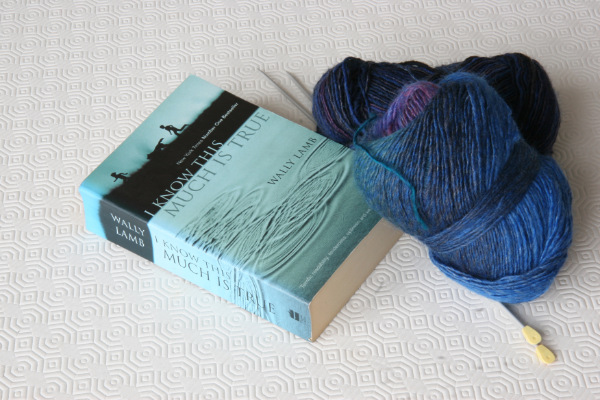
But oh wow! Oh dear! Little did I know when I ordered a copy, that it would turn out to have 897 pages of dense tiny text! A mighty doorstopper and no mistake. I had to force myself to keep going.
Dominick and Thomas Tempesta (later Birdsey) are identical twins born six minutes apart, in different years. They grow up in a tumultuous household with a weak mother and domineering step-father who both serve to exaceberate their sibling tensions and rivalry. Then Thomas develops paranoid schizophrenia, and Dominick promises his dying mother he will always care for his twin brother. But as Thomas reels from crisis to crisis, his twin is torn between love and resentment. Then on October 12 1990, Thomas uses a ceremonial Gurkha knife from WWII to amputate his own right hand in the Three Rivers public library in Connecticut, adamant that Dominick must not overrule his decision not to have the hand sewn back on.
‘It was a religious act! A sacrifice!’
Until this incident Thomas has been under the care of one psychiatrist for his mental illness for years, so when he’s admitted to a maximum security wing with a new team of professionals, Dominick is incensed and determined to get him out. But then he meets Dr Patel, an anthropologist as well as a psychologist, who gives him insights into what it feels like to be living in Thomas’s head.
The weight of the world is on his shoulders. He can trust almost no one. … Your brother is alone in the universe. Lost to his twin, lost to a conventional life. He is afloat in a world of evil and malignant power, his mettle tested at every turn. Thomas is, in effect, starring himself in his own hero-myth.
But Dominick – as his brother’s mirror, his healthy self – is the equivalent of a control group, with unique access and insights into Thomas’ thinking by virtue of their shared biology and shared history. He has the potential to provide a key to Thomas’ recovery.
For once, he had a doc who hadn’t majored in indifference.
Under her guidance, Dominick begins to retrieve childhood memories that might be significant, early schizophrenic episodes and decompensations, and in so doing Dr Patel recognises that there are two Birdsey boys lost in the wood, and maybe, just maybe, one of them is calling to her, and she can save him.
It’s not only a long book, but a complex one. Embedded in the text are several story lines including a whole autobiography by Dominick’s maternal grandfather, a really unlikeable egotist, revealing the troubled and often violent and abusive history in their family. Could these ancestors be the explanation for why he and Thomas were as they were?
There was much about this book I disliked, but I persisted to the end looking for answers to Dominick’s questions about his origins, about inheritance, about justice, about God. And some of them were answered. And for the record, Thomas is nothing like the disturbed boy who massacred children in Southport, or the mentally ill man who took three innocent lives in Nottingham; any harm he inflicts is only on himself.
Jackdaws
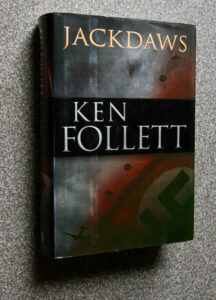 Having enjoyed Ken Follett’s novel Whiteout way more than expected, I raked another one from the back of my shelves: Jackdaws. A hefty 450 page hardback so not for the faint-hearted. It was well worth the effort.
The story is set in the dangerous final days of the Second World War. D-day is approaching and for one of Britain’s most effective operatives in northern France, senior agent Major Felicity (Flick) Clairet, the stakes have never been higher. She’s responsible for sabotage behind enemy lines and is no stranger to fear and danger, but she’s ruthless, clear-thinking, and paranoid about security; one of the survivors.
The centre of the proposed action is a large telephone exchange sited in a beautiful chateau near Reims which the Germans have enlarged to provide connections between the French and German communication systems, and a base for the Gestapo regional headquarters. It’s of enormously significant strategic importance; if it were destroyed, German communications would be crippled.
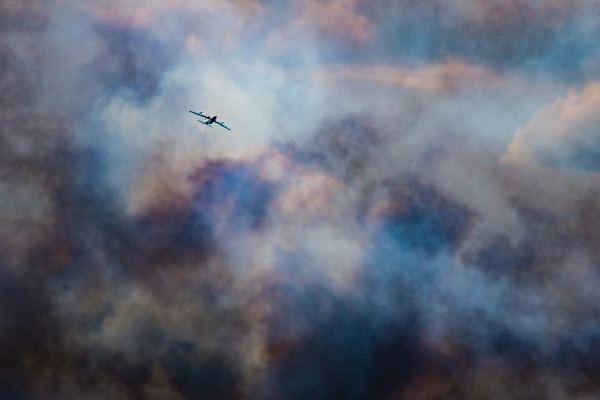
But when Flick and her husband, Michel – a Resistance leader – try a direct head-on assault, things go horribly wrong. On this occasion the intelligence supplied by MI6, had been inaccurate. Her team is destroyed, lives are lost, her husband is missing, confidence is temporarily shaken. But she remains resolute in her determination not to let the sacrifices be in vain.
Time is not on her side. She assembles a small group of women: a flirt, a murderess, a safe-breaker, a female impersonator, two aristocrats, one awkward, the other entitled – all unprofessional, but each with certain skills Flick needs. Code-named Jackdaws, these six women will attempt a daring infiltration under the very noses of the Germans, impersonating cleaning staff. An agents’ course normally takes three months; Flick has just two days to teach this motley band of women basic security rules: how to parachute, how to use weapons, and how to kill people without making a noise. Then they will be parachuted into France to blow up the telephone exchange.

Terrific tension is created by parallel accounts of the British team preparing to take out the telephone exchange and the German Major Deiter Franck infiltrating the French Resistance, as the countdown days are ticked off one by one. The descriptions of torture techniques, and the brutality of war, are both vivid and sickening, but the enormous courage of those who worked in enemy territory is breathtaking. It’s a shockingly mesmerising and totally gripping tale, bringing with it a fearful awareness of the price that was paid for the peace we take for granted.
Exactly 50 women were sent into France as secret agents during WWII; of these 36 survived. The other 14 gave their lives in service. This book is dedicated to them.
Charlotte Gray
Oh the joy of sinking into beautifully written fiction and gripping narrative! Particularly so as I’ve been wading through a couple of texts on moral philosophy, and started a novel that was so uninspiring and ‘so-what-ish’ that I abandoned it half way through – a rare thing for me. I shan’t bore you with references to the former, or name and shame the latter, but I will share the magnificent work which has brightened my week.
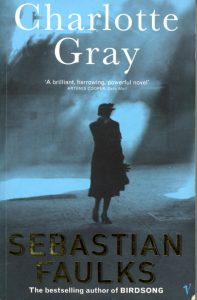 It’s Charlotte Gray by Sebastian Faulks. I loved the delicacy and skill of his Birdsong, so it comes as no surprise that in Charlotte Gray Faulks evokes the same emotions. A tender, tentative, love story between two flawed people in wartime – urgent because of the uncertainty of life; enduring because of the desire to find anchors and permanence in the face of imminent extinction.
The year is 1942. Peter Gregory, fighter pilot/airman, secret agent, is used to feeling vulnerable, flying in ‘nothing more than a few pieces of airborne metal and wood … a few inches from his eyes was a fuel tank waiting to explode‘. He knows all too well that on his low-level raids there are anti-aircraft guns waiting to blast him out of the sky, he is haunted by the premature deaths of so many young colleagues, and yet he seeks further danger, perhaps even to die himself.
Charlotte Gray, a child of the war years, is from the Highlands originally, more recently living in Edinburgh. She’s fluent in French, with a degree in French and Italian. During her formative years she spent time in the country, both on exchange visits and with her father going to visit the war graves occupied by his old comrades. Charlotte is only dimly aware of how damaged by his experiences her father is, but the hovering sensation of betrayal and violation is partially resurrected by the psychiatric evaluation she undergoes before going to France again.
Instant mutual attraction brings Peter aka Greg and Charlotte together when they meet at a literary party in London, but it’s a fragile relationship, laden with baggage from the past, the urgency of the present, and the uncertainties of the future. Both are determined to contribute meaningfully to the war effort, knowing each parting may be their last.
And then Greg goes missing on a secret mission. Information is hard to come by.
Charlotte redoubles her efforts to get to occupied France on military business, where she can employ her own fluency with the language to find out what has happened to him. The process of preparing to be a courier is rigorous but she passes with distinction. She’s given a new French identity, a new cover story. The attention to detail in transforming her is impressive – not only hair style and colour altered radically, every shred of clothing French, but dust from the right area of France lining her pockets. Even her fillings are drilled out and replaced by a heavy gold French mixture. Only one tiny detail is overlooked … pubic hair!!
Being active liberates her, and gives value to her life, but she is still driven by her desire to find Greg. So, having successfully completed her first mission, she takes an unauthorised extension to start the search. But life in the country with which she has always felt such an affinity is very different under enemy occupation. Suspicion and fear are everywhere. Who can be trusted?
She finds shelter with a young man, Julien Levade, aka Octave, also working as part of the resistance movement. But an aura of danger surrounds Julien, himself three eighths Jewish, who has already rescued two young Jewish boys whose parents have been deported. However, his eccentric father needs a housekeeper, so Charlotte, under an assumed name, takes on this post to give her additional cover and credibility.
 In places the story is so harrowing I had to go away and do something mundane – as when someone betrays the whereabouts of those two little French boys and we watch them being transported in cattle trucks to Poland, and then accompany them to the very door of the gas chamber – two tiny naked figures, heads shorn, clutching a tin soldier in one clenched fist. The weight of sadness feels unbearable.
Without drama, without hyperbole, Faulks somehow maintains suspense subtly but effectively, whether it’s the tension of parachuting into a foreign country, moving around under an assumed identity, making contact with unknown people, navigating unknown towns, delivering people and packages, keeping secret assignations, facing betrayal. He captures the incongruities of things people will do under extreme stress or duress. He writes with such delicacy of the emotions of those snatching at passing opportunities, all too aware of the fleeting nature of life.
Charlotte Gray is a powerful backdrop to some of the most heinous crimes committed against humanity whilst gently exploring the power of love to transcend such blackness. A brilliantly written book.
Holocaust Child
 Having recently been thinking about the Holocaust in association with International Holocaust Memorial Day, I was drawn to another book in my tbr pile: Holocaust Child: Lalechka, by Amira Keidar. It’s based on a journal written by a Jewish mother, Zippa Jablon-Zonsheim, recording the horrors which befell Poland when the Germans invaded, authenticated by interviews with key figures from the time, rare documents, photographs and actual letters exchanged.
Even before the war, tensions existed between Poles and Jews, but Zippa as a schoolgirl made firm friendships with girls from both cultures, particularly two Polish Christian girls, Sophia and Irena. University, marriage and the isolation caused by the polarisation of the Jews drove distance between them as the years went by, hardships and inequalities exacerbated their differences, and they rarely met.  In 1941, forced out of their home and into a vastly overcrowded, disease-ridden, derelict ghetto, Zippa despairs for the baby she is expecting, due to be born into a world devoid of hope. Wouldn’t it be better never to exist? But even though the restrictions and hardships imposed by the Nazis grow ever more harsh, on the day a wire fence is erected around the ghetto to further limit movement and supplies, she gives birth to a daughter, Rachel aka Lalechka – ‘a drop of happiness in an ocean of despair‘. Zippa is absolutely and fiercely determined to do whatever it takes to keep this precious baby alive and safe, and it’s to her old school-friends she turns.
Just before Lalechka’s first birthday, the Nazis begin the liquidation of the ghetto, systematically murdering everyone in it, and Zippa smuggles the child, a letter of explanation and three photos, outside the boundary of the Jewish quarter to a waiting Irena and Sophia. Sophia has arranged a safe place for Zippa too but, after a few days there, she returns to the ghetto to look for her husband and parents, wracked with guilt for having left them. Outside, Sophia and Irena too face grave danger and summary execution for pretending the little girl is part of their family. They live in a state of constant terror – for themselves and their families as well as Rachel.
Anyone willfully sheltering Jews or aiding them in other ways will incur the death penalty …Henceforth this rule will be executed severely and without mercy.
 The outcome was never going to be a happy one, and the barbarism and cruelty which determined the fate of so many thousands of human beings are hard to hear. But in the midst of the blackness, the story of devotion and bravery and loyalty between these Polish and Jewish girls transcends the divides, and the survival of Zippa’s baby feels like a triumph of love over hate. Which makes the post-war behaviour of many Poles towards Jews who survived – continuing hostility, abuse and even murder – the harder to understand and bear. I’ve read and written about this before but it never ceases to appall me. Imagine surviving the unspeakable horrors of Nazi brutality, concentration camps, starvation in war time, only to be vilified and hounded by one’s neighbours in peace time too.
But Zippa had left her own instructions for her daughter:
I ask you that after the end of the war you’ll look for my brother who immigrated to Palestine and give him this small child.
And between them Sophia and Irena do just that. Shimon has his own burdens though, having survived a very different kind of war as a POW for years. Even in the new homeland of Israel there is precious little stability or security for Rachel.
It’s a harrowing premise for a story, and the alternating accounts from Zippa, Sophia and Irena (and later two other voices, Rachel herself and her uncle Shimon) give a window onto the lived experience of persecution, bombings, deprivation, and all-pervasive fear as they see their beloved country destroyed, their culture desecrated, and they face appalling choices.
Somehow the literary deficiencies in the telling add authenticity to this account of life in another country at a time of unprecedented horror.
Zippa’s diary: Will people who didn’t live near these events ever believe it? Can anyone believe that what I write here is the truth and nothing but the truth?
It’s certainly painful to absorb this incomprehensible truth.
The Memory Keeper of Kyiv
I’ve read countless books on the Holocaust, also known as the Shoah, both factual and fictionalised accounts, and we all know about the appalling acts by Nazi Germany that led to the extermination of millions of Jews and Romanys and others in the concentration camps, gas chambers and mass shootings, during World War II. So how come I hadn’t even heard of the Holomodor – death by hunger – in Ukraine?  I have now, though, through the pages of a novel published in 2022: The Memory Keeper of Kyiv. And it will surely haunt me.
It’s the more powerful I suspect because of the images flashing onto our screens daily in the news, images of devastation in Ukraine as Russia attempts to subjugate this nation and destroy their culture. Vivid images of bodies left lying in the frozen ground, Ukrainian faces ravaged by despair, women lamenting their dead, the haunted eyes of orphaned children, snow falling over scenes of utter ruin, families ripped apart and displaced. All so redolent of the pictures author Erin Litteken describes in The Memory Keeper of Kyiv. Inhumanity and brutality on a scale it’s hard to comprehend or believe.
 Litteken is the granddaughter of a Ukrainian refugee from World War II which instantly gives her credentials for telling this tale. The poignancy of the current conflict appalls her; the horror of terrible history repeating itself. Her novel is an attempt to imagine and recreate the 1930s when Stalin’s activists marched across the Soviet Union and created a man-made famine in Ukraine, exacting a toll of almost 4 million lives.
As one of her principal characters who lived through the atrocities said: Share my story, our story, with everyone, so what happened to us never happens again. If only. But she has gone some way to exposing this forgotten horror.
The tale is told in two time frames, the 1930s and the 2000s, and the alternating perspectives worked for me since I found the accounts of life through the Holodomor so harrowing it was a relief to move to the nearer present, even though that time too is wreathed in tragedy and sadness. The natural disasters are at least understandable and forgivable.
I’ll sketch the plot lightly so as not to spoil it for future readers of the book. But perhaps a warning is wise: there is only one attempt at the end to soften the blackness, and by then it seems rather contrived.
1929
Kateryna Viktorivna Shevchenko (Katya) is a boisterous feisty 16-year-old, newly in love with Pavlo, a boy she’s known all her life. When the peace of their rural life is shattered by the coming of Stalin’s activists in January 1930, everything changes. Arrests and deportations begin immediately, appropriation of properties starting with the wealthiest, religious icons replaced with the trappings of collectivisation and communism, rebels disappearing. Interventions are in vain and incur terrible penalties.
Agonising choices face those left behind. Stalin’s plan is to terrorise them into subservience, appropriating their produce and animals and possessions, brutalising people and property, so they will join his regime, and even when they do forcing them into starvation. Resistance and disobedience attract instant death or deportation. The threat of harsh punishments makes ordinarily peace-loving people do astonishing things, and there’s a particularly devastating sense of loss attached to locals who succumb to the blackmail, collaborate with the enemy, and betray their compatriot neighbours.
As the atrocities mount, Katya begins to record events on tiny scraps of paper, with the stub of an old pencil. Then, on the day before their wedding, tragedy comes to them personally: Pavlo and his parents are shot in cold blood, and her own father is deported by the invading activists. In the pervasive fear, even the opportunity to truly mourn their grievous loss has been taken from them.
Tragedy after tragedy follows, and no effort is made to sanitise or soften the horrors for the sake of finer sensibilities. Even when Katya acts to try to save her family, and performs deeds of immense heroism, she’s wracked by guilt for the consequences of her choices, a guilt which haunts her to her last breath.
2004
Newly widowed, Cassie, is clinging to the remnants of life before her husband was killed in a car accident, though the memories are increasingly stifling her, trapping her in the past. She’s merely going through the motions of a bare-bones existence. Her 5-year-old daughter, Birdie, hasn’t spoken in over fourteen months since the tragedy. But then they are persuaded by Cassie’s mum to move to her childhood home to help care for Cassie’s grandmother, Bobby, a Ukrainian widow who survived the Holodomor. The move forces her out of the spiral of sadness, and gradually Cassie sheds the hard outer shell of her grief. And despite her resistance, she even finds love again with their neighbour, Nick, grandson of another Ukrainian woman, Mina.
But Bobby is losing her grip on reality as dementia sets in. She reverts to old behaviours, burying food in strange places and wandering out of the house at night lamenting past deeds. Cassie and her mother are at a loss to understand why. Until that is, Cassie discovers Bobby’s journal and scraps of paper covered in spidery Cyrillic script tucked into odd places. In a lucid moment Bobbie gives her granddaughter permission to read this account of her experiences in the1930s; she simply cannot bring herself to talk about those appalling memories but they should be known. Nick speaks Ukrainian and he helps to translate the texts. It’s an account of Katya’s life. Pavlo had told her moments before his death: You must survive this and tell the people of the world what has happened here, so that it doesn’t happen again. Use your pencil and paper and weave your beautiful words to keep our memories alive. Don’t let me die in vain, Katya. She was true to her promise to him.
 It’s a shocking account. But how sad that such courageous efforts were not enough to prevent history repeating the errors of the past for Ukraine. That we were not taught this evil alongside the Holocaust. That we did not know.
The philosophy of Katya’s father might well resonate for many in 2023 too: Just make it through today and hope that tomorrow will be better. But it ought not to be good enough for us who see what is happening. We surely can’t walk by on the other side. Not when we know.
The Gate of the Year
Listening to the first Christmas speech by our new king, Charles III, on Sunday, I was reminded of the words of his grandfather, King George VI, in his 1939 war time Christmas broadcast to the British Empire. He quoted the Gate of the Year poem by Minnie Louise Haskins, an apposite choice given the imminence of World War II, but words which speak to people in all of life’s difficult and dangerous situations across time.
And I said to the man who stood at the gate of the year,
‘Give me a light that I may tread safely into the unknown’.
And he replied:
‘Go out into the darkness and put your hand into the hand of God.
That shall be to you better than light and safer than a known way.’
So I went forth, and finding the hand of God, trod gladly into the night.
And He led me towards the hills and the breaking of day in the lone East.

The ‘dark unknown’ pretty much sums up the prospects ahead, doesn’t it? The year that’s just gone, 2022, has been one of widespread discontent, disaster and international strife, serious climate change and economic hardship, to name but a few causes for deep concern. Add to that the personal experience of many – the loss of beloved friends and family, of homes and security, and it’s evident none of us are immune from the stresses of life in the 2020s.
As we approach 2023 and that troubling ‘unknown’ we all need to seek guidance and find anchors. I do sincerely trust you can find confidence to go forward in hope, the kind of confidence Haskins and King George VI found in their faith.
Survivlng the War
The current situation in Ukraine, with the graphic images we’re seeing on our screens, is reminding us so much of the horrors perpetrated during the Second World War, isn’t it? And the thought of so many families running from, or hiding from the Russian onslaught, taking refuge in neighbouring countries like Poland, takes me to a book I read some months ago – events in the 1940s resonating strongly with what’s happening in 2022.
 Though I’ve read many many accounts of the persecution of the Jews, Surviving the War is the first about that faction in Poland who sought refuge in the vast forests and swamplands where the organised army would have trouble reaching them. It may not be as familiar as stories of the concentration camps, but it makes sobering reading, with its tales of betrayal and persecution by fellow countrymen as well as the Nazis.
WARNING: This post contains spoilers
Basing her material on a composite of real-life stories, Adiva Geffen, paints an idyllic picture of simple rural life in Poland before the war, with Jews and Gentiles living in harmony in a small village, joining in each other’s religious festivals, caring, sharing and supporting each other. As Avraham says in the book: ... we are one people, their language is our language and their culture is our culture … [and] we have God … the Poles are our brothers – we are united in this.
In her youth, Shurka Shidlovsky grows up both fascinated by, and fearful of, the dark and dangerous Parczew Forest, shrouded in myth and legend. But she lives in a happy family, joyfully observing all the Jewish festivals and holidays, completely oblivious to the horrors to come.
By the age of 15, Shurka is already beautiful and ready to leave school. She and her mother hold out for her to train in a profession/trade and she leaves home for one year to study sewing. City life is a revelation, but she keeps an anchor in the familiar by travelling home for the weekends. It’s during her wedding to the son of a prosperous merchant family, Avraham Orlitzky, that the first hint of trouble casts its long shadow: a young refugee couple appear who have escaped from Berlin as Hitler begins his terrible regime. The year is 1937.
But the innocents in Eastern Poland refuse to believe the stories; it’s nothing more than a ‘passing posturing’. Until, that is, the Germans invade Poland. This time the danger is impossible to ignore. Avraham has no choice but to wear the yellow star, but still he’s reluctant to move his pregnant wife, naively confident that their Polish friends will look after them. And even world leaders choose to ignore the signs of terror that have begun to form a crack in the world – the looting, confiscations, expulsions, eliminations. The year is 1939.

It’s only when, in 1941, Avraham is sent to a labour camp, that he begins to lose hope, and the realisation spurs him into action. The family begin a nomadic life, fleeing from one place of refuge to another, with two children in tow: Irena, and a frail little boy, Yitzhak.
As they move from her parents’ house, to an abandoned pavilion, to a vastly overcrowded Jewish ghetto, experience teaches them that, far from all being brothers, nobody is to be trusted. Brutality and lawlessness are rife. It’s the end of all security, all connections with their past. It’s the beginning of 1942.
And then the Final solution swings into action. News of the crematoria and death showers reaches the Orlitzky family: Horrors not even the devil could have imagined, and they realise that the ghettos have become not just ‘natural death’ chambers through starvation, but now also transfer stations to the concentration camps, extermination camps and forced labour camps. The Parczew Forest is the only place of safety left to them, and they must flee while the ghetto gates remain open. It is August 1942 – just one month before all the Jews left in the ghetto are sent to Treblinka and certain death.

Life in the vast forest is precarious in a different way. And indeed, more people perished there than survived. Shurka and her family camp alongside resistance fighters, Jewish partisans. They are forced to dig their own underground bunkers, camouflage them with branches, scavenge for food, be ready to move immediately if the Germans gain intelligence of their whereabouts, leaving no trace of their presence, only to start again from scratch.
Life even inside the bunkers is fraught with peril. The Jews are huddled together, forbidden to utter a sound, not even to cough. The Germans periodically approach with their weapons and dogs. On one occasion, baby Yitzhak starts crying, refusing any comfort, endangering the whole camp. What is Shurka to do? The account is too tragic and poignant to recount; you have to read it through her eyes.
As winter clenches its frozen fists on the forest, they are again on the move, this time to an old granary, courtesy of a sympathetic peasant, where they live in complete silence for nine weeks and five days. Suspicious neighbours eventually drive them back into the forest. Though Avraham is the king of plenty, obtaining basic provisions under cover of darkness, nevertheless disease, death, constant deprivation, unremitting fear, take their toll. It is 1943.
The threat grows ever closer. The Germans set fire to the forest to drive the hidden Jews out. Then with more precise information from informants, they throw grenades directly into the bunkers. Shurka and her daughter survive because they have crawled onto a high shelf; but almost all her family are killed in that terrible raid. Alone now, they must once again flee, this time to a series of old granaries or barns during the harsh winter months, imperilling the farmers who grant them shelter, using silverware and jewellery to pay for their silence, capitalising on friendships and allegiances from Avraham’s successful business days. But with spring comes a return to the forest. It is March 1943.
By that September, the Third Reich begins to crumble, but the forest families are by no means safe. They spend another frozen winter hidden in a spacious barn belonging to an avaricious couple of Poles, in a remote village surrounded by swamps. Always silent, constantly vigilant. Irena by now is six years old. It’s while they are there, as the war draws to a close, that tragically, Avraham is killed while out on one of his night-time scavenges. Shurka decides she must return to the forest to seek out those she knows, unaware that the Germans have retreated, the battle over.
Just twenty-two days later, on Sunday 23 July 1944, the people of the Parczew Forest are liberated, marched away, leaving behind the graves of their loved ones. They are free to return to look for the Poland they had lost, but carrying a terrible burden of pain for the rest of their days. And it would take time to fully trust these Russian men who had come with the offer of release. Was it all a trap? After all, their compatriots in the concentration camps in the west are still being sent to their deaths.
Sadly, the reception that awaits them in Poland is one of outright hostility, revealing a hidden anti-Semitism that hurts deeply from supposed brothers. New persecutions follow. And once again the Jews are in hiding, as murderous men rampage through the streets and houses. After losing so much, however, the few forest survivors crave connection, love and intimacy. Suddenly men are in hot pursuit of Shurka. She soon finds new love with a man who lost his own wife and children in Treblinka, and together they resolve to set their sights on the future, not to look back. They marry in November and a son Yaakov is born in August 1945. They eventually begin the slow process of leaving Poland behind, to seek a new life with their fellow Jews in the new State of Israel. The year is 1948.
Shurka’s story challenges me as so many levels:
Would I have the courage to endure such hardship?
Would I endanger my family to protect strangers?
Would I sacrifice my son to save the wider community?
Would I retain faith in God in the face of such horror?
Unanswerable. Uncomfortable. Unimaginable.
On that date …
I’ve been mulling over a strange thought this week. The significance of dates.
 It began when I started to read yet another book about the Nazis: this time The Day the Nazis Came by Stephen R Matthews. This one is set in Guernsey at the beginning of the Second World War, and it’s written by a man who was a small child there and got caught up in the horrors. He was just four years old when he was deported with his parents to a camp in Germany.
To begin with, and with due respect, I should say, the author is not a natural wordsmith, but he has a family story to tell which I found worth persisting with, because these times were relevant to my own history. My parents started their family in 1941; they too were eking out a meagre living because of the deprivations of war; they too were seeking shelter from air raids, observing blackouts, watching developments fearfully. It resonated.
I’ve visited the Channel Islands twice and can envisage the places and scenarios Matthews talks about.
 At the end of the 90s a beautiful tapestry had finally been completed commemorating the events of occupation, and I was blown away by the vibrancy of its panels and the profound sense of history it captures. The bulk of the embroidering was done by skilled needle workers, but anyone could add a stitch under their guidance, to give them a personal connection. And it’s that personal identification with events and experiences that I’ve been preoccupied with this week.
 Identifying with dates and details in this book, I’m reminded of the profound feeling I had in Berlin where there is so much to remind one of the horrors perpetrated in the 40s which must never be forgotten. I felt devastated by a sense of terrible loss when I stood on the edge of a railway line marking the number of Jews deported to the concentration camps on the day of my birth. I was bereft of words looking at the memorials to the Romany people, to the trains taking children to life or to death, to the six million Jews who died in the concentration camps – all of which happened in my early childhood.

And isn’t that what we try to do with novel writing? Take the reader into that place, that time, that emotion? Leave them feeling the connection. So even though The Day the Nazis Came isn’t going to win any literary prizes, it’s enabling us to hear what it was like to live innocently on these beautiful islands, and nevertheless be sucked into a darkness, an evil, beyond comprehension.

Man’s Search for Meaning
HEALTH WARNING: This week’s post may not be easy or desirable reading for those who are finding life tough right now.
In a week where the headlines revolve around the financial implications of a global pandemic, bitter in-fighting in the Scottish government, and the revelations of a woman who found the burden of royal life too much after a couple of years, coming at a time when a proud 99-year-old prince who gave up a successful career and the next 70-odd years of his personal ambitions, to always walk two steps behind his wife, lies ill in hospital … well, I, for one, was looking for perspective.
And I found it in the depths of the Holocaust.

During WWII, psychiatrist Viktor E. Frankl, spent three years in Auschwitz, Dachau and other concentration camps – as an inmate, not as a doctor. But he survived and went on to be professor of neurology and psychiatry at the University of Vienna Medical School until his death in 1997, the author of thirty books. So when he speaks about the importance of finding meaning in life, we ought, at the very least, to sit up and listen.
I certainly did. Man’s Search for Meaning: The Classic Tribute to Hope from the Holocaust – written in 1945 – has been described as ‘profoundly honest’ … ‘inspiring’ … ‘deeply sensitive’ … ‘influential and eloquent’ …’wise, kind, and comforting’. It’s all of those things. And it’s eminently readable to boot.
 The bulk of this slim volume is not so much a fascinating account of his own three years of appalling treatment in one concentration camp after another, but his analysis of what suffering of this depth and magnitude reveals about mankind, and what he learned about himself through the experiences. Here he was, ‘stripped to naked existence‘, quite literally. With the exception of his sister, his entire family – father, mother, brother, wife – perished in the camps.
‘How could he – every possession lost, every value destroyed, suffering from hunger, cold and brutality, hourly expecting extermination – how could he find life worth preserving?‘
He dug deep to discover why.
He unpicked, with a kind of detached professional interest, the gradual dulling of emotion, which inured prisoners to horrific sights, sounds, smells and tastes, as well as a brutality and sadism normally unknown to them. He watched the apathy and blunted sensitivities helping his fellow inmates acquire a protective shell – a mechanism of self-defence which eventually detached them from the frequent beatings. He observed the detail of human behaviour in these appalling circumstances, translated it into psychopathological terms, and explained the ‘Why?’- why they followed like sheep; why they sought the centre of the group during marches; why they ripped clothes and food from still warm corpses; why they secreted their meagre ration of bread in their pocket, taking a crumb at a time throughout the day. Throughout his incarceration, he retained this sense of medical curiosity, pitting received wisdom against lived reality in these uniquely horrific conditions, and sometimes he found both medical texts and his own reservoir of knowledge wanting.
And gradually, over time, he discovered first hand ‘the meaning of the greatest secret that human poetry and human thought and belief have to impart: The salvation of man is through love and in love.’ And that ‘love goes very far beyond the physical person of the beloved. It finds its deepest meaning in his spiritual being, his inner self.’ Even though he had no means of knowing whether she was alive or dead, nothing could touch the strength of his love for his young wife (she had in fact died aged just 23).
But good does not always prevail, and he saw his fair share of evil, before concluding that everyone has a choice as to how they deal with adversity. ‘The way in which a man accepts his fate and all the suffering it entails, the way in which he takes up his cross, gives him ample opportunity – even under the most difficult circumstances – to add a deeper meaning to his life. It may remain brave, dignified and unselfish. Or, in a bitter fight for self-preservation he may forget his human dignity and become no more than an animal. Here lies the chance for a man either to make use of or to forgo the opportunities of attaining the moral values that a difficult situation may afford him. And this decides whether he is worthy of his sufferings or not.‘ Dr Frankl himself found the courage and resources to make a victory of the experiences, to turn this humiliating life into an inner triumph.
One of the tactics he adopted to gain this inner strength and mastery over his present adversity, was to imagine himself giving a lecture on the psychology of the concentration camp! By this method he somehow rose above the present situation and observed the sufferings as if they were already in the past. Nevertheless, he remained humble and understanding and forgiving of others’ less robust approach. When he saw them steal, or act meanly or brutally, he refused to condemn: ‘No man should judge unless he asks himself in absolute honesty whether in a similar situation he might not have done the same.’ Nor would he judge any group as a whole, not even those who routinely harmed him. None were made up of all angels or all devils; indeed, in his thinking, there are only two races of men in this world – the ‘decent‘ and the ‘indecent‘.
But of course, he saw utter despair and hopelessness elsewhere in Auschwitz and Dachau. And it was through the inmates who were at rock bottom, contemplating suicide, that the psychiatrist in him recognised a fundamental truth. ‘When the impossibility of replacing a person is realized‘ – it could be a father to his child; or an author to his unfinished creative or scientific work – ‘it allows the responsibility which a man has for his existence and its continuance to appear in all its magnitude … He knows the “why” of his existence, and will be able to bear almost any “how”.‘ An understanding shared with Nietzsche.
And it was by this route, that Dr Frankl honed his own version of existential analysis – ‘logotherapy‘. Essentially logotherapy involves searching for the thing that stops a person committing suicide, the one thing that anchors him to life, and using this as the guide-line for psychotherapy, to help him find meaning in life. One is moved to ask, Who better to steer others away from the torments that are devouring them, than this exceptional man?
Part 2 of this little book is a brief capsule version of Viktor Frankl’s therapeutic doctrine: Logotherapy in a Nutshell. As he says himself, it’s a pretty hopeless task to try to collapse twenty volumes in German into thirty small pages in English! Not much hope I can do it in a couple of sentences, then. In essence though, logotherapy focuses on the meaning to be fulfilled by the patient in the future. Man inherently needs ‘something’ for the sake of which to live, and he desires a life that is as meaningful as possible. Using logotherapy, a patient is assisted to identify what this ‘something’ is, and is then reorientated towards the meaning of his life. Dr Frankl himself felt a deep desire to write the manuscript he had started before he was taken to the camps. That helped him survive.
Not your average Holocaust book; but a remarkable tribute to the triumph of hope and endurance against insuperable odds, and a potential doorway towards finding meaning and purpose in our own lives.
