suicide
The darkest side of life
Hello, my name is Shy Keenan, I was born and broken in Birkenhead, and was abused from infancy by a network of every kind of pervert … I entered the world unwanted and was beaten, sold, swapped, photographed, filmed, left for dead, betrayed, ignored and booted into adulthood; at which point I was branded the problem and left completely on my own.
 This book, Broken, has to be one of the most difficult reads I’ve ever encountered. To learn about horrific and ongoing sexual exploitation of young children through the eyes of one not old enough to have the vocabulary to describe her ordeals, wrenches something deep inside from its sockets, and gives it a painful twist for good measure. Then to find she is repeatedly and catastrophically let down by the authorities stirs something primitive and dark.
Trouble began for Karen/Shy long before she was even conceived. Her immature birth parents were so badly behaved and out of control that they were both sent away to a special mixed boarding school for maladjusted children in Sussex –- where they met. Theirs was a volatile relationship essentially bonded by their common love of stealing. After a shotgun wedding and just 14 months after her first child (by a different boy) was born and then taken away from her, Jennifer, gave birth to Karen/Shy, in 1963. Their life of crime continued unabated and the baby was frequently left alone in the squalid flat. It was there that her aunt found her: a red-raw and emaciated baby in a rancid cot.
Despite numerous attempts to shore up this dysfunctional and chaotic family, the marriage failed and her future stepfather, Stanley Claridge, came on the scene, 17 years older than Jennifer, the product of a depraved childhood in care, emerging as a drunken, violent and abusive adult. And extremely keen to become a ‘daddy’ to Jennifer’s young girls.
The sexual abuse, not only by Stanley, but also by other men, started when Karen was about three years of age, and her sister Denise a year younger, made the more appalling by extreme physical abuse from both adults. Frequent severe beatings rendered Karen partially deaf and with poor eyesight before she even went to school. But – and this is an incredible aspect of this extraordinary story – somehow Stanley managed to persuade the authorities it was Karen who was the problem; a recurring theme.
 Efforts were made to ‘treat’ her so-called promiscuity but she rebelled against the injustices and eventually, at the age of 9, she was sent to stay with Nanny and Grandpa Wallbridge (he was a retired Quaker reverend minister) in order to cure the precocious sexual proclivities Stanley alleged she had. Under their strict but fair rules her true personality emerged, trust blossomed, and at last someone believed in her innocence. It was an idyllic time in her life.
Sadly though, the reprieve was all too short, and after almost a year her mother, though she thoroughly disliked her eldest daughter, managed to manipulate the situation to get Karen back in the family home in order to claim extra benefits. The perverted behaviour began all over again. By the time she was 14 she had suffered three miscarriages and been in intensive care with a venereal disease.
It seems absurd to think that no one would question why an 11-year-old should have an STD, but no one seemed unduly concerned.
Then Stanley somehow contrived to get her sent to a psychiatric ward where she was started on powerful sedative drugs, which in turn then gave him more control of her. He began to arrange for men to come to the house to rape her; he took her to the docks where she was filmed with multiple strangers doing all sorts of sickening things to her, and the pictures sold on the black market. When the situation began to slip out of his control again, he contrived to get her taken back into psychiatric care on a trumped up charge.
 There followed a series of spells in assorted care homes, but far from helping her, they were the scenes for further abuse, both physical and sexual. Having been labelled by Social Services as a sexual tease, assumptions were made each time she reported abuse, and she was never believed – not even when Stanley admitted to his crimes in his letters to her. The distraught child repeatedly ran away seeking refuge from the horrific abuse and organisational failures. And one place ended up becoming her true haven: the stream where Grandpa Wallbridge had once taught her to wash away her troubles.
When Shy’s mother became disabled by a stroke, Stanley soon became disillusioned with caring for her and helped her to die. Shy grieved sorely in spite of her mother hating her. all her life. Then her sister Denise turned against her. Bereaved and feeling totally alone, Shy fled to London and, entirely without means or shelter, began a life of crime, sleeping on the streets. Initially she simply stole to survive, but gradually her personal moral code was eroded and she became both ‘greedy’ and ‘arrogant’. Forging signatures bought her untold wealth and for a time she became a social chameleon, hobnobbing with the uber-rich, living a life of luxury. No one knew her real name, age, or history; she had effectively reinvented herself. The high life lasted several months before she was caught, identified as a juvenile, and returned to care.
Throughout her childhood, every time she tried to tell her story, her Social Services report was raked up to turn the blame onto her: she was an attention seeking, sexually promiscuous liar with now a long history of criminal behaviour. Having escaped from a padded cell in a care home, at her lowest ebb yet, with nowhere to go, desperate and alone, she found herself on top of a 15-storey block of flats, ready to end it all. It was a turning point. When she was talked down by a scared young police officer, she mentally said goodbye to the old Karen and consciously turned her face towards a better way of life.
But the authorities hadn’t finished with her yet. She was charged for all her stealing offences in London, remanded in a Liverpool prison, before being sent to Holloway in London. At her trial, she was sentenced to up to two years at a different prison in Essex – a hell all of its own.
In spite of her good intentions, her life was simply a struggle to survive. At the age of 17, in desperation, she married a man she hardly knew, and moved to Germany with him. But after a year she was back in London on her own.
I was like another person, trapped inside the shattered remains of an old human being, trying to make all the broken parts work and survive day to day. I was like a human ghost ship drifting on a wild and treacherous sea, with the hull ripped away and nothing left inside of it.
 After a lifetime of being betrayed and abused and let down, it was very hard for her to learn to trust anyone. So, she did what she could to start again: she hid her identity, and began living a law-abiding life, avoiding any contact with the authorities. But the years of being drugged and sexually attacked took their toll; something snapped and she sank into a very deep depression. From absolute rock bottom, she took life one tiny step at a time through her twenties and early thirties gradually finding enjoyment through music and her motorbike, with help from MIND (the mental health charity), all the time protecting her identity fiercely.
As the years passed she eventually, little by little, came out the other side and became a new, happier, grounded person, going on to be a wife, a mother, a songwriter, and a fierce advocate for abused victims.
But there remained the matter of Stanley – now in his 70s and still abusing children, some of them still in nappies. Incredibly, though armed with incontrovertible evidence, when Shy contacted every agency and organisation she could, from care homes through to the House of Lords, no one responded to her plea for something to be done to stop this monster and his gang of paedophiles. So, as a last resort, she sought support from a victim support charity, One in Four, who helped her contact the media. It came at a heavy price. Going public meant she could kiss goodbye to her musical ambitions, but she simply could not abandon those innocent children.
The prestigious BBC programme Newsnight took up the story; so moved were the team that an unprecedented 60-minute special was created. It was the catalyst for finally, finally getting action for the child victims of sexual abuse.
It was not until 2002 that Shy finally had her day in court at the trial of the paedophiles who had made her own childhood so broken and frightening. And it was there that she found that at last she was believed.
With the massive support her case generated and the awards the story attracted, she changed her plans entirely. She put all she had learned towards forging a new career, launching Phoenixsurvivors.com to stop paedophiles and help their victims. She qualified as a private investigator and studied criminal psychology, building a team of dedicated child protection advocates backed up by a support network. Together with Sara Payne, mother of murdered Sarah, she established the first ever centre of excellence in this field and the first ever Phoenix victim support retreat. And she became something of a celebrity.
But sadly her success as the CEO of a flourishing organisation was not the happy ending we might wish for this traumatised woman. Still more tragedy followed. Her 14 year old son took his own life. Then, during the pandemic, she had three bleeds on her brain and had to fight her way back to some level of independence. Just how much horror can one person bear? And yet she can still say:
I am a Phoenix, rising from the ashes of a broken life, an ongoing survival in progress.
The dark side of psychiatric illness
I have an ambivalent relationship with psychiatry which goes back sixty years. But that was probably what drew me to the book I’ve just finished reading.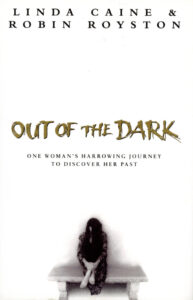
Out of the Dark is a moving account of one woman’s descent into depression and suicidal ideation and her struggle to return from that dark place with its sense of overwhelming hopelessness. The two narrators are Linda Caine and her psychiatrist/psychotherapist, Dr Robin Royston.
On the face of it Linda has everything: health, financial security, a beautiful home, a husband she loves who loves her, two healthy children, talents and hobbies, a strong faith, good social networks. But she becomes increasingly aware of a periodic detachment from reality and a desire to escape from the frightening place she is sinking into.
It’s as though my mind has slipped out of gear and is running in neutral.
Thanks to a church friend she’s saved from killing herself and taken into the mental health sector. Thereafter it takes years of patience and care to unravel the mysteries of her mind.
She grew up along with her three siblings in Rhodesia/Zimbabwe in Africa when apartheid was causing major unrest. Her mother, who was never very motherly, left them when Linda was eight, and had no further contact with them. In time her father married a black woman, who was not kind to Linda, and they became social outcasts. When Linda became pregnant her father threw her out, and she went on to marry a violent man.
When the book opens Linda is a woman in her thirties, happily married to a lawyer, Chris, whom she has known since primary school, and they have two children. But Linda is becoming increasingly disturbed by bad dreams, absences when she simply tunes out of life, and a growing conviction that death would be a welcome release. She clearly needs help.
 Sometimes I see myself lying beneath the water, staring up through the fingers of a hand, spread across my face, over my mouth and nose. At other times, I see a pair of eyes staring furiously at me; eyes that want me dead; eyes that look straight through me as though I don’t warrant the space I take up. In the back of my mind, I keep telling myself, if I’m not better next week I can always commit suicide.
Her psychotherapist, Dr Robin Royston likes Linda:
She isn’t manipulative, or self-seeking. She has no hidden agenda. She wears her pain apologetically, as though she doesn’t want anyon’e sympathy or help.
But he’s intensely concerned about her because, not only does she seem devoid of hope, but she’s not getting better. He knows that deep and powerful psychological factors are at work but has no idea what they are. Though Linda has no identifiable psychiatric disorder, he is certain that the answer to her problem lies within her. She’s struggling to cope with the everyday stresses of life, and unless this is ameliorated she will become suicidal again.
Linda is like her horse (which had colic and died) – deeply wounded, walking round and round in agony. She can see no reason for her pain and no treatment that can take it away. I have to keep her on her feet, to keep her moving forward. The answer lies within her. It invariably does.
It’s as though there’s something in her mind that wants to get out but each time we move closer she just falls apart.
 Then Linda suffers a major breakdown and needs to be admitted to the psychiatric hospital. The accounts of her experiences as she’s dragged further and further down into a black vortex of terror make disturbing reading. It takes endless patience and skill to help her explore and share the traumas from her past, some of which have been denied so comprehensively for so long. The cost to both patient and therapist is captured in the two perspectives running side by side. It is by no means a linear progression to recovery and Linda returns to the hospital a number of times, and again and again regresses in her behaviour to an alarming degree, damaging both herself and the fabric of the building around her. I lost count of the number oif times she smashed windows!
The secrets in her African childhood and adolescence are buried so deep that to reveal them may destroy her completely, but gradually a picture emerges which explains everything. From a very young age she had suffered appalling abuses and her only survival mechanism was to dissociate herself in order to survive. Now, as an adult, her mind ‘slides away’ when things trigger powerful negative feelings, she becomes absent and unaware of the present. Dr Royston knows that painful and frightening though it may be, and no matter how uncertain the consequences, Linda herself must be helped to face the repressed memories and learn to live with them if she’s to find the will to live. But each memory renders her extremely vulnerable, and there are no guarantees that the team will save her from herself or her suicidal feelings. They put their professional judgement on the line in some of the risks they take with her.
Psychotherapy doesn’t create perfect people with perfect lives. It just helps us to cope with what we have.
But gradually, gradually, they bring her to a place where she is honestly facing the horrors of her past, there are no more unaddressed issues, and Linda takes the last step in choosing to allow a faith healer to cleanse her life of the demons that have haunted her for so long. The family are restored and reunited, ready to up sticks and start a new life in sunny California.
We’ve probably all been aware of the negative press around repressed memory, and the damage caused by attributing present trauma to past abuse, but I felt I learned such a lot from this account, and have a deeper respect for the work of people like Dr Royston and his team.
Eighteen Seconds
Storyteller Louise Beech, or more formally Louise Jane Lady M Puffbrains Beech, endured a traumatic childhood and chaotic life until she was fifty, at which point she severed all connections with her mother. Her memoir, eighteen seconds, tells her painful story.
 Why eighteen seconds? It’s a phrase her mother used:
I wish you could feel the way depression does for eighteen seconds. Just eighteen seconds, so you’d know how awful it is.
Writing is Louise’s safe place, her creative outlet. After years of not being heard and hiding the horrors of home, writing about the bad times, giving voice to her emotions, has proved cathartic.
I still turn to my stories to escape reality. Fiction has been like a filter. A way to let in difficult feelings, gently, bit by bit, in small paragraph-sized lumps so they are easier for me to digest.
And because her writing is the mechanism by which she shares her deepest self, initial rejection of her novels feels personal. Later publication at the age of 44, selection for shortlists and prizes, positive reviews – all these things confirm her private dreams, and give her the acceptance she always craved.
Hers is a story of sexual, psychological, physical and narcissistic abuse – abuse which was largely ignored or overlooked.
We were the masters of silence, of doing as we were told and staying quiet, of putting up and shutting up, so how could anyone have known?
Her mother, Patricia/Trish, was beautiful but troubled and not the caring nurturing person the children wanted and needed. An alcoholic, depressive narcissist, she constantly belittled and insulted her four children, and tried to foist them onto others, so that she could ‘have a life‘. But despite manipulating situations to get her own way, depression haunted her, and she made several attempts to end her life, including a spectacular fall from the Humber Bridge which she survived, but with catastrophic injuries.
It was as a consequence of these suicide attempts, and prolonged stays in psychiatric institutions, that Louise and her siblings knew the value of being secure with someone reliable and safe and nurturing who wasn’t drunk or depressed: their maternal grandmother. For much of their childhood too, Louise was also mother to her twin sisters and her brother. She herself suffered on and off from eating disorders, and began to bury things too traumatic or painful to understand or to face.
Their father was an engineer and musician, a remote figure, probably autistic, who beat his wife and took little interest in his children. When Louise was eight, without consulting him, Trish left, taking the children with her. He vanished eight years later and didn’t reappear for 26 years. Left alone Trish simply found a string of other unsuitable men and lurched from one to the next, caring nothing for the impact on her children or their safety. The girls have largely blocked out the sexual abuse they suffered.
It’s a shocking tale courageously told. A tale of a mother who drank and jumped, but whose children paid the price.
She stood on the grenade, but the shrapnel hit her offspring.
‘Honour killing’
 The title alone, No Safe Place : Murdered by our father, instantly captures something of the terror of being born into a family where violence is the norm. But this is no work of fiction; it’s a true story – a story so horrific that the identities of the two girls at its centre have had to be concealed. It is told by Bekhal Mahmod assisted by a legal reformer, Dr Hannanah Siddiqui.
Bekhal Mahmod was one of six siblings born into a Sunni Muslim family in Iraqi Kurdistan. Though living conditions were primitive, her early years were happy in the bosom of her extended family. But suddenly, when she was just six years old, the father she had adored and respected began to subject her to beatings and abuse as he enforced his strict misogynistic rules. Six years old.
At the age of about eight, she was genitally mutilated by her elderly, half-blind grandmother, pinned down by her own mother and aunt, with no explanation, no compassion. The shaking hand managed to sever a nerve with the open razor and cause serious haemorrhaging, but the women promptly threw scalding vegetable oil over the area to cauterize it, using nothing more than beetroot to treat the child’s raging fever. She waited a further six years for an explanation as to why this had been done to her.
Some girls die from blood loss or severe infections …
But hey, never mind – because it’s all about ‘honour’, right? Such is the mentality of some of the men in our family.
From that time on Bekhal knew she wanted to flee from this culture, this religion, the oppression, violence and control.
As she grew, and as she challenged the status quo, so the violence escalated. The soles of her feet were burned with a red hot metal scraper. Her bottom was thrashed with a hosepipe whip. Extreme verbal abuse left her feeling worthless and unloved. She was partially suffocated by her father sitting on her face. She witnessed a teenage neighbour being killed in a vat full of steaming tar. Another girl who lived nearby was killed by her father scalding her from head to toe in boiling water.
‘That’s what happens when they don’t listen to their fathers,’ her mother warned her.
Yet another father locked his daughter alone in the house and bombed it with hand grenades.
 Still there was no mention of the term ‘honour killing‘ in Bekhal’s hearing. But the fathers were known as heroes in their community.
The perpetrators are proud. In their warped minds they’ve ended the shame and reinstated their family’s honour. It gives them power.
It was not until she was ten that Bekhal was able to go to school … a strict religious all-girls school, and this became a blessed form of escapism, and a place where she experienced approval and affection.
Then, suddenly and secretly, the family all moved to London.The culture shock was massive. But the tragedies of life in Iran reached across the miles when they learned that Bekhal’s beloved and beautiful cousin, Avin, was so desperately unhappy that she had committed suicide. And though the abuse, sadness and inhumane violence continued, Bekhal’s rebellion also escalated as she experimented with clothes, make-up, tobacco, weed, alcohol … if she was going to be abused anyway she might as well earn the beatings! But not even her miscellaneous efforts to numb the pain could prevent depression and self-harm claiming this teenage girl, drawing her inexorably towards a suicide attempt.
I can’t even try to kill myself without getting a beating.
Her father and uncle stepped up the vigilance and she was overtly threatened with death if she persisted in flouting the strict rules of their culture.
If I had my way, you’d be turning into ashes by now.
Their solution? To force her into an arranged marriage with a much older cousin in Iraq – at just fifteen years of age. Terrified, she ran away, making herself a target for ‘honour killing’. She was trapped.
If I run away, I’m dead; if I go home, I’m dead.
To Bakhal’s horror, in an effort to restore his family’s collective reputation, her father swiftly married off his two younger daughters, Banaz and Payzee, by force, to much older men. But two years later, aged only nineteen, Banaz walked out on her husband saying he had beaten and raped her; and she wanted to marry someone else, a young man from a different tribe who was not a strict Muslim, and therefore deemed ‘unsuitable’. More ‘shame’ on the family. She too must now die.
 In 2006 when Banaz was twenty, she vanished. Though she had reported the violence and the threats to the police on five occasions, the system failed her, and she was brutally raped, tortured and murdered in a so-called ‘honour killing’, her body stuffed in a suitcase and buried in the garden of a disused house far from the scene of the crime. Bekhal was devastated.
Seven male relatives were convicted, her father and uncle among them, though the police stated that there were up to fifty men from their community involved in the murder or the cover-up. Bekhal’s own evidence was crucial in securing the convictions and for her own safety she was put into witness protection with a new identity. Even so she has spent, and will spend, the rest of her life looking over her shoulder, conscious that the unrepentant men who killed her sister and continued to boast of their ‘honourable’ actions in prison, have her high on their hit list still.
This landmark case in the Old Bailey shone a spotlight on the horrors being perpetrated in the name of honour, generating a powerful movement to end such brutality in this country. It also exposed multiple failings on the part of the police to protect Banaz from repeated attempts on her life and a catalogue of abuse, with both these authors working tirelessly to introduce new legislation to protect vulnerable women and girls: to be known as ‘Banaz’s Law‘. Films have been made, interviews recorded, courses run, based on this remarkable and tragic story. This book is but one cog in the wheels of change. A sobering and harrowing read.
The power of drama
Oh wow! What an amazing response to a drama.
Mr Bates vs the Post Office is based on a real life story of one of the biggest miscarriages of justice in British legal history. More than 700 sub-postmasters and -mistresses were falsely accused of theft, fraud and false accounting, after faulty software made it look as if money was missing – large sums of money. They had long complained about bugs in the system after it erroneously reported shortfalls; some had even used their own money to plug the gaps. Following the convictions, lives were devastated. Reputations were shredded, families bankrupted and shunned. Marriages, businesses and job prospects were ruined. Some people were imprisoned. Some took their own lives.
Prosecutions for these supposed thefts took place between 1999 and 2015. After 20 years of maintaining their innocence, campaigners eventually won a legal battle to have their cases reconsidered. Twenty years!
A public inquiry began in February 2021, but three years on many victims are still fighting for justice, or to secure full compensation. To date only 93 convictions have been overturned, even though it is now undisputed that the software was to blame. That same software, Horizon, is still being used by the Post Office; this new version is described as ‘robust’.
The delays are unconscionable, but a drama has precipitated real action. From 1-4 January 2024 ITV aired four instalments of Mr Bates vs the Post Office, with Toby Jones playing the title character, sub-postmaster Mr Bates, with his customary skill and appeal.
Then on Wednesday 10 January, the BBC devoted an hour of the morning news programme Breakfast, to listening to nine of the real life victims of the Post Office scandal, and allowing them to ask questions of the relevant government minister on air.
At lunch time that same day, 10 January, (yesterday) the prime minister announced new legislation to ‘swiftly exonerate and compensate’ victims.
Wow! I rather suspect the British public will not now allow this promise to go unfulfilled. Such is the power of storytelling.
Headlines
It’s astonishing how often topics relating to medical and social ethics reach the media headlines. These are recent ones …


 And just yesterday, news of the first baby in the UK created using the DNA of three parents. It’s a rich mine of topics for discussion … and material for novels, huh?!
Broadmoor
 Broadmoor. The very word carried a deeply chilling resonance. The most infamous high security hospital in the world. Makes me think of spine-chilling names like Peter Sutcliffe, Ronnie Kray, Charles Bronson … serial killing, cannibalism, paedophilia, arson, and the like heinous crimes. Or the horrific occasion in 1977, when two inmates trapped a third in a locked area in Broadmoor, and tortured him to death, skinning him alive, ramming a spoon into his brain, before garotting him. What kind of a mind could conceive of, and calculatedly carry out, such barbaric acts? I still remember the shivery sense of profound relief when these men were locked away in this maximum security psychiatric hospital facility for the criminally insane. Little public sympathy for them; widespread fear should they ever be released; a general ‘throw away the key’ mentality! ‘Monsters’, ‘evil incarnate’, ‘irredeemable’. ‘The more whole-life sentences running sequentially the better.’
 But TV journalist Jonathan Levi, and cultural historian Emma French, have uncovered a much more nuanced picture of this notorious place. In their book: Inside Broadmoor, (published in 2019 but written before the new hospital was opened in the December of that year) they bring together their observations based on nearly ten years observing and interviewing staff, experts and the patients themselves, and they find that the staff really believe in redemption and rehabilitation – at least in most cases. No matter what they’ve done these men deserve to be treated humanely, and they aim to give them the best chance of a future.
This generosity of spirit from the staff comes in spite of the fact that the threat of violence is ever present. There are on average five physical assaults on staff members each week, but violence is seen as intrinsic to some of the medical conditions these patients suffer from, so it’s viewed more compassionately here than by the public at large.
The authors asked why did the men commit such dastardly deeds? Might they do it again? Can clinicians unravel the mysteries of their brain chemistry and render them safe? Are any conditions untreatable? Is there such a thing as pure evil? What can we do with those who are beyond help? What draws people to this work: 8-900 staff at any given time, all sworn not to reveal any information outside the hospital? If the inmates are themselves the victims of appalling histories, does society owe them anything in compensation?
 It’s hard to believe that 200 of Britain’s most dangerous men can be housed here together, maximum unrelenting security measures notwithstanding, some of them day in day out with no reprieve of any kind for decades. Each one suffering from a serious mental disorder rendering every man a grave and immediate risk to the public, not to mention their combined threat.
There is a popular misconception that, when someone goes to Broadmoor, they are there for life; in reality only a very few high-profile criminally insane individuals remain there for decades. Over the years a lot of work has gone into de-stigmatising and altering perception of severe mental illness, with great emphasis on intensive programmes of drug and psychological therapies. The old prison mentality and ethos has largely gone. As a result, nowadays, the average stay for a Broadmoor patient is less than 6 years, and there is a notably lower reoffending rate than in the UK prison population overall. This is not to say the men all go free into the community – depending on their diagnosis and progress they may be sent to a variety of other less high security institutions.
The demographics of today’s patients have changed radically over the last 150 years. Religious and ethnic factors play a significant part in this, and the authors concluded that, It is tragically clear that work needs to be done urgently to address these inequalities.
What really emerges is the vulnerability of these men alongside their criminal insanity.
It is nothing short of chilling that … the fate of many Broadmoor patients was fixed from early childhood. Critically, theirs was a childhood not just of deprivation and economic hardship, but of abuse too … Childhood experiences, often shocking and sickening beyond belief, seal the fate of many patients very early on.
One illustrative case is Dillon, born into a ‘satanic’ family. Father broke his bones, sexually abused him, and raped and beat his mother. From birth, mother rejected Dillon, convinced he was evil. She sexually abused him and tried to kill him repeatedly. He was kept locked up in the attic, not allowed to talk to his brothers, or tethered naked to a post and made to eat food off the floor like a dog. By the age of 5 he was an arsonist. From the age of 7 he went into care but became arsonist, kidnapper, violent offender, out of control alcoholic. What chance did this boy have in life? And yet most of us don’t see beyond the violent, criminally insane adult. The staff in Broadmoor do.
One consequence of receiving effective medication, therapy and healing, is that patients can arrive at a deeply vulnerable moment; they begin to have consciousness of the crime that brought them to the hospital in the first place. This is a point of profound fragility. In some cases it’s more than they can handle and proves lethal; they take their own lives. Suicide is rendered possible in the lower risk areas, especially in Victorian buildings where ligature points, such as bars at the windows, have remained because of a shortage of funding to make the necessary alterations.
Hmm, a shortage of funding … Maintaining these dangerous men in secure units under constant surveillance is horrendously expensive. It costs upwards of £300,000 per annum to keep each patient in Broadmoor – five times the cost of a prison stay. Peter Sutcliffe’s 32 year stay in Broadmoor cost the taxpayer in the region of £10 million. In just one of a number of rooftop protests, Charles Bronson did £250,000 of damage.
I found this book profoundly challenging – challenging my preconceptions, my prejudices, my lack of real understanding: the barbed wire around my own reactions. I commend it to you.

Turkish delight? Not so much.
 Way back in 2017 I read my first novel by much-garlanded Turkish author, Orhan Pamuk, My Name is Red. It was shortly after I’d visited Turkey myself, and I reviewed it on this blog.
Verdict? Brilliant and well worth the time spent.
I’ve just read a second one of his: Snow, which I bought on the strength of the first experience.
Verdict? Much harder work and not so gripping.
However, I’m game for a challenge, so I persevered through this labyrinthine story, all 436 pages of tiny font, densely packed, precise, slow moving prose.
 Journalist and poet, Ka, has travelled to a mountainous border city called Kars – one of the poorest and most overlooked corners of Turkey – ostensibly to investigate an epidemic of suicides amongst young women. He is both shocked and frightened by the manner of deaths: abruptly, without ritual or warning, in the midst of their everyday routines, one minute jostling normally with siblings or playing with babies, the next lying dead from shotguns or pills or nooses. The speed and efficiency of the deaths convinces him that they had been carrying suicidal thoughts around with them for some time. But why?
Local reaction is powerful. Posters proclaim: Human beings are God’s masterpieces and suicide is blasphemy. Pamphlets are circulated. Such is the sensitivity around this issue that Ka himself is offered police protection. As he unravels attitudes and mores underpinning both religion and atheism, Ka also writes poems that come to him in blinding flashes – a significant development after a very fallow period in his creative energies.
He’s also looking for answers to his own existential questions. He’s searching for a God who doesn’t ask me to take off my shoes in His presence, and who doesn’t make me fall to my knees to kiss people’s hands. I want a God who understands my need for solitude. But he knows this is dangerous territory and is highly sensitive to the threat on all sides.
The story wanders into some pretty serious territory: the existence of God, why are we here, the problem of suffering, life after death, the importance of headscarves, religious fanaticism, media ethics … But the author, Pamuk himself, describes the heart of the story thus:
How much can we ever know about the love and pain in another’s heart? How much can we hope to understand those who have suffered deeper anguish, greater deprivation and more crushing disappointments than we ourselves have known? Even if the world’s rich and powerful should ever try to put themselves in the shoes of the rest, how much would they really understand the wretched millions suffering around them?
Maybe, after all, the right book to read in this second week of the COP26 summit in Glasgow, where we see such grave inequalities exposed between ‘the rich and powerful’ and ‘the wretched millions’.
It’s a fact universally acknowledge that I rarely have more than one book on the go at once. Simple mind! So, it’s probably a measure of the density of this particular novel that I dipped into two others in the time it took to complete it.  My companion on a long train journey – Deadly Decisions by Kathy Reichs –
  required no effort or analysis, and was pure mindless distraction during a time of significant mental and emotional turmoil. A more serious alternative to Snow was Lies Lies Lies! by Michael Green, which looks at claims against Christianity. It provided a fascinating contrast with the religious bigotry and fanaticism within the Muslim world in Turkey depicted in Pamuk’s novel.
Man’s Search for Meaning
HEALTH WARNING: This week’s post may not be easy or desirable reading for those who are finding life tough right now.
In a week where the headlines revolve around the financial implications of a global pandemic, bitter in-fighting in the Scottish government, and the revelations of a woman who found the burden of royal life too much after a couple of years, coming at a time when a proud 99-year-old prince who gave up a successful career and the next 70-odd years of his personal ambitions, to always walk two steps behind his wife, lies ill in hospital … well, I, for one, was looking for perspective.
And I found it in the depths of the Holocaust.

During WWII, psychiatrist Viktor E. Frankl, spent three years in Auschwitz, Dachau and other concentration camps – as an inmate, not as a doctor. But he survived and went on to be professor of neurology and psychiatry at the University of Vienna Medical School until his death in 1997, the author of thirty books. So when he speaks about the importance of finding meaning in life, we ought, at the very least, to sit up and listen.
I certainly did. Man’s Search for Meaning: The Classic Tribute to Hope from the Holocaust – written in 1945 – has been described as ‘profoundly honest’ … ‘inspiring’ … ‘deeply sensitive’ … ‘influential and eloquent’ …’wise, kind, and comforting’. It’s all of those things. And it’s eminently readable to boot.
 The bulk of this slim volume is not so much a fascinating account of his own three years of appalling treatment in one concentration camp after another, but his analysis of what suffering of this depth and magnitude reveals about mankind, and what he learned about himself through the experiences. Here he was, ‘stripped to naked existence‘, quite literally. With the exception of his sister, his entire family – father, mother, brother, wife – perished in the camps.
‘How could he – every possession lost, every value destroyed, suffering from hunger, cold and brutality, hourly expecting extermination – how could he find life worth preserving?‘
He dug deep to discover why.
He unpicked, with a kind of detached professional interest, the gradual dulling of emotion, which inured prisoners to horrific sights, sounds, smells and tastes, as well as a brutality and sadism normally unknown to them. He watched the apathy and blunted sensitivities helping his fellow inmates acquire a protective shell – a mechanism of self-defence which eventually detached them from the frequent beatings. He observed the detail of human behaviour in these appalling circumstances, translated it into psychopathological terms, and explained the ‘Why?’- why they followed like sheep; why they sought the centre of the group during marches; why they ripped clothes and food from still warm corpses; why they secreted their meagre ration of bread in their pocket, taking a crumb at a time throughout the day. Throughout his incarceration, he retained this sense of medical curiosity, pitting received wisdom against lived reality in these uniquely horrific conditions, and sometimes he found both medical texts and his own reservoir of knowledge wanting.
And gradually, over time, he discovered first hand ‘the meaning of the greatest secret that human poetry and human thought and belief have to impart: The salvation of man is through love and in love.’ And that ‘love goes very far beyond the physical person of the beloved. It finds its deepest meaning in his spiritual being, his inner self.’ Even though he had no means of knowing whether she was alive or dead, nothing could touch the strength of his love for his young wife (she had in fact died aged just 23).
But good does not always prevail, and he saw his fair share of evil, before concluding that everyone has a choice as to how they deal with adversity. ‘The way in which a man accepts his fate and all the suffering it entails, the way in which he takes up his cross, gives him ample opportunity – even under the most difficult circumstances – to add a deeper meaning to his life. It may remain brave, dignified and unselfish. Or, in a bitter fight for self-preservation he may forget his human dignity and become no more than an animal. Here lies the chance for a man either to make use of or to forgo the opportunities of attaining the moral values that a difficult situation may afford him. And this decides whether he is worthy of his sufferings or not.‘ Dr Frankl himself found the courage and resources to make a victory of the experiences, to turn this humiliating life into an inner triumph.
One of the tactics he adopted to gain this inner strength and mastery over his present adversity, was to imagine himself giving a lecture on the psychology of the concentration camp! By this method he somehow rose above the present situation and observed the sufferings as if they were already in the past. Nevertheless, he remained humble and understanding and forgiving of others’ less robust approach. When he saw them steal, or act meanly or brutally, he refused to condemn: ‘No man should judge unless he asks himself in absolute honesty whether in a similar situation he might not have done the same.’ Nor would he judge any group as a whole, not even those who routinely harmed him. None were made up of all angels or all devils; indeed, in his thinking, there are only two races of men in this world – the ‘decent‘ and the ‘indecent‘.
But of course, he saw utter despair and hopelessness elsewhere in Auschwitz and Dachau. And it was through the inmates who were at rock bottom, contemplating suicide, that the psychiatrist in him recognised a fundamental truth. ‘When the impossibility of replacing a person is realized‘ – it could be a father to his child; or an author to his unfinished creative or scientific work – ‘it allows the responsibility which a man has for his existence and its continuance to appear in all its magnitude … He knows the “why” of his existence, and will be able to bear almost any “how”.‘ An understanding shared with Nietzsche.
And it was by this route, that Dr Frankl honed his own version of existential analysis – ‘logotherapy‘. Essentially logotherapy involves searching for the thing that stops a person committing suicide, the one thing that anchors him to life, and using this as the guide-line for psychotherapy, to help him find meaning in life. One is moved to ask, Who better to steer others away from the torments that are devouring them, than this exceptional man?
Part 2 of this little book is a brief capsule version of Viktor Frankl’s therapeutic doctrine: Logotherapy in a Nutshell. As he says himself, it’s a pretty hopeless task to try to collapse twenty volumes in German into thirty small pages in English! Not much hope I can do it in a couple of sentences, then. In essence though, logotherapy focuses on the meaning to be fulfilled by the patient in the future. Man inherently needs ‘something’ for the sake of which to live, and he desires a life that is as meaningful as possible. Using logotherapy, a patient is assisted to identify what this ‘something’ is, and is then reorientated towards the meaning of his life. Dr Frankl himself felt a deep desire to write the manuscript he had started before he was taken to the camps. That helped him survive.
Not your average Holocaust book; but a remarkable tribute to the triumph of hope and endurance against insuperable odds, and a potential doorway towards finding meaning and purpose in our own lives.

Mental health in a time of pandemic
Well, twelve months ago, as we headed towards Christmas, who’d have thought 2020 would be a year like no other? Were you truly savouring each family hug, each shared celebration, each freedom? I certainly wasn’t. We took it all so much for granted, didn’t we?

But plenty of evidence has been emerging that the mental health of the nation has deteriorated during the pandemic, and that’s on top of already soaring mental health issues. One only needs to think isolation, job insecurity/loss, uncertain future, economic hardship, fear of disease and death, bereavement, domestic abuse, cancelled medical appointments/operations, etc etc, to understand why. And official reports bear this out. We heard in September on World Suicide Prevention Day of the serious effect on men’s mental health of lockdown, and now this month, a coroner in Wales has highlighted the tragic suicides precipitated by the profound and detrimental effect of the pandemic.
Recognising the stresses, lots of organisations are offering informative and/or therapeutic sessions online to help people combat the associated effects, some generic, some focused – relaxation techniques, mindfulness, breathing exercises, coping strategies, that kind of thing. I’ve dipped in to some myself, and as well as helping the participants to understand the legitimacy of what’s happening to them, these opportunities enable wider social connections to be made. Just chatting, or simply listening, to those who admit to also feeling beleaguered by developments, can be a comfort in itself.
Then there are the amazing events being streamed online, making uplifting experiences and cultural events accessible to so many more than would normally travel to expensive shows or courses. Ballet, opera, drama, concerts, masterclasses, demonstrations, tutorials … something for pretty much any interest. And again I’ve personally availed myself of these opportunities. It’s so heartening to see and hear artists and experts, actors and athletes, craftsmen and academics, turning their own troubled times to good effect by sharing their expertise with the masses – drawing, running, playing musical instruments, creating beauty, and so on. A bonus for both sides.
The recent doorstep musicals project is a case in point. West End actors have set up Doorstep Productions in a bid to bring theatre to ordinary people in streets across the UK, simultaneously entertaining and lifting their spirits, whilst helping out-of-work actors whose jobs have dried up as theatres are forced to close. Big names like Andrew Lloyd Weber and Cameron Mackintosh are backing this initiative. Heart warming. And the Dundee Rep have just begun to bring their production of A Christmas Carol to the streets of a select nominated few too.
It all says much for the fighting spirit of the nation, doesn’t it? and the resilience of individuals, and the kindness of strangers. I want to add my thanks to everyone anywhere doing their bit to boost morale and unite our nation. In these days of dire health statistics, economic crisis, and uncertainty over Brexit, news of individual or collective positive endeavour or heroism or compassion is a real tonic.