JK Rowling
If at first you don’t succeed …
Oh wow! I’ve been reading about assorted famous and hugely successful authors whose work was rejected multiple times before someone saw their true potential… and feeling decidedly sub-standard!
JK Rowling, (Harry Potter and the Philosopher’s Stone)
Rejected by 12 publishers. Now one of the most successful series in history.
William Golding (Lord of the Flies)
Rejected by 20 publishers. Became a classic.
John Grisham (A Time to Kill)
Rejected by 28 publishers. He’s since written over forty books, selling a collective 275 million copies worldwide, translated into 42 languages.
Stephen King (Carrie)
His debut novel was rejected 30 times. He famously threw it in the fire but his wife rescued it! Published 65 books and known as the ‘King of Horror’!
Kathryn Stockett (The Help)
Rejected 60 times. The debut novel went on to spend over 100 weeks on the New York Times bestseller list.
Agatha Christie (The Mysterious Affair at Styles)
Struggled for 5 years before being accepted for publication. She is the best-selling fiction writer of all time, her novels having sold more than two billion copies.
Jack Canfield and Mark Victor Hansen (Chicken Soup for the Soul)
Rejected by over 140 publishers. 500 million copies sold world-wide since.
Rejection is an inescapable reality in a writer’s life, but it still hurts. I am clearly not made of sufficiently stern stuff: I gave up trying to find a literary agent to represent me after three rejections! Puny!!!
Freedom of speech
Words are my currency so I was instantly captivated by a news item on Monday which took me to an interview with Sir Salman Rushdie.  He was talking about his new book, Knife, and I was struck by a comment that language is his knife, the tool through which he cuts open to reveal the truth, enabling him to fight back against the physical knife which so savagely wounded him. Losing an eye, nearly losing his life, has not stopped him from speaking up about what he believes to be important. I might not always agree with him, but I do respect his right to state his opinion.
And hearing his determination made my mind tick faster in relation to a growing concern I have about the effects of words, free speech, peaceful protest, and the tensions that can be created, particularly where the speaker is eloquent and articulate. Somehow it’s becoming much more difficult to uphold freedom of speech.
Just this past week,  I’ve been
listening to Vicky Beeching openly admitting to being gay at the age of 35 … losing her career as a Evangelical Christian singer songwriter as a consequence;
reading JK Rowling‘s defence of speaking her mind on the matter of gender transitioning … at the expense of her popularity;
watching Dr Hilary Cass drawing attention to the weak evidence underpinning the treatment of gender dysphoria … and attracting negativity.
Just three among many orators and writers, male and female, defending themselves against the abuse and condemnation and even death threats they’ve received for speaking their truth.
But, of course, words can also be used as weapons for ill. Receiving hate mail; watching fanatical preachers peddling condemnation and intolerance; seeing or hearing of ruthless zealots bent on purging the world of certain idea; reading vile slogans daubed on walls; these all chill the blood. I refuse to add links which might oil the engine of publicity for these people and their causes, but you know they exist.
Reflections this week, coupled with developments in my own life, make me want to add my mite by appealing to people everywhere – not just on the world stage, but in lesser everyday arenas – to respect the rights of others to have a considered view, and to express it without threat or abuse. My own experience of being sanctioned for subscribing to certain ideas is small fry when compared to Rushdie’s attempted murder, but I know what it feels like to be branded and punished for my words. This is not the mark of a civilised or compassionate society. But curiously, the more people try to silence me, the more powerfully I see how essential it is to stand up against oppression and bullying.
I prefer a quiet life, but not at all costs.

Richard Osman’s meteoric rise
OK. I give in. I’ve resisted buying his books for long enough. But Richard Osman is hitting all sorts of award lists and records these days so I might as well see what all the fuss is about. It was this kind of resigned approach I took to JK Rowling back in the pre-Harry-Potter-worldwide-crazy days … and look what happened there!
From what I’ve read and seen about Osman’s debut series, it has shades of Alexander McCall Smith‘s gentle humour. Poking fun at life’s idiosyncrasies without malice, but revealing a keen understanding of the human psyche and behaviour. It follows a group of elderly amateur sleuths in a sleepy retirement village in rural Kent who form a club to investigate unsolved murders.
 In his first novel, The Thursday Murder Club, a rich but unscrupulous local builder cum property developer, Tony Curran, is actually bludgeoned to death in his own vast kitchen in real time on their doorstep. A photograph of three men is left on the work surface nearby. The intrepid TTMC gang use every wile known to them, and a few new ones too, to infiltrate the police squad dealing with this crime. And then someone else is killed with an injection of fentanyl in full view of many people – including TTMC – during a sit-down protest against the digging up of graves in which nuns are buried in The Garden of Eternal Rest. This time the victim is someone no one likes – Ian Ventham – a unscrupulous avaricious man bent on owning the land on which the graves are situated.
Much as he rather begrudgingly likes them, the elderly sleuths stretch the patience of Inspector Chris Hudson when they keep quiet about the discovery of a skeleton buried illegally in the nuns’ cemetery; and again when they send bones away for forensic analysis. They take risks, interview people they suspect, gain information by nefarious means. All under the guise of naive innocence and old age.
Though the intrepid quartet have an air of elderly eccentricity, even scattiness, in reality they represent a combined force to be reckoned with and seem to find an answer to everything. Somehow they manage to get information often before the professionals are asking the questions. But they are essentially engaging and friendly and beautifully hospitable and friendly. One can’t help but root for them.
One example from the brightest spark in the gang, Elizabeth, a former MI5 agent, gives a flavour:
‘You don’t know who dug up the body and you won’t hear the answer from any of us,’ continues Elizabeth. ‘You don’t know who took the bones away for analysis and you won’t hear that from us either. At the end of the evening you might try and explain to the CPS that four people in their seventies and eighties have failed to report digging up a body. For what reason? With what evidence, other than the inadmissible confession you’ve taken from us this evening? And with four suspects, all of whom are quite happy to go to court, smile happily and pretend to mistake the judge for their granddaughter and ask why she doesn’t visit often enough. The whole process is difficult, costly and time-consuming, and achieves nothing. No one is going to prison, no one is getting a fine, no one’s even going to be picking litter by the roadside.’
The prose is witty, charming, quirky. Pure escapism and just what I needed. And the plot unravels satisfactorily through many a twist and perfectly civilised shenanigan.
Richard Osman’s background as a comedian as well as TV presenter, is not far from the surface, and I could well imagine him chortling as he conjured up these crazy scenes and endearing characters. What I didn’t know is that he has such poor eyesight that he has to learn his scripts off by heart because it’s too difficult to read the autocue. But his stellar career belies his diagnosis and I so admire his determination and spirit launching into yet another successful career change.
Sensitivity policing
 Forgive me if I have a minor rant this week. Methinks the world has gone mad.
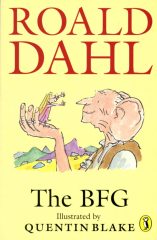 Who hasn’t enjoyed the wonderfully vivid creativity of Raold Dahl? Indeed, he’s been acclaimed as one of the greatest storytellers for children of the 20th century. More than 250 million copies of his 49 published books have sold worldwide, and some were turned into much-loved films. But he was a provocative author writing in the latter half of the last century, before the political correctness we know today took off; he’s been dead for 33 years.
So, how come that, having raked in a fortune from one of their most famous clients, his publisher, Puffin, working with the Raold Dahl Story Company, have now decided they must radically alter the very feel of his books in subsequent editions lest they upset those with issues – body image, mental health, racial etc – or any other political niceties relating to inclusivity or accessibility? 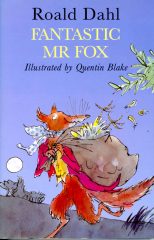 They’ve drafted in a team of sensitivity readers to comb through the books for anything which might possibly cause offence, and in so doing have watered down the sheer effectiveness of Dahl’s prose, turning the vibrant language into the banal. I’m offended on behalf of the great writer himself. Imagine that great mind slogging away for huge tracts of time and exhausting his mental energy choosing exactly the right word, precisely the degree of nastiness, conjuring up shiveringly mesmerising and memorable characters, in order best to captivate his young readers, only to have those with a tiny fraction of his imagination and linguistic skill, mangle his text into mediocrity!
 OK, OK, it has been necessary in the past to adapt his writing where it’s been genuinely offensive – anti-Semitic, misogynistic, outright racist – I accept that. And indeed, he himself changed some of his more debatable descriptors. By all means add riders and disclaimers and facilitate and promote healthy discussion on the debatable language, but this latest drive is change on a different scale. It is distorting the whole feel of his dark humour and spikily irreverent writing, the rebellion and mischievousness that are part of his particular style.
It’s about dumbing down colourful and amusing descriptors and grotesque features supposedly to conform to the modern sensibilities of a select band of woke-obsessives. Hundreds of changes have been made. Hundreds! A few examples  must suffice:
‘fat’ becomes ‘enormous’
‘no higher than my knee’ becomes ‘small’
‘fearful ugliness’ becomes ‘ugliness’
‘white with fear’ becomes ‘quite pale’
‘a chambermaid’ become ‘a cleaner’
‘a supermarket cashier’ becomes ‘a top scientist’
an earthworm can no longer have ‘lovely pink skin’
neither animals nor machines can be described as ‘black’
tortoises can no longer come from ‘North Africa’
male characters have had a gender transplant
Rudyard Kipling has been superceded by Jane Austen …
… you’ll have got the point by now. It’s insulting. It’s a massacre.
 Where will it all end? What value is there in a uniquely creative mind or fabulously inventive vocabulary? Watch out David Walliams … JK Rowling … Beatrix Potter … Shakespeare … all creators everywhere of mean-minded characters and sinister plots and devious motives.
I’d personally rather question the moral ugliness of those so obsessed with money-grabbing that they will countenance deliberately diluting the very power of this man’s genius, and yet somehow continue to fill their own coffers at the same time as bringing his name into disrepute.
Rant over.
What’s in a name?
You know that point when you think … life can’t get any weirder ….? And it does. Well, I had such a moment this week.

You might have noticed that my beautiful homeland, Cornwall, has been high profile for months – TV programmes, news items, holiday recommendations … now it’s in the spotlight again, this time for re-naming its fish to make them sound more appealing on restaurant menus. Spider crabs become king crab; megrim become Cornish sole. Pilchards have already become Cornish sardine. Made me think about names and what they conjure up. And about competing rights and interests.

But that’s when the ultimate craziness hit me. And it relates to another of my old stamping turfs: the maternity hospital. Midwives in one University Hospitals NHS Trust (Brighton and Sussex) are now being told to stop using terms like ‘breastfeeding’ and ‘breast milk’, and even ‘mothers’ without a qualifying add-on …! Like I say … Hello? OK, I accept that there’s an above average percentage of LGBTQ folk in that area of England, with sensitivities, but still … Has the world gone mad? In a hospital where women are naturally and normally having babies and feeding them from their breasts?
Why, you might well ask. Well, apparently such gender-exclusive terms might cause offence and upset non-binary people.
So, out goes ‘mothers’; in comes ‘mothers or birthing parents’
Out goes ‘breastfeeding’; in comes ‘chestfeeding’
Out goes ‘maternity services department’; in comes ‘perinatal services’
Out goes ‘breastmilk’; in comes ‘human milk’ or ‘chestmilk’ or ‘milk from the feeding mother or parent’
Out goes ‘woman’; in comes ‘woman or person’
Out goes ‘father’; in comes ‘co-parent’ or ‘second biological parent’
Out goes ‘maternal’; in comes ‘maternal and parental’
To begin with, are the folk behind this drive unaware of the facts?
– that men have breastbones
– that men can get breast cancer
– that it’s a biological fact that only women can give birth to babies
– that, in the excitement and responsibility of assisting the delivery of a baby, it’s hard enough to always use acceptable words, without this additional layer of prohibition and verbal diligence
– that in seeking not to offend an Infinitesimally small percentage of the population who object to exclusively female words, they are probably losing the goodwill of the vast majority
– that this attempt to be politically correct and woke, is most likely to put hackles up against the very people it purports to speak for.
I have no wish to attract the venom JK Rowling endured when she challenged a decision to use the expression ‘people who menstruate’ instead of ‘women’, so I will merely leave the matter in your capable hands. As for me, I’m still in recovery stage, and in danger of being left behind with the old dogs beyond learning new tricks.
Miss Peregrine’s Home for Peculiar Children
 Miss Peregrine’s Home for Peculiar Children. Hmm. This is most definitely not a book I would have loved in my youth. But then, I was an unsophisticated country girl, born during WW2, with an over-active imagination that got me into a whole lot of trouble, and back then I knew nothing of the Holocaust which forms the foundation of the tale.
The book hovers somewhere between YA and adult fiction, fantasy and fiction, shape-shifting ghosts and boy-swallowing bogs, past and present, coerlfolc and syndrigasts, time travel and murder, which might just explain the mixed reviews. Difficult to pigeon-hole. Shades of JK Rowling meets Stephen King meets Philip Pullman.
But it was the story’s origins that fascinated me most. The author, Ransom Riggs, started collecting vintage snapshots from flea markets, and antique shops, and fellow-collectors, as a casual hobby, but became increasingly mesmerised by the ones of strange-looking children. There was no way of knowing the true stories behind these pictures, so he made up his own, and it’s a selection (50) of these actual photographs that illustrate the book and give it an air of authenticity and intrigue. Having attended film school prior to writing Miss Peregrine, Riggs was already inclined to think in pictures, and a certain cinematic quality pervades the book. (It was actually made into a film in 2016.)

The teenage narrator, Jacob, only son of extremely wealthy parents, (the kind that gets a car for his 16th birthday), from a very privileged background, is destined to move into the family drugs business – a ‘corporate cage’. He has grown up listening to his grandfather’s fantastical tales of a colourful past, and magical powers, and monsters and oddities. Indeed, Grandpa Portman keeps a collection of old photos in an ancient cigar box to illustrate his accounts, and these add to Jacob’s pervasive sense of hovering between two worlds. As a child, he’s unaware that these stories have foundation in the dark experiences of persecution of the Polish Jews in WW2 during the 1940s, and escape to a remote island. Or that Grandpa Portman faced double genocide – for being a Jew, and a peculiar, and has carried the weight of those experiences for the rest of his life, burdened by the compulsion to do his bit to fight against both the Nazi and ‘the monsters’.
As dementia sets in, these stories become completely and oppressively real to the old man, even as Jacob’s credulity wanes. But when he’s at the point of death at the hands of an unseen attacker, Grandpa Portman speaks clearly and lucidly, extracting a promise from Jacob that he’ll ‘go to the island’ where he’ll be safe. He’s to ‘Find the bird. In the loop. On the other side of the old man’s grave. September third,1940.’
Appalled to be witness to his grandfather’s violent and inexplicable death, Jacob gives his word he will do so. But immediately ‘the strangest feeling came over me. I let go of my grandfather’s body and stood up, every nerve tingling with an instinct I didn’t know I had. There was something in the woods, all right – I could feel it.’ Something from his childhood nightmares, that ‘stared back with eyes that swam in dark liquid, furrowed trenches of carbon-black flesh loose on its hunched frame, its mouth hinged open grotesquely so that a mass of long eel-like tongues could wriggle out.’ It’s an image that tips Jacob over the edge into a paranoid delusional state/acute stress reaction, wracked with guilt that he hadn’t believed his grandfather’s fears.
Recovering from his mental breakdown he’s given an old book with an inscription from his grandfather to Jacob, and inside a photo and letter than confirm he needs to go to the Welsh Island Grandpa talked about to seek the children’s home to which he allegedly escaped. His psychologist recommends Jacob does go, on the basis that a visit could serve to demystify the place that’s been so mythologised by his grandfather. To combat fantasy with reality.
But once there, Jacob unravels a picture of a different dimension. He does Miss Peregrine’s Home for Peculiar Children, but it’s been wrecked by a single bomb, and is now a crumbled ruin, overgrown and disused. Much more than that, he enters a world that defies logic and confirms so much of what Grandpa Portman told him. ‘This was the enchanted island; these were the magical children’ he’d heard about and seen in the photographs. Far from being a ‘paranoiac gun nut or a secret philanderer’ as he’d suspected, his grandfather had straddled two worlds; he was some kind of hero fighting a war few could or would understand, a wandering knight risking his life for others.
Now I’ve read it, my sense is that it’s those amazing vintage photographs that give this book it’s strongest appeal. These were real children. Riggs has given them a pedigree. At some level we have to believe in their reality, but at what point precisely do we stop believing their peculiarity?
Oh, and I love the decoration at the foot of every page. Seems to captures the love and care that went into its production.

Image and appearances
 It’s 4 years now since I published Inside of Me, but body image and transgender issues keep popping up above the parapet, and hauling me back into that world of tortured self-doubt and secret longing.
– In the last few weeks we’ve had the BMA saying that people should be able to gain legal recognition of their changed gender without the input of a registered doctor, and indeed with no more than a witnessed sworn statement. As things stand, you need a diagnosis of gender dysphoria, and a report from a registered doctor detailing treatment received, and proof that you’ve lived for at least two years in your chosen gender, and intend living in for the rest of your life.
– But subsequently the government announced that plans to allow transgender people to self-identify as the opposite sex have been shelved; they feel that the current system means that ‘proper checks’ are in place. However the current fee of £140 is to be reduced to £5.
– Then, the transgender community, already incensed by JK Rowling‘s comments about what a woman is, have trained their sights on her yet again, because her latest Robert Galbraith novel, Troubled Blood, features a serial killer who dresses in women’s clothing.
– And then there’s the mother of a dead transgender 18 year old, campaigning to honour her daughter’s dearest wish: to have children. The youngster changed gender from boy to girl in the teen years, but had sperm frozen at 14. The mother is planning to launch a landmark legal case to preserve the sperm (now due to be destroyed) to enable her to have a grandchild via a donor egg and a surrogate mother.
Just a few of the news items. But of course, each one brought the complicated ethical issues very much back into my mind, and that in turn, led me to a book near the top of my tbr pile – For Today I am a Boy by Kim Fu.

One day I’ll grow up, I’ll be a beautiful woman.
One day I’ll grow up, I’ll be a beautiful girl.
But for today, I am a child. For today, I am a boy
This truncated quote beautifully sums up the essence of this brave novel.
Peter’s father only ever wants a son: ‘In a family, the man is king. Without you, I die – no king.’ But two daughters come first, before Peter, followed by another girl. With only one chance, Mr Huang is determined to make a real man of this longed-for boy, forcing Peter into male ways from an early age. He teaches him how to shave when he’s 6 years old, tears anything female out of his schoolbooks, approves and rewards brutish male behaviour, makes sure his son doesn’t do ‘women’s work‘ like the dishes. Peter is acutely aware that his sisters get much more lenient treatment.
But Mr Huang is steeped in Chinese traditions about ancestors and what is right. Appearances matter. He has high expectations of his only son, even whilst being unfaithful to his own wife. Peter describes his father’s mistress, the neighbour Mrs Becker, beautifully. She was …
‘Pale and thin and seemed to quiver at the edges, like she was made of water. She had limp red hair. Her freckles were a handful of sand tossed in her face … light shone through her skin to the blue veins along her forehead … her smile looked unstable.The structure of her face couldn’t sustain the weight’ … and when she betrays Peter – ‘a jittery nobody, the human equivalent of onionskin paper.’
Mr Huang is appalled at a deep level by Peter’s ‘differentness‘, his ‘weaknesses‘. his proclivities. He must at all cost keep them secret, not shame the family, not let down his ancestors. And even when facing his own imminent demise, he reminds Peter he’ll still be watching him ‘from the other side.’
With this threat haunting him, even excursions into the female world carried out behind closed doors are fraught with fear and guilt for the conflicted Peter. When he puts on a wig, pouts his lips, looks in a mirror, ‘I felt my father staring through my eyes, the grotesque image in the mirror, the halfsie freak. The grandfather I hadn’t known, the great-grandfather, all watching as my father strove not to shame them, every day until he died. All of them watching me now.’
 In this fragile tale, shot through with melancholy, Kim Fu powerfully captures the young child’s only-partially-understood longing to be other than he was. The ‘nightmare years‘ of adolescence. The ongoing desperate struggle to live up to the expectations of others – gang members, pals, work mates, family. The terrible loneliness of not being understood. The pervasive malevolent forces that would crush people like Peter Huang, learning slowly and painfully the real meaning of being a woman. The terrifying consequences if he names his inner conviction.
He becomes increasingly aware of consequences outside his battles with his own body, too; the larger fight against hatred and prejudice. ‘It’s not just about me and my body. There were marches, vigils, hate crimes, unjust laws, a world that needs education. There were other people like me … there were forces that had crushed us.‘
I was struck by the essential loneliness or unresolved doubt. Do any of us really understand what goes on in the lives and minds of others? Books like For Today I Am a Boy help us to sidled a little closer, understand a little better.
Let’s celebrate! Books, books and more books
 Yep, it’s Christian Aid Book Sale time again in Edinburgh. I was there at St George’s and St Andrew’s in George Street at opening time on Day 2 this year surrounded by over 100,000 secondhand books of every genre, fact and fiction, filling the sanctuary and both courtyards. Imagine! The sun was beating down on us, the mood everywhere was upbeat and busy … I was like a pig in muck! And I picked up no less than fifteen paperbacks! … what? … yes, of course I paid for them! It’s a cause very dear to my heart.

I missed getting the whole set of Peter May‘s The Lewis Trilogy by a whisker – and I even refrained from challenging or cheating the lady who found them two seconds ahead of me but put them down while she continued searching. My honesty and magnanimity was rewarded however, by my finding two other copies in boxes under the tables, and I immediately ordered the third one when I got home – a treat in store.
And another first … there was one of my own used novels nestling amidst all the Maggie O’Farrells and Alexander McCall Smiths and Ian Rankins and JK Rowlings. It felt very grown up!
But as every year, the biggest thrill is seeing so many people browsing and buying and discussing books. So confirming. The written word, the hold-in-your-hand real copy, is very much alive and well.
Shape-shifters
What do you feel about an author who adopts a completely different genre from the one you’re familiar with?  Like, say, JK Rowling changing from wizardry for children (Harry Potter) to adult fiction (The Casual Vacancy) and then to the Cormoran Strike crime stories (The Cuckoo’s Calling)? (I vividly remember my own reaction when I read The Casual Vacancy … did this indeed come from the same pen, the same imagination?) Or Kazuo Ishiguro (winner of this year’s Nobel Prize) who displays a remarkable ability to create a completely different book each time, and for each to read as if written by a different person – Remains of the Day (gently historical and romantic);
  Never Let me Go (science fiction); When we were Orphans (detective novel). Does it bother you?
There’s a reason for my question. My latest manuscript has been deemed much more like a regular commercial novel than my previous ones. It deals with a specific medical ethical dilemma as they all do, but the structure is that of a mainstream psychological thriller. Will that be an issue for those people who associate me with my former style?
 Of course, I’ve already made a giant leap from non-fiction* to novels, years ago. And I know there are plenty of readers who would only go for one or the other, not both. However, I believe my professional credentials to some extent give me some credibility in my latest incarnation. Added to that there is no set McHaffie-style: each of my novels has been written in a way to reflect the subject matter – romance, family saga, diary, etc – so perhaps there is no issue to worry about.
But it’s certainly been a totally different experience writing this current novel, from my point of view. Much more of a challenge. (I do like a good challenge!) I spent far longer preparing the ground for this one, before I ever started writing the story; researching the key elements of a thriller, mapping out the sections, balancing the surprises, to create tension and all the other things that keep a reader turning the pages. And I’m not done yet. Feedback from my first-round critics suggests I need to work on creating still more conflict and toughening up some of my characters. Apparently I do too much ‘niceness’!! Snag is, when everything is carefully calibrated and distributed first time round, as soon as you start altering things that equilibrium is disturbed. Arggggghhhh ….
I may be gone some time! – to half-quote a very famous last word.
*It’s Baby Loss Awareness Week which has reminded me forcefully of the years I spent studying the impact of loss on families in my academic life.

Mixed reviews
I’ve been giving myself a stern talking to this week. After a concerted burst of frenzied writing, I’d just sent out novel number 10, Listen, to my first raft of critics … I should have been feeling elated, yes? Well, I was … for about two days. But then the lowering thoughts started, the doubt, the gloomy prediction. My earlier books have had such generous reviews; what if nobody likes this latest one? Is there anything of value in it? What if I’ve gone past my sell-by date? What if I’ve lost my own powers of discernment?
And believe me, in the solitary world of a writer, it’s all too easy to sink into a trough of self-doubt. I’m my own sternest critic, always seeking to do better, never satisfied. But then, quite unsolicited, several unconnected people spontaneously commented on one or more of my books. Positively. You will never know what a welcome lifeline you threw me, folks. Thank you hugely.
 My sane dispassionate self tells me that, of course, no author anywhere is going to please all the people all the time. Not even the best of the best, and I’m a million miles away from that pinnacle.
I’ve just finished ploughing through Mark Haddon’s The Red House. I really really really disliked it – the thin plot, the linguistic pretension, the whole thing – and had to force myself to complete it. Whereas I loved his The Curious Incident of the Dog in the Night-time.
Same with Sarah Waters, Lionel Schriver, JKRowling, to name but three famous authors. Fingersmith, We Need to Talk about Kevin,  are among my top 50; I’m in awe of Rowling’s success with the Harry Potter books. But some of their subsequent writings left me unmoved.
So, I’m working at convincing myself that the world as we know it will not disintegrate if one or more of my critics doesn’t like this latest work. It might not be time to bin all ideas and drafts. To give up. It might simply be a question of taste; this particular book doesn’t appeal to this particular reader. Get over it!
It’s a very good thing that former apprentice painter and decorator from Coatbridge in Scotland, Brian Conaghan, didn’t give up, even after 217 rejections by publishers and agents. He persevered, he believed in himself, and he’s just won the Costa Children’s Book Award! I might re-read this paragraph every night before going to bed by way of therapy!