Orthodox Jews
Cross Bones
 Who isn’t watching with trepidation the unfolding picture in the Middle East right now?
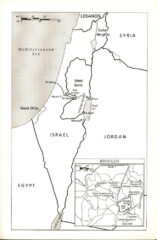
So, when I opened Cross Bones and saw a map of that famous outline of Egypt, Israel, Jordan and Syria; an inset map of Jerusalem; swiftly followed by three quotes from Holy Writ: the Jewish Holy Scriptures, the Christian New Testament, and the Koran, I knew this was the book for me right now.
 Let me hasten to clarify, though, this novel is nothing to do with the current conflict, and indeed was published back in 2005. But still …
Depart from evil, and do good. Seek peace, and pursue it, (Psalm 34:14)
feels like a quote for any age.
Dr Temperance Brennan is one of Kathy Reich‘s trademark characters: a forensic anthropologist for North Carolina and Quebec, based in Montreal, specialising in murder, suicide, accidental and sudden and unexpected deaths.
My job is to restore the identity death has erased.
Based on the author’s own experience in this role – yes, she knows what she’s talking about, and it shows!
At the outset, the body of Avram Ferris, a 56-year-old Orthodox Jew, is discovered in a storage cupboard in his business premises. The on-scene assessment: death by self-inflicted gunshot. But his family is adamant he would never have taken his own life. His body is in an advanced state of decomposition from being in a very hot cupboard and being partially eaten by hungry cats locked in with him, limiting what can be deduced from the scene, and leaving a multitude of questions to be asked. But there’s one major obstacle – a solid phalanx of four of his fellow religious compatriots with strict kosher rules to observe in relation to this body.
The age old struggle between dogma and pragmatics.
But this case is way more complex and politically volatile than at first appears. A mysterious photo slipped to Tempe by an unknown man, a stolen skeleton, a first century cave containing 24-26 skeletons, an ancient shroud, a first century family tomb, missing reports, trashed rooms, more deaths – all indicate deeper issues and sinister intent. Islamic extremism, ultra-Orthodox Jewish taboos, ethical dilemmas, religious fanaticism, confound the picture – could this really be a holy relic with the potential to upend the most basic tenets of Christian faith? We are taken to so many idiosyncratic phenomena, down so many potentially unrelated blind alleys, I for one was grateful for periodic summaries of the state of play.
It’s the stolen skeleton, affectionately named Max, that screams out to Tempe. Three friends are involved in its survival – one of whom is the dead man from the cupboard, who transported it and hid it after his friend, Lerner, stole it from the Musee de L’Homme in Paris. The third man is a devout priest, Morissonneau, who lied about the bones, went against his priestly conscience, and kept them hidden in his Abbey, all to prevent a potential scandal destroying the church. Now he too is dead – soon after Tempe visits him.
Religious fervour breeds obsessive actions.
And those very bones – sacred or not – now lie on her bench. Scientific analysis pinpoints a middle-aged white male of average stature. With someone else’s molar tooth glued into his mouth. Carbon dating reveals the bones date back 2,000 years – the hairs on her neck stand up. This case is deemed potentially ‘explosive’. Mitochondrial DNA … well, is he related to ‘Mary’ in the family tomb?
… international incidents can arise from the most harmless of circumstances.
It’s in the Holy Land itself, that melancholy and conflicted piece of our planet about which she’d read so much, that Tempe and her detective lover, Ryan, find the answers. The mega-theories crumble one by one. Those ‘old reliables’, mundane greed and revenge, are found to be behind all these sinister happenings.
The forensic detail in, and research behind, this tale are mind-blowing. Not many readers will be at ease with words like onomastics, prosopography, paleoepigrapher, polymorphisms, amelogenin markers, etc. Nor will most be up to speed with the generations of conflict in the Middle East. Throw in a smattering of French, Hebrew, Greek … well, you get the picture. But for me these details, and the esoteric language, serve to authenticate and give authority, making the subversive elements of the tale at least plausible to an open mind. A much more erudite challenge than Dan Brown’s The da Vinci Code.