seventeenth century
Masque of the Gonzagas
The scenery is sumptuous – baroque splendour, lavish musical events, glittering jewels, fabulous artistic masterpieces, gilded barges. Decadence writ large. It’s the beginning of the seventeenth century (think the era of Charles 1) and Northern Italy is in a state of religious and political unrest.

At 29, Vincenzo Gonzaga, 4th Duke of Mantua, is rich, feared and beloved enough to pursue his own pleasures unfettered, gathering around him the finest painters, musicians, singers, women anywhere, in his relentless search for perfection. Even his wife tolerates his endless infidelities, his mistresses, his illegitimate children. And when he proves incompetent in the political and military arena, he becomes yet more obsessive in his quest for supremacy in music and art.
Much of the story is seen through the eyes of his intimate and principal courtier, Ottavio, known as ‘the crooked one’ because of his spinal deformity, fiercely loyal to his master, protective, and a shrewd observer. ‘The Duke’s love is more dangerous than his hatred, for it makes a prisoner of you.‘ And indeed even girls he has violated sing his praises and adore him.
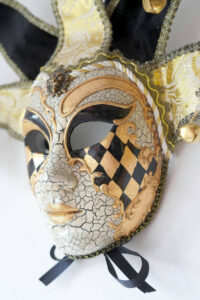 The setting is the Mantuan court, a pernicious place to be.
Whisper, gossip, all these mediocrities in their court dresses trying to justify their existence by bringing others down.
And splendid and opulent though life inside might be, outside the palace walls it’s a time of great brutality and inequality, the air tainted by disease and death. The Duke’s whims and demands become increasingly unreasonable and excessive, an incomprehensible mix of profligacy and meanness. He will smother visiting musicians with riches and jewels whilst keeping his own world-famous composer and Maestro in poverty, almost killing him with overwork.
But his supremacy is short-lived. Physically he fades from the golden being of his youth to a paunchy, balding pathetic figure. He gambles away a fortune; his amorous advances become more predatory and grotesque and unwelcome.
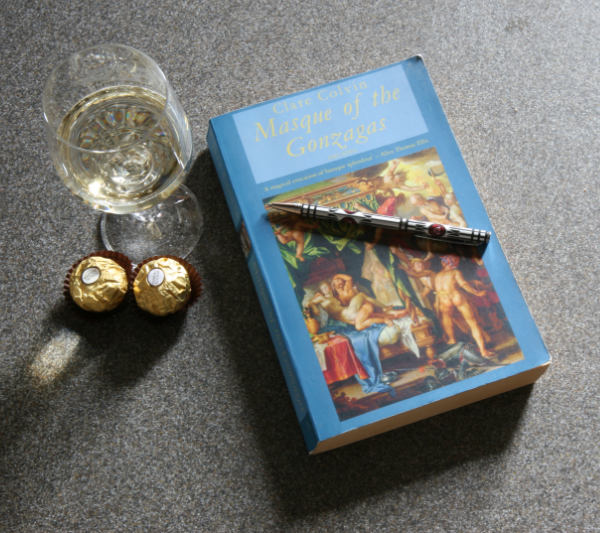
This ambitious sprawling novel, Masque of the Gonzagas, is full of references to historical events and famous names in Rennaisance art and music, the product of extensive and meticulous research.
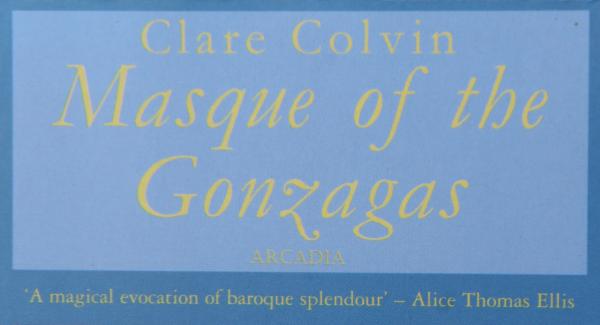 The essential ingredients for page-turning are there too – murder, rape, revenge, secret marriages, witchcraft – but somehow … hmmm, somehow the plot feels fragmented … it fails to engage … the story lines peter out, especially after the death of the 4th Duke. I wanted to love it, but for me its strength lies in the author, Clare Colvin‘s excellent command of English and evocation of Northern Italy and a lavish bygone age. A less expansive time frame and concentration on fewer key players would have suited me better, I think.
NB. A masque is a form of festive courtly entertainment that flourished in 16th and early 17th century Europe