slavery
Beloved
Beloved by Toni Morrison was published way back in 1987, and won the Pulitzer Prize the following year, but to my shame, I must confess, I’ve only just got around to reading it.
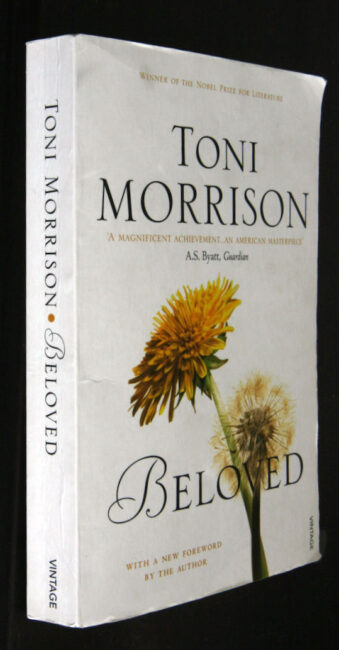
Nowadays it would be regarded as very un-pc, but it movingly captures a bygone era in the 1800s when slavery was rampant in America, and a vast gulf separated white from black. But the fact that it’s written from the perspective of the slaves themselves, with their African-American folklore and magical beliefs, dialect, and colloquial names, seems to render the ‘unacceptable’ language somewhat less offensive. It’s of its time and place and culture.
Morrison rather likes lists that sum up characteristics, and her description of life in 1875 captures something of the horrors:
Whole towns wiped clean of Negroes; eighty-seven lynchings in one year alone in Kentucky; four colored schools burned to the ground; grown men whipped like children; children whipped ike adults; black women raped by the crew; property taken, necks broken. He smelled skin, skin and hot blood. The skin was one thing, but human blood cooked in a lynch fire was a whole other thing. The stench stank.
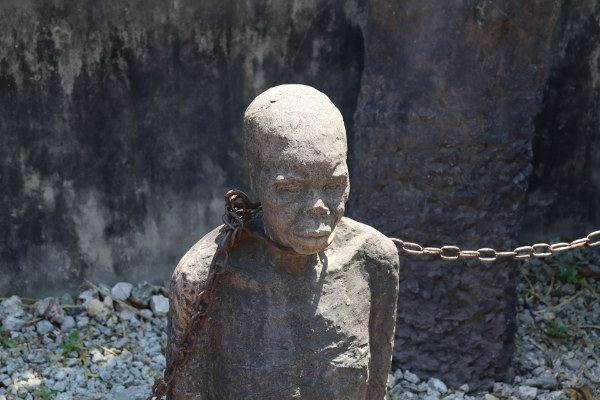
The enduring trauma and impact on the human psyche and memory of these inhumane experiences forms the foundation stones for the story. The depravity and brutality to which they were subjected stemmed from the concept of their being a sub-human species. For a black person to be killed, or maimed or caught or burned or jailed or whipped or evicted or stomped or raped or cheated – none of these violations would qualify as news in a newspaper. They were completely unremarkable. Because … whatever the manners, under every dark skin was a jungle.
124 Bluestone Road, Cincinnati, Ohio, is also central to the story; home to ex-slave Sethe, her mother-in-law Grandma Baby Suggs, and daughter Denver. Sethe herself is scarred mentally and physically by the experiences she’s suffered, and one day, when her previous master and three other men approach the house, she gathers up her three children, takes them to a shed, and using a handsaw, cuts the baby’s throat, in full view of her two young sons. Anything to save her from a fate worse than death. The furious ghost of the dead baby (who was not yet 2 years old) haunts the house thereafter. It becomes a ‘spiteful’ house.
The entire family are seriously affected by this tragedy, burdened by the memories and consequences, ostracised by the neighbours. So when a mysterious young woman, calling herself Beloved (the word carved on the baby’s headstone) appears one day, and establishes herself in the house with Sethe and Denver, we can’t be sure if she’s real or a metaphorical construct.
Whichever is the case, when Beloved re-enters the scene, emotions are turbulent and the family dynamics irretrievably affected. Denver is initially thrilled to have the companionship of a sister; but Beloved is obsessively attached to Sethe. An old friend Paul D who has moved in with the women becomes inextricably caught up in the repercussions.
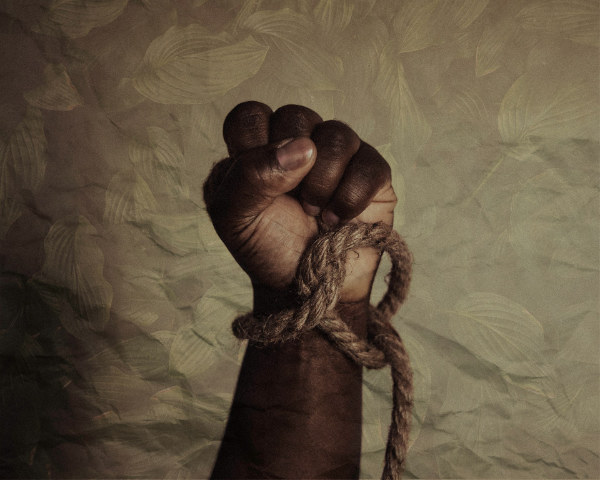
There are so many dimensions which potentially trouble the mind and conscience of the reader. One of the most poignant for me is the relationship of slave mothers with their children, some of whom were the result of repeated sexual abuse, many of whom died or were sold, never knowing who their fathers were.
She barely glanced (at the last of her children) when he was born because it wasn’t worth the trouble to try to learn features you would never see change into adulthood anyway. Seven times she had done that: held a little foot; examined the fat fingertips with her own – fingers she never saw become the male or female hands a mother would recognise anywhere. She didn’t know to this day what their permanent teeth looked like; or how they held their heads when they walked.
For a used-to-be-slave woman to love anything that much was dangerous, especially if it was her children she had settled on to love. The best thing … was to love just a little bit; everything, just a little bit, so when they broke its back, or shoved it in a croaker sack, well, maybe you’d have a little love left over for the next one.
It’s a difficult read.
Intellectually: the reader needs to work at understanding just what’s being conveyed, what’s happening in real life, what’s going on in the mind of these traumatised people.
Emotionally: listening to the voices of slaves grappling with the aftermath of barbaric treatment, and even after emancipation, struggling to adjust to a level of autonomy for which they are ill-prepared.
Morally: recognising that there are some dilemmas which can never be resolved or made sense of. There but for the grace of God …
… to get to a place where you could love anything you chose – not to need permission for desire – well now, that was freedom. 