classical literature
The perfect thriller …?
 Regular visitors will know I wrote a thriller myself pre-pandemic, and both before and since I’ve been fascinated by the structure of books in that genre. Maybe that makes me super-critical; I’m not sure. Maybe simply being a writer makes one extra-analytical.
But when I saw one labelled ‘the perfect thriller’ with yards of superlatives attached, it did at least warrant a second look. And that led to a purchase.
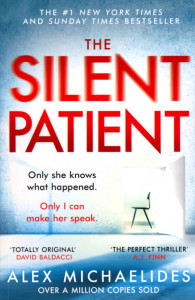 The Silent Patient by British-Cypriot author, Alex Michaelides, is the book in question.
Looking deeper I can vouch for the fact that it has certainly attracted accolades from famous names:
… totally original, spellbinding psychological mystery
… masterfully plotted and brilliantly paced
… the definition of a page turner
… a real sucker punch of a twist
… an absolute jaw-dropper of an ending.
And it has won many prestigious awards. OK, I’m intrigued …
Alicia Berenson is 33 years old and her life is seemingly perfect: a famous painter married for seven years to an in-demand fashion photographer, living in a beautiful house in London. One evening her husband, Gabriel, 44, returns home late from a fashion shoot, and Alicia shoots him five times pointblank in the face, using his own rifle. After which she never speaks another word.
Because of her new, more macabre notoriety, the price of her art skyrockets, but she herself is hidden away from the tabloids and the public, in a secure forensic psychiatric unit in North London, known as The Grove. She has been there now for six years.
Theo Faber, 42, and a forensic psychotherapist with plenty of emotional baggage of his own, is fascinated by her story to the point of obsession. He waits a long time for the opportunity to work with Alicia, but eventually gets a post in The Grove, and becomes her psychotherapist. He wants to understand what drove her; something in her past must explain that moment of murderous rage. Was it her mother’s violent death in a car accident? Was it her father’s suicide? Was it her husband’s behaviour? Or what? It’s crucial that Theo understands what her life was like as a child, what happened to shape her, and he explores ancient classical Greek literature, works of art, literary allusion, seeking enlightenment. He begins to investigate her family, her colleagues, her friends. He is assaulted, attacked, the subject of official complaints … nevertheless he continues doggedly, unravelling a string of inconsistencies between the ‘official’ story and the facts he’s discovering.
The search is all-consuming, but alongside all this obsession with his patient’s history and fantasies, Theo is also dealing with the discovery that the wife he adores, Kathy, is being unfaithful to him. He is tortured by the awareness, but driven to continue seeking answers for his professional responsibility towards Alicia. Gradually, imperceptibly, the boundaries become blurred. We too are sucked into the dark spaces that allow horror to grow, where no one is what they appear to be, everyone seems to harbour sinister intent. Where disorder reigns. Where perceptions are distorted. Where lies cover truth.
When all Theo’s attempts at therapy draw a blank, he’s forced to abandon the mission. But then, out of the blue, Alicia hands him a lifeline. Her secret journal – her honest account this time. Now he has something concrete to work with. Now he has the respect of his colleagues who earlier doubted his methods.
The ending has been described as a sucker-punch. It is. Oh yes, indeed it is. And it’s only when you get there that you can truly appreciate the cleverness of the whole story. It’s a masterly twist indeed.