psychotherapy
The dark side of psychiatric illness
I have an ambivalent relationship with psychiatry which goes back sixty years. But that was probably what drew me to the book I’ve just finished reading.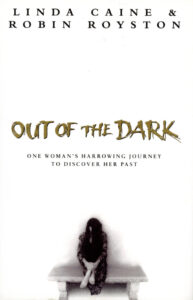
Out of the Dark is a moving account of one woman’s descent into depression and suicidal ideation and her struggle to return from that dark place with its sense of overwhelming hopelessness. The two narrators are Linda Caine and her psychiatrist/psychotherapist, Dr Robin Royston.
On the face of it Linda has everything: health, financial security, a beautiful home, a husband she loves who loves her, two healthy children, talents and hobbies, a strong faith, good social networks. But she becomes increasingly aware of a periodic detachment from reality and a desire to escape from the frightening place she is sinking into.
It’s as though my mind has slipped out of gear and is running in neutral.
Thanks to a church friend she’s saved from killing herself and taken into the mental health sector. Thereafter it takes years of patience and care to unravel the mysteries of her mind.
She grew up along with her three siblings in Rhodesia/Zimbabwe in Africa when apartheid was causing major unrest. Her mother, who was never very motherly, left them when Linda was eight, and had no further contact with them. In time her father married a black woman, who was not kind to Linda, and they became social outcasts. When Linda became pregnant her father threw her out, and she went on to marry a violent man.
When the book opens Linda is a woman in her thirties, happily married to a lawyer, Chris, whom she has known since primary school, and they have two children. But Linda is becoming increasingly disturbed by bad dreams, absences when she simply tunes out of life, and a growing conviction that death would be a welcome release. She clearly needs help.
 Sometimes I see myself lying beneath the water, staring up through the fingers of a hand, spread across my face, over my mouth and nose. At other times, I see a pair of eyes staring furiously at me; eyes that want me dead; eyes that look straight through me as though I don’t warrant the space I take up. In the back of my mind, I keep telling myself, if I’m not better next week I can always commit suicide.
Her psychotherapist, Dr Robin Royston likes Linda:
She isn’t manipulative, or self-seeking. She has no hidden agenda. She wears her pain apologetically, as though she doesn’t want anyon’e sympathy or help.
But he’s intensely concerned about her because, not only does she seem devoid of hope, but she’s not getting better. He knows that deep and powerful psychological factors are at work but has no idea what they are. Though Linda has no identifiable psychiatric disorder, he is certain that the answer to her problem lies within her. She’s struggling to cope with the everyday stresses of life, and unless this is ameliorated she will become suicidal again.
Linda is like her horse (which had colic and died) – deeply wounded, walking round and round in agony. She can see no reason for her pain and no treatment that can take it away. I have to keep her on her feet, to keep her moving forward. The answer lies within her. It invariably does.
It’s as though there’s something in her mind that wants to get out but each time we move closer she just falls apart.
 Then Linda suffers a major breakdown and needs to be admitted to the psychiatric hospital. The accounts of her experiences as she’s dragged further and further down into a black vortex of terror make disturbing reading. It takes endless patience and skill to help her explore and share the traumas from her past, some of which have been denied so comprehensively for so long. The cost to both patient and therapist is captured in the two perspectives running side by side. It is by no means a linear progression to recovery and Linda returns to the hospital a number of times, and again and again regresses in her behaviour to an alarming degree, damaging both herself and the fabric of the building around her. I lost count of the number oif times she smashed windows!
The secrets in her African childhood and adolescence are buried so deep that to reveal them may destroy her completely, but gradually a picture emerges which explains everything. From a very young age she had suffered appalling abuses and her only survival mechanism was to dissociate herself in order to survive. Now, as an adult, her mind ‘slides away’ when things trigger powerful negative feelings, she becomes absent and unaware of the present. Dr Royston knows that painful and frightening though it may be, and no matter how uncertain the consequences, Linda herself must be helped to face the repressed memories and learn to live with them if she’s to find the will to live. But each memory renders her extremely vulnerable, and there are no guarantees that the team will save her from herself or her suicidal feelings. They put their professional judgement on the line in some of the risks they take with her.
Psychotherapy doesn’t create perfect people with perfect lives. It just helps us to cope with what we have.
But gradually, gradually, they bring her to a place where she is honestly facing the horrors of her past, there are no more unaddressed issues, and Linda takes the last step in choosing to allow a faith healer to cleanse her life of the demons that have haunted her for so long. The family are restored and reunited, ready to up sticks and start a new life in sunny California.
We’ve probably all been aware of the negative press around repressed memory, and the damage caused by attributing present trauma to past abuse, but I felt I learned such a lot from this account, and have a deeper respect for the work of people like Dr Royston and his team.
Literary genius
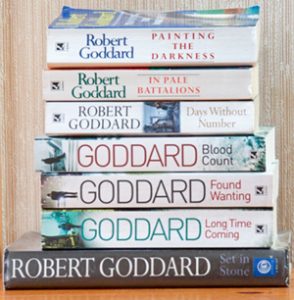 One of my most favourite novels is Past Caring by Robert Goddard, and since reading it I’ve collected a goodly number of his books on my shelves. They’re lengthy and intricate and absorbing though, so I only select them when I have the luxury of enough time to opt out of other commitments, or when I want a literary treat, or escape from reality.
The weather cancelled a couple of diary engagements recently so I seized the opportunity to indulge in a Goddard feast.
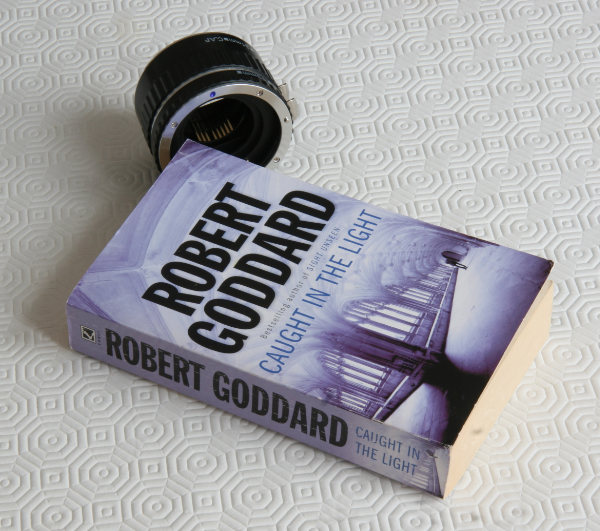 This time it was Caught in the Light … and I’m instantly captivated. He manages to convey an atmosphere of period brilliantly, moving effortlessly between the seventeenth century and the present. His plotting is spellbinding, layer upon layer of intrigue, and whether it’s a sinister menace, or a romantic interlude, or a psychological minefield, he grabs your attention and compels you to keep those 445 pages turning. A truly superb storyteller.
 Photographer Ian Jarrett is in Vienna for a few days on an assignment when he meets and falls in love with a stranger in a red coat standing against a snowy background: Marian Esguard. So utterly captivated is he that he returns to London, leaves his wife, tells his daughter, and goes to meet Marian. But she never appears. She seems to have completely vanished. What’s more the six films of photographs he took are blank. What is going on?
So fixated is he that he vows not to take another picture until he can photograph Marian again. So, not only has he lost his wife and home, and his lover, and his dreams, now he is without a job. His single-minded search for her takes him back into history, and into a dangerous world of unscrupulous men and dabblers in the darkness of a disordered mind.
I became a ghost, hunting a ghost, haunted by a past I couldn’t forget and a future I couldn’t give up.
 He is joined in his search by a Harley Street psychotherapist, Daphne Sanger, who is looking for the same woman, a client who spun her a very different story. Given the circumstances she agrees to breach her ethical code of conduct and share a vivid account of what this missing woman is enduring. Lies and deceit and betrayals abound. Everything swirls dangerously out of control. A man is strangled. Jarrett is caught up in this web of deception, trapped between the enigmas of the part and the greed and revenge of the present.
As the real truth unravels, and his existence is reduced to the narrowing circle of his search for his missing obsession, he becomes increasingly cagey.
There was secrecy bedded in my soul now, a furtiveness about my every word and thought.
And just when you begin to believe he’s about to realise his dream, the entire picture blows up in his face, and he has to acknowledge that he’s a mere puppet in an elaborate plot, his whole life being demolished around him. No one seems to be who they claim to be, yet he is the one who seems pathologically paranoid and deluded … except that he knows for sure he’s not, and he’s utterly determined to call the chief tormentor to account. And to save his sixteen-year-old daughter. But he’s at the mercy of a ruthless enemy who will stop at nothing to exact revenge. Murder, kidnap, suicide: it just keeps getting worse.
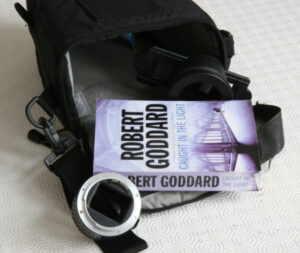 I’d love to reveal the amazing detail of what is really going on, but I absolutely can’t risk spoiling your enjoyment of this incredibly complex story. It’s a masterclass in writing. And whether its the origins of photography, or 17th century historical detail, or the medical facts around haemophilia, or the underpinnings of psychological derangement, the author writes with authority and assurance, never flaunting his research, but weaving fact and fiction together seamlessly with a sure hand.
As critics have already said, when it comes to duplicity and intrigue, Goddard is second to none. He’s a master of manipulation … hypnotic … unputdownable … spellbinding. Genius.
The perfect thriller …?
 Regular visitors will know I wrote a thriller myself pre-pandemic, and both before and since I’ve been fascinated by the structure of books in that genre. Maybe that makes me super-critical; I’m not sure. Maybe simply being a writer makes one extra-analytical.
But when I saw one labelled ‘the perfect thriller’ with yards of superlatives attached, it did at least warrant a second look. And that led to a purchase.
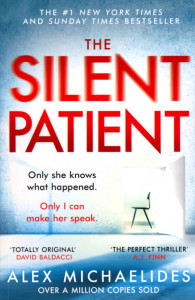 The Silent Patient by British-Cypriot author, Alex Michaelides, is the book in question.
Looking deeper I can vouch for the fact that it has certainly attracted accolades from famous names:
… totally original, spellbinding psychological mystery
… masterfully plotted and brilliantly paced
… the definition of a page turner
… a real sucker punch of a twist
… an absolute jaw-dropper of an ending.
And it has won many prestigious awards. OK, I’m intrigued …
Alicia Berenson is 33 years old and her life is seemingly perfect: a famous painter married for seven years to an in-demand fashion photographer, living in a beautiful house in London. One evening her husband, Gabriel, 44, returns home late from a fashion shoot, and Alicia shoots him five times pointblank in the face, using his own rifle. After which she never speaks another word.
Because of her new, more macabre notoriety, the price of her art skyrockets, but she herself is hidden away from the tabloids and the public, in a secure forensic psychiatric unit in North London, known as The Grove. She has been there now for six years.
Theo Faber, 42, and a forensic psychotherapist with plenty of emotional baggage of his own, is fascinated by her story to the point of obsession. He waits a long time for the opportunity to work with Alicia, but eventually gets a post in The Grove, and becomes her psychotherapist. He wants to understand what drove her; something in her past must explain that moment of murderous rage. Was it her mother’s violent death in a car accident? Was it her father’s suicide? Was it her husband’s behaviour? Or what? It’s crucial that Theo understands what her life was like as a child, what happened to shape her, and he explores ancient classical Greek literature, works of art, literary allusion, seeking enlightenment. He begins to investigate her family, her colleagues, her friends. He is assaulted, attacked, the subject of official complaints … nevertheless he continues doggedly, unravelling a string of inconsistencies between the ‘official’ story and the facts he’s discovering.
The search is all-consuming, but alongside all this obsession with his patient’s history and fantasies, Theo is also dealing with the discovery that the wife he adores, Kathy, is being unfaithful to him. He is tortured by the awareness, but driven to continue seeking answers for his professional responsibility towards Alicia. Gradually, imperceptibly, the boundaries become blurred. We too are sucked into the dark spaces that allow horror to grow, where no one is what they appear to be, everyone seems to harbour sinister intent. Where disorder reigns. Where perceptions are distorted. Where lies cover truth.
When all Theo’s attempts at therapy draw a blank, he’s forced to abandon the mission. But then, out of the blue, Alicia hands him a lifeline. Her secret journal – her honest account this time. Now he has something concrete to work with. Now he has the respect of his colleagues who earlier doubted his methods.
The ending has been described as a sucker-punch. It is. Oh yes, indeed it is. And it’s only when you get there that you can truly appreciate the cleverness of the whole story. It’s a masterly twist indeed.
Serendipidy
It’s odd how often, when you’ve got something on your mind, lots of things feed into it, isn’t it?
My own current novel centres around the loving but dysfunctional Grayson family. Dad, Victor, has vanished and his neatly folded clothes are found on a beach where he used to take his young daughter, India, to play. The police are confident he took his own life. Case closed. So how can it be that India is convinced she heard his voice on Kings Cross station seven years later? And if he is still alive, what possible reason can he have to remain away from the daughter he loved so devotedly?
I guess that makes me super-sensitive to stories where people vanish without trace at the moment. But it was only when I was trying to devour all my Diane Chamberlain novels before Christmas that this one came to my attention: The Silent Sister.
 Teenager Lisa MacPherson is a prodigiously gifted violinist whose talent is fostered by the best mentors money can buy. She has the world at her feet. So why did she suddenly disappear? Who was the mysterious teacher who wrecked her ability? What made her shoot her first teacher dead? Did she really choose to commit suicide in a frozen lake rather than go to prison? And if not, where is she now?
Her sister Riley, who was two at the time of Lisa’s disappearance, has grown up believing Lisa was so depressed she couldn’t go on; that’s what she was always told. It’s not till she’s grown up and sorting out the family house after her father’s death, that she stumbles on newspaper cuttings that tell a very different tale, and she begins to unravel a series of clues darker and more tortured than she ever bargained for. Her whole life seems to have been built upon lies.
The plot is well structured and certainly keeps the pages turning. Plenty of twists in the tale; plenty of intriguing characters; plenty of secrets and deceptions. And true to her background as a psychotherapist, Chamberlain delves into troubled minds and convoluted thinking with consummate ease. The needles flashed and the Christmas charity knitting grew apace as I flew through this book.
And now the season of concerts and school productions and dance shows is upon us. There’s something rather glorious about the spirit that drives teachers/church leaders to produce these events year after year in spite of the dire happenings in the world as well as on our doorstep – this time terrorist attacks in sundry places; floods of unheard of ferocity; Britain sending planes to bomb Syria, the Forth Road Bridge closed for weeks causing chaos on the roads in this area … the list goes on and on. And yet these innocent voices carol ‘Peace on Earth, Good will to all men.’ Bless them.
 I know some people will scoff, despairing of a God in all this chaos. It’s the age old conundrum: if he exists, why does he allow such suffering? Which brings me to another book I’ve just finished reading: Richard Holloway‘s Dancing on the Edge. It’s not looking at this question per se, but it is addressed to the doubting, the wounded, the excluded, the escapees who feel marginalised and disenchanted. I don’t always agree with Holloway’s thinking – goodness, the ex-bishop doesn’t always agree with himself! – but in this book he talks a lot of sense: compassion is a more important response to human behaviour than contempt. Faith should be a way of living with questions without being afraid. If only there was more compassion in the world and people could learn to tolerate difference, the world would be a safer, happier place. Keep singing, children!
Portable magic!
Famous American author, Stephen King, has described books as ‘a uniquely portable magic’ – and he wasn’t referring to the news this week that inmates are smuggling books into prison laced with hallucinogenic drugs! No, books have a unique potential and power to open up worlds and horizons and opportunities. They can transport us into another dimension altogether. They can influence our mental wellbeing, our opinions, our relationships, our empathy with others. British novelist and journalist, Matt Haig, goes further: he maintains that books saved his life, rescuing him from severe depression.
With that in mind, I look up at my own shelves and suddenly the feeling of you-should-tidy-these becomes enough-to-keep-me-sane-for-decades.
 Yes, OK, I know I should tidy and sort them, but somehow reading them always seems so much more attractive and urgent. And I am doing a kind of sort – transferring the to-be-read to the now-read sections.
As part of my mental tidy up I decided to return to a familiar author and complete her set of novels. They fall into the same kind of genre as Jodi Picoult: family relationships, moral quandaries, suspense, secrets – on the face of it a similar vein to my own kind of writing. And as you know I like to keep up with ‘the competition’.
Diane Chamberlain is the lady in question. With a background in social work and psychotherapy, she certainly understands how people tick and I like her light touch; she doesn’t labour the psychology or force information upon the reader. But what I didn’t know until now is that she goes a stage further than most writers: she sometimes puts herself into a light trance to get inside the heads and hearts of her characters … Wow! Risky stuff, but a unique take on living inside one’s characters! And perhaps it’s that awareness and sensitivity that come through in her novels.
Before the Storm tells the story of the Lockwood family struggling to deal with postnatal depression, tragic deaths, Fetal Alcohol Syndrome and betrayals. Because of the damage to his brain caused by his mother’s drinking, 15-year-old Andy’s take on the world is simple and black-and-white. Then one day he gets trapped in a serious fire in a building full of teenagers. Somehow he manages to use his initiative and guide other children to safety through a window in the men’s toilets, and to his naive delight he’s hailed as a hero. But it’s not all happy ever after. Several people die in the fire, some are terribly damaged, whole families are wrecked. What’s more, adulation turns to suspicion and hatred when Andy is suspected of setting the fire himself. The Lockwood family regroup, Andy’s sister, mother and uncle join forces to keep him out of prison, but rescue comes in the end from a most challenging source. Guilt and grief abound. Told through the voice of all four main protagonists it’s an interesting and thought-provoking read. Just how far would I go to protect my children? How well do I really know them?
 Secrets She Left Behind is a sequel to Before the Storm, but fear not, I won’t reveal any spoilers to the earlier novel. In Secrets Chamberlain cleverly unravels other dimensions in the lives of the characters at the heart of the story about the devastating fire. Central to the plot is Sara Weston, whose son Keith was terribly burned in the blaze, whose best friend Laurel has every reason to shun her, and whose poverty stands in sharp contrast to the wealth and privilege of the Lockwoods. Now Sara has mysteriously vanished leaving a raft of secrets behind her. There’s a huge over-weighting of deceit in this sequel, with a rather improbable number of people leading secret lives; relationships and dynamics distorted by the cycle of revelations; and individual members struggling to come to terms with the past and create new futures – all in the claustrophobic confines of a tiny island community. Boundaries between good and bad, perpetrator and victim, become blurred. And again the reader is left questioning: Just how far would I go to forgive those who ruined my life? How would I react to betrayal and rejection?
I must confess I was expecting a very different denouement in Secrets She Left Behind. That, however, would have been a different book. Nevertheless imagining the ending I would have given it gave my writing-brain a healthy work out.
 The Shadow Wife tells the story of Joelle D’Angelo aka Shanti Joy Angel. Divorced and childless, Joelle is grieving for her dearest friend, Mara, who has suffered a catastrophic brain haemorrhage after giving birth. Shocked to her core, Joelle turns to the only other person who understands her pain, Mara’s husband, Liam, for comfort. But gradually their relationship changes and after one illicit night, Joelle finds herself pregnant. Determined not to compound her mistake, Joelle decides she must leave her home and job as a social worker and begin a new life elsewhere, but before she goes she makes one last ditch effort to help Mara recover. She turns to Carlynn Kling, a lady with mysterious powers of healing who saved Joelle’s own life when she was a baby. The interweaving of two timelines in this book is cleverly handled and the unravelling of the past sits perfectly with the present. A good read and a tender tale of love and loss and loyalty. Could I live with the choices these characters faced? How would I react if my parent rejected me? Or if I fell in love with my best friend’s husband? Or if a tiny lie could transform my future immeasurably? I don’t know. But this book has challenged me to think about my own moral code and my boundaries.
There, that’s the Diane Chamberlain section complete and re-filed.
Occupational hazard
Heebie jeebie! Talk about illusions shattered …
After a five-month enforced ‘sabbatical’ I’ve been yearning for my old life. Odd, isn’t it, how once you have time for recreational pursuits they lose some of their appeal? Anyway, recently I decided to try to winkle my way back into the world of my next novel. After all, I want to be on the starting blocks ready for a quick get away once my heart is fixed; best to get into the zone at least, and start limbering up, I thought.
Top of my to-do pile is a book by leading authority in anorexia, psychotherapist Steven Levenkron. He has an excellent reputation in the USA so I’d been saving him for a special moment in the process. Now might be the right time. I’d be in safe hands. As Levenkron says himself, Anatomy of Anorexia aims to ‘demystify this life-ruining disease.’ Exactly what I need. It should help me inch myself back into the thinking of a young girl enmeshed in this dangerous practice, and home in on any errors in my understanding so far.
Off I went.

Well, this author is indeed a hands-on expert in the subject … tick. He writes well … tick. He holds the attention easily … tick. He intersperses authentic stories of anorexics with credible advice … tick. He explains in understandable language the origins, psychology, pathology, manifestations and management of the illness … tick. So well does he do so in fact that I found myself engrossed … overly identifying … and slowly drowning in all the horror of fractured relationships and distorted thinking and devious tactics and compulsions and young lives spiraling into destruction; even all the worries that burden the therapists. Seeing in stark relief all my own hang ups and obsessions. Yep, I was back in that tortured place I found myself reduced to after reading 30 novels on the subject.
Conclusion: this subject is bad for my personal health!
Time to get out and smell the crocuses!
