controlling behaviour
Mad Honey
I’m a longstanding fan of Jodi Picoult who writes about the big issues in society in an engaging and challenging way, but it’s a while now since I read one of her novels.  What’s more, this one, Mad Honey, is unusual in that it’s co-authored with Jennifer Finney Boylan, another established writer, who is new to me. Hmm, I wonder why.
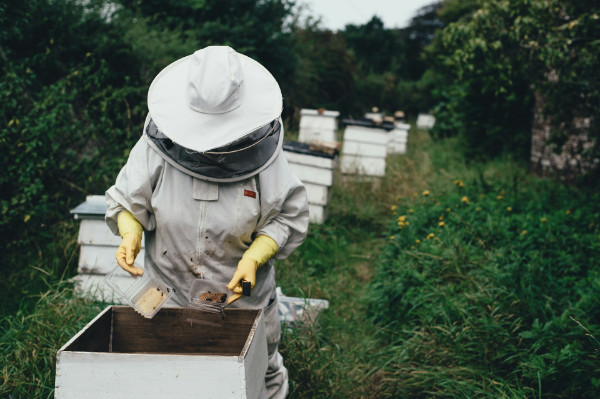
It weaves an intricate tale told through the eyes of two narrators. Olivia McAfee is a professional beekeeper who escaped from an abusive marriage with her six year old son, Asher. Now he’s six feet tall and in his last year of high school. He’s kind and handsome and sporty and very much in love.
Lily Campanello is his girlfriend who has also escaped from trouble. Her mother, Ava, a Forest Ranger, fled with her to the old family home, and Lily tells anyone who asks that her father is dead. Lily is an extremely accomplished cellist with an extraordinary ability to soak up information on a wide range of subjects and use it to good effect.
Asher and Lily’s relationship is a rather volatile one characterised by great sweetness and tenderness, but also bouts of not speaking. Both find it hard to trust after what has happened in their past. Both are hiding deep secrets and fears. Both need time out to consider their options.
Then one day Olivia gets a phonecall telling her that Lily is dead. Asher is found cradling her in his arms, stained liberally with her blood. He says he found her at the foot of the stairs unresponsive, and that he moved her to the living room. His fingerprints are found in her bedroom though he swears he didn’t go upstairs that night. There are signs of a struggle in that room. His last text reads, THIS ENDS NOW, I’M COMING OVER. He is subsequently arrested on a charge of murder.
As the case against him builds, Olivia realises that Asher has kept a lot from her, and she begins to fear that, though she had physically removed him from the influence of his father, maybe he has inherited something of his violent and controlling traits. Asher is appalled to see her doubt and excludes her still further. But he does allow her to bring in her brother, Jordan McAfee, as his defence lawyer. There follows a nail-biting court case where Asher appears to be his own worst enemy.
In traditional Picoult style, the authors give us a wealth of information about bee keeping and music and animal and human behaviour, but it’s not until P204 that we learn what social issue they are really addressing, and why this particular second writer was co-opted.
WARNING: THE FOLLOWING PARAGRAPHS CONTAIN SPOILERS. So if you intend to read the book please stop at this point.
It’s the forensic pathologist who drops the bombshell whilst giving his evidence in court: Lily had no uterus or ovaries. Why? Because she had transitioned from being a boy, Liam, and had been through the full treatment with puberty blockers and surgical procedures to give her outward female sexual anatomy and characteristics. Very successfully too. As the surgeon who carried out the operation put it: The plumbing works and so does the electricity.
In typical Picoult fashion the challenges and truths emerge by way of succinct thoughts and statements from the characters who are pondering the arguments. Here are a few illustrations that stopped me in my tracks.
Lily: I don’t think it’s an invisible chromosome, or the inability to get pregnant, or anything else, that makes people so cruel to transgender folks. I think what they hate is difference. What they hate is that the world is complicated in ways they can’t understand.
Olivia: In college zoology classes I learned there are plenty of animal species that change sex. It’s called sequential hermaphroditism. Clown fish are all born male, but the most dominant one becomes a female. Wrasses work in reverse, with a female able to transform her ovaries into testes in about a week’s time. The slipper limpet, when touched by other male limpets, can become female. Male bearded dragons can change sex while still in their eggs, if exposed to warmer temperatures. Spotted hyena females have what look like penises and have to retract them into their bodies for mating. Coral can go from male to female or vice versa. Common red frogs spontaneously change sex in the wild.
In other words it’s perfectly normal.
Olivia: I haven’t really thought about what it means to be trans … because I have had the luxury of not having to think about it.
Olivia: (of a person she knows who looks ands ounds like a man but identifies as female): She seems – I hate how this sounds – like a work in progress? Like a subcategory of woman? But even saying that makes me feel like I’m judging, when I don’t mean to.
Olivia: If you want to understand something, you first need to accept the fact of your own ignorance. And then, you need to talk to people who know more than you do, people who have not just thought about the facts, but lived them.
It’s a complex and difficult topic especially when it involves young children and irreversible changes. When I tackled the subject through fiction myself (in Inside of Me) I worked closely with people who had themselves changed sex, but there are still critics who say no one can or should embark on such an undertaking unless they have lived experience of transitioning. Jennifer Finney Boylan has. Here’s hoping this novel helps more people to understand.
The transformational power of education
 How many of us really appreciate the education we received? We mostly take it for granted, don’t we? – only stopping in our tracks when we hear children in less advantaged countries expressing their amazement or gratitude for opportunities (often limited) that come their way.
Educated is a searing account of one woman’s extraordinary childhood and the transformative power of education in her life. It’s a compelling and sobering read, beautifully written, and unflinching in its honesty.
Gene Westover doesn’t believe in the state, so his daughter Tara has no birth certificate, no schooling, no medical records. The government doesn’t follow up her absence from school because, according to the state of Idaho and the federal government, she does not exist. Instead she spends her early formative years preparing for the ‘Days of Abomination’, or roaming the mountain, or bottling fruit ready for the End of Days, or delivering herbs and babies with her untrained unlicensed midwife mother.
The extremities of her dysfunctional family emerge only gradually in Tara’s memoir, which somehow makes the revelations the more harrowing.
Tara Westover is the youngest of seven children. Her father is a religious zealot, a paranoid and fundamentalist Mormon, an eccentric, who believes drinking milk is forbidden in the Scriptures; that public school is a ploy by the Government to lead children away from God; college education the work of the devil.
There’s two kinds of them college professors. Those who know they’re lying, and those who think they’re telling the truth. Don’t know which is worse, come to think of it, a bona fide agent of the Illuminati, who at least knows he’s on the devil’s payroll, or a high-minded professor who thinks his wisdom is greater than God’s.
To Tara’s father the theatre is a den of adulterers and fornicators; doctors are sons of perdition, and the Medical Establishment to be avoided at all costs; a teenage girl showing an inch of bare shoulder is a gentile exhibiting rank provocation; accepting a Government grant is to indebt oneself to the Illuminati; safety at work is a matter of faith in God. As Tara says:
We had been bruised and gashed and concussed, had our legs set on fire and our heads cut open. We had lived in a state of alert, a kind of constant terror, our brains flooding with cortisol because we knew that any of those things might happen at any moment. Because Dad always put faith above safety. Because he believed himself right – after the first car crash, after the second, after the bin, the fire, the pallet. And it was us who paid.
It’s only years later that she suspects he suffered from bipolar disorder – unacknowledged, undiagnosed. At the time she believed his rantings: … the whole world was wrong; only Dad was right.
The Westover family live in a state of permanent chaos and squalor, and expectation of the imminent end of life as we know it. They keep themselves distant from anyone who believes differently, and even scorn members of their own church. Their family are the only true Mormons they know.
The house was pure confusion: piles of unwashed laundry, oily and black from the junkyard, littered the bedroom floors; in the kitchen, murky jars of tincture lined every table and cabinet, and these were only cleared away to make space for even messier projects, perhaps to skin a deer carcass or strip Cosmoline off a rifle. But in the heart of this chaos,Tyler [my third brother] had half a decade’s pencil shavings, [stored in matchboxes in his closet] catalogued by year.
It’s a wonder Tara survived childhood given the accidents and horrors and violence that befell her. Her father might believe angels were protecting them; her brothers might say they were protecting her; but to a dispassionate reader Tara relied largely on her own quick wits and instincts to survive. And in self defence she sometimes re-wrote history. It was the only way she could handle the manipulative controlling behaviour that characterised family life.
She finds redemption in study. Initially she uses dense church texts to learn.
In retrospect, I see that this was my education, the one that would matter: the hours I spent sitting at a borrowed desk, struggling to parse a narrow strands of Mormon doctrine in mimicry of a brother who’d deserted me. The skill I was learning was a crucial one, the patience to read things I could not yet understand.
Then she applies herself to mastering the abstraction of algebra and trigonometry, of prepositions and gerunds, and of science, for the entrance exam to college, and that, in spite of her father’s constant refrain that her desire is flying in the face of God’s laws.
The Lord has called me to testify. He is so displeased. You have cast aside His blessings to whore after man’s knowledge. His wrath is stirred against you. It will not be long in coming.
University life is a shock to the system for Tara, even though it’s Brigham Young. Not only is the whole programme of work completely alien to her, but her fellow students repeatedly shock her. They think nothing of breaking the strict Mormon code of behaviour she has lived by: they shop and watch movies on Sundays, they wear skimpy clothes, they use soap regularly, they drink Coke. She’s surrounded by gentiles disguised as saints. She desperately clings to every truth, every doctrine, her father has taught her, finding a new devotion to an old creed. It’s only when she learns about slavery and apartheid at university that she starts to see her upbringing for what it was.
I had started on a path of awareness, had perceived something elemental about my brother, my father, and myself. I had discerned the ways in which we had been sculpted by a tradition given to us by others, a tradition of which we were either wilfully or accidentally ignorant. I had begun to understand that we had lent our voices to a discourse whose sole purpose was to dehumanize and brutalize others ...
Course-wise Tara is at a grave disadvantage. I wanted to weep at her accounts of ritual humiliation because of her deprived upbringing; her complete unpreparedness for life; her determination to remain true to her father’s philosophy. It’s clear from her writing that this girl is highly intelligent and discerning; and yet her loyalty overrides her instinct. But gradually, incrementally, enlightenment comes, and she receives sympathetic help. So much so that she wins entry to a study abroad programme at Cambridge in England!
I believed myself invincible. It was an elegant deception, a mental pirouette.
But the refinement, the encouragement, the praise, at Cambridge, compared with her former life of violence and manipulative control on the mountain, is initially overwhelming. She could never belong here …
… being here threw into great relief every violent and degrading moment of my life …
I could tolerate any form of cruelty better than kindness. Praise was a poison to me; I choked on it … The ugliness of me had to be given expression.
However, her brilliance as a scholar shines through her social gaucheness. She is nurtured by her academic mentors, winning a Gates scholarship to Cambridge on merit and with their powerful endorsement. Her father still takes the credit, because they home schooled her … but he is also bereft – she is putting herself beyond the reach of his protection.
If you’re in America we can come for you. Wherever you are. I’ve got a thousand gallons of fuel buried in the field. I can fetch you when The End comes, bring you home, make you safe. But if you cross the ocean …
But it’s there, as a full time postgrad, and subsequently a PhD student, in this famous seat of learning, that she finds the courage to live in the real world. It is to cost her dear. One by one her family betray and disown her, creating a fantasy history exonerating themselves, blaming her for the evil influences that have led her astray. In the face of this agony, even a visiting fellowship to Harvard is robbed of any allure. This was what education had cost her. For a time she believes herself to be insane, delusional, crippled by psychological injuries, and begins to unravel. It takes years, and independent corroboration, for her to regain belief in herself. Some rifts are never healed, but eventually she finds a measure of peace – both within herself and with some of her family – without renouncing her own hard won belief.
A superb memoir by an inspirational writer and courageous woman.