transgender
Mad Honey
I’m a longstanding fan of Jodi Picoult who writes about the big issues in society in an engaging and challenging way, but it’s a while now since I read one of her novels.  What’s more, this one, Mad Honey, is unusual in that it’s co-authored with Jennifer Finney Boylan, another established writer, who is new to me. Hmm, I wonder why.
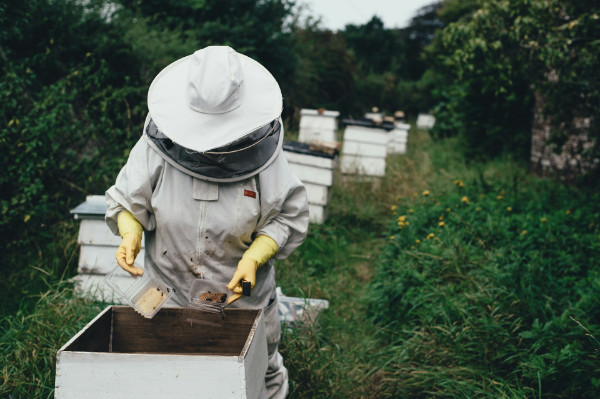
It weaves an intricate tale told through the eyes of two narrators. Olivia McAfee is a professional beekeeper who escaped from an abusive marriage with her six year old son, Asher. Now he’s six feet tall and in his last year of high school. He’s kind and handsome and sporty and very much in love.
Lily Campanello is his girlfriend who has also escaped from trouble. Her mother, Ava, a Forest Ranger, fled with her to the old family home, and Lily tells anyone who asks that her father is dead. Lily is an extremely accomplished cellist with an extraordinary ability to soak up information on a wide range of subjects and use it to good effect.
Asher and Lily’s relationship is a rather volatile one characterised by great sweetness and tenderness, but also bouts of not speaking. Both find it hard to trust after what has happened in their past. Both are hiding deep secrets and fears. Both need time out to consider their options.
Then one day Olivia gets a phonecall telling her that Lily is dead. Asher is found cradling her in his arms, stained liberally with her blood. He says he found her at the foot of the stairs unresponsive, and that he moved her to the living room. His fingerprints are found in her bedroom though he swears he didn’t go upstairs that night. There are signs of a struggle in that room. His last text reads, THIS ENDS NOW, I’M COMING OVER. He is subsequently arrested on a charge of murder.
As the case against him builds, Olivia realises that Asher has kept a lot from her, and she begins to fear that, though she had physically removed him from the influence of his father, maybe he has inherited something of his violent and controlling traits. Asher is appalled to see her doubt and excludes her still further. But he does allow her to bring in her brother, Jordan McAfee, as his defence lawyer. There follows a nail-biting court case where Asher appears to be his own worst enemy.
In traditional Picoult style, the authors give us a wealth of information about bee keeping and music and animal and human behaviour, but it’s not until P204 that we learn what social issue they are really addressing, and why this particular second writer was co-opted.
WARNING: THE FOLLOWING PARAGRAPHS CONTAIN SPOILERS. So if you intend to read the book please stop at this point.
It’s the forensic pathologist who drops the bombshell whilst giving his evidence in court: Lily had no uterus or ovaries. Why? Because she had transitioned from being a boy, Liam, and had been through the full treatment with puberty blockers and surgical procedures to give her outward female sexual anatomy and characteristics. Very successfully too. As the surgeon who carried out the operation put it: The plumbing works and so does the electricity.
In typical Picoult fashion the challenges and truths emerge by way of succinct thoughts and statements from the characters who are pondering the arguments. Here are a few illustrations that stopped me in my tracks.
Lily: I don’t think it’s an invisible chromosome, or the inability to get pregnant, or anything else, that makes people so cruel to transgender folks. I think what they hate is difference. What they hate is that the world is complicated in ways they can’t understand.
Olivia: In college zoology classes I learned there are plenty of animal species that change sex. It’s called sequential hermaphroditism. Clown fish are all born male, but the most dominant one becomes a female. Wrasses work in reverse, with a female able to transform her ovaries into testes in about a week’s time. The slipper limpet, when touched by other male limpets, can become female. Male bearded dragons can change sex while still in their eggs, if exposed to warmer temperatures. Spotted hyena females have what look like penises and have to retract them into their bodies for mating. Coral can go from male to female or vice versa. Common red frogs spontaneously change sex in the wild.
In other words it’s perfectly normal.
Olivia: I haven’t really thought about what it means to be trans … because I have had the luxury of not having to think about it.
Olivia: (of a person she knows who looks ands ounds like a man but identifies as female): She seems – I hate how this sounds – like a work in progress? Like a subcategory of woman? But even saying that makes me feel like I’m judging, when I don’t mean to.
Olivia: If you want to understand something, you first need to accept the fact of your own ignorance. And then, you need to talk to people who know more than you do, people who have not just thought about the facts, but lived them.
It’s a complex and difficult topic especially when it involves young children and irreversible changes. When I tackled the subject through fiction myself (in Inside of Me) I worked closely with people who had themselves changed sex, but there are still critics who say no one can or should embark on such an undertaking unless they have lived experience of transitioning. Jennifer Finney Boylan has. Here’s hoping this novel helps more people to understand.
Psychological overload
I was intrigued to hear the bestselling crime writer Patricia Cornwall speaking about her new book, Unnatural Death, on BBC News recently. She published her first novel in 1990, and she’s been producing bestsellers for over thirty years. So why did my ears prick up? Because this time she reported a change in her modus operandi: she is much gentler with her readers nowadays, sparing them an excess of gory details. She even makes her victims baddies to lessen the stress! Why? Because, she feels, we are all more affected by the tsunami of bad news and real life horror that crashes over us almost daily these days. We don’t need oceans of fictional angst superimposed on reality.
This tallies with my own personal experience as a writer, not having the personal space nowadays to add unnecessarily to the real psychological stresses of life these days.
 So it was with her words in my mind that I picked up The Restless Dead by another bestselling thriller writer, Simon Beckett. It was published back in 2017 and billed as The most chilling forensics thriller you’ll read this year. OK, that should test my metal! And sure enough it spares no detail. It opens with a macabre description of what happens to a body in water – the decomposition, degradation, disintegration. Gruesome, graphic stuff. And as the pages turn, bodies float to the surface or are discovered in various stages of this process. Oh yes, we can see them in all their grisliness!
David Hunter, GP turned forensic anthropologist, is called in when human remains are too badly decomposed or degraded for pathologists to deal with, and it’s his job to assess each cadaver and crime scene to piece together what actually happened and when.
I’d become intimate with death in all its gory excess, fluent in the languages of bone, putrefaction and decay.
And we look over his shoulder.
Curiously though, because this revolved around scientific analysis, the chemistry, I didn’t find the mounting death toll or the graphic detail overwhelming. So I was in a good place to suddenly find the story segued into my own much gentler field of interest – medical ethical issues. One of the characters is transgender! A timely and perfectly serendipitous development.
But thanks go to Patricia Cornwall for making me feel less of a wimp, by naming and explaining and somehow legitimating my reduced capacity for fictional stress!
Going gently into that good night
Until this week I have to admit that I’ve never watched the soap, Coronation Street. But there was so much hype about Monday’s double bill featuring the suicide of a character called Hayley Cropper, that I felt compelled to see it. After all, exploring real moral questions through fiction is what I’m all about.
For those of you who don’t know, (as I understand it) Hayley (once Harold) is a transgender person who survived local prejudice, married cafe owner Roy, and developed pancreatic cancer. Monday was the day she had resolved to end her suffering by taking a self-administered (don’t even touch the glass, Roy) cocktail of drugs.  Roy is hoping against hope that when it comes to it she’ll change her mind and they’ll have longer together. ‘There’s still joy to be had.‘
I came to this my first episode without any emotional attachments to the Croppers, but the whole scene was handled so gently and sensitively that the millions of viewers for whom this represented a personal tragedy must have found it harrowing. It felt as if we were in that flat with them. The touching last conversations … Hayley’s struggle to iron Roy’s best shirt so he turns up respectably clad for her funeral … Roy’s decision not to have a ‘special’ on the cafe menu on this terrible day … the anxiety and concern of the neighbours … all provided heart-wrenching pathos to the last hours of this desperately sick woman. I haven’t been party to her struggles over the past few months but I have seen other real people die of this horrible illness, and in a way their suffering overlaid Hayley’s for me. Seeing her quiet smile as the music of Vaughn Williams’ The Lark Ascending stole through the room, listening to her settled resolution, watching her determined drinking of that fatal cocktail, the peaceful waiting – I was willing all the assorted well-wishers not to disturb their precious last hours together. This was a moment for absolute privacy and solemnity. And from where I sat, ITV got most of it right.
Whatever we think of the issue of assisted dying, or suicide, or the right to die, this programme provided a useful vehicle to promote discussion. Of the tragic situations for which there are no good options. Of the emotional and physical impact of terrible diseases. Of our responses, our prejudices, our beliefs. Of the current law.
And indeed, Lord Falconer, the former Lord Chancellor, is currently working towards launching another bid in real life to legalise assisted dying under certain clearly specified conditions which will reopen the hornets’ nest for sure. So, hats off to another screenwriter and to ITV for bravely raising the issue in such a way as to get ordinary people thinking about these vexed issues for themselves. If you cared about Hayley’s plight, if you were angry with her for doing what she did, if you threw things at the TV, if you wrote to ITV complaining about their depiction of a suicide … then spare a thought for those for whom such dramas are lived realities. What would your answer be?
A safe distance away I might share another such challenging film production – but that’s for another time. Today belongs to Coronation Street.