Elizabeth Jane Howard
In celebration of women writers
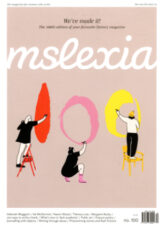
2024 marked the 100th edition of Mslexia, a magazine for women who write, to which I’ve subscribed for many years. So as we turn into a new year, I thought I’d share a few random snippets from the journal, with thanks to all the contributors who researched and wrote about them.
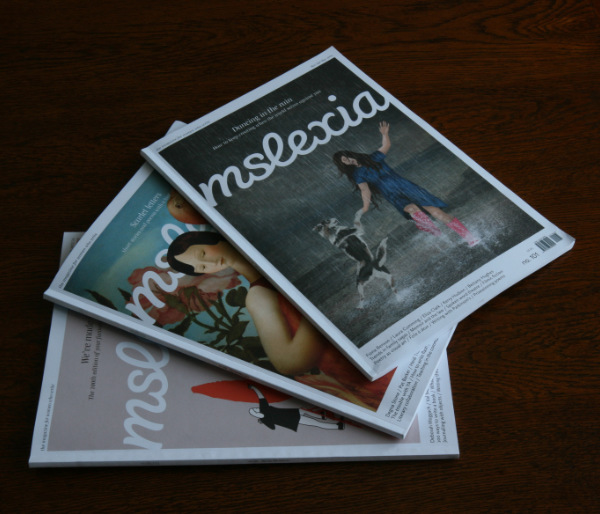
It’s a truth not always recognised that women writers have many extra hurdles to overcome because of their role as caregivers to children and parents, alongside juggling domestic duties and paid employment and maintaining a writing profile, as a number of surveys have demonstrated. But perhaps Ginger Rogers sums it up most neatly: she did everything that Fred Astaire did but backwards and in high heels!
 Martin Amis said his stepmother, novelist Elizabeth Jane Howard, would be busy gardening, cooking, staring out of the window, and then suddenly disappear into her study where she would furiously hammer out her stories for an hour: a ‘think, think, think, WRITE’ routine. But she would have written twice as much as his father Kingsley Amis in a whole day.
We tend to look at established and best-selling authors as having everything buttoned up. But it was reassuring to me to read that crime-queen Val McDermid after 39 novels still says that around two thirds of the way through she loses faith in the novel, the writing feels flat, the plot makes no sense and she wonders why anyone would be remotely interested and read it. Happily she’s a consummate professional and wouldn’t dream of missing a deadline so she ploughs on and regains confidence as she goes.
It’s striking how many writers are willing to expose their own vulnerabilities whether its mental illness, infertilty, abuse, being controlled, losing babies, being bereaved, being financially insecure, abandoning security, being in the public eye, stage fright. I’ve benefitted greatly from their revelations and honesty.
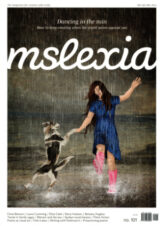 Mary Wesley published her first bestseller at the age of 71, and went on to write ten more, only stopping at the age of 84. There’s inspiration for you.
Did you know that the mental effort of serious stints of writing entails deep concentration and requires the same kind of nourishment and rest as a strenuous run? My GP did many years ago; he diagnosed my body’s need for extra thyroxine because of the intensity of my work as a researcher/writer, and prescribed accordingly.
Heidi Thomas (screen writer for the long-running TV series, Call the Midwife, has a wonderful philosophy, gleaned from her seven years as a Quaker. It’s Let us see what love can do, because, she believes, so much more can be accomplished by kindness or patience or compassion … The real depth of the show, set in London in the 50s and 60s, comes from a belief in service to others; the secret of its success is sincerity which pervades all aspects of making the programme, and decency. It shows.
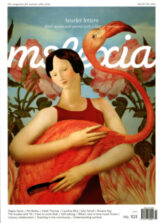 Poet Degna Stone sums up the true value of reading: The characters and their narratives each changed me in some way, And that’s why we read, isn’t it? To experience new ideas that will help us to see the world differently. Or to experience a familiar feeling told from someone else’s perspective.
Author Chioma Okereke puts it slightly differently:
Reading isn’t just a sanctuary from the real world, but a therapeutic activity that enriches our knowledge and provides us with insights beyond our lived experiences … increases our capacity for empathy, through the process of seeing the world through a relatable character.
A whole lot of wisdom comes in my quarterly packages from Mslexia. Here’s to a wiser and more compassionate and peaceable 2025.
The price of empathy
Elizabeth Jane Howard, author of the novels based on her own family history that became known as The Cazalet Chronicle, (recently serialised on Radio 4) has said that ‘You cannot be a good writer without empathy.‘ Too right, I thought. You have to enter the lives and hearts of your characters, to understand how they tick, how they react, in order to create believable three dimensional people. Fair comment.
I’d go further and say that in my experience, involvement with your own fictional characters means you pay quite a hefty price as their creator. You feel their pain. You struggle with them. You grieve with them. They keep you awake at night.
This phenomenon was at its most acute for me when I was writing Right to Die, the story of a young man who develops Motor Neurone Disease. It so happened that several members of my family were quite seriously ill at the time – indeed one of them actually died in reality on the day I ended the life of my main protagonist. Traumatic in more ways than one. I was a wrung out rag for ages after completion of the book.
 Then there was Double Trouble (a tale of one family’s attempts to overcome infertility). Not only I, but a number of readers have been seriously upset by the violence done to the main character in that. One of my colleagues in the Institute of Medical Ethics said he couldn’t talk to me about it for a week; he had to recover first. I really really didn’t want it to happen myself, but it did. I was there. I was simply recording what took place in that bedroom. I was distressed twice over: both witnessing it and again describing it.
Oh, and I still shed a tear at the end of Saving Sebastian  when Sebastian’s mother appears at a medical conference to tell her story and reveals an unexpected twist in the tale. It’s my happiest book to date, I’ve read it countless times, and I know what happens, yet it still tugs at my heart strings.
But in a way I see this as some kind of a barometer. If I don’t care about these characters how can I expect other people to? After all, I conceived them, nurtured them through the gestatory period, and gave birth to them. I tracked their thoughts and actions intimately. So of course I empathise with their agony – perhaps even more than their ecstacy. I was there at their end too, so naturally I stand at their graves and weep …
… except that … I must confess …
Oh dear, I’ve remained dry eyed throughout the writing of Over my Dead Body. Hmm. Should I be worried? Should I even share such a revelation?
This latest novel has the usual quota of tragedy, moral dilemmas, and heartbreak. It’s about a troubled woman, Carole, who loses her daughter and granddaughter in a car crash. It includes harrowing decisions about whether or not to use their organs. It reveals tense relationships, sibling rivalries, haunting secrets. We also peep into the lives of those struggling with life-limiting conditions who might or might not be saved as a consequence of Carole’s choices. In fact, the characters were initially so burdened emotionally that a number of my early reviewers and critics strongly suggested – even begged me to tone down the problems. One said she felt ‘coshed’; two said they cried throughout; others said they felt drained. So I did.
But me? Ahhhhh, therein lies the issue. I’ve lain awake listening to Carole and Guy and Oliver and Sarah and all the others. I’ve worried – agonized even – with them, I’ve woken stressed by their quandaries, but no, I haven’t cried with them.
So … am I getting hard in my old age? Am I inured to tragedy? Or am I unmoved by these particular characters? If so, that blows my empathy theory right out of the water. Help!
Are the characters one dimensional? Or wooden? Or unsympathetic? Are the situations and dialogue implausible? Well, I’ve had more than the usual amount of positive feedback for this book: so I’m pretty confident that readers do care and they do weep.
So it’s me then. I can assure you, Ms Howard, I do empathise with my characters. I do. I DO! I must then modify my declaration: it is not necessary for the author to be reduced to tears. Is that OK with you?
PS. For your eyes only … until the final manuscript goes for publication I shall continue my vigilance and analysis … and keep worrying!