Murano
The Glassmaker
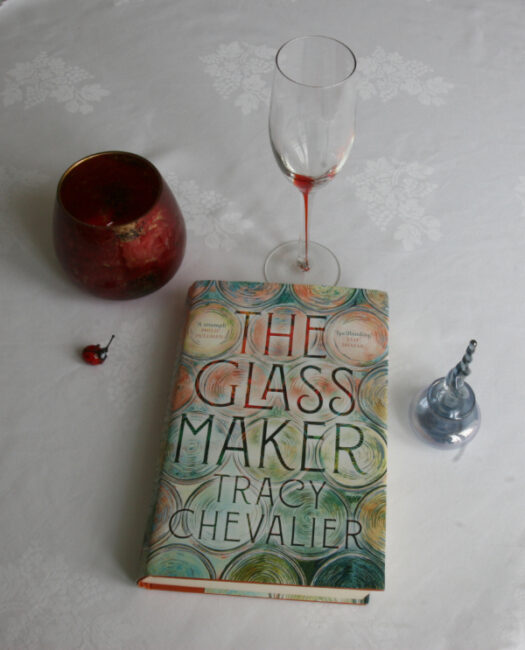 OK, cards on the table at the outset: I loved this book – The Glassmaker by Tracy Chevalier – but I also had reservations about it.
The story is set in Venice and Murano, both places I’ve visited and enjoyed, and Chevalier’s descriptions of the waterways and gondoliers and bridges and campaniles and Caffè Florian and floods and masks evoke their unique flavour beautifully and resonate strongly with me. I also love exquisite glassware (I’ve even tried my hand at glassblowing!), so I’m genuinely in awe of the skills involved, most ably captured in this book. I was predisposed, then, to romp through this tale.
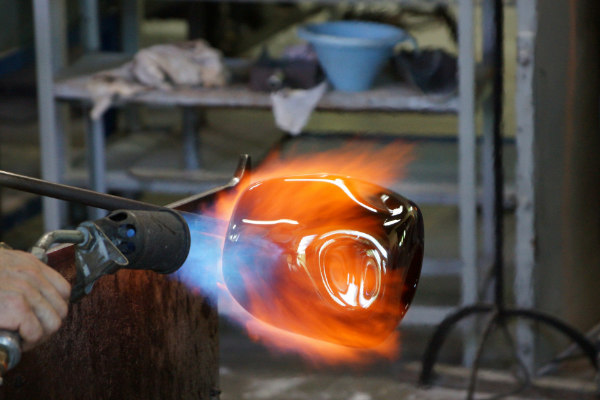
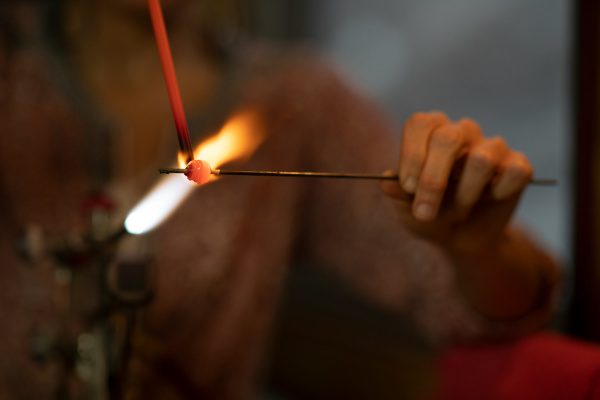
The central character is Orsola Rosso, daughter of a long line of glassmakers, who’s forbidden from entering the profession because of her gender. But she hates the endless cycle of domesticity which becomes her lot, and flouts convention by turning to the creation of glass beads under the tutelage of a famous female beadmaker, Marietta Barovier (who really existed). She may not be allowed in the main workshop alongside the men and furnaces, but she can work with her own blowtorch and bellows equipment on a kitchen table in solitary peace. She has an outlet for her pent-up creativity.
Since the death of their father in a freak accident, her oldest brother, Marco, has become maestro in the creative workshop with its male hierarchy and immensely complicated designs and generations-long reputation. The siblings have always clashed, and Marco is characteristically scornful of his sister’s bead work, but Orsola persists, knowing that her income will help everyone in the lean times when the bigger goblets and mirrors and candlesticks are not selling as they once did.
Beads fill the spaces between things. They don’t get in the way. They are inconsequential, and women can make them because of that.
 The story traces her life from 6 to 60s, a vital part of a large family all struggling to deal with the fickle world of commerce, the loves and rivalries and loyalties of domestic life, the competition and successes and failures that accompany creative art forms. She herself loses the love of her life and marries a man who can never match up to his memory; she suffers numerous miscarriages; her glass work is variously lauded and dismissed. An indomitable soul who is forced to forgo her own passions in order to practically and emotionally support her family and fit in in a culture that limits her potential.
Thus far it ticked all my boxes. But what causes me to tone down my superlatives is the structure of the book. Alongside Orsola’s story we have the history of glassmaking in Murano and Venice through the centuries, starting in 1486 (when they were the epicentre of this artform) and ending in this century (with countries like Bohemia and China taking over production). This larger picture is portrayed at the beginning of each new chapter as a flat stone skimming the surface of the water of the Venetian Lagoon between the two places. Each time it dips into the water (about every 80 years) we have a résumé of significant historical events happening in the world at that time, but the characters have aged much more slowly. So their personal stories are continuous but they are grappling with quite different problems in the bigger world – plagues, floods, wars, unifications, technology … even Covid and climate change!
I’m hugely impressed by the meticulous research behind this work, with fascinating detail relating to glassmaking and life in Italy across the centuries. The writing is a joy to read, and grips the attention effortlessly. So perhaps it’s due to my own deficiency that I felt a glitch each time that stone touched the sparkling aquamarine waters of the Venetian Lagoon and we leapt forward almost a century – a sophistication too far for the brains of simple readers like me, maybe?
But I’d still heartily recommend the book.