paranoid schizophrenia
I Know This Much To Be True
I can’t begin to comprehend the horrific damage inflicted by the teenager who went on a murderous rampage in Southport last summer. Nor the effect of a lifetime of contemplating the gravity of his crimes while he lives out his sentence of at least 52 years in prison before he can even be considered for parole. But I’ve been exercised by news reports that say he’s autistic and mentally ill and has a long history of problems he’s inflicted on so many families, including his own.
And then there’s the man with paranoid schizophrenia who killed three people in Nottingham in June – we now know he didn’t get the essential anti-psychotics he needed to prevent him becoming violent.
Details from both cases, and the deficiencies in their management, make horrific and deeply troubling reading, If only … If only …
So, an advert for a novel about a young man with paranoid schizophrenia – I Know This Much is True by Wally Lamb – jumped out at me.
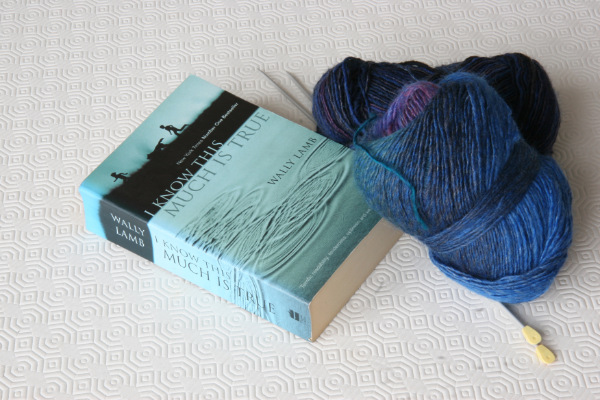
But oh wow! Oh dear! Little did I know when I ordered a copy, that it would turn out to have 897 pages of dense tiny text! A mighty doorstopper and no mistake. I had to force myself to keep going.
Dominick and Thomas Tempesta (later Birdsey) are identical twins born six minutes apart, in different years. They grow up in a tumultuous household with a weak mother and domineering step-father who both serve to exaceberate their sibling tensions and rivalry. Then Thomas develops paranoid schizophrenia, and Dominick promises his dying mother he will always care for his twin brother. But as Thomas reels from crisis to crisis, his twin is torn between love and resentment. Then on October 12 1990, Thomas uses a ceremonial Gurkha knife from WWII to amputate his own right hand in the Three Rivers public library in Connecticut, adamant that Dominick must not overrule his decision not to have the hand sewn back on.
‘It was a religious act! A sacrifice!’
Until this incident Thomas has been under the care of one psychiatrist for his mental illness for years, so when he’s admitted to a maximum security wing with a new team of professionals, Dominick is incensed and determined to get him out. But then he meets Dr Patel, an anthropologist as well as a psychologist, who gives him insights into what it feels like to be living in Thomas’s head.
The weight of the world is on his shoulders. He can trust almost no one. … Your brother is alone in the universe. Lost to his twin, lost to a conventional life. He is afloat in a world of evil and malignant power, his mettle tested at every turn. Thomas is, in effect, starring himself in his own hero-myth.
But Dominick – as his brother’s mirror, his healthy self – is the equivalent of a control group, with unique access and insights into Thomas’ thinking by virtue of their shared biology and shared history. He has the potential to provide a key to Thomas’ recovery.
For once, he had a doc who hadn’t majored in indifference.
Under her guidance, Dominick begins to retrieve childhood memories that might be significant, early schizophrenic episodes and decompensations, and in so doing Dr Patel recognises that there are two Birdsey boys lost in the wood, and maybe, just maybe, one of them is calling to her, and she can save him.
It’s not only a long book, but a complex one. Embedded in the text are several story lines including a whole autobiography by Dominick’s maternal grandfather, a really unlikeable egotist, revealing the troubled and often violent and abusive history in their family. Could these ancestors be the explanation for why he and Thomas were as they were?
There was much about this book I disliked, but I persisted to the end looking for answers to Dominick’s questions about his origins, about inheritance, about justice, about God. And some of them were answered. And for the record, Thomas is nothing like the disturbed boy who massacred children in Southport, or the mentally ill man who took three innocent lives in Nottingham; any harm he inflicts is only on himself.