I Know This Much is True
The Hour I First Believed
Imagine you’re a high school nurse, sitting quietly listening to a troubled student. It’s April 1999. It’s lunch-time, that hour when the maximum number of youngsters gather in one place. Suddenly, without warning, all hell breaks loose. Two teenagers both known to you, now armed with guns and knives and bombs, are laughing and taunting as they systematically shoot the children around them with apparently carefree abandon. You crawl into a dark cabinet, but you can still see and hear their deadly progress, and you expect any moment to be blasted out of existence. When you eventually emerge, bodies litter the floor and the student you were with is missing.
Or imagine you are the spouse of the woman hiding in the cupboard. You too normally work in the same school, but you’re currently miles away organising the funeral of a relative. The developing news of the massacre is running continuously on TV, but you have no way of knowing if your wife, your colleagues, are alive or dead.
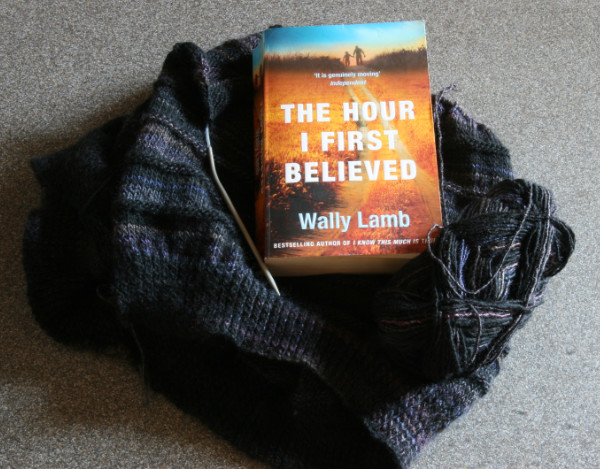 We’ve all read and heard about the Columbine High School massacre in Colorado in 1999, but Wally Lamb takes us inside the school on that fateful day, inside the lives of those for ever marked by these terrifying events.
In a nutshell so as not to spoil the story for future readers …
Both Caelum Quirk, the narrator, a creative writing teacher, and his wife Maureen, though not physically hurt, are seriously traumatised by the experience and seek professional help. They move right away from the scene of the crime and pick up the threads of Caelum’s earlier life, but they both develop dependencies which in turn lead to further tragedies, mounting financial worries, and an unravelling of their family history which brings both solace and heartbreak.
Although The Hour I First Believed is essentially a work of fiction, it feels much more than that. By weaving reality throughout the story – with actual names and words and excerpts from the killers, and reference to well known individuals, and historic events like the destruction of the World Trade Centre on 9/11 and hurricane Katrina – Lamb has given the whole narrative a sense of historic accuracy and credibility, allowing him to explore and examine real tragedies such as war and natural disasters and violent crimes more meaningfully.
Why did he choose this tricky route? For two reasons. First, because he felt a responsibility to name the Columbine victims, both dead and injured, and to acknowledge the strength and suffering of those traumatised by the event. And second, because, having spent 29 years in high schools, he was both frightened and confused by the twisted logic of the two boys who slaughtered those innocent children, and wondered if he would have acted as courageously as some colleagues did. His overarching hope back in 2008, was that the book in some small way would help to broaden understanding and maybe prevent future tragedy. Sadly events since have rather questioned that.
As with I Know This Much is True, I personally found the book overly complicated by the inclusion of long documents and lateral stories (it’s 632 pages long), but I take my hat off to any author who researches meticulously and makes me believe in his story. And perhaps a couple of sentences from early in the book, describing Caelum’s experience of teaching creative writing, capture what he has achieved:
‘Look, don’t just stare at the pages. Become the characters. Live inside the book,’ he’d tell his students.
They’d sit there, staring back politely at the alien from Planet Irrelevance.
I Know This Much To Be True
I can’t begin to comprehend the horrific damage inflicted by the teenager who went on a murderous rampage in Southport last summer. Nor the effect of a lifetime of contemplating the gravity of his crimes while he lives out his sentence of at least 52 years in prison before he can even be considered for parole. But I’ve been exercised by news reports that say he’s autistic and mentally ill and has a long history of problems he’s inflicted on so many families, including his own.
And then there’s the man with paranoid schizophrenia who killed three people in Nottingham in June – we now know he didn’t get the essential anti-psychotics he needed to prevent him becoming violent.
Details from both cases, and the deficiencies in their management, make horrific and deeply troubling reading, If only … If only …
So, an advert for a novel about a young man with paranoid schizophrenia – I Know This Much is True by Wally Lamb – jumped out at me.
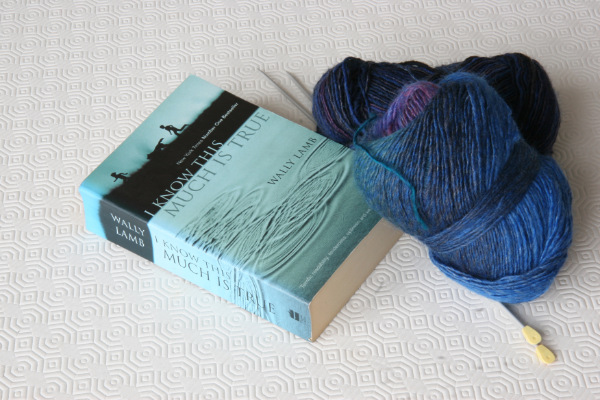
But oh wow! Oh dear! Little did I know when I ordered a copy, that it would turn out to have 897 pages of dense tiny text! A mighty doorstopper and no mistake. I had to force myself to keep going.
Dominick and Thomas Tempesta (later Birdsey) are identical twins born six minutes apart, in different years. They grow up in a tumultuous household with a weak mother and domineering step-father who both serve to exaceberate their sibling tensions and rivalry. Then Thomas develops paranoid schizophrenia, and Dominick promises his dying mother he will always care for his twin brother. But as Thomas reels from crisis to crisis, his twin is torn between love and resentment. Then on October 12 1990, Thomas uses a ceremonial Gurkha knife from WWII to amputate his own right hand in the Three Rivers public library in Connecticut, adamant that Dominick must not overrule his decision not to have the hand sewn back on.
‘It was a religious act! A sacrifice!’
Until this incident Thomas has been under the care of one psychiatrist for his mental illness for years, so when he’s admitted to a maximum security wing with a new team of professionals, Dominick is incensed and determined to get him out. But then he meets Dr Patel, an anthropologist as well as a psychologist, who gives him insights into what it feels like to be living in Thomas’s head.
The weight of the world is on his shoulders. He can trust almost no one. … Your brother is alone in the universe. Lost to his twin, lost to a conventional life. He is afloat in a world of evil and malignant power, his mettle tested at every turn. Thomas is, in effect, starring himself in his own hero-myth.
But Dominick – as his brother’s mirror, his healthy self – is the equivalent of a control group, with unique access and insights into Thomas’ thinking by virtue of their shared biology and shared history. He has the potential to provide a key to Thomas’ recovery.
For once, he had a doc who hadn’t majored in indifference.
Under her guidance, Dominick begins to retrieve childhood memories that might be significant, early schizophrenic episodes and decompensations, and in so doing Dr Patel recognises that there are two Birdsey boys lost in the wood, and maybe, just maybe, one of them is calling to her, and she can save him.
It’s not only a long book, but a complex one. Embedded in the text are several story lines including a whole autobiography by Dominick’s maternal grandfather, a really unlikeable egotist, revealing the troubled and often violent and abusive history in their family. Could these ancestors be the explanation for why he and Thomas were as they were?
There was much about this book I disliked, but I persisted to the end looking for answers to Dominick’s questions about his origins, about inheritance, about justice, about God. And some of them were answered. And for the record, Thomas is nothing like the disturbed boy who massacred children in Southport, or the mentally ill man who took three innocent lives in Nottingham; any harm he inflicts is only on himself.