Prayer
Finding understanding; gaining perspective
Hey ho! I’ve come to the halfway point in my serious study this year, a point where I have to conclude that prayer is a very personal issue. I’ve listened to others talking about it; I’ve read a stack of books on it; and I’ve tried to explore the essential underpinnings (the What? Why? How? level questions) myself in talks. Big sigh. It’s way harder to share than any other topic I’ve tackled so far. Seems, my thoughts are unlikely to run parallel with yours; my understanding is probably not going to reflect yours. What’s still more sobering is that it appears one can study the whole subject too much and end up losing perspective on it. Yoiks!

I’ve had a few earnest recommendations along the way, and have done my best to follow them up. A recent one was for Harry Emerson Fosdick‘s 1915 book on the subject, The Meaning of Prayer. It’s a slim volume, brown pages, and couched in very dated language. OK. I’ll give it a go …
Suffice to say I’m afraid I didn’t share the enthusiasm of the person who pointed me in its direction. However, that was itself reinforcement of my conclusion thus far: each of us has our own ideas and experiences and preferences on the topic; discussing it openly has it’s limitations. I confess it’s been a bit deflating to discover this, however, I shall persist with the study for my own education and enlightenment, though clearly I need to pace myself with this potentially dispiriting task.
 With that resolve in mind, I felt I’d earned some light relief, so I turned to The Stolen Baby by Diney Costeloe – a new author to me.
I chose it for two reasons: it deals with the attachment of a child to it’s mother/carer; and it’s set in wartime Plymouth. I was four when my own parents moved to a place in the country in Cornwall, ten miles from Plymouth, so I remember the devastation caused by the relentless bombing of the city and the emergence of a new one. I grew up knowing first-hand about Tilley lamps and primus stoves and romper suits and babies left outside shops and the rigid rules of etiquette (Thou shalt not allow a male to enter the sacred portals of a nurses’ home) … all of which characterise the world of this tale. I myself worked in the two main general hospitals there during the 60s (misnamed in The Stolen Baby!).
The book is undemanding, and certainly brings alive the horrors of the frequent devastating air-raids, and the tragic consequences of war for so many families. It would have been perfectly possible for a baby to be found in a bombed house alone and crying, for his family to be missing presumed dead, for someone else to find him and take him home to be cared for. In the chaos and fog of war, anything could indeed happen.
… the war has changed everything. It’s turned everything topsy-turvy and you find out what’s really important in life.
And delving into that past era has helped to restore equilibrium in my perplexed and overloaded brain now so many decades later!
Research continues
In amongst all the other things punctuating life, the serious study on prayer continues quietly and unseen. It’s actually quite useful that I have mundane responsibilities keeping me out of the study for lengthy periods – gives the material I’m ingesting time to simmer and diffuse and settle.

That process has actually been helped by a friend who’s going through a very diffuclt time in his life questioning me about pain and suffering. Having to marshall my thoughts in order to give a semi-coherent response to his deep questions helps me sort out the theory from what I can accept or even believe. My own personal experience doesn’t bear out some of the most pious ideas, and I’m seriously allergic to platitudes.
Though I still have a lot of my own issues for which I can offer no satisfactory answer, I am gradually drawing up a workable framework within which to hang them. It’s a start. And I doubt very much if I will ever reach a comprehensive conclusion that covers everything. Some things may just have to be relegated to the category of ‘Mystery’ – which, when you’re considering the interface between heaven and earth, is just as it should be.
Next week I’m introducing the subject to a couple of quite different audiences and inviting their thoughts and reactions so that should help to refine my thinking too.
Progress!
Regular visitors to my blog pages will know I’m currently grappling with the serious topic of prayer as part of a year-long project. Still at the stage of feeling formidable.
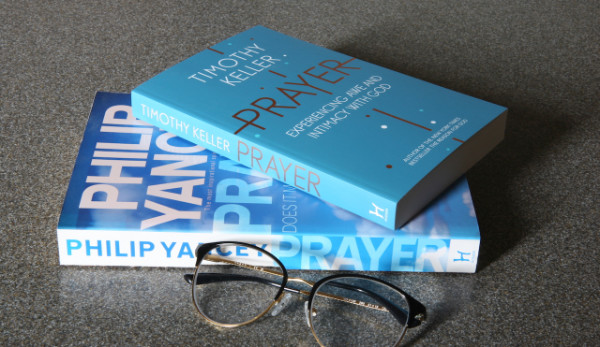
However, two and a half months into 2026 and I’m pleased to say that I’m making some progress. I’ve ploughed my way through a number of weighty tomes already and fed new thoughts and ideas into my framework so that I can reflect on them and start to formulate my own ideas and conclusions. I’m trying my best to keep an open mind and not close down avenues of thought too prematurely.
It’s still all wide open to revision, but some puzzles are becoming clearer and new questions are emerging which will hopefully lead to greater clarification and a surer foundation. To date I have enough material assembled to fill about four hours of discussion!! Synthesizing and sharpening and refining will begin and be ongoing as I meditate and explore more writers’ ideas and experiences.
I’ll leave you with today’s gem: Pray and let God be God!
God on Mute
Brilliant title, isn’t it? God on Mute. The strapline: Engaging the Silence of Unanswered Prayer gives a sense of the direction of travel.

It was recommended to me as ‘excellent’ by a lovely friend when he heard that I was studying the whole question of prayer this year. And I agree: it is excellent. Having just finished ploughing through a much denser tome bringing together miles of literature and thinking on the topic, it was something of a relief to turn to this accessible page-turner. So readable is it indeed that twice I made a mistake in my knitting and had to unravel and re-knit several long rows!
God on Mute is by Pete Greig, pastor, and founder (with his wife Sammy) of the 24-7 Prayer Movement. He has a most engaging style of writing, illustrating his points with vivid accounts of real people and their lived experiences, including Sammy’s many years of epilepsy following a brain tumour diagnosed a few weeks after their second son was born.
And therein for me lies the secret. As with many other books on the subject of suffering and unanswered prayer, I am most persuaded by those people who have known real trouble, who have agonised over the questions themselves, whose trembling and sometimes tentative answers come from the crucible of pain and darkness.  Nothing glib or hackneyed. No smooth detached academic analyses. No pious well-rehearsed platitudes. But raw, unflinching, genuine struggle to find a way through doubt and fear, leaving room still for uncertainty and mystery.
I confess I don’t share all his beliefs and conclusions – my experience and background are very different from his – but he has made me think again. Better yet, I took reams of notes which have helped enormously towards marshalling ideas into a coherent framework for my own study of this topic. A giant step forward.
Serious reading for 2026
I’ve been ploughing through a pile of crime-related books recently (reviews pending) so, by way of a reality check, I thought I should reassure you that I haven’t gone totally over to the dark side!
As regular visitors will know, for some years now I’ve chosen a serious topic to study for the 12 months, alongside all my other reading – something that I’m curious about, or feel I don’t understand. Something to challenge pre-conceived ideas hopefully; sort the wheat from the chaff.
This year I’ve chosen to look into prayer. What is it? How does it work … if it does work? Is it relevant or valuable? What difference does it make? That kind of thing.

So I’ve started on the first raft of books, maintaining focus by putting ideas and questions into a document. Strange how, once you start with a topic, all sorts of serendipitous ideas pop up everywhere … memes, blog posts, snippets on social media. Seems like it’s something lots of folk are thinking about. And with terribly dark things happening in our known finite world, lots of people are appealing to an unseen, only-partially-known, infinite Being for help. Are they right/wise to do so?