The Meaning of Jesus
The Historic Jesus
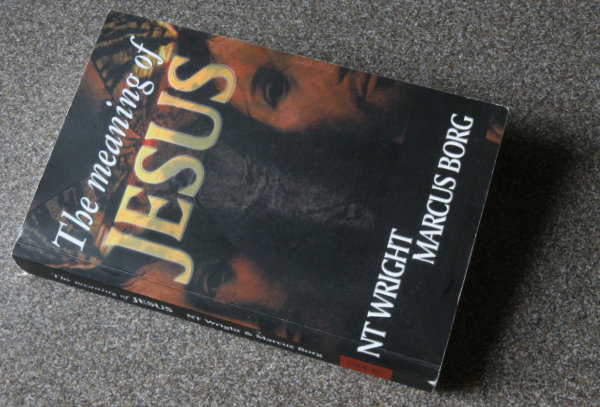
Early in the year I shared with you that I’ve set myself a challenge for 2025 to try to get to grips with who Jesus of Nazareth was in the historic context of his time and place. I ploughed through the first seven books in my pile with relative ease. NT Wright and Marcus Borg‘s The Meaning of Jesus gave me a harder run for my money, as I reported at the time.
Now it’s the turn of Kenneth Bailey. Wow! I’m sitting at the feet of a master of Middle Eastern culture with impeccable credentials; a man who grew up in, as well as lived and worked in the area much of his life (1930-2016), not only a prolific author and lecturer in Middle Eastern Studies, but also an ordained Presbyterian minister to boot!
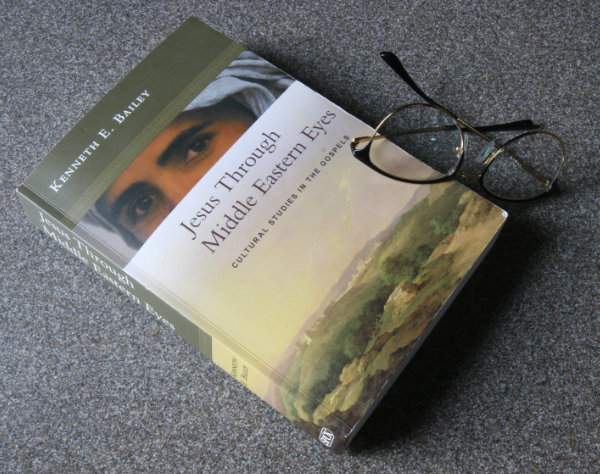
Jesus through Middle Eastern Eyes – which I’ve just finished reading – is in a league of its own, I suspect. Bailey begins rather provocatively by taking apart the ever-popular oh-so-familiar Christmas stories of Jesus’ birth. If you’ve swallowed the old traditions from your youth up – donkeys and inn-keepers and precipitate births etc – prepare to have the rug unceremoniously whipped from beneath your feet. It’s a clever way of grabbing our full attention without doing too much damage. Though I’d heard many different challenges to the birth stories before, somehow I found Bailey’s perspective put me in the mood to have all my preconceived ideas on other topics and my supposed knowledge challenged. I could see from the outset that Western eyes and minds in general have obscured important aspects of Jesus’ life and ministry – for most of us. But if we’re to understand who Jesus really was, and what he was all about, we need to take off those Western glasses and get the dust of the Middle East in our eyes. And boy, he’s the man to guide is through that journey.
He writes beautifully and so compellingy. Everything is clearly organised and laid out. And though there’s plenty of evidence of scholarship and wide reading in the references and footnotes, he doesn’t allow his great learning to bog down the text. Instead he focuses on one topic at a time, drawing out clear points of biblical exegesis and the significance of what these ancient books have to tell us. He’s selective: covering Jesus’ birth, the Beautitudes, the Lord’s Prayer, dramatic actions of Jesus, and his relationship to women, with more than half the book devoted to the parables.
I found it both fascinating and illuminating. How could I ever have assumed we Westerners could adequately interpret these books without insider reference to the ancient and foreign culture in which it was all enacted? With his own extraordinary background, this author has the skill to understand Middle Eastern texts and interpreters that very few other scholars could attempt, and in his hands the stories come alive and assume proportions and details and meaning hitherto unseen. The book seems to me to end rather abruptly but perhaps that simply leaves the reader looking for more.
Progress update on the big challenge
A month ago I shared the information that I had set myself a challenge to search for understanding of the real Jesus. I showed the first pile of books I planned to read.
 Well, I can now report real progress! Wahey!! All these books have now moved to the have-been-read shelf. And a substantial pile of knitting for refugees is filling out a polythene sack!
I confess I felt I was drowning for a while, but persistence has paid off and things are coalescing to give me a clearer – no, perhaps ‘less-muddy’ picture would be more accurate. So at this point in my search, I want to pay tribute to the many writers who have attempted to put down their thoughts and scholarship on what is an immensely difficult and multi-layered issue.
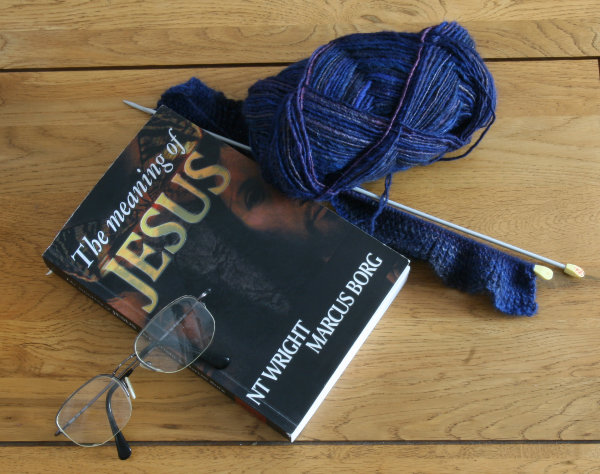
In particular one book stands out for me and calls for a specific mention: The Meaning of Jesus by NT Wright and Marcus Borg. Both New Testament scholars, they have excellent credentials for tackling this topic, with impressive lists of awards, appointments and books to their credit. NT Wright is an English Anglican; Marcus Borg was an American Liberal Christian (he died in 2015). Real authorities then, huh?
But not so fast! In this book they have together presented differing views on the historicity and meaning of Jesus of Nazareth. And I mean radically different! On pretty much every aspect: his origins, his birth, his divinity, his foreknowledge, his sayings, his resurrection, his intentions … Mightily confusing for us lesser mortals sitting at their feet. Who is right? They can’t both be.
But they have both challenged me greatly. We are too used to turning to an authority on a subject and quoting them to substantiate a fact or a viewpoint. These two men ask us to enter into their thinking and work it out for ourselves. A work in progress.
However, what impressed me most is their humility and deference each to the other. Less qualified and generous minds too frequently fail to show respect or tolerance for alternative interpretations. But in the struggle to understand matters at the interface between God and humankind, it’s fitting that all should acknowledge they see through a glass but darkly, and encourage fellow travellers to keep thinking and exploring. As they do.
As I’ve said before, I’ve spent years re-examining my own set of beliefs and refining, confirming, revisiting, discarding. So I love the idea conjured up by Wright: It’s time that the old scholars’ myths were given a decent burial! I’ve certainly buried a few in the light of their exposition.
On now to the work of another towering figure who has a wealth of personal experience living in the land where the historic Jesus walked and talked: Kenneth Bailey – Presbyterian, lecturer and author; master of Middle Eastern culture. But first I’m going to take time out to read an undemanding novel to give my grey cells a bit of a holiday!
