unauthorised clinical trials
Psychiatric scandals
We’ve probably all heard about the historical barbaric treatments and unauthorised clinical trials and experimentation meted out to psychiatric patients, which led to big inquiries and the radical reshaping of modern medical ethics on issues like informed consent and autonomy.
Vulnerable mentally ill people were systematically destroyed with mind-altering drugs, extreme forms of electro-convulsive treatment, operations on their brains, and horrific research on mind control. Many of these procedures were irreversible; patients were seriously damaged; some died. Unscrupulous clinicians went to extreme lengths to disguise or cover their tracks. Governments were complicit in the name of national security and international competition.
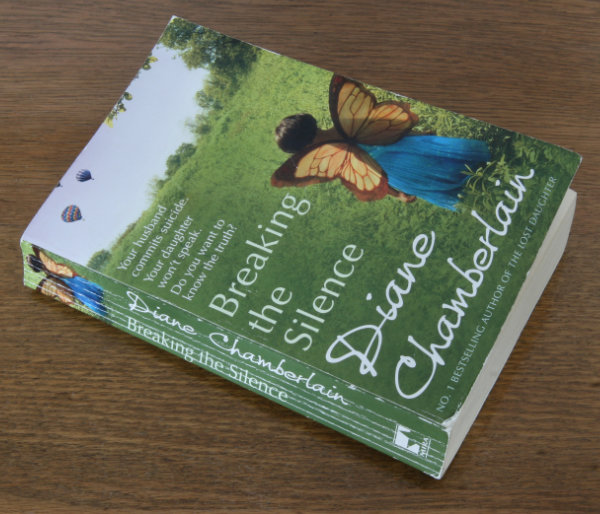
It’s a topic that offers big potential for novelists. Diane Chamberlain is one such. In Breaking the Silence, she’s woven the issue through the eyes of a psychiatric nurse, Sarah, in the 1950s, who finds herself in an advanced facility where the lead clinician has a reputation as a genius offering cutting edge therapy, and conducting innovative research, but who is in fact unscrupulous and maniacal. Alongside this is a present-day tale of a young girl, Emma, who’s in the house alone with her stepfather when he shoots himself dead. The child, believing her chattering made him do it, simply stops speaking, and her mother, Laura, and therapists struggle to unlock the key to her extreme response. When Laura’s father, begs her on his death bed to visit an elderly lady in a retirement home who has Altzheimer’s, the scene is set for these two time-lines to converge.
 Though the story appealed on the grounds that it explores medical ethical issues, from a literary point of view I read it at the wrong time. Successfully dovetailing two stories, two time-frames, requires a deft touch, and it was a shame I read it too soon after Robert Goddard‘s Painting the Darkness. (reviewed last week) His writing is so brilliant and he has woven a first person account into a third person narrative with so much more immediacy and verve, never losing momentum. However, Chamberlain is herself a psychotherapist, so she handles the medical aspects of her storytelling with more assurance and I enjoyed that element of the book.