arson
James Patterson
It’s a long time since I read a novel by prolific author James Patterson*, but I picked this one up in the National Trust property bookshop a few weeks ago. It’s 7th Heaven and it’s a real page turner. Short chapters, cliff hangers aplenty, fast paced action, electrifying twists and turns, and a completely unexpected finale.

Detective Lindsay Boxer, attorney Yuki, medical examiner Claire, crime reporter Cindy – aka The Women’s Murder Club – are immersed in two high-profile cases. The first involves the disappearance of the golden boy son of a high profile and hugely wealthy governor. The boy, Michael Campion, has a serious congenital heart defect. He was last seen entering the home of a prostitute, who eventually confesses that he died in flagrante, and she and her boyfriend butchered his body and packed it into plastic bags which they disposed of in a dumpster miles away. But there is not a single shred of evidence to back up her allegation.
The second case concerns two college youths with aliases of Hawk and Pidge, who target extremely wealthy couples, tie them up, steal their jewellery and cash, and then burn them and their properties to the ground using an untraceable accellerant. Four couples have perished in these horrific circumstances so far. But the fires leave no clues.
Lindsay and her partner Rich Conklin are relentless in their pursuit of these ruthless murderers; Yuki is equally persistent in her prosecution of the prostitute. Told in parallel the cases unravel at pace and reveal such chillingly devious minds that must surely outwit the reader as well as the investigators. Just what I needed to take my mind off real life problems, and remind me of the power of accomplished novel-writing.

* On this occasion he writes with Maxine Paetro
Restorative Justice
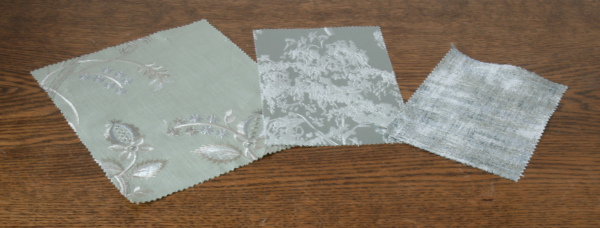
Odd isn’t it how often something in fiction jumps out at you because it resonates with things happening in your real life? I’ve been searching for the right fabric for curtains for the dining room for some time now and have recently whittled the choice down to three swatches. This is the week of the final decision.
So, one of the main characters in Forgive Me by Susan Lewis instantly took on an extra dimension for me. Rebecca is artistically gifted in interior design, and runs a very successful business in Kensington. Her second husband, Marcus Huxley-Brown, is a handsome and powerful man, a financier, son of a former trade minister. But behind the facade her life is a nightmare because Marcus turns out to be both abusive and controlling, destroying her confidence, and leaving her terrified of the repercussions if she steps out of line. When he’s eventually sent to prison for multiple counts of fraud and insider trading, she sees her one opportunity to escape and she seizes it, taking her daughter Cara and an attache case full of money and incriminating documents.
 She leaves behind all evidence of their London lives, adopts a new name, Claudia Winters, renames her daughter, Jasmine, and is aided and abetted by her mother, Marcy, who sells up and moves in with them. It’s a new life in a pretty place in Somerset, far from her old home in London, but… she’s constantly looking over her shoulder, knowing that Marcus will have men paid to hunt her down. His pride will not suffer her desertion lightly. When they buy up a beautiful but rundown Georgian coach-house, I could relate to Claudia’s delight in restoring it to its former glory. I was choosing the fittings and fabrics with her!
The local people are friendly and welcoming and in spite of her terror, she’s drawn into their company, and warm friendships build. Word of her skills travels and she is soon inundated with work, and well integrated into this new social circle. Gradually she begins to relax her guard.
She even manages to explain away the vague sense of someone having been in the house as the remnants of her paranoia. But when petrol is thrown through the front door and the house torched, all her old guilt and terror return. She knows Marcus is behind this but who did he pay to commit this atrocious deed? She convinces herself it’s all her fault that Marcy is terribly burnt in the fire: she was the one who married this monster; she was the one who dragged her mother into this secret life; she was the one who allowed her mother to be alone in the house nursing a cold while she went to her daughter’s concert rehearsal the night the arsonist struck. She can never forgive herself.
Her new friends, who include lawyers and detectives, do their best to support the family but Marcy herself is crushed by the shock and horror of her trauma and the serious disfigurement she will have to endure for the rest of her life. She retreats into herself. But one of the lawyers, Dan, seeing the devastating psychological impact, uses his professional expertise in an effort to coax Marcy out of the dark place she has shrunk into. He runs a process called Restorative Justice designed to bring the perpetrator of a crime together with their victims, and he begins to work with Archie, the nineteen year old arsonist who has lived a deprived and crime-ridden life, encouraging him to write to Marcy.
 It takes time for Dan to feel that these letters would be helpful for Marcy, so he stores them up until he sees the evidence of Archie forming a relationship with her in his mind, caring about her, and expressing genuine remorse. Claudia has serious reservations about the whole idea; she is full of rage and wants nothing but retribution for this youth who has wrecked her mother’s life. But Marcy has her own ideas, and little by little she comes out of her dark place and is intrigued by this boy who has led such a sorry life.
Her forgiveness and compassion are redemptive for Archie, and the two establish a firm bond which transcends class and culture, trauma and retribution.
It’s a warming tale of goodness and forgiveness triumphing over evil, but the most moving parts are Archie’s letters, interspersed throughout the book with the narrative of Claudia’s life, and the insights into Marcy’s innate kindness and generosity of spirit. There’s a little too much improbable romance for my taste, but the core elements of the Restorative Justice process are fascinating and heartening. Susan Lewis manages to make me care for Archie and his crazy mother as well as for Marcy – the skill of an accomplished author.
Broadmoor
 Broadmoor. The very word carried a deeply chilling resonance. The most infamous high security hospital in the world. Makes me think of spine-chilling names like Peter Sutcliffe, Ronnie Kray, Charles Bronson … serial killing, cannibalism, paedophilia, arson, and the like heinous crimes. Or the horrific occasion in 1977, when two inmates trapped a third in a locked area in Broadmoor, and tortured him to death, skinning him alive, ramming a spoon into his brain, before garotting him. What kind of a mind could conceive of, and calculatedly carry out, such barbaric acts? I still remember the shivery sense of profound relief when these men were locked away in this maximum security psychiatric hospital facility for the criminally insane. Little public sympathy for them; widespread fear should they ever be released; a general ‘throw away the key’ mentality! ‘Monsters’, ‘evil incarnate’, ‘irredeemable’. ‘The more whole-life sentences running sequentially the better.’
 But TV journalist Jonathan Levi, and cultural historian Emma French, have uncovered a much more nuanced picture of this notorious place. In their book: Inside Broadmoor, (published in 2019 but written before the new hospital was opened in the December of that year) they bring together their observations based on nearly ten years observing and interviewing staff, experts and the patients themselves, and they find that the staff really believe in redemption and rehabilitation – at least in most cases. No matter what they’ve done these men deserve to be treated humanely, and they aim to give them the best chance of a future.
This generosity of spirit from the staff comes in spite of the fact that the threat of violence is ever present. There are on average five physical assaults on staff members each week, but violence is seen as intrinsic to some of the medical conditions these patients suffer from, so it’s viewed more compassionately here than by the public at large.
The authors asked why did the men commit such dastardly deeds? Might they do it again? Can clinicians unravel the mysteries of their brain chemistry and render them safe? Are any conditions untreatable? Is there such a thing as pure evil? What can we do with those who are beyond help? What draws people to this work: 8-900 staff at any given time, all sworn not to reveal any information outside the hospital? If the inmates are themselves the victims of appalling histories, does society owe them anything in compensation?
 It’s hard to believe that 200 of Britain’s most dangerous men can be housed here together, maximum unrelenting security measures notwithstanding, some of them day in day out with no reprieve of any kind for decades. Each one suffering from a serious mental disorder rendering every man a grave and immediate risk to the public, not to mention their combined threat.
There is a popular misconception that, when someone goes to Broadmoor, they are there for life; in reality only a very few high-profile criminally insane individuals remain there for decades. Over the years a lot of work has gone into de-stigmatising and altering perception of severe mental illness, with great emphasis on intensive programmes of drug and psychological therapies. The old prison mentality and ethos has largely gone. As a result, nowadays, the average stay for a Broadmoor patient is less than 6 years, and there is a notably lower reoffending rate than in the UK prison population overall. This is not to say the men all go free into the community – depending on their diagnosis and progress they may be sent to a variety of other less high security institutions.
The demographics of today’s patients have changed radically over the last 150 years. Religious and ethnic factors play a significant part in this, and the authors concluded that, It is tragically clear that work needs to be done urgently to address these inequalities.
What really emerges is the vulnerability of these men alongside their criminal insanity.
It is nothing short of chilling that … the fate of many Broadmoor patients was fixed from early childhood. Critically, theirs was a childhood not just of deprivation and economic hardship, but of abuse too … Childhood experiences, often shocking and sickening beyond belief, seal the fate of many patients very early on.
One illustrative case is Dillon, born into a ‘satanic’ family. Father broke his bones, sexually abused him, and raped and beat his mother. From birth, mother rejected Dillon, convinced he was evil. She sexually abused him and tried to kill him repeatedly. He was kept locked up in the attic, not allowed to talk to his brothers, or tethered naked to a post and made to eat food off the floor like a dog. By the age of 5 he was an arsonist. From the age of 7 he went into care but became arsonist, kidnapper, violent offender, out of control alcoholic. What chance did this boy have in life? And yet most of us don’t see beyond the violent, criminally insane adult. The staff in Broadmoor do.
One consequence of receiving effective medication, therapy and healing, is that patients can arrive at a deeply vulnerable moment; they begin to have consciousness of the crime that brought them to the hospital in the first place. This is a point of profound fragility. In some cases it’s more than they can handle and proves lethal; they take their own lives. Suicide is rendered possible in the lower risk areas, especially in Victorian buildings where ligature points, such as bars at the windows, have remained because of a shortage of funding to make the necessary alterations.
Hmm, a shortage of funding … Maintaining these dangerous men in secure units under constant surveillance is horrendously expensive. It costs upwards of £300,000 per annum to keep each patient in Broadmoor – five times the cost of a prison stay. Peter Sutcliffe’s 32 year stay in Broadmoor cost the taxpayer in the region of £10 million. In just one of a number of rooftop protests, Charles Bronson did £250,000 of damage.
I found this book profoundly challenging – challenging my preconceptions, my prejudices, my lack of real understanding: the barbed wire around my own reactions. I commend it to you.
