fairness
Christmas greetings
Christmas blessings to you all whatever your circumstances.

If you are currently facing devastating loss or grief,
may you be given the strength and courage to go on.
If your life is a spiral of stress and anxiety,
may you find a way through to a calmer, more peaceful place.
If you are subject to oppression or rejection or abuse,
may you be helped to a place of safety and security.
If life is currently treating you kindly and you have all you need,
may these blessings continue, valued and appreciated.
If you are fortunate enough to enjoy a super-abundance of health and resources,
may you have the generosity to share wisely.
If you are in a position of power,
may you use it for the greater good and towards a fairer world.
‘Let there be peace on earth and let it begin with me.’

Gender issues in sport … again!
Yep, it’s back on the agenda.
Remember Caster Semenya‘s involvement at the Rio Olympic games way back in 2016? I wrote a piece for this blog about the ethical dimensions that rumbled on for ages.  Now here we are years later with another case involving sex chromosomes and justice in sport.
But let me just say this: there’s so much good about the big international sporting events bringing people together from around the world in a healthily competitive arena. Clear rules of engagement, close scrutiny of performance, awesome talent on display, national pride, the best taking on the best … So let’s not lose sight of the big picture by homing in on a single disturbing case.
Because the vast majority of athletes at the top of their game are competing on merit, when there’s a clear violation of the standards of fairness and equality expected and taken for granted in high level sport we are justifiably outraged. The authorities organising the event are challenged. Sometimes individuals are excluded or medals removed. Sometimes not.
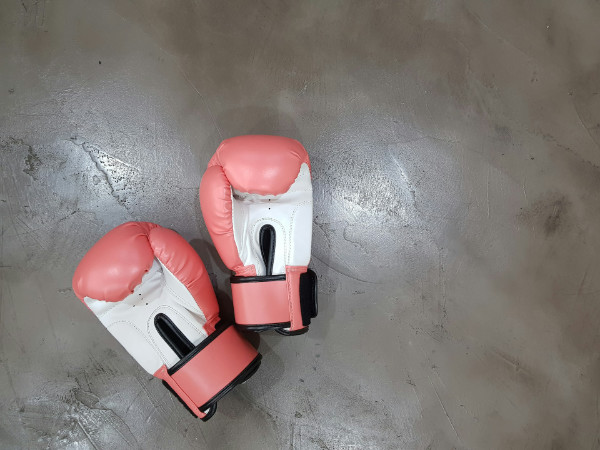
This past week in the Paris Olympics in the women’s welterweight boxing, Italy’s Angela Carini was forced to abandon a fight after only 46 seconds because she feared for her life. Opposite her in the ring was an Algerian boxer, Imane Khelif, who has failed sex tests in the past, and who was removed as recently as last year from the World Championships after failing a testosterone test. The power behind Khelif’s punches was such that Carini’s physical safety could not be assured.
In this case the president of the International Olympic Committee appears to be confused as to the real issues of biology here, but there are plenty of people spelling out the facts of the case. This is not a matter of a transgender competitor; rather of differences in sex development and tests demonstrating that two competitors in female boxing (the other one is Taiwan’s Lin Yu-ting) have XY chromosomes – which denote maleness. Simply being raised as a girl and having a passport identifying them as female, is not – or surely should not be – enough to qualify someone to enter into one of the most dangerous arenas at the highest level as a female. One article reported in Science Daily in 2020 documented that on average men punch 162% times harder than women. It figures.
But hey, I’m not on the inside of this story. What do I know? Only what’s reported in the media. Whose story is the correct one? I can only deal with what I’m reading and hearing, and form my opinion based on that. So feel free to correct me if you know more.
 As I see it, the IOC has attempted to ‘dial down’ scrutiny of the match, TV coverage was minimised; nevertheless debate on the subject has gone viral with the inevitable distortions and sensationalisation that brings. Celebrities as well as sports commentators have joined in the furore over the injustice of this incident. Widespread vitriol, hate and calls for justice have followed. My own observations tell me this was an unfair fight.
But through it all Khelif insists: I am a woman. Her father says she’s a woman. Her country says she’s a woman. She believes she has every right to fight for a medal for her country. Some reports state that she was born with Swyer syndrome which is a form of intersex. That’s as may be, but in other circumstances I would not condone a person with XY chromosomes smashing into a person with XX chromosomes in order to subdue and crush them: my instinct is to apply the same rules in sport.
But whose rights take precedence here? What do you think?
The self-appointed righteous judges of this world have a long history of casting stones at those who are ‘different’ even where this is through no fault of their own. So, If Khelif is simply following a dream after a lifetime struggling with the tricks nature has played on her, I hope she can find some fair and fulfilling way to achieve her goals.
Everyday ethics
Wow! We’re only five plus weeks into 2022, and already the papers seem to have been full of stories centred around ethical questions. Time to share a few by way of illustrating their prevalence in our everyday lives.
 A survey of almost 300 members by the Association of Palliative Medicine, published on 26 January, has shown that doctors are concerned over the focus on negative and traumatic deaths, while ignoring good palliative care leading to gentle easeful deaths. They believe the public are being scared into supporting assisted dying. The timing of this is significant, given that the Government’s Health and Care Bill to legalise assisted dying within a year of the Act coming into force, is currently being processed in the House of Lords.
Current guidance for the forthcoming Scottish census is that transgender people can select their preferred sex/gender identity even in the absence of a gender recognition certificate. A feminist group, Fair Play for Women, have brought a case against this to a top civil court, calling on the judges to strike down this advice. Under present rules, a person must have a medical diagnosis of gender dysphoria, live in their acquired gender for two years, and have their application approved by an expert panel to officially claim a new gender identity; under the SNP plans, self declaration would suffice.
A call has been made for compensation for the approximately 40,000 care workers who lost their jobs because of the mandatory vaccination against Covid policy, now that the measure has been deemed no longer proportionate.
The Medicine and Healthcare Regulatory Agency is proposing to reclassify a vaginal oestrogen tablet – Gina 10; a form of HRT costing as little as £2.50 per week – so that women over the age of 50 can purchase it over the counter. A consultation, seeking the views of GPs, pharmacists and members of the public, is scheduled to take place. Until now such medication has required consultation with a doctor. The proposed new arrangement might still require the input of a pharmacist.
The ongoing debate about inequality where female transgender athletes compete in women’s sport has been revisited in the case of a University of Pennsylvania swimmer who has broken records in women’s races after transitioning from male to female.
The Health and Social Care Secretary has set out a vision to make Britain a world leader in cancer care. It includes the introduction of new technologies, including vaccines, designed to boost survival rates, as well as new ways to boost early diagnosis. Even before the pandemic Britain’s survival rates lagged behind many other Western nations; since the pandemic the figures for missed diagnoses and delayed treatment have plummeted still further.
The world’s most expensive drug, Libmeldy – a gene therapy that costs £2.8 million per treatment – is to be offered on the NHS to young people suffering from a rare genetic condition called metachromatic leukodystrophy, following a landmark deal. The condition causes severe damage to the nervous system and organs, and carries a life expectancy of 5-8 years.
Recently, No10, the Treasury, the Department of Health and the NHS have been discussing a multi-million pound National Recovery Plan to tackle the NHS backlog exacerbated by the pandemic. Now the Treasury has put on ice an announcement about it, which was due to be made on Monday this week. This comes at a time of mounting unrest in Government following a series of revelations about broken Covid rules in Downing Street and unfortunate statements by the Prime Minister. Speculations abound.
The Children’s Commissioner has revealed that more than 100,000 children (1 in 4) referred with mental health issues were discharged before receiving treatment. This was the finding in a survey of more than half a million children. The Department of Health and Social Care have now committed an additional £79 million this year for children’s mental health services.
The Human Fertilisation and Embryology Authority have advised doctors to stop providing wholly inappropriate treatment to infertile couples who request unproven add-on therapies in a bid to improve their chances of having a baby. Increasing numbers of couples are asking for them after misleading claims made in marketing or internet forums.
There is certainly no shortage of topics for exercising the brain when it comes to medicine today, is there? Every one of these issues raises so many fascinating and challenging questions. Were I to continue writing novels in the area of medical ethics (still under review incidentally) there would be plenty to keep me occupied for the next twenty years!
Is it ever right to take a life?
 With all the events marking 75 years since D-Day and the Battle of Normandy, and other war-related events, my mind has been travelling the well-worn path of … is it ever justifiable to take a life? And is there a kind of life that’s worse than death?
Then for the last two Thursdays those questions have swirled again, watching Susanna Reid interviewing inmates awaiting execution in maximum security prisons in the USA for her series: Death Row: Countdown to Execution. The state of Texas supports the death penalty, and the locals appear to take it in their stride, but Susanna found it unsettling just being in the town with the execution chamber, to know exactly when a human being was being walked to that gurney, strapped down, given that lethal shot of Pentobarbital. She wanted to know exactly what was happening, how everyone felt – the convicted man, the family, the witnesses, the townspeople. She’d met these men briefly in the last few days of their lives, and in spite of their criminal backgrounds, it clearly troubled her.
Many inmates are held on Death Row for decades (the average 12 years) and massive amounts of money are spent on appeals even up to the eleventh hour. Fewer than 2% are exonerated but the process has to be gone through, seeking additional years or days of life if nothing else. For those who are the victims of the crimes (and that often includes the family of the convicted man) the death brings a form of closure; but opponents believe that society should not sink to their level. After all, as they said, we don’t rape rapists, we don’t steal from burglars; why should we kill murderers? ‘We should be better than that.‘
And against all this my mind goes to my own area of particular interest, viz the issues around assisted death for people on a different kind of trajectory: those with incurable, degenerative illnesses; trapped for years in many cases, with no hope of a reprieve. Their own kind of death row; their own kind of hell. And our society – too humane to kill convicts – is also unwilling to countenance patients ending their own lives when the pain, the suffering, the indignity, are intolerable. Is this justice? Is this fair? Is it humane? As Scottish former Rugby Union player Doddie Weir (who has Motor Neuron Disease himself and has just buried his mother after a fairly short experience of cancer) said this week: Being a farming boy, when there is no hope with the animals you are able to put them out of their misery, but with humans it is not allowed. It does not seem fair sometimes.
 So many truly difficult questions; so many nuances and valid perspectives. I studied this topic in depth before writing Right to Die, published in 2008. I’ve repeatedly returned to it since. Eleven years on we’re no further forward in terms of the law. Assisted suicide is still illegal; doctors who help a person to die still face a jail sentence of up to 14 years. However, public opinion has swung much more towards some provision to help people caught up in these intolerable situations, helped in no small measure by the brave souls who have shared their harrowing experiences openly. Then in March this year, the Royal College of Physicians declared neutrality on the subject. And this week the Royal College of General Practitioners has said it will consult its 53,000 members on whether the time has come to drop their opposition to assisted dying. The wheels grind oh so slowly, but they do seem to be turning.
What do you think?