justice
Gender issues in sport … again!
Yep, it’s back on the agenda.
Remember Caster Semenya‘s involvement at the Rio Olympic games way back in 2016? I wrote a piece for this blog about the ethical dimensions that rumbled on for ages.  Now here we are years later with another case involving sex chromosomes and justice in sport.
But let me just say this: there’s so much good about the big international sporting events bringing people together from around the world in a healthily competitive arena. Clear rules of engagement, close scrutiny of performance, awesome talent on display, national pride, the best taking on the best … So let’s not lose sight of the big picture by homing in on a single disturbing case.
Because the vast majority of athletes at the top of their game are competing on merit, when there’s a clear violation of the standards of fairness and equality expected and taken for granted in high level sport we are justifiably outraged. The authorities organising the event are challenged. Sometimes individuals are excluded or medals removed. Sometimes not.
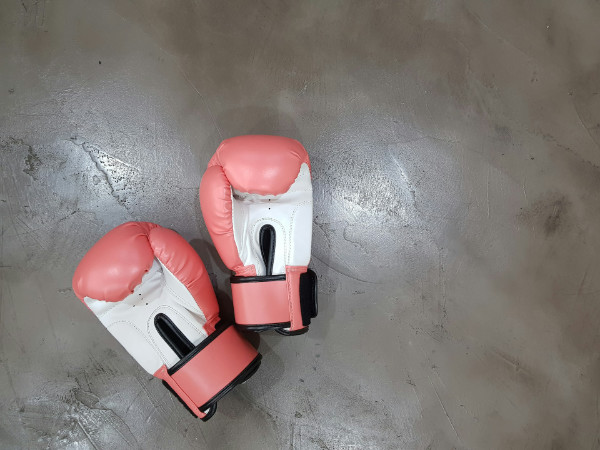
This past week in the Paris Olympics in the women’s welterweight boxing, Italy’s Angela Carini was forced to abandon a fight after only 46 seconds because she feared for her life. Opposite her in the ring was an Algerian boxer, Imane Khelif, who has failed sex tests in the past, and who was removed as recently as last year from the World Championships after failing a testosterone test. The power behind Khelif’s punches was such that Carini’s physical safety could not be assured.
In this case the president of the International Olympic Committee appears to be confused as to the real issues of biology here, but there are plenty of people spelling out the facts of the case. This is not a matter of a transgender competitor; rather of differences in sex development and tests demonstrating that two competitors in female boxing (the other one is Taiwan’s Lin Yu-ting) have XY chromosomes – which denote maleness. Simply being raised as a girl and having a passport identifying them as female, is not – or surely should not be – enough to qualify someone to enter into one of the most dangerous arenas at the highest level as a female. One article reported in Science Daily in 2020 documented that on average men punch 162% times harder than women. It figures.
But hey, I’m not on the inside of this story. What do I know? Only what’s reported in the media. Whose story is the correct one? I can only deal with what I’m reading and hearing, and form my opinion based on that. So feel free to correct me if you know more.
 As I see it, the IOC has attempted to ‘dial down’ scrutiny of the match, TV coverage was minimised; nevertheless debate on the subject has gone viral with the inevitable distortions and sensationalisation that brings. Celebrities as well as sports commentators have joined in the furore over the injustice of this incident. Widespread vitriol, hate and calls for justice have followed. My own observations tell me this was an unfair fight.
But through it all Khelif insists: I am a woman. Her father says she’s a woman. Her country says she’s a woman. She believes she has every right to fight for a medal for her country. Some reports state that she was born with Swyer syndrome which is a form of intersex. That’s as may be, but in other circumstances I would not condone a person with XY chromosomes smashing into a person with XX chromosomes in order to subdue and crush them: my instinct is to apply the same rules in sport.
But whose rights take precedence here? What do you think?
The self-appointed righteous judges of this world have a long history of casting stones at those who are ‘different’ even where this is through no fault of their own. So, If Khelif is simply following a dream after a lifetime struggling with the tricks nature has played on her, I hope she can find some fair and fulfilling way to achieve her goals.
The power of drama
Oh wow! What an amazing response to a drama.
Mr Bates vs the Post Office is based on a real life story of one of the biggest miscarriages of justice in British legal history. More than 700 sub-postmasters and -mistresses were falsely accused of theft, fraud and false accounting, after faulty software made it look as if money was missing – large sums of money. They had long complained about bugs in the system after it erroneously reported shortfalls; some had even used their own money to plug the gaps. Following the convictions, lives were devastated. Reputations were shredded, families bankrupted and shunned. Marriages, businesses and job prospects were ruined. Some people were imprisoned. Some took their own lives.
Prosecutions for these supposed thefts took place between 1999 and 2015. After 20 years of maintaining their innocence, campaigners eventually won a legal battle to have their cases reconsidered. Twenty years!
A public inquiry began in February 2021, but three years on many victims are still fighting for justice, or to secure full compensation. To date only 93 convictions have been overturned, even though it is now undisputed that the software was to blame. That same software, Horizon, is still being used by the Post Office; this new version is described as ‘robust’.
The delays are unconscionable, but a drama has precipitated real action. From 1-4 January 2024 ITV aired four instalments of Mr Bates vs the Post Office, with Toby Jones playing the title character, sub-postmaster Mr Bates, with his customary skill and appeal.
Then on Wednesday 10 January, the BBC devoted an hour of the morning news programme Breakfast, to listening to nine of the real life victims of the Post Office scandal, and allowing them to ask questions of the relevant government minister on air.
At lunch time that same day, 10 January, (yesterday) the prime minister announced new legislation to ‘swiftly exonerate and compensate’ victims.
Wow! I rather suspect the British public will not now allow this promise to go unfulfilled. Such is the power of storytelling.
Backstory
It’s probably fair to say that Patricia Cornwell is generally adjudged the undisputed mother and queen of forensic thriller writing.

It was her first novel, Postmortem, that kick-started this genre and spawned a fascination with the world of the dead. BBC series like Silent Witness, and Waking the Dead, which explore unexplained deaths, are aired at prime time. Just this week, Channel 5 has started showing a brand new 3-part documentary, Cause of Death, taking viewers inside a coroner‘s office as he and his team investigate unexplained deaths.
But way back in the 1980s, it was not instant hits all round. Initially Cornwell had to endure the usual run of rejections, and even when Postmortem was published, it took time before it was duly acclaimed. When she slipped out in her lunch break from the mortuary where she worked for her very first book signing, precisely no copies of the book were sold, and she fielded just one question: an elderly lady asking where she could find the cookbooks!
Since then, of course, she has achieved phenomenal success, won an impressive raft of literary prizes, and sold over 120 million books. Probably her most famous character is Chief Medical Officer Dr Kay Scarpetta, and next week her 26th book in the series comes out. 26!! But it’s Scarpetta’s backstory, and that of her niece Lucy, and policeman colleague Pete Marino, that help to drive the novels – a massive achievement in itself to sustain the suspense and time-lines across so many years, a backdrop to countless horrific crimes and painstaking investigations, each a compelling read in its own right.
Another powerful characteristic of her books which I am in awe of is the precision – whether it’s the minute records of exactly which bones were fractured in a frenzied attack, or the precise level of decomposition of a body, or the battery of tests needed to establish where a body has been, the scene is described in meticulous detail. She lists as her interests:
Forensics | Forensic Technologies | Ballistics | Weapons | Explosives | Pathology & Autopsies | Crime | Historical and Unsolved Criminal Cases | Jack The Ripper | Helicopter Piloting | Scuba Diving | Archaeological Excavation Experience |
It shows! And she’s famous for working tirelessly to stay up to speed as methods of detection and analysis evolve.
But until this week I was unaware of her own harrowing personal story. Interviews with her to mark the publication of Livid on 25th October, have revealed a grim start in life. She was just five years old when her father walked out on Christmas Day. Shortly afterwards she was molested by a local patrolman, and required to testify in court before a grand jury. Her mother suffered from psychotic depression and spent large swathes of her daughter’s early life in hospital, meaning Patricia was either responsible for caring for her at home or in foster care herself. Her foster mother verbally abused her, bullied and force-fed her (leading to subsequent anorexia). She also left Patricia’s beloved dog locked in the basement to die of neglect. The grown up Cornwell is still riddled with deep-down anxieties about families and responsibilities.
By her own admission, in Scarpetta she has created a character who would have rescued her from all this torment – someone who is unflagging in the pursuit of justice for the murder victims who end up on her autopsy table. But it doesn’t require a PhD in psychology to see the origins of her deep empathy with inner turmoil and the effects of suppressed emotion which are so evident in her fiction. She has used her own personal tragedy and her extraordinary literary talent to make sense of the world. In her own words: I think your pain becomes your poetry, your gift. What a gift!
The Assisted Dying Bill … yet again
Patience is the name of the game when it comes to legalising assisted dying, it seems. But this week there’s been a significant breakthrough.
 Back in the noughties, when I was writing my novel, Right to Die, about a young man who contracts Motor Neurone Disease and contemplates ending his own life, I lived in daily dread that something would happen to steal my thunder, and the bottom would fall out of the marketing strategy, before it hit the bookshelves. That was 13 years ago! At that time, Lord Joel Joffe was expending his energy trying to get a bill drafted to ease the lot of those facing intolerable suffering at the end of their lives. I had the privilege of meeting him in London, at the House of Lords, to talk about our shared interests, and he very kindly endorsed my book. Sadly his bill didn’t get through, and he died disappointed by this.
In Scotland, MSP Margot MacDonald fought valiantly for an easement of terminal pain and suffering, her case the more powerful because she herself was suffering with Parkinson’s Disease. I listened to her too on a number of occasions, and was moved by the passion behind her case. She too died without seeing progress on this front.
These are but two of the many notable figures who have kept the issue alive, nibbling away at the edges of the arguments about the horror for some people who face a slow undignified and painful death, and who would welcome the security of knowing that, if things became intolerable, they had a way out that wouldn’t incur penalties for those left behind. Experience in other countries (the USA and Netherlands especially) shows that a large proportion of those who have an advanced directive authorising assisted death, never actually avail themselves of the service. It’s enough to know it’s there if needed.
Over the years, we’ve all heard and seen patients and families sharing their plight with the media, publicly throwing their dwindling energies and resources into fighting for compassion and understanding. We’ve listened to politicians, clergymen, philosophers, religious people, those with disabilities, putting their perspectives into the melting pot. For and against. Passionate, angry, distressed, vengeful, dogged. And gradually, over time, we’ve seen a softening of attitudes taking place.
 As far as the general public are concerned, opinion has swung in favour of a change in the law; for some kind of easement of intolerable suffering. Politicians have gradually – almost imperceptibly – become less scared of picking up this hot potato.
But one group of people who’ve remained reluctant to back assisted dying has been the doctors. Small wonder: they’re the ones who will be on the frontline, actually taking those active steps to supply the fatal drugs, or even administer them, to help eligible patients end their lives, should this become legally permissible in this country. And, as we all know, doctors are in the business of caring not killing.
However, this week, the British Medical Association has dropped its opposition to assisted dying and adopted a neutral stance. Not in favour, please note. Neutral. And indeed, the vote hinged on a hairsbreadth! 49% of the representative body voted in favour of a move to a position of neutrality; 48% were opposed to such a move. They, in turn, were acting on behalf of their members: 40% of whom were in support of a change in the law to allow assisted dying; 33 opposed to it; 21% thought the union should be neutral on the subject. A position of neutrality gives scope for all ranges of opinion. It’s a major step.
And a timely one it seems. Because next month a new version of the Assisted Dying Bill is due to be put to the House of Lords for a second reading, this time promoted by Baroness Meacher – whom I have NOT met! It would seem to have a stronger chance of success this time because of the BMA shift. Time will tell, but I’ll be watching this space closely and thinking of all those who have paved the way but died disappointed.
Justice, rights, entitlement
 The latest casualty of the coronavirus lockdown in this country is fertility care. As of Wednesday of this week, no new patients will be accepted, and even those in mid-treatment, those for whom this is their last hope, those who will be too old to qualify or stand a chance of success by the end of lockdown, will not now receive the necessary procedures towards which they’ve been working for so long. Yet another tragedy. More heartbreak. More hopelessness.
Which brings my thoughts to the ethical issues around assisted conception …
It’s now fifteen years since I wrote Double Trouble, a book about surrogate pregnancy. Fifteen years! Yoiks. But as with so many ethical dilemmas in medicine, the issues are still relevant today.
I was fascinated then, to watch the serialised BBC1 drama, The Nest, which finished this week, about a very wealthy but childless couple, Glasgow property tycoon Dan and his beautiful pampered wife Emily, who decide to go down this route. Click on the picture for the official trailer.

All attempts at IVF have proved unsuccessful. Dan’s sister has already tried to carry a baby for them but miscarried. They have one precious embryo left. One. Only one more chance. Emily meets the troubled teenage Kaya when she accidentally knocks into her in her car. Kaya sees an opportunity to get out of her impoverished life, and offers to be a surrogate for them in return for £50K. But as the story unravels we find that Kaya has secrets in her past and a very dubious pedigree indeed …; the would-be father Dan is something of a rough diamond too, dealing with a lot of shady characters and skullduggery …; Emily is single-minded about motherhood and what she wants, but privately troubled by the morality of what they are doing – always setting herself up as ‘the principled one‘ according to her sister-in-law. No-one in the UK will implant the last embryo. However, the Dochertys can well afford to go abroad for the simple procedure, and they do so.
On the face of it everyone stands to win. Kaya will be set on her dreamed-of pathway to becoming a successful business woman, able to ‘go on a plane, have one of these pull-along cases‘. The wealthy couple get their hearts’ desire. Better yet, surrogate and intended parents establish a relationship, even friendship. Kaya moves in with the Dochertys and gets a taste of a life of privilege. The baby will not only be much wanted, but will have every advantage money can buy.
Naturally – this is, after all, fiction, drama, a series requiring cliff hangers – things go pear-shaped. Relationships get confused. Loyalties are divided. Dubious and unsavoury motives emerge. But the underlying questions and challenges remain pertinent.
Is parenthood a right?
Is ‘want’ the same as ‘need’ in childbirth terms?
Payment for this service in the UK is forbidden. Should it be?
How binding should a contract between intending parents and surrogate be?
Should private arrangements for surrogacy be permitted?
Does a woman have the right to do whatever she likes with her own body?
What constitutes ‘reasonable expenses’?
Should those with the wherewithal be allowed to circumvent ethical and medical guidelines?
Does using someone far less powerful in this way constitute exploitation?
In the event of a dispute about whose baby it is, whose rights should take precedence, and who should decide?
What if the child is damaged/imperfect/not what was expected? Should the contract still stand? Who should accept responsibility for him/her?
What of the baby’s rights?
How much of its origins should a child be told?
Back to the drama … enter Kaya’s long-estranged mother, who encourages her to renege on the contract, hang on to the baby, become a mother herself, a better mother than she has been. But Dan already loves this child. Even when he finds out she is not his genetically, she’s still his daughter in his heart. The Dochertys call in their lawyer; the case goes to court. It’s left to the judge in the Family Court to put things into perspective – severely castigating their self-serving recklessness, the complete imbalance of power, the undesirable qualities on both sides. But, she says, at the end of the day it’s not a question of how she would judge them; it’s about what is in the baby’s best interests.
Contrary to expectation, there is a happy ending to this story, and both sides demonstrate they’ve learned important lessons about what matters in life. But the drama perfectly illustrates the power of fiction to challenge us to think about what society today should endorse, and how far the law can go in dealing with the fine nuances of moral questions in assisted reproduction. Well done, screenwriter Nicole Taylor.
Death row drama
Fast-paced … action packed … unputdownable … chilling … compelling … well crafted … the reviews give Last Witness by Jillianne Hoffman plenty of hype.
 Plus, the author has impeccable credentials for writing a book about criminal trials and police investigations. She was herself an Assistant State Attorney between 1991 and 1996, and a Legal Advisor for the Florida Department of Law Enforcement until 2001, so she knows what she’s talking about. I set out with high hopes. But as I read, a little voice niggled. Is she perhaps rather too anxious to ensure the reader knows how everything works, what everything means. I was personally criticised for letting my academic background show through the mesh early on in my metamorphosis into novelist, so it’s something I’m specially attuned to.
Having said that, the book is centred on a fascinating premise: just how far should a person go to ensure justice is done? Is it ever justifiable to lie in the interests of the greater good, to protect innocent people? My kind of ethical challenges, huh? And Hoffman creates enough bad apples to make one suspicious of everyone in this story! She also challenges the reader to ask, What would I have done in these circumstances? Could I live with a guilty conscience? OK, I’m listening.
A summary of the story:
Three years ago a serial rapist, William Bantling, was sent to death row by Florida’s Assistant State Attorney, CJ Townsend, for the torture and murder of eleven young woman.
Now three policemen closely involved in Bantling’s conviction have been brutally murdered in ritualistic killings conveying a powerful message. No gruesome details are spared in the telling! CJ knew all three victims. She also knows the shocking secret they took to their graves. Now she is the last witness to what they all conspired in.
Someone out there knows the truth and will stop at nothing to prevent it being revealed. Will she be the next to die? Who exactly is this second monster and what motive could he possibly have for such barbarity?
As new facts emerge, serious doubts are being raised about the safety of Bantling’s conviction, enough to demand he be brought from death row to the very court that convicted him, to face again the young woman who sent him to his death. A woman he once raped, terrorised and left for dead. He’s a man with scores to settle and allies in dark places. She’s a woman haunted day and night by the past and the future.
 It’s a dark barbaric tale scraping the barrel of human depravity and psychological manipulation. Maybe it was because I read it during a ten-hour train journey, but I found it rather weighed down with technical detail which slowed the momentum of the story for someone not familiar with the American judiciary system.
In places too, I found the style of writing rather repetitive, and hampered by the density of the material. For me it needed space to breathe. But I loved the description of criminal defense attorney, Lester Franklin Barquet who ‘was old school himself, dressed to the nines in southern manners and a three-piece suit.’
It’s a thriller and part of my ongoing education in how to achieve suspense and tension, but this one doesn’t make it into my exemplar section.
Is it ever right to take a life?
 With all the events marking 75 years since D-Day and the Battle of Normandy, and other war-related events, my mind has been travelling the well-worn path of … is it ever justifiable to take a life? And is there a kind of life that’s worse than death?
Then for the last two Thursdays those questions have swirled again, watching Susanna Reid interviewing inmates awaiting execution in maximum security prisons in the USA for her series: Death Row: Countdown to Execution. The state of Texas supports the death penalty, and the locals appear to take it in their stride, but Susanna found it unsettling just being in the town with the execution chamber, to know exactly when a human being was being walked to that gurney, strapped down, given that lethal shot of Pentobarbital. She wanted to know exactly what was happening, how everyone felt – the convicted man, the family, the witnesses, the townspeople. She’d met these men briefly in the last few days of their lives, and in spite of their criminal backgrounds, it clearly troubled her.
Many inmates are held on Death Row for decades (the average 12 years) and massive amounts of money are spent on appeals even up to the eleventh hour. Fewer than 2% are exonerated but the process has to be gone through, seeking additional years or days of life if nothing else. For those who are the victims of the crimes (and that often includes the family of the convicted man) the death brings a form of closure; but opponents believe that society should not sink to their level. After all, as they said, we don’t rape rapists, we don’t steal from burglars; why should we kill murderers? ‘We should be better than that.‘
And against all this my mind goes to my own area of particular interest, viz the issues around assisted death for people on a different kind of trajectory: those with incurable, degenerative illnesses; trapped for years in many cases, with no hope of a reprieve. Their own kind of death row; their own kind of hell. And our society – too humane to kill convicts – is also unwilling to countenance patients ending their own lives when the pain, the suffering, the indignity, are intolerable. Is this justice? Is this fair? Is it humane? As Scottish former Rugby Union player Doddie Weir (who has Motor Neuron Disease himself and has just buried his mother after a fairly short experience of cancer) said this week: Being a farming boy, when there is no hope with the animals you are able to put them out of their misery, but with humans it is not allowed. It does not seem fair sometimes.
So many truly difficult questions; so many nuances and valid perspectives. I studied this topic in depth before writing Right to Die, published in 2008. I’ve repeatedly returned to it since. Eleven years on we’re no further forward in terms of the law. Assisted suicide is still illegal; doctors who help a person to die still face a jail sentence of up to 14 years. However, public opinion has swung much more towards some provision to help people caught up in these intolerable situations, helped in no small measure by the brave souls who have shared their harrowing experiences openly. Then in March this year, the Royal College of Physicians declared neutrality on the subject. And this week the Royal College of General Practitioners has said it will consult its 53,000 members on whether the time has come to drop their opposition to assisted dying. The wheels grind oh so slowly, but they do seem to be turning.
What do you think?
Christmas blessings
 Since it’s just four days to Christmas I’m quite sure you don’t want to be reading about ethical dilemmas or medical conundrums or even writerly angst, so I shall simply send a seasonal greeting.
It would be all too easy to simply write ‘Happy Christmas, everyone!‘ but I know that sadly this will not be a joyous time for many people. So …
 If you are currently facing devastating loss or grief,
may you be given the strength and courage to go on.
If you are caught in a spiral of stress and anxiety,
may you find a way through which guides you to a safer, more peaceful place.
If life is currently good and you have all you need,
may these blessings continue, valued and treasured.
If you are fortunate enough to enjoy a super-abundance of health and wealth,
may you have the wisdom, compassion and generosity to share wisely.
If you are in a position of power,
may you have the humility and insight
to use it to influence others and effect change for the greater good.

‘Let there be peace on earth and let it begin with me.’
What the papers say
This post should carry a government health warning: If you are quickly bored with facts or allergic to conundrums do not continue with this week’s blog.
I’ve always maintained that the subjects I write about are issues which challenge us as a society; they repeatedly hit the headlines. And this remains the case. To illustrate the point, I decided to monitor the medical ethical challenges that were reported in one newspaper (The Telegraph) for just one week (4-10 August 2014) and share with you what I found. Wow! Even I was bowled over with the sheer volume of material in this category in just seven days.
Please bear in mind as you read, that papers have their own agendas and the facts might not all be correct. However, on this occasion I’m not going to research every issue or attach links or hedge the topics around with qualifiers and alternatives; all these ‘extras’ would detract from my focal point. I’ll simply itemise the issue, and leave you to ask yourself: How would I feel in this situation? What would I do in these circumstances? What should society do? What is fair and just? What are the implications for educating the public, or our limited resources, or competing demands? … Or you can just accept the point if you prefer an easier life!
So … are you sitting comfortably? …

ASSISTED CONCEPTION
There’s been an outcry against the first national sperm bank (in Birmingham) which openly caters for lesbians and single women who want to start a family without having a relationship with a man.
The ongoing story of Gammy, the baby with Downs Syndrome (discussed in my last post) who was allegedly rejected by his commissioning parents following a surrogate twin pregnancy, rolled on with almost daily updates unravelling more and more bizarre aspects, bringing the whole question of surrogacy under the spotlight.
A Japanese businessman is said to have fathered nine babies during the past two years using Thai surrogate mothers. Seven nannies have been hired to care for them. Reports vary as to his motives: from ‘he wanted a big family for himself’, to ‘he’s part of a child trafficking ring’.
ASSISTED DYING
Former teacher, Dawn Faizey Webster, has been in a locked-in state following a stroke at the age of 30, two weeks after giving birth to her son. She was featured this week completing a university degree 12 years later, by blinking using a laptop that translates her eye movements into text. And yet other people in a similar state are pleading for assisted dying because life is intolerable.
MATERNAL v FETAL RIGHTS
Women who drink alcohol during pregnancy slow the development of their children’s brains, reported researchers in Los Angeles. They compared the brains of children with fetal alcohol spectrum disorders and unaffected children over a period of two years.

Shutterstock image
DEMENTIA
Saga conducted a survey of the over 50s and found that far more are afraid of developing dementia than cancer.
A study of 1658 Americans aged 65 and over has found that a severe lack of vitamin D appears to more than double the risk of dementia. But hey, the winter sun in the UK is too weak to generate adequate vitamin levels and older skin is less efficient at doing so. Cue salmon, tuna, mackerel and fortified foods etc etc etc.
A report from the Centre for Economics and Business Research has estimated that the number of people who are forced to retire early because they have (or a loved one has) dementia will double within 15 years.
PERSONAL LIBERTY v PUBLIC SAFETY
Several Britons have been quarantined over fears of the Ebola virus entering this country. It’s alleged that certain ‘special’ patients have been given specific experimental untested drugs to good effect which are not available to others.
MENTAL HEALTH
A nationwide survey of people with bipolar disorder, their carers and the professionals who treat them, is about to begin in this country. The researchers say it’s too often the case that other people remote from the sharp end are the ones who influence research expenditure; they want to remedy this. Critics question the morality of including people with mental illnesses.
A teenage girl in Merseyside took her own life after visiting pro-anorexia websites and self-harming.
ORGAN DONATION
A 24 year old, Stephanie Reynolds, has launched an appeal for a kidney for her mother via Facebook. Thousands of strangers from around the world have offered to be tested to see if they are compatible as potential donors. Her mother, Elaine, has an autoimmune element which means she cannot have an organ from a blood relation. The odds of finding a match are less than one in 10,000. Hence Stephanie’s Facebook appeal. Apparently such appeals have been successful in the USA.
Shutterstock image
PUBLIC HEALTH and LIFE STYLE CHOICES
Grizzly bears gorge themselves and become obese prior to hibernation but they don’t get diabetes. Scientists are asking: Could this offer a clue for treating humans?
A report in Annals of Oncology has stated that if everyone between 50 and 64 took a low dose aspirin daily for 10 years it would prevent 6518 cancer deaths each year and 474 fatal heart attacks. But the price would include an extra 896 deaths per annum from strokes and stomach bleeds. (Hmmmm. This one affects me personally. Some years ago, taking that small prophylactic dose for only six months triggered lymphocytic colitis which has plagued me ever since. So I wouldn’t myself describe it as poetically as Christopher Howse: ‘Aspirins are the vanilla cynosure of the rattling world of pills; unsparkling but attractive, like pearls’. Not in my book, matey! Sorry, I digress.)
It seems that prostate cancer screening could save more lives than programmes to detect breast cancer – so says a European study of 162,000 men from 8 countries. That would mean saving around 2300 lives per annum in the UK. And yet … the research has concluded that such screening should not be introduced. Why? Because a high level of over-diagnosis (resulting from the unreliable PSA test) would mean thousands of men going through needless treatment and ending up with incontinence or impotence.
RESOURCE ISSUES
A staffing agency, Prestige Nursing + Care, has issued new figures which indicate that pensioners’ incomes have fallen further behind the cost of care homes. This is adding to the pressure on NHS hospitals and putting vulnerable elderly people in danger. Also the number of people receiving home adaptations has fallen by 12% since 2010, heightening the risk and incidence of falls and injuries.
A report, The Future of Loneliness, has predicted that hundreds of thousands of pensioners will be all but cut off from services, shops and their local communities within 15 years because of the rise in the use of the internet. The result will be a hugely inflated risk of loneliness, already a worrying aspect of old age.
A ‘wonder drug’, metformin, normally used to treat diabetes, has been found to increase the life expectancy of patients with other conditions such as cancer and cardiovascular disease. This could mean an extra two and a half – three years for today’s 65 year olds. What’s more it only costs 10p a day. But hey, we’re already struggling with the problems of an aging society …
The National Institute for Health and Care Excellence has decided that a revolutionary drug, Kadcyla, that is said to give women with advanced breast cancer an extra six months of life, will not be available on the NHS because it is too expensive, even after the manufacturers have offered a discount. Countries elsewhere in Europe fund it. Ahhh, the old chestnut: if you look at the individual cases, doesn’t every family want to hang on to their loved ones for as long as possible? – well, most families anyway. But add up all those astronomical bills and balance them against only a few more weeks of life and set that against all the other treatments competing for the limited pot of money, and the perspective looks different.
Researchers at Imperial College have found that injecting a patient’s CD34+ stem cells into their brain following a stroke encourages tissue repair and may save them from death or severe disability. However, an expert has said these improvements could just be due to chance or the special care this small safety trial has provided for a tiny number of patients.
FAILURES IN CARE
The Care Quality Commission has admitted that at least 750 homes providing care for the elderly and disabled have been failing to attain at least one basic standard for more than a year. Why? Because the CGC feared legal threats from the owners of the homes. As a result vulnerable people have been knowingly put at risk. The CQC say that a new regime is being introduced to make protection much more robust.
Official statistics on NHS waiting times have revealed that the number of patients forced to queue in ambulances outside A&E departments has almost doubled in three years. In addition, over 3 million people are now on waiting lists for operations – a rise of 700,000 compared with 2010 figures.
Phew! As you can see, I shall never run out of triggers for new novels! I’m constantly thinking, What if ……?