Freida McFadden
13 hours locked in a psychiatric unit
When I was about 20 I was faced with a choice of rotation: obstetrics or psychiatry. It was a no-brainer for me; I was only too aware of the fine dividing line between mental health and mental illness. My vivid imagination played into this decision too.
I grew up in the country in Cornwall not far from the River Tamar. On the other side of the river, on Dartmoor in Devon, was a prison, and very occasionally one of the inmates would escape. I was convinced every owl hoot was them sending signals to their co-conspirators! I couldn’t scuttle the mile home along an unlit path in the gloomy light fast enough. I lay quivering under the bedcovers at night. And I’ve had wierd inexplicable experiences that hover in a twilight zone on and off ever since.
During my decades of clinical practice, I encountered real patients with real mental illness, and visited good friends who needed inpatient treatment for a time. Effective management has changed dramatically over the years, but there’s still for me a scary element of there-but-for-the-grace-of-God … The margins feel all too fragile.
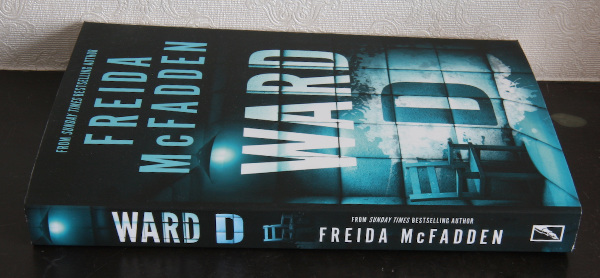
So, last week I picked up a thriller, Ward D, about a psychiatric unit, with a degree of trepidation. Should I get it … should I not? My curiosity overcame my demons and not only did I buy it, but I deliberately put it on the top of my tbr pile. Better not keep procrastinating or I might never dare to open it!
The author, Freida McFadden, is herself a physician specialising in brain injury; her father a practising psychiatrist. She’s a very successful novelist too with accolades in the world of thriller writing, so her credentials are excellent. This should at least be authentic … or is it?
Ward D is a primary locked psychiatric unit. Medical student Amy Brenner is currently rotated to psychiatrics, although she knows she’ll never choose that specialty. Never. Ever. Like me, she’s acutely conscious of the fine line. Almost ten years before, her best friend had been an inpatient there and Amy came face to face with the fragility of the human mind. Hers included. Most especially hers. Because she’d started to hallucinate and hear a voice telling her to do bad things.
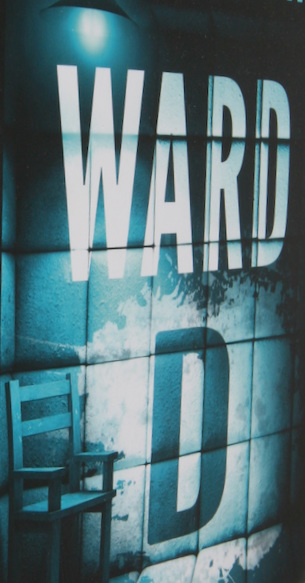 She’s already completed the outpatient bit of her rotation but now she’s scheduled to do one 13-hour night shift in Ward D. Just one night. One night. But for 13 hours she’ll be locked in with seriously disturbed patients and a skeleton staff. She’s frankly terrified, and that feeling only increases when she’s told that two rooms are reserved for the most dangerous patients, one of which is occupied. On no account must she unlock that door. The noises that emanate from behind it are bloodcurdling enough.
The story is written with two time frames. One takes us back eight years to Amy’s friendship at school with Jade, a girl from a troubled home, who develops mental illness sufficiently serious to need incarceration in Ward D for a time. The other, set in the present, counts down the 13 hours of Amy’s night shift as inexplicable things start to happen, terror mounts, and she begins to doubt everyone and everything. The patients have histories of violence but roam around the unit at will, some of them warning her she will be killed that night. A fellow medical student suddenly vanishes from the unit. Even the experienced doctor and nurse she’s working with seem suspect. Who can she trust? But not only is she locked in with them, she has no means of connecting with the outside world, and when a patient manages to damage the electrics, not even a code to allow her to get out.
What actually happens is so extreme I could detach myself from the action for much of the time; it’s inconceivable that this could actually happen. But it was still a tense read.
I did finish it – honestly I did! But perhaps the most sobering message I took from it was that, no matter the severity of the illness or the crimes such patients might commit, they are nevertheless human beings first.