Linda Fairstein
How do you see me?
Eeeh, I wonder how secure you really feel …
Have I’ve mentioned before the practice a small number of authors have adopted of offering the opportunity to have a character in a book named after you in exchange for a donation to a charitable cause or some such worthy return? Helps increase circulation as well, of course! Relatives, friends, neighbours, chance acquaintances … Hey, d’you know I’m in a book?!
Anyway, Linda Fairstein is one such writer. As she says: Some are good guys, some are suspects, some are perps – that’s the chance they take.
Would you be equally happy with any identity allocated to you? How robust is your personal sense of self esteem?!
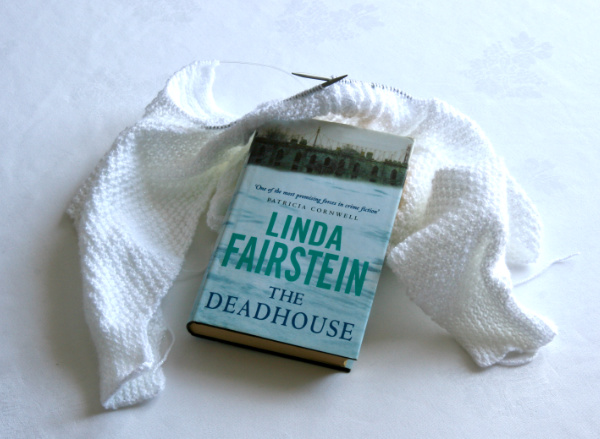 In her novel The Deadhouse, for example, would you want to be cast as
the sleazy academic, or
the workman on the scaffolding peering in windows, or
the student who hangs himself, or
the one who vanishes without a trace?
Would you rejoice seeing your name attached to
the nosey neighbour, or
the paranoid schizophrenic with a history of drug taking, or
the incomprehensible psychiatric patient with learning difficulties, or
the professor found lying at the bottom of a lift shaft?
Would you feel privileged to be identified with
three generations of men, or
the bright spark who solves the crimes?
I kept wondering just what the real owners of all these names would be thinking as the fictional versions got into all kinds of nastinesses. Hmmmmm ….
Learning from the master storytellers
Every now and then I like to read a book by an accomplished writer and analyse what makes it tick. It doesn’t have to be in my favoured genres; I don’t need to like the story; it just has to be well written. It acts as a kind of masterclass.
Cold Hit by Linda Fairstein falls into that category. I’ve read Fairstein’s novels featuring Alexandra Cooper before and know she has brilliant credentials for writing from the perspective of an Assistant District Attorney; she herself is a former prosecutor and America’s foremost expert on sex crimes. I’m instantly inclined towards someone who really knows what they’re talking about. Safe hands.
As her narrator puts it:
… this is the most fascinating job in the world. How many people get up in the morning and look forward to going to work? You and I have never had two days that have been at all predictable in our entire careers, and no two that have been even remotely alike. And on top of it, you do a little bit of good for somebody else in the mix.
So one of the factors behind her success is authority.
And because she is who she is, I’m trusting her to be diligent in her background research. In this case that includes, not just the world of crime and law and forensic medicine, but famous artists and works of art. She drops enough specifics I do know about, for me to trust her in the rest.
Then there’s the meticulous plotting. So intricately woven is it, indeed, that a third of the way in I was wishing I’d kept a written note of who fitted where and how events knitted together. The author seems to have the kind of brilliant mind that can juggle umpteen balls, and know which is which all the time. But I guess, being able to hold details of many clinical cases in your head, and work simultaneously and effectively for all those victims, requires that kind of brain. I think I’d be emotionally swallowed up by just one of them.
Her characterisation is excellent too – each person rounded out and distinctive in their own way. I can see the author’s own professional and analytical eye observing, deducing, calculating, in her day job as well as in the penning of her novels.
Although we might justifiably take exception to some of the politically incorrect comments and attitudes, the dialogue is sharp, witty and appropriate to each person.
Then there’s the clever dropping of actual facts – eg. about art and artists, historical details, real live celebrities. It provides a ring of authenticity and credibility. Makes the whole thing more believable.
It’s a great exercise in unpacking some of the key elements that make writing great. But you’ll probably be asking, what’s the story about? In a nutshell, the corpse of a young woman in expensive silk clothing is pulled from the water strapped to a weighted ladder. Assistant District Attorney Alex Cooper, and her colleagues in the police force, hunt for the killer through luxurious apartments, famous auction houses and avant-guarde galleries. A string of deaths follow. What common factor can link the murders of a rich ex-wife, a convicted blackmailer and a famous art restorer? Big money, priceless paintings, rub shoulders with serious scams and bid-rigging and false death certificates. And now someone wants Alex herself dead.
Cold Hit has all the ingredients of a gripping thriller: high drama, chases, terror, corpses aplenty, police camaraderie, blind alleys. And even the title speaks of a supremely confident writer:
Cold hit = slang term used by scientists to describe what happens when a computer makes a successful comparison between DNA samples, linking a piece of forensic evidence with an actual human being.
Ticks in so many boxes!
Acknowledgements
By the time you’ve written ‘THE END’, gone through dozens of edits, and proof read the final draft of your precious novel till you’re cross eyed, the very idea of writing another word can seem like a labour too far. But hey, what about all those folk who helped to bring this baby to birth?
Some writers content themselves with a dutiful list of agents, publishers, editors (all exemplary of course ) who’ve seen the value of the story and steered it through choppy waters to publication. Most thank friends and family (all stalwarts of course). The page can be simply ‘Thank you …’ followed by a list of names, or it can extend to several pages and include Great Aunt Gertrude who provided scotch broth on cold school days and became an unwitting template for Aunt Sally in the current magnum opus. Hey, been there, done that, myself; I’m not knocking it. I’m fascinated too by those that tell us people actually paid substantial sums of money (to charity of course) in exchange for immortality in the said book.
But best of all are the ones that manage to inject a sense of fun into this potentially dry catalogue. And I love the self-deprecating ones and those that manage to twist a fact to put an unusual slant on it. So I thought I’d share a few of my favourites with you this week.
 This is indeed a work of fiction, and more so than usual. Almost nothing in the previous 340-odd pages is based on reality. Research, hardly a priority, was rarely called upon. Accuracy was not deemed crucial. There was no federal camp at Frostburg, no uranium lawsuit (yet), no dead judge to inspire me, and no acquaintance in prison scheming to get out, at least not to my knowledge.
Inevitably, though, even the laziest of writers need some foundation for their creations, and I was occasionally at a loss. As always, I relied on others. Thanks to …
This book took an embarrassingly long time to write, also my short-term memory isn’t what it was – apparently this is what happens when you’re perimenopausal (not menopausal, I should stress; that’s still decades away, and by the time it happens I’ll be grand again and back winning Mastermind) – so there’s a very good chance that someone may have given me invaluable help at an early stage in the book and that I’ve now completely forgotten. If you are that person, I am truly sorry.
Marian Keyes (This Charming Man)
Last year I lost two friends, each of great spirit and heart. Whenever Alex Cooper (lead in story) goes to the ballet – as she does herewith Natalie Moody – she will be watching the dancers at American Ballet Theatre and honoring Howard Gilan, an extraordinary man whose spirit lives on in all those – man and beast – whom he embraced.
And my young protegee, Maxine Pfeffer, who lost her valiant struggle with cancer, will always be Coop’s paralegal, Max. Thinking of her will forever bring a smile to my face.
Some of my Vassar classmates asked me to create a character in memory of one of our dear friends, the actress Marilyn Swartz Seven, who also died too young. She is here as a woman of mystery – a role I hope she would have enjoyed performing.
In these dog days when lawyers rule the universe, I have to persist with these disclaimers, which happen to be perfectly true. With one exception nobody in this story, and no outfit or corporation, thank God, is based upon an actual person or outfit in the real world … so with luck I shall not be spending the rest of my life in the law courts or worse, though nowadays you can never be sure. But I can tell you this. As my journey through the pharmaceutical jungle progressed, I came to realise that, by comparison with the reality, my story was as tame as a holiday postcard.
John Le Carré (The Constant Gardener)
I hope that my patients and colleagues will forgive me for writing this book.
Oh and, strictly speaking a preface but to leave you smiling:
[This} is the only book of mine which I tried to produce without sitting down at the typewriter and getting a crick in the back.
Not that I ever thought of dictating it to a stenographer. How anyone can compose a story by word of mouth, face to face with a bored looking secretary with a notebook is more than I can imagine. Yet many authors think nothing of saying “Ready, Miss Spelvin? Take dictation. Quote No comma Lord Jasper Murgatroyd comma close quote said no better make it hissed Evangeline comma quote I would not marry you if you were the last man on earth close quote period Quote Well comma, I’m not the last man on earth comma so the point does not arise comma close quote replied Lord Jasper comma twirling his moustache cynically period And so the long day wore on”
If I started to do that sort of ting I should be feeling all the time the girl was saying to herself as she took it down, “Well comma this beats me period How comma with homes for the feeble-minded touting for customers on every side comma has a fathead like this Wodehouse succeeded in remaining at large all these years mark of interrogation”
But I did get one of those machines where you talk into a mouthpiece and have your observations recorded on wax, and I started Thank You, Jeeves, on it. And after the first few paragraphs I thought I would turn back and play the stuff over to hear how it sounded.
It sounded too awful for human consumption.
…
You can’t think out plots like mine without getting a suspicion from time to time that something has gone seriously wrong with the brain’s two hemispheres and the broad band of transversely running fibres known as the corpus collosum.
P G Wodehouse (Thank you, Jeeves)
Thanks, guys. I am resolved to take a leaf out of your books and make my own next acknowledgements more appealing in future.
Thrillers – lessons learned
 OK, with a pile of thrillers of various kinds now read and analysed, I’m a bit closer to refining my own choices for the current novel. What have I decided so far?
Main narrative thread
The issue must be one I personally care about. And I need to be clear who I’m trying to appeal to. A tale of individuals seeking personal justice or dealing with their own family dramas holds my interest more than stories about money laundering or righting organisational wrongs.
Main protagonist(s)
The lead doesn’t have to be likeable but the reader must care about his/her fate so the character needs to be carefully drawn and handled, with a plausible and intriguing backstory.
His/her motivation must be worthy so readers will root for him/her.
He/she must be up against tremendous odds.
Secondary characters
Too many tangential stories and secondary characters run the risk of losing narrative tension and interest. (Or am I a wimp when it comes to holding umpteen names and storylines in my head?)
Style
Short sentences and staccato prose can help build tension but lose impact if used too often. Sentence structure, length and complexity need to be varied.
Grammatically incomplete sentences also need to be used with caution; they can hold up the pace of a story.
Action
The psychology of the characters must be authentic and plausible. (See writers like Jonathan Kellerman who’s a psychologist himself and uses a psychologist to help solve crimes, or Linda Fairstein who was a prosecutor focusing on crimes of violence against women and children and really understands police procedure.)
Accuracy
If the story includes historical reality or geographical locations, the facts must be spot on accurate.
So, with that foundation, I’m now concentrating on fleshing out the profiles of my own characters.