Michael Palmer
Physician-assisted suicide or mercy killing – a medical thriller
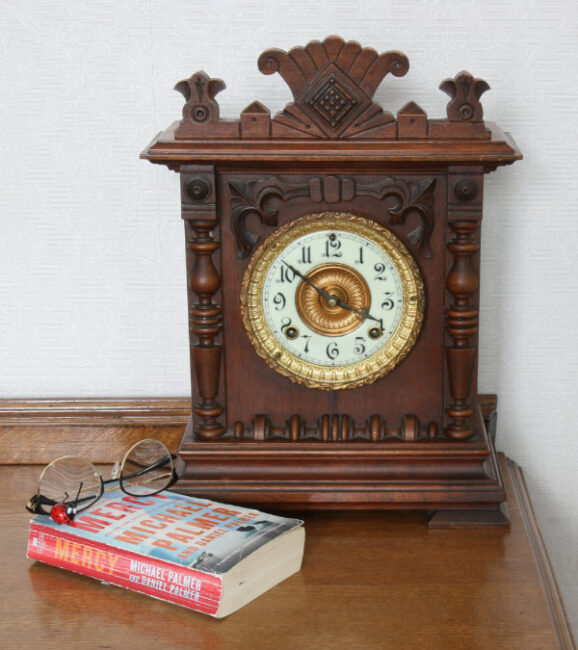 Mercy by Michael and Daniel Parker (a father and son duo) begins with a quote from the Dalai Lama:
Love and compassion are necessities, not luxuries. Without them humanity cannot survive;
and ends with
Compassion is what binds us. It’s what makes living worthwhile.
A neat bookending of the substance of this novel which centres on the controversy around mercy killing. Yep, I’m back in my familiar milieu. And given that the topic comes before the UK Parliament again tomorrow, it’s topical.
The narrative opens with a chapter recounting the deliberate killing of a patient in end-stage cardiac failure – told from his perspective. But something’s decidedly wrong here. It’s certainly not a mutually agreed procedure. We feel the patient’s terror, and are hooked in immediately. And then there’s the person administering the lethal medication: coldly dispassionate not gently reassuring. We’re alert to trouble from the outset.
By contrast, the main protagonist in this story is emergency room intensivist, Dr Julie Devereux, a passionate but compassionate advocate for death with dignity. Her ambition is to take officialdom and government out of the equation and let the patient with his/her doctor decide together what’s best for them, always staying within the law.
Then one day the patient is her fiancé Sam, hideously injured in a three-vehicle collision which she personally witnessed as he was driving his motorcycle ahead of her on a fast road. Along with multiple fractures and serious open wounds, Sam has suffered a crush injury to his fourth cervical vertebra – he faces the rest of his life as a permanent quadriplegic with a tracheotomy, requiring a raft of medication to keep his body functioning.
When he emerges from oblivion and is able to comprehend the desperate situation, Sam begs Julie to help him die.
‘I can’t live like this … You’ve fought for death with dignity for years, now fight for me.’
She’s appalled by the idea when it applies to the man she loves, but he throws her own words back at her:
‘The best care should be made available to every patient, but a patient deserves the right to hasten death to avoid inhumane suffering or escape from a life turned unbearable.’
Now, on the other side of the situation herself, Julie does an about-turn, arguing passionately against all the speeches she’s made, all the papers she’s written, all the arguments she’s employed for mercy killing – for continuing life.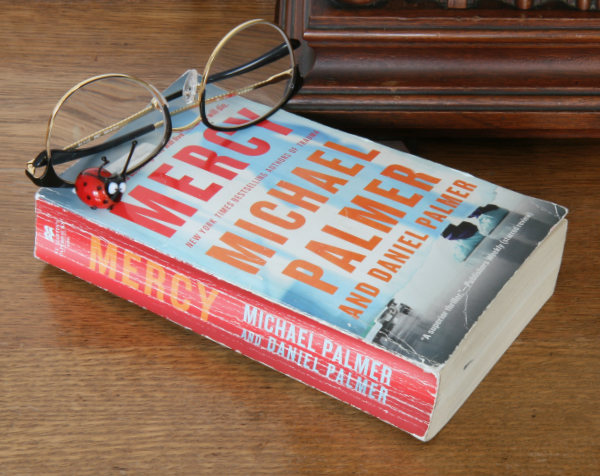
But then something inexplicable happens. Sam suddenly collapses and dies. Julie is acutely aware that something isn’t right. He might have wanted fiercely to die, but he was incapable of doing anything himself to induce death. She didn’t help him, so … what happened? Was this a medical anomaly or did someone do something to cause his death? She starts asking questions, challenging results, and piecing together a bewildering picture. Because the autopsy results indicate a very rare stress phenomenon: takotsubo cardiomyopathy, an instant reaction to an extreme stressful stimulus resulting in an abnormal surge of adrenaline, constricting the coronary arteries, and diminishing blood flow. It seems Sam was literally scared to death.
Julie begins to investigate. She unearths other similar deaths, and gradually a picture emerges of skull-duggery beyond belief. Her search takes her to interview a convicted murderer in prison, to talk to ardent campaigners for life, and experts in many branches of medicine and science. The common link between all the unexpected deaths initially seems to be this enlargement of part of the heart: takotsubo cardiomyopathy … or is it? Why did all these people develop hives just before death? Could it be an acute allergic response? If so to what? And who is behind it?
Administrators desperate to stop the rapid drain of money from the hospital?
Doctors with reputations to maintain?
Parents wanting to avenge their dead children?
Aggrieved staff looking for revenge for dismissal?
Someone with their own personal agenda?
Who?
Still more patients die. When their lab results come back they make no sense; no, more than that, they’re downright sinister. Allergic cardiac events, tics, massive overdoses …?? And a common feature seems to be that all the victims are very ill, severely incapacitated, or at the end of their lives – some even asking to die. It looks on the surface like a macabre version of mercy killing.
It’s now no longer a case of finding out who or what killed Sam; it’s a race to stop more people dying.
But what Julie doesn’t know is that with every piece of the jigsaw she discovers, she’s putting herself in greater danger. Her every word, every movement, is being monitored by a paid assassin who’s simply biding his time. One by one her supporters are picked off. And her own previous high profile in relation to assisted dying becomes a weapon in the hands of her adversaries. She herself becomes a prime suspect.
We’re kept in suspense until the very end, and I for one did not suspect the person who actually killed Sam, though I was suspicious of some of the administrators charged with balancing the books. A thriller in the best sense, and one in my own field of interest! Wahey!!
[NB. Meticulous research went into this story but just for the record, it’s not sparrows but starlings that form murmurations! (pp222-3) But in a work of this calibre it’s actually quite comforting to note a tiny human chink in the overall brilliance!]
Thriller writing
It was probably a throwaway suggestion: ‘I think you should make your next book a thriller‘, but it’s stuck in my mind – especially as it came from someone in the book world whose opinion I respect.
Well, OK, I’m prepared to consider it at least. But first I need to understand what’s involved. Would my ideas thus far fit into this genre? Do I have what it takes to master this kind of writing? So I’ve been delving into the theory; what I’d need to do to create a good thriller. To date I’ve identified seven essentials.
1. Use dread and frightening possibilities to drive the story.
2. Make it action-packed from the outset. Maintain urgency and tension (short paragraphs, cliff hangers, surprises, active verbs, each chapter revealing something new, etc etc) throughout. Include confrontation.
3. Make the stakes high. Give the bad guys seemingly justifiable aims too.
4. Keep the reader guessing till the end.
5. Give the protagonists lots of baggage and emotional complexity, something to fight against and triumph over. Make sure they endure plenty of grief and anxiety along the way. Some characters at least shouldn’t be what they seem to be. Avoid stereotypes.
6. Build dramatic tension by means of multiple points of view.
7. Have an unforgettable take-home message/meaning.
 OK, some at least of the basics.
I’ve read plenty of thrillers over the years; indeed I’m a big fan of both Harlan Coben and Robert Goddard, but I fancied testing the theory using something new to me … Hmmm, how come I have so many unread thrillers on my shelves? … Right, let’s choose something with rave reviews … an acknowledged masterpiece … and maybe something medical?
Brilliant. Flashback by Michael Palmer, a qualified doctor cum very successful writer? Fits my bill perfectly.
Young neurosurgeon Zackery Iverson has left an understaffed, under-resourced hospital and dedicated team of colleagues to return to the place where he grew up, leaving behind a broken relationship and almost all his belongings. His new workplace, the ultramodern rejuvenated regional hospital in Sterling, New Hampshire, is thriving under the leadership of his older brother Frank. State of the art equipment, a growing team of specialists, ultra modern facilities, a veritable ‘juggernaut of technology’. Sounds impressive, but where is the heart?
Zack becomes increasingly concerned about the policies and politics behind the veneer of success. How can the hospital board own so much property? Why are poor patients shipped elsewhere? Why is a very senior doctor claiming harassment and a campaign to get rid of him? Why can a young patient recall events when he should have been anaesthetised during a routine operation? Why is Zach’s new friend and colleague, Suzanne Cole, so alert and bright immediately after her surgery; and why is she behaving erratically now? And why is Zach’s own brother resurrecting childhood rivalries?
Old doubts and insecurities raise their heads. Is Zach being naive and idealistic? Is the cut and thrust of a modern medical ‘business’ simply not for him? Should he have stayed as a champion of the underprivileged and poor?
 A growing sense of dread starts to unravel in his head when he’s called in to work with 8 year old Toby Nelms, a boy who’s so disturbed he’s stopped speaking, is having nightmarish flashbacks, and is wasting away. Why is this lad so terrified of hospitals? How does he know about Metzenbaums? – only staff working in an operating theatre would use the word. There can be only one answer: somehow Toby was awake during his surgery for an incarcerated inguinal hernia. But how could he be? And how much of his suspicions dare Zach share with Toby’s desperate mother?
Could some of his colleagues be monsters masquerading as caring physicians and nurses? Is his own brother somehow implicated? Just where do the ethical boundaries begin and end?
Yep, I’d say this fits all of the above criteria. Thrilling! Unputdownable. I’m hooked, reading long after I should be tucked up asleep.
 But I note something else important. There are lots of characters and subplots in this story – hard to keep a handle on initially, but gradually they become rounded out and emerge as … the shrewd controlling judge … the anaesthetist with a secret unsavoury history … the cardiologist with an abusive ex-husband and a young daughter … the nanny who has served her family faithfully but is now threatened with a nursing home … the nurse who can be bought … the shallow secretary chosen for her loose morals and voluptuous body. This steady drip of detail from various sources adds greatly to the suspense. You’re left wondering just who is the real baddie in all of this? who else is implicated in some way? Everybody seems to have mixed motives, vulnerabilities and dubious characteristics. And the links between them grow ever more tortuous. A tall order to achieve that level of complex interweaving. Could I manage it? Right at this moment I’m not at all sure I could.
Having a take-home message is less of a problem to me. In this case: how far would any of us go to uphold our personal moral standards? What if it became a question of love and loyalty over rules and systems? Familiar? Yep. My kind of territory.
OK. Let’s try again with another novel, another author … a medical mystery-cum-thriller, Damaged by Pamela Callow. Again stories within stories, lots of intertwined characters with mixed agendas, false trails. A blond dog-walker, a lawyer with a haunting past, an inscrutable judge with a murdered daughter, a rejected policeman … By now I’m hugely impressed by authors who can hold all this together so successfully.
One thing is definitely in my favour. Medicine’s a hotbed of ethical quandaries – that’s why I became a novelist in the first place, of course. All those folders containing ideas and research material amassed over the years? Ideal material for intrigue and mystery and dark deeds.
So, what do I think now? Well, I’m not ruling out a thriller this time around. Indeed I’m already trying to work out some kind of grid that would make my story-line work. But, boy, what an undertaking. I might be gone some time!!
Books books and more books
 I’ve had a very generous book token burning a hole in my pocket for too long now. Holding me back was a real conscience about acquiring any more books when my shelves are already groaning, and I couldn’t get to the bottom of my my tbr pile if I did nothing else but read for the rest of the year.
But hey, everybody who knows anything says that writers must read … and read … and read. Voraciously. Comprehensively. Widely. Constantly.
Besides which, it would be churlish not to appreciate this wonderful gift, so I’ve succumbed and been spending it over the last few weeks. What fun. I delved into my file marked BOOKS I MUST READ, re-read the reviews, ordered my choices, and hey presto! here they are.
 (I didn’t realise this first batch were colour coordinated until I put them together to photograph!)

And …

And finally …

I might be gone some time!
Speaking of treasured books brings me to the lady in a village in Cambridgeshire who bought an old phone box for her husband as a birthday present in 2011. He restored it and installed it on the forecourt of their garage (on land they owned) and they filled it with over 800 books, opening it to their friends and neighbours. It became a free and much valued part of community life. Brilliant. Four years later though, the district council suddenly decided the phone box needed planning permission for a change of use, a process that would cost the owners £400. The poor lady emptied the shelves, bagged up the books and bundled them into a skip (I think for storage not disposal). Mercifully the council eventually saw sense and the phone box was reprieved, but not before the said stock were damaged by the wet weather. Nothing daunted she has now rebuilt her supplies and the phone box library is back in operation this month. Three cheers for her indomitable spirit and stunning services to reading.
The thought of 800 books going to waste like this makes me value my own collection even more.