natural disasters
The Hour I First Believed
Imagine you’re a high school nurse, sitting quietly listening to a troubled student. It’s April 1999. It’s lunch-time, that hour when the maximum number of youngsters gather in one place. Suddenly, without warning, all hell breaks loose. Two teenagers both known to you, now armed with guns and knives and bombs, are laughing and taunting as they systematically shoot the children around them with apparently carefree abandon. You crawl into a dark cabinet, but you can still see and hear their deadly progress, and you expect any moment to be blasted out of existence. When you eventually emerge, bodies litter the floor and the student you were with is missing.
Or imagine you are the spouse of the woman hiding in the cupboard. You too normally work in the same school, but you’re currently miles away organising the funeral of a relative. The developing news of the massacre is running continuously on TV, but you have no way of knowing if your wife, your colleagues, are alive or dead.
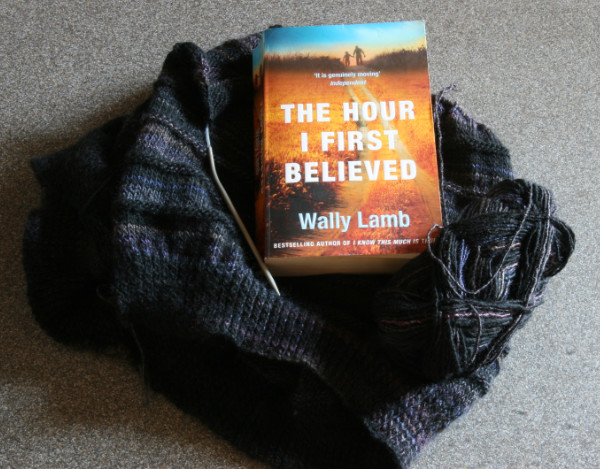 We’ve all read and heard about the Columbine High School massacre in Colorado in 1999, but Wally Lamb takes us inside the school on that fateful day, inside the lives of those for ever marked by these terrifying events.
In a nutshell so as not to spoil the story for future readers …
Both Caelum Quirk, the narrator, a creative writing teacher, and his wife Maureen, though not physically hurt, are seriously traumatised by the experience and seek professional help. They move right away from the scene of the crime and pick up the threads of Caelum’s earlier life, but they both develop dependencies which in turn lead to further tragedies, mounting financial worries, and an unravelling of their family history which brings both solace and heartbreak.
Although The Hour I First Believed is essentially a work of fiction, it feels much more than that. By weaving reality throughout the story – with actual names and words and excerpts from the killers, and reference to well known individuals, and historic events like the destruction of the World Trade Centre on 9/11 and hurricane Katrina – Lamb has given the whole narrative a sense of historic accuracy and credibility, allowing him to explore and examine real tragedies such as war and natural disasters and violent crimes more meaningfully.
Why did he choose this tricky route? For two reasons. First, because he felt a responsibility to name the Columbine victims, both dead and injured, and to acknowledge the strength and suffering of those traumatised by the event. And second, because, having spent 29 years in high schools, he was both frightened and confused by the twisted logic of the two boys who slaughtered those innocent children, and wondered if he would have acted as courageously as some colleagues did. His overarching hope back in 2008, was that the book in some small way would help to broaden understanding and maybe prevent future tragedy. Sadly events since have rather questioned that.
As with I Know This Much is True, I personally found the book overly complicated by the inclusion of long documents and lateral stories (it’s 632 pages long), but I take my hat off to any author who researches meticulously and makes me believe in his story. And perhaps a couple of sentences from early in the book, describing Caelum’s experience of teaching creative writing, capture what he has achieved:
‘Look, don’t just stare at the pages. Become the characters. Live inside the book,’ he’d tell his students.
They’d sit there, staring back politely at the alien from Planet Irrelevance.