Rhodesia/Zimbabwe
The dark side of psychiatric illness
I have an ambivalent relationship with psychiatry which goes back sixty years. But that was probably what drew me to the book I’ve just finished reading.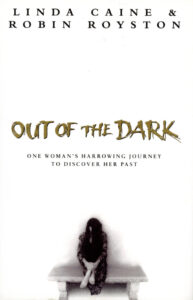
Out of the Dark is a moving account of one woman’s descent into depression and suicidal ideation and her struggle to return from that dark place with its sense of overwhelming hopelessness. The two narrators are Linda Caine and her psychiatrist/psychotherapist, Dr Robin Royston.
On the face of it Linda has everything: health, financial security, a beautiful home, a husband she loves who loves her, two healthy children, talents and hobbies, a strong faith, good social networks. But she becomes increasingly aware of a periodic detachment from reality and a desire to escape from the frightening place she is sinking into.
It’s as though my mind has slipped out of gear and is running in neutral.
Thanks to a church friend she’s saved from killing herself and taken into the mental health sector. Thereafter it takes years of patience and care to unravel the mysteries of her mind.
She grew up along with her three siblings in Rhodesia/Zimbabwe in Africa when apartheid was causing major unrest. Her mother, who was never very motherly, left them when Linda was eight, and had no further contact with them. In time her father married a black woman, who was not kind to Linda, and they became social outcasts. When Linda became pregnant her father threw her out, and she went on to marry a violent man.
When the book opens Linda is a woman in her thirties, happily married to a lawyer, Chris, whom she has known since primary school, and they have two children. But Linda is becoming increasingly disturbed by bad dreams, absences when she simply tunes out of life, and a growing conviction that death would be a welcome release. She clearly needs help.
 Sometimes I see myself lying beneath the water, staring up through the fingers of a hand, spread across my face, over my mouth and nose. At other times, I see a pair of eyes staring furiously at me; eyes that want me dead; eyes that look straight through me as though I don’t warrant the space I take up. In the back of my mind, I keep telling myself, if I’m not better next week I can always commit suicide.
Her psychotherapist, Dr Robin Royston likes Linda:
She isn’t manipulative, or self-seeking. She has no hidden agenda. She wears her pain apologetically, as though she doesn’t want anyon’e sympathy or help.
But he’s intensely concerned about her because, not only does she seem devoid of hope, but she’s not getting better. He knows that deep and powerful psychological factors are at work but has no idea what they are. Though Linda has no identifiable psychiatric disorder, he is certain that the answer to her problem lies within her. She’s struggling to cope with the everyday stresses of life, and unless this is ameliorated she will become suicidal again.
Linda is like her horse (which had colic and died) – deeply wounded, walking round and round in agony. She can see no reason for her pain and no treatment that can take it away. I have to keep her on her feet, to keep her moving forward. The answer lies within her. It invariably does.
It’s as though there’s something in her mind that wants to get out but each time we move closer she just falls apart.
 Then Linda suffers a major breakdown and needs to be admitted to the psychiatric hospital. The accounts of her experiences as she’s dragged further and further down into a black vortex of terror make disturbing reading. It takes endless patience and skill to help her explore and share the traumas from her past, some of which have been denied so comprehensively for so long. The cost to both patient and therapist is captured in the two perspectives running side by side. It is by no means a linear progression to recovery and Linda returns to the hospital a number of times, and again and again regresses in her behaviour to an alarming degree, damaging both herself and the fabric of the building around her. I lost count of the number oif times she smashed windows!
The secrets in her African childhood and adolescence are buried so deep that to reveal them may destroy her completely, but gradually a picture emerges which explains everything. From a very young age she had suffered appalling abuses and her only survival mechanism was to dissociate herself in order to survive. Now, as an adult, her mind ‘slides away’ when things trigger powerful negative feelings, she becomes absent and unaware of the present. Dr Royston knows that painful and frightening though it may be, and no matter how uncertain the consequences, Linda herself must be helped to face the repressed memories and learn to live with them if she’s to find the will to live. But each memory renders her extremely vulnerable, and there are no guarantees that the team will save her from herself or her suicidal feelings. They put their professional judgement on the line in some of the risks they take with her.
Psychotherapy doesn’t create perfect people with perfect lives. It just helps us to cope with what we have.
But gradually, gradually, they bring her to a place where she is honestly facing the horrors of her past, there are no more unaddressed issues, and Linda takes the last step in choosing to allow a faith healer to cleanse her life of the demons that have haunted her for so long. The family are restored and reunited, ready to up sticks and start a new life in sunny California.
We’ve probably all been aware of the negative press around repressed memory, and the damage caused by attributing present trauma to past abuse, but I felt I learned such a lot from this account, and have a deeper respect for the work of people like Dr Royston and his team.