apartheid
The dark side of psychiatric illness
I have an ambivalent relationship with psychiatry which goes back sixty years. But that was probably what drew me to the book I’ve just finished reading.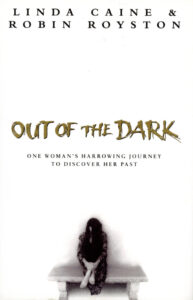
Out of the Dark is a moving account of one woman’s descent into depression and suicidal ideation and her struggle to return from that dark place with its sense of overwhelming hopelessness. The two narrators are Linda Caine and her psychiatrist/psychotherapist, Dr Robin Royston.
On the face of it Linda has everything: health, financial security, a beautiful home, a husband she loves who loves her, two healthy children, talents and hobbies, a strong faith, good social networks. But she becomes increasingly aware of a periodic detachment from reality and a desire to escape from the frightening place she is sinking into.
It’s as though my mind has slipped out of gear and is running in neutral.
Thanks to a church friend she’s saved from killing herself and taken into the mental health sector. Thereafter it takes years of patience and care to unravel the mysteries of her mind.
She grew up along with her three siblings in Rhodesia/Zimbabwe in Africa when apartheid was causing major unrest. Her mother, who was never very motherly, left them when Linda was eight, and had no further contact with them. In time her father married a black woman, who was not kind to Linda, and they became social outcasts. When Linda became pregnant her father threw her out, and she went on to marry a violent man.
When the book opens Linda is a woman in her thirties, happily married to a lawyer, Chris, whom she has known since primary school, and they have two children. But Linda is becoming increasingly disturbed by bad dreams, absences when she simply tunes out of life, and a growing conviction that death would be a welcome release. She clearly needs help.
 Sometimes I see myself lying beneath the water, staring up through the fingers of a hand, spread across my face, over my mouth and nose. At other times, I see a pair of eyes staring furiously at me; eyes that want me dead; eyes that look straight through me as though I don’t warrant the space I take up. In the back of my mind, I keep telling myself, if I’m not better next week I can always commit suicide.
Her psychotherapist, Dr Robin Royston likes Linda:
She isn’t manipulative, or self-seeking. She has no hidden agenda. She wears her pain apologetically, as though she doesn’t want anyon’e sympathy or help.
But he’s intensely concerned about her because, not only does she seem devoid of hope, but she’s not getting better. He knows that deep and powerful psychological factors are at work but has no idea what they are. Though Linda has no identifiable psychiatric disorder, he is certain that the answer to her problem lies within her. She’s struggling to cope with the everyday stresses of life, and unless this is ameliorated she will become suicidal again.
Linda is like her horse (which had colic and died) – deeply wounded, walking round and round in agony. She can see no reason for her pain and no treatment that can take it away. I have to keep her on her feet, to keep her moving forward. The answer lies within her. It invariably does.
It’s as though there’s something in her mind that wants to get out but each time we move closer she just falls apart.
 Then Linda suffers a major breakdown and needs to be admitted to the psychiatric hospital. The accounts of her experiences as she’s dragged further and further down into a black vortex of terror make disturbing reading. It takes endless patience and skill to help her explore and share the traumas from her past, some of which have been denied so comprehensively for so long. The cost to both patient and therapist is captured in the two perspectives running side by side. It is by no means a linear progression to recovery and Linda returns to the hospital a number of times, and again and again regresses in her behaviour to an alarming degree, damaging both herself and the fabric of the building around her. I lost count of the number oif times she smashed windows!
The secrets in her African childhood and adolescence are buried so deep that to reveal them may destroy her completely, but gradually a picture emerges which explains everything. From a very young age she had suffered appalling abuses and her only survival mechanism was to dissociate herself in order to survive. Now, as an adult, her mind ‘slides away’ when things trigger powerful negative feelings, she becomes absent and unaware of the present. Dr Royston knows that painful and frightening though it may be, and no matter how uncertain the consequences, Linda herself must be helped to face the repressed memories and learn to live with them if she’s to find the will to live. But each memory renders her extremely vulnerable, and there are no guarantees that the team will save her from herself or her suicidal feelings. They put their professional judgement on the line in some of the risks they take with her.
Psychotherapy doesn’t create perfect people with perfect lives. It just helps us to cope with what we have.
But gradually, gradually, they bring her to a place where she is honestly facing the horrors of her past, there are no more unaddressed issues, and Linda takes the last step in choosing to allow a faith healer to cleanse her life of the demons that have haunted her for so long. The family are restored and reunited, ready to up sticks and start a new life in sunny California.
We’ve probably all been aware of the negative press around repressed memory, and the damage caused by attributing present trauma to past abuse, but I felt I learned such a lot from this account, and have a deeper respect for the work of people like Dr Royston and his team.
A Scottish mystery
OK, duty done! I duly persisted to the end of Georgette Heyer’s mighty tome on Lord John of Bedford. So I’ve earned the pleasure of reading the book I was itching to get into: The Woman who Walked into the Sea, bought in the Outer Hebrides last month. And memories of those endless golden beaches, turquoise seas, alluring bays, came flooding back.

The author, Mark Douglas-Home, – yep, he is indeed the nephew of the former prime-minister, Alec Douglas-Home – is a journalist turned author, with an interesting career start: as a student he edited a University anti-apartheid newspaper in South Africa and got himself deported! Now there’s tale to tell!! He now lives more quietly in Edinburgh and this is his second novel.
 The story’s set on the North West coast of Scotland where, on 9 September 1983, a heavily pregnant Megan Bates walked across the sands of a remote beach into the cold Atlantic sea, and kept on walking. She was 33 years old and was wearing a loose white dress and a raffia hat with a broad red ribbon round it. Or so it was said. But the day before the sighting of Megan walking to her death, a baby girl was abandoned at the main door of Raigmore Hospital, Inverness, just before midnight, in a cardboard box, wrapped only in towels. There was no note, nothing to identify her apart from an envelope taped to the side of the box containing a brooch featuring violets, pinned to a small rectangular section cut from a green woollen cardigan. Could this have been Megan’s illegitimate child? Because of the brooch, the staff named the baby Violet.
26 years later, following a tip off from a social worker from Inverness, Violet Wells is searching for clues as to her biological mother’s life and intentions. Her journey takes her to the island where Megan lived and died. But the good people of Poltown give her a strange reception: there’s a local beach-combing farmer who says he loved Megan but who was accused by the police of killing her; a bitter elderly lady who was in service but has been soured by her treatment since the death of her employer; a stranger who attempts to abduct her. It seems the whole community is conspiring to keep its secrets buried and nothing is what it seems. Even Orasaigh Cottage, Megan’s rented home, is stripped of personality and bereft of any trace of her existence. And yet her possessions are preserved in a room in the ramshackle building belonging to a boy/man who believes her still alive.
Cal McGill is a private investigator and oceanographer brought in to locate things and people lost at sea, and currently not at all sure he does families any favours by doing so. He’s intrigued by this young woman who has suddenly left her flat in Glasgow and her four year old daughter, Anna, and come to this far corner, obsessed by her personal quest, reticent about sharing her own story. His knowledge of tides and flotsam makes him question the newspaper and police accounts of that time a quarter of a century ago. But his interest in this woman and her strange history soon leads to his personal safety being threatened as well as Violet’s.
Subtly, little by little, local characters let slip details and together Violet and Cal piece together a fragmented account – a tale of greed and jealousy, cover up and lies – until the pieces of the jigsaw fall into place and the ugly truth is revealed.
It’s been likened to a Ruth Rendell mystery. I wouldn’t personally rank it in that school of writing but I enjoyed the unravelling and of course, the exploration of the parent-child bond as well as the importance of knowing one’s roots; both slot neatly into my own current preoccupations.
A relaxing diversion before getting back into my own novel which is now on the downward slope to a conclusion. Very exciting to be counting down.
A Place Called Winter
All except one of my trusted readers/critics have now given me their feedback on my latest book, Listen. Exciting times. But before I sit down for a serious edit, I’m immersing myself in some exquisite writing, beautiful language from the pen of a master, that will be a incentive to me to raise my own game – I hope!
The author? Patrick Gale. The book? A Place Called Winter. A sad, tender, compelling tale of Harry Cane’s battle with his own demons, the taboos of his day, and the wild wastelands of a new country. It’s an intensely personal novel inspired by a true story from Gale’s own family history: one gay man reaching out with sympathy and deep feeling to another (his mother’s grandfather) across a century of social change.

Harry Cane is born into privilege, raised to ‘believe that what mattered was to be unmistakably a gentleman’. He rides horses; others muck out their stables. His soft hands remain idle while callouses build up on the palms of his social inferiors. But his childhood is emotionally impoverished, with his mother dead and his father absent, schooldays punctuated by all the trials upper class boys can inflict on those they see as weaker prettier mortals. Consequently his life is centred on his younger brother Jack. It’s Jack who drags his shy insecure brother into society after their father’s death and introduces him to Winifred Wells, his future wife. Theirs is a gentle undemanding relationship which reluctantly produces one daughter before it settles into platonic coexistence.
The time is the early 1900s; apartheid is unchallenged; class distinctions rule; abortion and homosexuality are unlawful, the latter punishable by hard labour and utter disgrace; ‘treatment’ for psychiatric illness and ‘deviance’ is draconian. When his brother-in-law discovers Harry’s guilty secret, Harry – now an exiled ‘unmentionable‘ – signs up for a new start in a new country, Canada, one of 511 passengers on a ship sailing to the unknown.
The vast impossible prairies are simply waiting to be tamed, and after serving his year-and-a-day apprenticeship to a Danish farmer, Harry commits himself to converting 160 acres of wild wasteland into a self-sufficient thriving homestead within three years. Setting out with simply the map coordinates SW 23-43-25-W3, and directions to a place called Winter scribbled on the brown paper the cheese was wrapped in. An English innocent in a harsh unbroken landscape where there is ‘not much call for cash‘, and ‘neighbour is a relative term‘.
His closest neighbours are a brother and sister, Paul and Petra Slaymaker, whose lives become intimately entwined with his own. Beautiful relationships are established which are tested in the cauldron of gossip, violence, war and illness. But their peace is threatened much more by the reappearance of a common enemy whose actions and knowledge cast a long shadow over their lives.
Gale’s writing is superb. His characters are beautifully realised, their emotions are captured with tenderness and palpable truth, and the abiding fear of loss, disgrace and exile haunts every hour of reading. Much as I revelled in the writing, though, I had a powerful feeling of desolation at times. Harry’s apologetic personality, his sad acceptance of the degrading things that happen to him, his gentle resilience, his innate decency even in the face of extreme provocation, stand in sharp contrast to the militance and ferocity of modern day campaigners for individual and collective rights. I wanted to reach out to him with compassion, understanding and reassurance.
But it’s a novel. I must instead give you a flavour of the lyrical prose:
… hot breakfast rolls as soft and pale as infancy.
… torn rags of sentences.
… they gave the impression of having emerged, fully formed, from eggs, as brittle as the waxy shells they had discarded.
There’s the heir and the spare and the heiress-beware.
A horse is ‘like a sofa with hooves‘.
‘Vaccinated by this cruel loss of his first daughter, he approached fatherhood the second time round with a certain reserve. He did not consciously harden his heart, but he loved with hands metaphorically behind his back.’
‘… war was declared in August, when harvest preparations were at their height. The news was sown swiftly, shaken from pulpits and scattered by posters and threshing gangs.’
I rarely give a book 5*s – this novel reminds me why. It wholeheartedly merits them. Highly recommended.
*****