Psychological overload
I was intrigued to hear the bestselling crime writer Patricia Cornwall speaking about her new book, Unnatural Death, on BBC News recently. She published her first novel in 1990, and she’s been producing bestsellers for over thirty years. So why did my ears prick up? Because this time she reported a change in her modus operandi: she is much gentler with her readers nowadays, sparing them an excess of gory details. She even makes her victims baddies to lessen the stress! Why? Because, she feels, we are all more affected by the tsunami of bad news and real life horror that crashes over us almost daily these days. We don’t need oceans of fictional angst superimposed on reality.
This tallies with my own personal experience as a writer, not having the personal space nowadays to add unnecessarily to the real psychological stresses of life these days.
 So it was with her words in my mind that I picked up The Restless Dead by another bestselling thriller writer, Simon Beckett. It was published back in 2017 and billed as The most chilling forensics thriller you’ll read this year. OK, that should test my metal! And sure enough it spares no detail. It opens with a macabre description of what happens to a body in water – the decomposition, degradation, disintegration. Gruesome, graphic stuff. And as the pages turn, bodies float to the surface or are discovered in various stages of this process. Oh yes, we can see them in all their grisliness!
David Hunter, GP turned forensic anthropologist, is called in when human remains are too badly decomposed or degraded for pathologists to deal with, and it’s his job to assess each cadaver and crime scene to piece together what actually happened and when.
I’d become intimate with death in all its gory excess, fluent in the languages of bone, putrefaction and decay.
And we look over his shoulder.
Curiously though, because this revolved around scientific analysis, the chemistry, I didn’t find the mounting death toll or the graphic detail overwhelming. So I was in a good place to suddenly find the story segued into my own much gentler field of interest – medical ethical issues. One of the characters is transgender! A timely and perfectly serendipitous development.
But thanks go to Patricia Cornwall for making me feel less of a wimp, by naming and explaining and somehow legitimating my reduced capacity for fictional stress!
Nothing Ventured
I’m currently grappling with some very deep and challenging topics, so needed a little light relief and an escape from brain overload and emotional tension. Jeffrey Archer ticked all the boxes and Nothing Ventured – the first of his William Warwick series – has proved both undemanding and distracting. Oh, and with a nice line in humour. Just what the doctor ordered.
 It’s billed as ‘not a detective story, but a story about a detective’. DC William Warwick is the product of an expensive private education, with a degree in Art History, and a lifelong yearning and determination to be a police detective. His father is an eminent judge and his sister a successful barrister, but William does his best to hide these facts from his fellow officers; he wants to advance on his own merits alone. What he’s less able to hide are his privileged ‘choirboy’ credentials.
Having been very successfully mentored by an excellent near-retirement sergeant on the beat and given invaluable practical advice, William is devastated when Fred is killed in the line of duty while they are out on the streets, and he is himself wounded in the same incident. But by this time his own innate abilities are all too obvious and he is fast tracked to Scotland Yard into the Art and Antiques Squad.
With his background in Art History he’s uniquely qualified to join a team investigating the theft of priceless masterpieces by the great artists, and the clever replication of certain special pieces. When he falls in love with Beth Rainsford, a girl from the Fitzmolean Museum from where one great work was stolen seven years earlier, he also gets embroiled in her personal campaign to free her father, Arthur, from prison where he is serving time for murder. William becomes a key player in both cases, and both his father, Sir Julian Warwick, and his sister, Grace, are instrumental in defending Arthur’s innocence.
When the mastermind behind the theft of paintings is apprehended, both his case and the review of Arthur Rainsford’s case come to court at the same time. Archer skilfully has us dipping back and forth into Court 22 and Court 14, following the arguments in each case, eyes flicking from the immobile faces of the experienced judges, to the reactions of counsel as they score or lose points, to the concentration of the jury, to the sneer on the face of the man in the dock.
Fred Yates’ advice to a rookie PC Warwick at the outset of his career is: ABC – Accept nothing. Believe no one. Challenge everything. And that’s what we need to do with this book. Archer is brilliant at weaving a clever plot and keeping us guessing till the end which way the courts will swing. Nothing Ventured filled this brief very satisfactorily.
High in the Rocky Mountains …
Following the huge success of The Horse Whisperer, Nicholas Evans again chose animals – this time wolves – to take centre stage in his second novel, The Loop, published in 1998 – but well worth coming back to.  Evans was a screenwriter and film director before he became a best selling author, and something of his eye for what makes a dramatic scene is there in his writing … the bleak scenery high in the Rocky Mountains where wolves, bears and coyotes roam; the basic shack which must serve as a home for a solitary female wolf biologist, even in the depths of a harsh North American winter; the bloody scenes of animal savagery; the magic of wild animals doing what comes naturally.
At its heart is a young biologist, Helen Ross, who is sent to a small ranching town in the Rocky Mountains to defend a pack of wolves from those who want to destroy them. Wolves are an endangered species and the law protects them, but local ranchers are sure they are slaughtering their animals, and they’re determined to eradicate them from their area. Chief among them is the brutal but charismatic womaniser, Buck Calder. Helen treads carefully but then, alone in this hostile place, bruised from a broken love affair, she embarks on a dangerous love affair with Buck’s teenage son, Luke.
Although the book includes this tender love story, the vast sweep of the Rockies and the bigger ongoing struggle to achieve harmony between man and nature somehow keep the lives of the central characters in perspective. Knowing the basic narrative, perfectly at ease with the well-wrought cast of characters, I had leisure this time to be fascinated by the techniques the author uses to convey the inner turmoil driving people to act as they do.
Young Luke Calder is a closet animal-lover – a ‘bunny-hugger’ as his domineering, overbearing, amoral father Buck puts it scornfully. His pronounced stammer in all the dialogue with Buck is in sharp contrast to his fluent articulation in the presence of his gentle speech therapist, and the confidence he finds with Helen.
Helen’s dialogue too varies according to who she is speaking with – sarcastic with her prospective stepmother, but jauntily jokey with her fellow wolf enthusiast, Dan, and softly reflective with Luke. Her public assurance as she moves in the treacherous world between the wolf-lovers and -haters, shows in stark relief against the heartbroken Helen we see sobbing uncontrollably when more time goes by without a word from her erstwhile lover Joel, and the gently supportive Helen we see in her role as older lover.
The descriptions of animal behaviour are redolent of David Attenborough‘s rather breathless explanation of predators and prey engaged in life and death struggles. Half way through the book a whole chapter is devoted to the encounter between an old male moose and a pack of nine wolves, conveying the cunning and cleverness of survival tactics. Life deep within an earthen tunnel seen through the eyes of a mother wolf giving birth to and guarding her six newborn pups is breath-holdingly tense when we know killers with guns and flaming torches are approaching, starvation a very real prospect.
My own experience of having trekked in the Rockies, seen bears roaming wild there, carried pepper spray in case of a personal encounter, and felt the remoteness deep in my bones, made this all the more real and immediate.
As you may recall, I love lyrical language from these master-storytellers, but a couple of short examples must suffice:
silence lowered itself like a murderer’s pillow over the forest
The blizzard had been blowing for the last two hours. It was coming from the northeast, straight across the lake. Helen listened to it wailing around the cabin like a choir of the unforgiven.
What Celia had said about her ‘tragic destiny’ and self-indulgent wallowing had the cold truth of a scalpel.
If I have a quibble it’s the title of the book – The Loop. It refers to a devilish instrument of torture designed to lure wolves towards meat left as bait on spikes which, when taken in the mouth releases deadly sharp prongs that penetrate the throat of the unsuspecting animal. The very idea, and the descriptions of it acting, are so barbaric, that I didn’t want the book to be defined by it. It’s something so much more deep and beautiful and unforgettable.
Literary snobbery
Real life has thrown a few curved balls this week so I needed something light and undemanding to help me unwind.  The Journey by Josephine Cox was lurking at the back of one of my shelves, and it has lived up to expectation: light, untaxing, but sufficiently gripping to hold my interest.
In a nutshell, the story revolves around three strangers thrown together by chance. Ben Morris is intrigued by two women, Lucy Baker and her daughter Mary, who frequently appear at a graveside bearing the inscription:
BARNEY DAVIDSON
1890-1933
A MAN OF COURAGE.
HE MADE THE GREATEST SACRIFICE OF ALL.
What was this ‘greatest sacrifice’? Why was the older woman so wracked with grief two decades later? Who had ordered this inscription? And why?
Ben seizes the opportunity to introduce himself when Lucy slips and falls in the cemetery, and is delighted to be invited to their old Edwardian house. But Ben senses the imperious and forthright Lucy is harbouring a profound secret from her past. She is – but one which she has sworn to carry to her grave. However, her chauffeur and old friend, Adam, took no such oath. He knows the full story and he is sure Barney’s children should all know the truth about their father. Ben’s romantic interest in Mary encourages him to befriend them and together, he and Mary, discover a history of deep and sacrificial love. It’s a moving story even though it’s of its time.
It’s true that when you’re a writer yourself, reading is an altogether different experience. You can’t help but analyse – structure, style, tactics, grammar – and I must confess it irked me that Cox assumes the role of omniscient narrator. She changes point of view at random – sometimes paragraph by paragraph. She tells rather than shows. And the mature Lucy doesn’t quite square with the young version. Oh dear … ‘cardinal sins’ we’ve been warned against so often. Certainly not up to the standard of the master-storytellers I usually review in this blog.
BUT this author – who died three years ago aged 82 – wrote about 60 books, was published by one of the biggest British publishing houses, sold 20 million copies, and was one of the top three most-borrowed library authors. Huge success by anyone’s standard, huh? Add to that the fact that she was one of ten children, with an alcoholic father, who grew up in a mill-worker’s house in Lancashire, married at 16, and had two sons which meant she was unable to take up a university place at Cambridge, and you begin to get the measure of a quite remarkable and seriously determined woman. Who am I to judge her?! I confess, I felt thoroughly ashamed of my literary snobbery.
The pace of change
Thirty years ago, when I first started writing novels set in the world of medical ethics, I had an abiding horror of someone else writing on the same theme and publishing before me, or real life medicine coming up with something new that rendered my plotting obsolete – or that made it look as if I’d copied from real life, or the topic simply becoming old hat in some way. In reality the reverse has happened: real life has occasionally mimicked my fiction. And not one of the eleven novels I’ve published has actually gone out of date. Such is the enduring nature of ethical issues.
 This week I’ve been following up an ongoing story in the Isle of Man – a self-governing UK dependency in the Irish Sea between Great Britain and Ireland – where a Bill is going through Parliament designed to legalise assisted dying. The first reading of the Bill was approved by 22 to 2 votes. In the second reading at the end of October, 17 members voted for, 7 against. It now faces three more stages: a clause stage – where each clause is independently scrutinised; a potential committee stage, and a third reading. If it survives these obstacles it goes to the Legislative Council where it could be signed into law and could be available as early as 2025. If it is, the island will be the closest place to mainland Britain where this service is available, although it should be noted, tourists will not be able to take advantage of it.
 It’s fifteen years now since my novel Right to Die was published – hard to believe! But the issues remain the same; the complexities and caveats are still confounding the process of actually enshrining a practical workable solution in legal language; patients and families are still facing horrendous choices. Could it be that an island 426 times smaller than the UK will blaze a trail for its neighbours?
Whatever, the wheels of law turn oh so slowly. I shall not be short of potential material in my lifetime!
Beyond race and prejudice
 What a heart warming autobiography Becoming is – reinforcing the opinion I formed watching the Obamas during their time in the public eye: decent, honourable, hard-working, intelligent, well grounded, warm, caring.
The book is divided into three parts:
Becoming me – takes us from Michelle‘s childhood through to her falling in love with Barack.
Becoming us – covers their marriage, parenthood and entering the world of politics through to Barack becoming the forty-fourth President of the United States.
Becoming more – sees them surviving two full terms in office.
Her father taught her to work hard, laugh often and keep her word; her mother showed her how to think for herself and use her voice. Michelle Robinson herself emerged from humble origins into adulthood adopting all these attitudes, well balanced thanks to her close family unit, consistent love, high expectations, strong values, encouraging her to work hard at improving her sense of self-worth, excelling at school well enough to study law at Harvard – and all that in spite of the prejudices about women and race prevailing in the USA. As she puts it:
I grew up with a disabled dad in a too-small house with not much money in a starting-to-fail neighborhood, and I also grew up surrounded by love and music in a diverse city in a country where an education can take you far. I had nothing or I had everything. It depends on which way you want to tell it.
By the time she met Barack Obama, Michelle was already making a name for herself as a clever, articulate, determined, no-nonsense, principled woman, trying to make a difference in the lives of disadvantaged people. She recounts with disarming candour how Barack’s political ambition and slovenly habits strained her tolerance at times, and her struggle to retain her own sense of identity as an independent woman and mother in the face of his drive to further his career, and do his bit to improve the lot of ordinary American citizens.
Family was always her top priority. Though Barack was increasingly caught up in campaigning and meetings and responsibilities to the country, Michelle remained doggedly insistent that she should get back home to her two daughters at night, and attend school functions. Once she became First Lady even the most mundane of ordinary activities would become major strategic exercises such was the level of security necessary to protect them all, but throughout her maternal devotion never wavered.
In spite of their high principles, their obvious love for one another, and the lack of scandal in their lives, once the Obamas rose to political prominence they became fair game for every reporter around the world. Barack, naturally calm and steeped in political history, absorbed by the big problems in the country, remained relatively undisturbed by the rumours and misperceptions, but he was the central figure, and as such had the full weight of a large team of advisers and supporters around him. Michelle cared what people thought, craved approval, and took criticism to heart, but as simply the spouse of the main man, she was given no training and only limited back-up … until that is she began attracting negative publicity.
Over time their decency and high hopes for improving the lives of their fellow countrymen gained traction and their popularity soared, but even as support swelled, it was shadowed by cruel counter-narratives suggesting they were charlatans, ineligible and inappropriate to be America’s leading couple. Hearing this through Michelle’s eyes gives it added poignancy and pain. For someone who had struggled with her sense of self-worth for much of her formative years, having her own intellectual and personal and political credentials maligned falsely and publicly cut deep.
I am telling you, this stuff hurt.
 And resentment built. After all she hadn’t chosen this life, she’d never like politics, she’d left her job and given up her identity and power for Barack’s campaign and ambition. To weather these tensions, somehow, she knew, she had to reclaim her personal self-worth and be her true self wherever she went. Happily, once she was given more support, she was able to embrace her role and begin to enjoy the unique opportunities she was given to woo the American people through the force of her personality, the eloquence of her distinctive voice, and the power of her message for change.
She allowed her naturally warm empathetic style free rein, engaging with people close up in their lives. She did a lot of hugging! And she learned an important lesson: It’s harder to hate up close. The more she showed the people how genuine and caring she was, the more they came to see the caricatures of her were untrue.
And so their campaign flourished. The election would be the real test: had the country indeed moved beyond race and prejudice as the polls suggested? Would it prove that Michelle’s conviction was right:
Barack was the right person for this moment in history … ?
And indeed, as we all know, on 4 November 2008, Barack Hussein Obama was declared the forty-fourth President of the United States. He could declare that
On this day we gather because we have chosen hope over fear, unity of purpose over conflict and discord.
And so Michelle rose from obscurity to become First Lady of the United States of America aka FLOTUS – the first black woman ever to hold this position. She lived in the White House for 8 years, eager to make it less formal, more accessible, more welcoming, more representative of a cross section of American society. She herself wanted not be a well-dressed ornament cutting ribbons and cakes, smiling adoringly at her husband, but to make a difference in a meaningful way: improving the nation’s health, supporting service personnel, combatting racism, helping ordinary people – and especially children – to feel valued and supported …
(to) push back against the old and damning narrative about being a black urban kid in America, the one that foretold failure and then hastened its arrival …
… to point out students’ strengths and give them some glimpse of a way forward …
And in the drive to do that, she was prepared to accept for a while the loss of privacy, the erosion of family time, the presence of a constant security detail, less time for her own work.
Which of us could fail to see the difference between the two couples who took centre stage at the end of those eight years as the Obamas handed over the reins to Donald and Melania Trump? – stark and palpable for all to see in the coverage on our screens. The former, gracious and dignified, smiling and courteous, even with the man who had mocked and vilified them so publicly for so long:
a bully, a man who among other things demeaned minorities and expressed contempt for prisoners of war, challenging the dignity of our country with practically his every utterance.
… bragging about sexually assaulting women, using language so lewd and vulgar that it put media outlets in a quandary about how to quote it without violating the established standards of decency.
In reviewing their time in the highest office, Michelle was able to say with complete conviction,
we’d managed two terms in office without major scandal. We had held ourselves and the people who worked with us to the highest standards of ethics and decency …
It was now time for her to begin the task of finding herself again, of squaring who she was with where she came from, and where she wanted to go. Of finding her voice yet again.
Throughout her story what comes across is the sheer humanity, grace, integrity and humility of this lady. A person we would surely all love to have sitting beside us at a banquet.
Have Kindle, will travel!
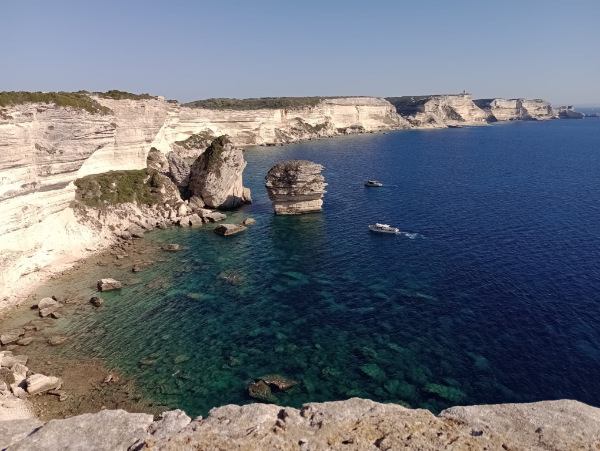
Let’s hear it for the trusty Kindle … or indeed e-readers in general! Mine is decidedly worn and elderly but once again it carried a great store of holiday reading for my recent trip to Sardinia and Corsica.
Two books stood out …
Heart Collector by Jacques Vandroux (translated by Wendeline A Hardenberg) took me into the minds of two diabolically clever psychopaths who torture young women and surgically remove their hearts for their personal gratification. The macabre plotting, the coldly calculating minds, the race against time to save yet another young woman’s life, kept the pages turning to the last word. Chilling, gripping, disturbing.

This Must Be the Place by Maggie O’Farrell explores a marriage between bluff New Yorker, Daniel Sullivan, and his wife, Claudette, an eccentric and reclusive ex-film star living in the wilds of Donegal with a propensity to shoot at anyone daring to venture up their driveway. The lyrical prose, the criss-crossing of continents and time zones, the perceptive insights into both the psyche and illness, make this compelling reading.
Though totally different in almost every way, both carried me effortlessly through long journeys, and many hours waiting in airports and stations, and sitting on the hotel balcony between sightseeing and meals.

Much as I love the heft and allure of actual hard copies normally, the weightlessness and choice of sixty plus e-books is ideal for such times as this. The fact that the first of my chosen two is set in France, and the main character in the second book is half French, seemed to position them naturally for this time under deep blue skies and surrounded by turquoise waters and foreign tongues.
Classy insults
 If you love clever use of words these classy insults from a former era might tickle your fancy and brighten your day when the news is grim and the weather forecast is on the highest alert.
George Bernard Shaw to Winston Churchill:
“I am enclosing two tickets to the first night of my new play; bring a friend, if you have one.”
Winston Churchill:
“Cannot possibly attend first night, I will attend the second … If there is one.”
A member of Parliament to Disraeli:
“Sir, you will either die on the gallows, or of some unspeakable disease.”
Disraeli:
“That depends, Sir, whether I embrace your policies or your mistress.”
Walter Kerr:
“He had delusions of adequacy.”
Clarence Darrow:
“I have never killed a man, but I have read many obituaries with great pleasure.”
William Faulkner (about Ernest Hemingway:
“He has never been known to use a word that might send a reader to the dictionary.”
Moses Hadas:
“Thank you for sending me a copy of your book; I’ll waste no time reading it.”
Mark Twain:
“I didn’t attend the funeral, but I sent a nice letter saying I approved of it.”
Oscar Wilde:
“He has no enemies, but is intensely disliked by his friends.”
Stephen Bishop:
“I feel so miserable without you; it’s almost like having you here.”
John Bright:
“He is a self-made man and worships his creator.”
Irvin S. Cobb:
“I’ve just learned about his illness. Let’s hope it’s nothing trivial.”
Samuel Johnson:
“He is not only dull himself; he is the cause of dullness in others.”
Paul Keating:
“He is simply a shiver looking for a spine to run up.”
Charles, Count Talleyrand:
“In order to avoid being called a flirt, she always yielded easily.”
Forrest Tucker:
“He loves nature in spite of what it did to him.”
Mark Twain:
“Why do you sit there looking like an envelope without any address on it?”
Mae West:
“His mother should have thrown him away and kept the stork.”
Oscar Wilde:
“Some cause happiness wherever they go; others, whenever they go.”
Andrew Lang:
“He uses statistics as a drunken man uses lamp-posts … for support rather than illumination.”
Billy Wilder:
“He has Van Gogh’s ear for music.”
Groucho Marx:
“I’ve had a perfectly wonderful evening. But this wasn’t it.”
Winston Churchill:
‘He has all the virtues I dislike and none of the vices I admire.”
Sometimes it’s enough just to have a good laugh.
Separate tags with commas
Add New Custom Field:
- “His mother should have thrown him away and kept the stork.”
– Mae West
- “Some cause happiness wherever they go; others, whenever they go.”
– Oscar Wilde
- “He uses statistics as a drunken man uses lamp-posts… For support rather than illumination.”
– Andrew Lang (1844-1912)
- “He has Van Gogh’s ear for music.”
– Billy Wilder
- “I’ve had a perfectly wonderful evening. But this wasn’t it.”
– Groucho Marx.
22.”He has all the virtues I dislike and none of the vices I admire.”
Sardinia
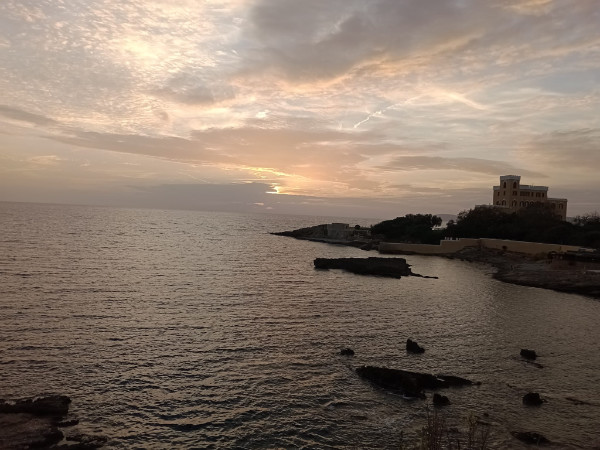
 Taking a break in Sardinia – deemed one of Europe’s most beautiful islands and certainly a haunt of the mega-rich and super-famous apparently. Who knew?

I neither arrived in a massive yacht nor flew in on my personal helicopter, but I can enjoy the same beauty and wallow in the same clear turquoise water, and probably dream up more exciting fictional stories set in this wonderful location to boot!
On my second novel dealing with organ donation too – reading not writing I hasten to add. This is the life!
Changing genres
 Susan Lewis is an author who has written in my areas of interest in the past, and those sagas with a moral dimension remain on my shelves rather than finding their way into second-hand bookshops. But I haven’t read one of her books for a while so I thought I’d treat myself to one as a break from all this trying-to-get-inside-the-mind-of psychopaths and the like.
 Karen Lomax was 17 when her body was discovered in a derelict railway hut less than half a mile from the site of a recent fun-fair, less than two weeks after her last known visit there. A source of ongoing gossip, she’d been a flirtatious, rather giddy, promiscuous daughter to her law-abiding parents, Eddie and Jess, who owned a wine bar in the old town. But no arrests were ever made.
Twenty years later, a local girl, Sienna Crayce, is picked up for stealing a teddy bear from a local shop. She’s one of a group of teenagers involved in harassing the Pakistani owner of the shop, and she’s totally contrite when she discovers Mr Chaudry is not only the victim of constant racial abuse and vandalism of his property, but also caring for his wife who has cancer. She has learned a hard lesson through the experience, but thanks to the busyness of the police, and her father’s direct plea, she suffers no bigger humiliation than having her DNA and fingerprints taken, and spending a night in a cell.
And that’s it for two decades. It’s then that her DNA records pinpoint a familial match to the semen found in Karen Lomax’s underwear. The Crayce brothers, David and Henry, were part of a close knit group of young people who had congregated at their family farmhouse after a pub crawl on the night Karen vanished. Karen’s parents’ bar was one of their drinking spots on the way. The police go in hard and fast, employing armed officers, closing in on the shooting school owned by Sienna’s father, David Crayce, arresting him for murder and taking him away. They are very aware that after six years as an army officer with special training, he’s a trained killer. Furthermore, since then his work has also involved killing – animals and birds – on his estate. Indeed he is surrounded by lethal weapons in his home, and he has a history of PTSD following his stint in the war zone. They are taking no chances.
But until DNA reports come back from each of them, David’s younger brother, Henry, and his father, Richard, are also in the frame. All of them have clammed up and are only talking to their hotshot lawyer or the police. Why? What are they hiding? And when arrest and charges follow, why are they still not talking? Now everyone’s accounts and alibis are all under the microscope; memories differ. Suspicion is rife. Who can be trusted? It’s a slowly unravelling plot and I for one didn’t guess the ending.
The moral in the tale? Comparing this story with earlier Lewis’ books serves to remind me that changing one’s genre as a writer has consequences. Had I read The Lost Hours first I doubt whether I would ever have discovered the early ones which centre on ethical dilemmas, and which in my personal opinion are much better written and plotted than this one.