More things in heaven and earth …
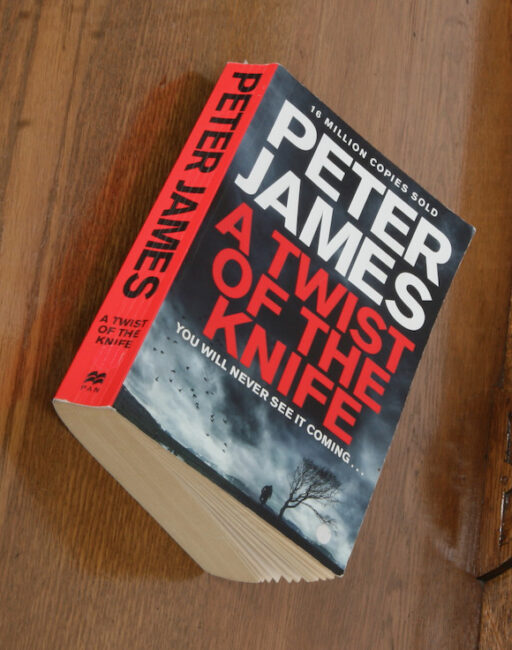 Well, the more I read on in the book I mentioned last week – A Twist of the Knife by Peter James – not only did I find I understood the structure of the stories, and even enjoyed a few (!), but I learned something new about the author.
Peter James is usually acclaimed for his crime writing and famous for his principal character, Detective Superintendent Roy Grace (currently back on our small screens, on ITV, with a 17-episode series, called simply Grace). But I’ve now discovered he – James not DS Grace – spent a long time doing in-depth research into the paranormal for his spooky novels written in the late 1980s and early 1990s. The Twist of the Knife includes both fact and fiction arising from that phase, some of it distinctly disturbing. The research involved interviewing people who had experienced inexplicable things as well as professionals engaged in dealing with supposed hauntings, and he’s used their accounts to good effect in his own writing. Who knew?!
Perhaps it was worth persisting with this strange book after all! But it’s definitely not one to retain on my own bookshelves.
Whirlwind weeks
 It’s been a crazy couple of weeks: travelling, visiting stately homes …
 … attending a conference, preparing sundry talks and articles, dealing with an ongoing difficult situation, celebrating a milestone birthday, even trying my hand at curling!
 So a book of short stories slotted in in spare moments nicely: Peter James‘ A Twist of the Knife bought for £1 in a charity shop.
Short stories largely remain a mystery to me and I’m still struggling to analyse the key components that make them work. Big sigh. I am trying, honestly I am. And for the first time I understood the structure of a small number of these stories. Perhaps there is hope …!
Wild child
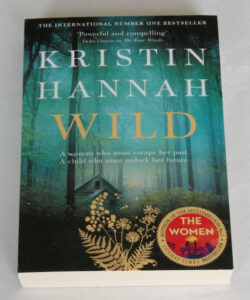 Wild is another tale from the international best-selling author Kristin Hannah. A remarkable story about resilience and human compassion.
Her own early years made Dr Julia Cates an exceptional child psychiatrist; she remembered every nuance of her pain. The odd one out, the geek, always in the shadow of her gregarious larger-than-life family, she’d always felt marginalised, unloved, unimportant. Now her profession has filled the frightened place inside her with joy. She is both accepted and needed.
But her burgeoning career is suddenly and seriously compromised following an incident where one of her long-term patients, Amber Zuniga, kills four children and then takes her own life. For three years Julia had spent two hours a week listening to Amber’s problems, so why hadn’t she recognised the girl was becoming increasingly violent and depressed? The modern world no longer believes in senseless tragedy: someone has to pay, and Julia certainly pays dearly in this case – the press expose her as incompetent; her clients leave her; her confidence is undermined and she’s left alone and aimless.
Then Julia’s sister, Police Chief Ellen Barton, is in serious need of help. Just as a powerful thunderstorm ends, a scrawny, spindly-limbed girl of about 6 with filthy matted hair and eerie blue-green eyes is discovered hiding in a maple tree in the town square of Rain Valley on the edge of a massive but largely-unexplored rain forest, a snarling wolf puppy cradled in her arms. She’s seriously malnourished and dehydrated, with old scars from ligatures round her ankles where she’s been tethered, knife wounds and evidence of whippings. Ellen is under pressure to call in the big guns, but she’s sure she can handle one lost girl – or at least she knows someone who can. Julia.

Julia has specialised in interpersonal dynamics but old personal hostilities and insecurities emerge now she’s back with her sister, and revisiting her childhood haunts. She has a true gift for dealing with traumatised children but she can’t get so much as a word out of this undersized creature who fell out of a tree. Nonetheless she’s intrigued by a child who behaves more like a wild animal than a human, who can communicate with birds and wolves though not with her own species. It’s clear she is locked in a prison of unimaginable fear and isolation. It’s undeniably a big challenge, but Julia has the time and the skill, so why not see what she can do to help this little person through her trauma, and discover how to unlock her mind and voice?
Julia becomes the lost child’s official foster parent, and makes her a full time project. She sleeps in the same room as her, spends all day every day with her, and gradually, almost imperceptibly, the waif – whom she names Alice – begins to respond to her and to trust her.
Meanwhile Police Chief Ellie is working too to find out the girl’s identity and keep the press engaged with the case. It’s only wide-spread publicity that will give them a chance to find her family and prevent her being taken into the detached care of the authorities. But publicity is not Julia’s friend: the press and public are still baying for her blood because of the case that ended her previous career. It takes enormous courage to put Alice’s need above her own.
It’s a tender story weaving together personal heartbreak and altruistic love. I wasn’t personally persuaded that there needed to be quite so many romantic threads, nor did it seem credible that the child, Alice, would still be using single disjointed words after such intensive therapy, but the flawed characters of the adults gave depth to their backstories and purpose to their actions. An unusual and enjoyable break from the serious study.
Assisted Dying AGAIN!
Yep, it’s not going away!! The United Kingdom is yet again up to its neck in controversy and debate about life and death.

canstockphoto19974200
It’s eighteen years since my own book on assisted dying was published, and precious little has changed.  Hospices are still seriously underfunded and understaffed. Palliative care is still a postcode lottery. There is still no consensus within the UK. Doctors are still challenged by the prospect of extending their role to include assisting death. The public are still divided. Emotions still run high. Patients are still dying in circumstances not of their choosing.
Not that the subject has been swept under the carpet. No. Indeed, the Isle of Man and Jersey have now passed legislation to legalise assisted dying. Scotland has tried three times now to do so, but the Bill was rejected again at its final stage on the evening of 16 March – two days ago – albeit by a very narrow margin.
Parliamentarians for England and Wales have strenuously debated their version of the Bill and last summer the Commons passed it. However, since then it’s got stuck in the House of Lords. With hundreds of amendments still to be dealt with, it looks highly likely to run out of time before the end of this session of Parliament, in which case it will need to go back to the Commons to begin again, but perhaps with provision made this time to stop the Lords repeating their blocking of it.
OK, it’s highly emotive and divisive stuff. And life is sacred and precious. There will always be detractors and critics and fierce opponents. There will probably also always be mistakes made. It behoves those who have agreed to allow the practice to tread warlily and monitor progress from the outset. And it behoves those who have not taken the decision as yet to listen, watch and learn.
One of the most heartening aspects of this whole issue is the big message coming across is: all parties need to up their game to ensure better palliative care is available. And I’ve been encouraged too by the sensitivity and respect and graciousness both sides demonstrate when these particular Bills are under discussion. Would that parliamentarians could bring the same gravitas and courtesy to other agenda items!
Progress!
Regular visitors to my blog pages will know I’m currently grappling with the serious topic of prayer as part of a year-long project. Still at the stage of feeling formidable.
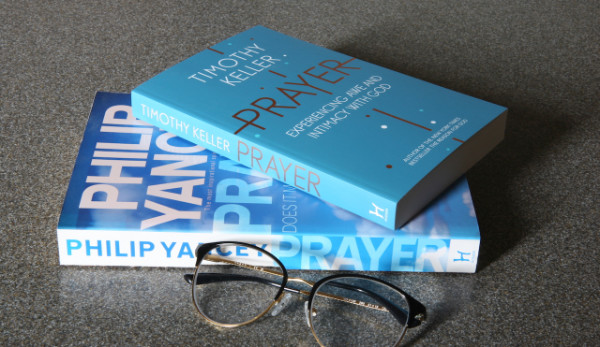
However, two and a half months into 2026 and I’m pleased to say that I’m making some progress. I’ve ploughed my way through a number of weighty tomes already and fed new thoughts and ideas into my framework so that I can reflect on them and start to formulate my own ideas and conclusions. I’m trying my best to keep an open mind and not close down avenues of thought too prematurely.
It’s still all wide open to revision, but some puzzles are becoming clearer and new questions are emerging which will hopefully lead to greater clarification and a surer foundation. To date I have enough material assembled to fill about four hours of discussion!! Synthesizing and sharpening and refining will begin and be ongoing as I meditate and explore more writers’ ideas and experiences.
I’ll leave you with today’s gem: Pray and let God be God!
The Girl Who Came Back
 I have quite a collection of books by Susan Lewis on my shelves, but The Girl Who Came Back was less to my liking, so it made me take more time to analyse why. The author herself tells us that she took her inspiration from a real live case of a girl being released from prison early after the violent murder of a friend, which has to be a sound foundation. It can happen.
Her fictional narrative features a thoroughly dislikeable character, Amelia Quentin, only daughter of an obnoxious, rich, cold, misogynistic but influential father. Amelia herself is without social engagement or empathy; a girl who, from an early age, hurts and kills without compunction – indeed, for pleasure. We know from the outset that as a child she killed her mother, that she has committed another serious crime, and that she’s about to be released way, way too soon from prison. OK, wealthy pillars of society may well have friends in high places, and unseen strings to pull, but I really couldn’t buy into the power of this father to influence the whole judicial process to such an extent in the face of overwhelming evidence … or could he? It’s a chilling question.
Amelia’s victim on this occasion is Daisy, a kind, considerate, trusting girl, loved by everyone, who goes out of her way to befriend the loner, Amelia. Which means we’re shocked to the core by what was done to her. And we just have to keep reading to see if justice is served in the end. But I found Daisy too, to be rather one-dimensional – too nauseatingly good and universally popular. I’d have preferred a more rounded person with flaws.
Daisy’s mother, Jules, is naturally struggling deeply with loss and guilt and dread – who wouldn’t? – but again she wasn’t convincing to me. Some of her decisions are positively ludicrous and implausible.
It takes more than half the book till we know what happened to Daisy, but the author uses that space to fill in the backstory, so we at least know how Jules and Kian can afford the lifestyle they offer Daisy (winning the lottery), what drives a wedge between them, and why Jules has some sympathy for Amelia. But I found the thread about Ruby the ghost haunting The Mermaid an unnecessary and implausible distraction which added nothing to the story.
For me, too, the ending is just too slick and hard to believe, much as I wanted justice to prevail. Wheels simply don’t spin that easily.
I’ve been attracted to this author for some time because she writes about issues close to my experience and interests. So I was intrigued to note that, alongside the horror and despair of teenage murder and legal manipulation in this tale, she also manages to slip in the exhausting strain of living with dementia, the heartache of infertility, the importance of inclusion and friendship – some of her earlier trademarks. And in reviewing the novel I decided it was, after all, worth adding to my shelf rather than consigning to a charity shop.
Apologies to Susan Lewis for my criticism, but I’ve tried to be fair and respectful of the serious labour that underpins any novel. Furthermore, I’ve done my best to avoid spoilers so you can read and judge for yourself.
God on Mute
Brilliant title, isn’t it? God on Mute. The strapline: Engaging the Silence of Unanswered Prayer gives a sense of the direction of travel.

It was recommended to me as ‘excellent’ by a lovely friend when he heard that I was studying the whole question of prayer this year. And I agree: it is excellent. Having just finished ploughing through a much denser tome bringing together miles of literature and thinking on the topic, it was something of a relief to turn to this accessible page-turner. So readable is it indeed that twice I made a mistake in my knitting and had to unravel and re-knit several long rows!
God on Mute is by Pete Greig, pastor, and founder (with his wife Sammy) of the 24-7 Prayer Movement. He has a most engaging style of writing, illustrating his points with vivid accounts of real people and their lived experiences, including Sammy’s many years of epilepsy following a brain tumour diagnosed a few weeks after their second son was born.
And therein for me lies the secret. As with many other books on the subject of suffering and unanswered prayer, I am most persuaded by those people who have known real trouble, who have agonised over the questions themselves, whose trembling and sometimes tentative answers come from the crucible of pain and darkness.  Nothing glib or hackneyed. No smooth detached academic analyses. No pious well-rehearsed platitudes. But raw, unflinching, genuine struggle to find a way through doubt and fear, leaving room still for uncertainty and mystery.
I confess I don’t share all his beliefs and conclusions – my experience and background are very different from his – but he has made me think again. Better yet, I took reams of notes which have helped enormously towards marshalling ideas into a coherent framework for my own study of this topic. A giant step forward.
A Stroke of Insight
Early in her life, Dr Jill Bolte Taylor, was drawn to the internal workings of the human brain when her brother presented with schizophrenia. That curiosity took her into the world of scientific enquiry where she excelled as a neuroanatomist. Then one morning, when she was only 37 years of age, everything changed.
I was in my mid-thirties and thriving both professionally and personally. But in one fell swoop, the rosiness of my life and promising future evaporated. I woke up on December 10, 1996, to discover I had a brain disorder of my own. I was having a stroke. Within four brief hours, I watched my mind completely deteriorate in its ability to process all stimulation coming in through my senses. This rare form of hemorrhage rendered me completely disabled whereby I could not walk, talk, read, write, or recall any aspects of my life.
 Unknown to her she had an arteriovenous malformation in her brain which had just blown, pouring blood into the left hemisphere. Miraculously she was able to observe the disintegration and in My Stroke of Insight she has recorded the whole experience and her recovery through the eyes of a neuroscientist, and she shares the unique insight it has given her into the beauty and resilience of the human brain with its intuitive right side and the logical left. She includes a limited amount of simple science to help understanding, but essentially this is a personal account of a shattering experience.
The dawning realisation of what was happening on the fateful morning came with the systematic loss of each function, each analytical reaction. Astonishingly, after an initial confusion, as more and more blood flowed into her brain, she fairly soon felt a growing sense of peace, enfolded in a blanket of tranquil euphoria … an expanding sense of grace. Without the traditional awareness of her physical boundaries, she felt fluid rather than solid, at one with the vastness of the universe.
In the absence of the left hemisphere’s analytical judgment, I was completely entranced by the feelings of tranquillity, safety, blessedness, euphoria, and omniscience.
Despite the fact that her brain was by now no longer capable of creating connections between things, she knew she needed to get help. Alone in her flat, it took her over 45 minutes of intense concentration to finally recall her work number and phone a colleague who knew her well enough to recognise the garbled noise spelled trouble. By the time Jill arrived in the hospital her ability to differentiate anything had faded and she no longer felt grounded in the external world.
In the absence of sight, sound, touch, smell, taste and fear, I felt my spirit surrender its attachment to this body and I was released from pain.
Realising that her keen scientific brain was no longer available to record, relate, detail and categorize information about the surrounding external three dimensional space she wanted to howl like a baby. She felt tremendous despair that she had survived. After a lifetime of being super-charged, that day she learned the meaning of simply being.
But somehow she managed to retain the memory of that first bitter-sweet day and has recorded brilliant insights into the complete inability to put information together and answer the most simple of questions, to make sense of sound or sight, space and form, boundaries between objects, smells, temperature, pain, the position of her own body … never mind what was inside her damaged mind.
She survived but recovery was painstaking. At first she had to concentrate on breaking every task down into manageable steps, every tiny effort taking so much time and energy. Her brain was on sensory overload and simply couldn’t process the barrage of information coming at her. It was exhausting. The left hemisphere had to be taught everything all over again, but here she had the inestimable support of her patient and intuitive mother who came to live with her and played a pivotal role in helping her begin to rehabiltate.
 Sixteen days after the stroke happened, she was strong enough to have her cranium opened (craniotomy with a 9” scar) and the blood clot and tangle of blood vessels surgically removed. The effort needed to recover was agony; so much so that she had to make a conscious effort a million times a day to endure it and persist, to deliberately choose the chaos of recovery over the peaceful tranquillity of the divine bliss that she’d experienced. Huge amounts of healing sleep without sensory input were required, during which her brain painstakingly filed information.
It took eight challenging years to recover; eight years during which she watched her mind analysing and recording everything that was going on in her brain. And astonishingly she discovered that she could now choose which emotional programmes she was interested in retaining; choose who and how she wanted to be in this post-stroke world; consciously develop characteristics in her personality and reactions that she liked and wanted to promote – a loving and peaceful mind, and a kinder way of living. For her, even amidst the normal chaos of a busy life, deep inner peace is just a thought/feeling away.
Learning to value and utilize all our cognitive gifts opens our lives up to the masterpiece of life we truly are. Imagine the compasssionate world we could create if we set our minds to it.
For me this conclusion is a leap too far. Just because Jill, with her unique abilities and experiences, has come to this conclusion and belief for herself doesn’t mean it’s a conscious possibility for us all. But I’d love to be proved wrong!
Effie Gray
There are biographies … and then there are biographies. So I was slightly cautious when I saw an excellent plug for Linda Randall‘s biography of Effie Gray: Fair Maid of Perth recently, but I sent off for a copy anyway. And my money was well spent. It’s a beautifully written account of one little Scots girl who went on to marry not just one, but two famous artists of the nineteenth century. Well worth reading.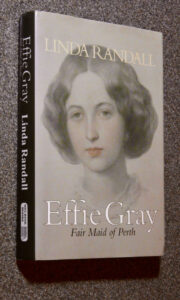
Little Euphemia Chalmers Gray (1828–1897) was the eldest of a large family of 15 children with her mother Margaret ‘relentlessly fertile’. Effie was a clever, vivacious child, hard working and sociable, excelling at her studies. She was sent away from her family home in Perth to boarding school in Stratford on Avon to try to eradicate her Scots accent, but nevertheless retained it all her life. During her first year there, three of her younger sisters died and indeed, she lost seven siblings in eight years. She was devastated when no one sent for her to return home to the family, but going away, staying away, as she did, probably saved her life. However, her own pain and bewilderment was so profound that she grew a protective shell around herself which influenced her behaviour into adulthood. She was only 11 when she first met John Ruskin (her future husband). who was ten years older than her. By the time she married at 19 she still had six siblings at home.
John Ruskin by contrast had a cloistered upbringing; an only child, over-protected by his doting parents, deprived of playmates and many of life’s freedoms. From a young age, his father read poetry to him and his mother the Bible, and he was protectively educated at home. He grew up to be pompous, selfish, erudite and focused, but socially inept. At the age of 18 he went to Oxford but his mother took lodgings nearby and stayed there for the duration of his student life.
The senior Ruskins were not keen on his marrying Effie; they had Sir Walter Scott‘s granddaughter in their sights for him to increase his status in society, and they had seen what a previous unrequited love had done to their delicate son. Besides which, Effie’s father was in dire financial straits by this time, due to his reckless gambling and risk-taking. But John was determined and they eventually consented to the marriage.
Though older, John at that time had much to commend him. He was clever and handsome, famous as a writer, thinker and art critic, kind and wealthy. He and his family gave Effie entree into society and the arts and a life she aspired to. The price she paid was a husband who chose his parents first – he wanted them to go on the honeymoon, share his love letters and their first marital home, and if Effie was away visiting her family he instantly returned to his parents’ home to be cossetted again. He was moreover, a husband who had such a distorted view of the female form and flesh that he was either unwilling or unable to consummate the marriage. Indeed, he was at his most romantic and passionate in letters written to his absent fiancée/wife.
Small wonder then that Effie became severely depressed after a year of marriage: rejected physically by her husband; relegated to a definite second place after his parents; suspecting he loved the romantic thought of her rather than the real Effie; constantly criticised as inadequate by her parents-in-law. Both John and his parents expressed themselves bewildered by Effie’s demeanour and withdrawn behaviour; and in their ignorance and self-obsession, believed she was exaggerating her illnesses. It was high time, the self-obsessed John delared, that his wife outgrew ‘that contemptible dread of interference and petulant resistance of authority which begins in pride … I look for meekness and gentleness in women.’
Away from his parents however, and especially abroad, the couple got on much better, John immersing himself in his research, sketching and writing, Effie out and about in society, flattered and admired, absorbing the culture and fashion of the place. They had money and fame and moved in the highest circles. And Effie was an acknowledged belle of the ball.
John Everett Millais was the youngest of three children in a clever cultured family of well-respected landowners, himself a free spirit who hated any form of restrictions. Largely educated by his gifted mother, his genius was recognised from a very young age, his parents actively encouraging his ambition, and the lad processing rapidly through art schools to the Royal Academy. Tall curly-haired Everett (to differentiate him from the other John) had dazzling good looks and great charm in addition to his extraordinary artistic talent. He moved in a circle of talented fellow artists (including William Holman Hunt and Gabriel Charles Dante Rossetti) and began to develop a style all his own. In time, he and six other like-minded rebellious young men, both artists and poets, discarded the dark, rigid, heavily varnished paintings they’d been taught to emulate and adopted an altogether lighter translucent form. They called themselves the ‘Pre-Raphaelite Brotherhood‘. However, they were ahead of their time and the world was not ready for this new style. Then, just when they were on the point of sucumbing to the harsh criticism, the famous art critic, John Ruskin, came to their defence. And very quickly the Ruskins and Millais struck up a friendship, with John agreeing readily to Effie becoming Everett’s artist’s model. It was the unsociable John himself who invited Everett and his brother William to spend the summer with them, mostly in Scotland.
By this time Effie and John had been married in name only for five years, and, although much sought after and feted at home and abroad, she was increasingly unhappy. The senior Ruskins had taken John back into their suffocating care, he always put them before her, and she was left very much on her own. He began keeping a notebook to record details of any shortcomings in Effie’s behaviour or manner. Determined now not to continue suffering in silence she shared her situation with various people, and her hitherto scrupulously modest behaviour became more provocative.
Seeing the couple at close quarters through several weeks in Scotland, Everett Millais grew to despise John for his coldness, bad temper and subtle bullying of Effie, and his own feelings for her gained traction. She reciprocated and stopped even pretending to be a loving spouse. By now John’s cruelty had included informing her that he was bent on breaking her proud spirit, and that his disgust with her physical body was the reason he has not consummated the marriage. There could be no recovery. And after six years together, Effie took steps to establish her virginity and get the union annulled.
In Victorian times divorce was socially unacceptable and Effie’s actions to end the farce of their marriage came in for their share of criticism although support far outweighed censure. Having moved in the highest circles hitherto, she found some doors now closed to her; one such being the court of Queen Victoria who never again allowed Effie to access those august quarters.
Happily though, Effie found happiness in marriage with Everett Millais who achieved high status as the nation’s favourite painter, and together they had eight children.
The book is illustrated with excellent photographs featuring members of the family and high society whose likenesses were captured by some of the biggest names in the art world. Highly recommended.
Emergency Care nurses
Nurses who work in emercency care settings are always jumping from one crisis to another, and there’s rarely time to process what they’ve just experienced. Although talking helps, they probably never really deal with all they see and do; the mental scars remain.

In ER Nurses: True Stories from the Frontline, by best-selling author James Patterson* and Matt Eversmann, highly skilled and compassionate nurses share a glimpse into their surreal world. It’s bizarre, unique and humbling.
Angela: early on worries that she’s too sensitive, too empathetic, to remain in control of her emotions and preserve the calm rational approach of a professional nurse. Then COVID hits and she’s caring for huge numbers of patients, many young, many of whom die. She is physically and mentally exhausted after giving her all. And at the end of a twelve hour shift she finds herself peeling the skin off her nose with the respirator (mask with a filter) she must wear continuously. When she leaves the hospital, people avoid her, fearing she might be infected. And through it all she realises she does have strength and resilence, gained through hard experience.
Katie: dares to defy convention. She encourages a family to bring his dog into hospital to comfort a dying man; she gives a young wife the chance to help with intimate care of her dying husband, to lie beside him and rest.
Carol: has actually met Dr Kevorkian aka Dr Death who became notorious for helping people to die. She was there when he rolled up to the ER in his rusty old white Volkwagen van with a deceased man inside it. And as she says, she saw far too many things people should never see. Nevertheless, when she retired, she missed the ER and the difference she made, the good she did.
Patrick: begins adult life as a drummer in a touring rockabilly band. He’s drawn to nursing and over time discovers that his uniform acts like a suit of armour, a physical barrier that creates a clinical, matter-of-fact mindset. It enables him repeatedly to see bad things but not dwell on them or get emotional, because he has a job to do, a job that entails endless switching of gears. And sometimes laughter is the only recourse to deal with the enormous stress. Indeed, humour is a key survival skill for an ER nurse.
Devyn: all unknowingly admits a serial murderer called Angel to the ER, a skinny man with tattoos on his face and neck, who repeatedly says he’s not well – and yes, it’s definitely mentally unwell. Devyn stands alone outside the room while Angel strips and dons paper scrubs prior to the necessary psychiatric evaluation. But before he goes in to do the examination, someone rushes up to tell him they’ve found a machete with Angel’s DNA on it is stuffed between the mattress and bedframe he’d been lying on initially. It transpires he has a history of chopping people up and putting them into a suitcase or box.
John: has worked in the ambulance service and law enforcement before becoming an ER nurse. He learns the hard way that it’s okay to be vulnerable. It’s okay to hurt, to cry. It’s okay to feel that loss. You can visit that place; you just can’t live there. You have to share the stress with someone; otherwise it will destroy not only your career, but who you are as a person.
Tara: sums up an important lesson for everyone: I wish people who came into the ER would understand that if we don’t get to you right away, it means you’re stable, that there’s someone sicker than you. If you’re waiting, that’s a good thing. It’s when we all rush in and jump on you that you should worry.
Corina: is haunted by the children who’ve been bused by family members being brought into the burns unit where she works, so she transfers to the ER. She catalogues some of the horrors she encounters there – morbidly obese women needing mattress springs surgically removed from their backs; patients riddled with lice and infested with cockroaches in their orifices; overdoses; violent and abusive patients, some of them armed … She eventually leaves there too: there’s only so much trauma a person can see and take.
Megan: I go, go, go until I crash. I cry, then I pick myself up and start the marathon all over again.
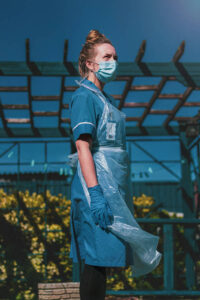 And so it goes on. Nurses being violently attacked; having feces thrown at them; devalued by their managers; so exhausted and demoralised all they can do on their days off is sleep and cry. In the ER you have absolutely no idea what will come through the doors next, and very little idea what any given patient might do next. Shoot. Stab. Throttle. Have sex. Die. Death is commonplace. And yet every day these nurses have the power to change lives, to make a difference. And that keeps them returning.
Perhaps the most terrifying stories relate to psychiatric patients, both children and adults, who seem to be possessed – scary even reading the accounts never mind living through the real experience. Or the cases of parents high on drugs who leave babies unattended in the bath or put them in the washing machine or deliberately scald them.
One nurse, Rosemary, says you can’t just detach yourself, you have to be a little bit vulnerable to get through to your patients. Another, Karen, uses the sorrow that follows losing a patient to draw on an inner reserve to make her try that much harder, work that much faster, for the next patient, and the next. But, whether they use humour, compartmentalisation, talking therapy, spirituality, or whatever else as a coping strategy, the ability of these nurses to deal day after day with the unspeakable tragedies of life, and their resilience and compassion, shine through.
This book resonated strongly with me as I chose emergency medicine as my specialty five decades ago. Particularly Claire‘s account. I still remember the moral dilemma of having to resuscitate patients who were fished out of the river or picked up at the foot of bridges following suicide attempts. Only to face their demons all over again.
As the blurb puts it: When we’re at our worst, nurses are at their best.