Jubilate
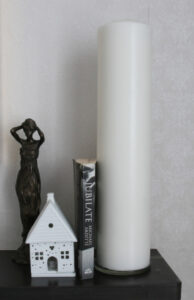 …challenges accepted notions of sickness and health, duty and sacrifice, the nature of miracles and the workings of grace
…convincingly, and imaginatively, interrogated faith, belief and the gritty struggle to live with grace
…combines a moving story of love against the odds with a moral debate on the nature of faith… a highly readable novel, full of humour and warmth… a novelist with the courage to tackle groundbreaking subjects
…the ethics of choice, and how we care for one another, are made to matter
… exposing the frailty in us all
Yeah, that sounds like my kind of reading! The book is Jubilate by Michael Arditti. And the reviews are glowing.
At the heart of the novel is a touching love story. Gillian is a dutiful Catholic wife approaching middle age. She accompanies her brain-damaged and errant husband, Richard, on a pilgrimage to Lourdes where she falls in love with Vincent, a lapsed Catholic and now agnostic investigative journalist and documentary film-maker bent on exploring, perhaps even exploding, the myths around miracle cures in the shrine’s 150th anniversary year.
The narrative spans just 5 days.The voices of Vincent and Gillian alternate with five chapters from each perspective – hers backwards from Friday to Monday; his forwards Monday to Friday.

Gillian joins the Jubilate, an independent pilgrimage of about two hundred people, on the recommendation of her mother-in-law who’s constantly hoping for a miracle cure for her son. Vincent is filming the events, wanting to shed light on their activities and motivation and experiences. Both are deeply vulnerable with great sadnesses and frustrations in their lives. Their mutual attraction is instant and powerful, their fundamental differences challenging and provocative. Can mutual respect count for more than agreement?
But alongside their immediate personal emotions, both are grappling with deep existential questions:
How can God – if he exists – allow random illnesses, especially in innocent children?
This amazing world – created or the product of chance?
Was the world created simply to reflect the Creator’s glory and give endless praise?
Does an awesome God really care about the small sins of insignificant people – like their adultery?
Does God punish people in ways that fit the crime/sin?
What makes us human? When does life cease to have meaning?
Where does duty end and sacrifice begin?
How do you decide between God’s intervention and coincidence?
Arditti makes no attempt to answer all their questions, but he does capture the atmosphere of an iconic place that encourages contemplation, and allows for miracles other than medical healing.
Deeper darker psychological thrills!
Ever since I started to study psychological thriller writing, I’ve continued to seize opportunities to examine how the masters of the genre do it.  Recently I’ve mentioned a couple of JP Delaney‘s novels on this blog, but in Believe Me he takes things one step further.
‘… a pitch-perfect psychological thriller’, Lee Child reckons! (Wouldn’t we all love to gain that particular accolade?)
Claire Wright is a 25 year old British actor, who since the age of eleven has been pretending to be someone other than an orphan girl who’s been in and out of foster homes, desperate to love and be loved. Her scholarship with the Actors Studio at Pace University in New York covers some of her tuition fees but not her living costs and here she is in one of the most expensive cities in the world. Her visa allows her to work as long as it’s not on the university campus, but she has no green card. So she takes a job working for a firm of divorce lawyers, posing as an easy pick-up in hotel bars in order to entrap errant husbands. She’s not proud of the work she does – breaking up families – but she is proud of how well she does it. She’s a consummate actor.
But then one of the men she’s supposed to expose as a cheat, Patrick Fogler, becomes chief suspect in a murder investigation. His wife is found brutally murdered in her hotel room soon after Claire meets her. He’s also known to have been in the vicinity of several other unsolved killings.  What’s more, he’s an academic with a penchant for the macabre works of Charles Baudelaire, and many of the murders bear distinct overtones of the fate of women in his poetry. But there’s nothing definitive to provide concrete evidence of Fogler’s guilt.
Then Claire is offered an attractive deal by the police: take on a terrifying role as someone Patrick would be attracted to, in return for a green card … if she survives!! She agrees and it becomes an all-consuming role requiring her to completely submit to the part of the character she’s supposed to be. She attends some of Fogler’s lectures in order to start up a conversation and intrigue him, and they begin a tense relationship, both suspicious of the other, but becoming increasingly in thrall to each other. The whole enterprise takes her into dangerous and mind-bending places: into police custody, into prison and a psychiatric facility; deeper and deeper into the psyche and heart of Patrick, and the reader can’t be sure anything is as it appears.
It’s a tense and constantly spinning tale with so many twists and turns that I gave up trying to decide who was guilty, who was sane, who was real, who was play-acting, and just allowed the narrative to unspool. Because, convoluted and confusing and unreliable it may be, unsavoury and unsettling too, but it’s certainly cleverly constructed. I was intrigued to discover this is its second iteration, the first having flopped early on in Delaney’s career. This time round he’s definitely crackled it!
 One particularly neat and unusual ploy adopted by the author is to record some scenes as scripts for a play, with instructions for the actors, and lines of dialogue, as if Claire as actress is picturing them in her head. It fits perfectly with the theme of the novel and the part acting plays in the whole story.
Oh, and the short chapters – 106 of them in less than 400 pages – do help those pages to keep turning.
The Return
Victoria Hislop’s first novel, The Island, was a runaway success way back in 2005. A copy of her second one, The Return, has been sitting on my shelf for years; high time I read it and passed it on – she’s already published eight more!

It’s a marriage between a family saga and meticulous historical research of the period of the Spanish Civil War in the 1930s, set partly in England but mostly in Spain. The narrative spans two time frames: the early part of the 21st Century and the 1930s.
Sonia Cameron is half Spanish, married to a ‘dusty old husband’. She jumps at the chance to get away with her best friend, Maggie, and they travel to Granada for a holiday in the sun. Whilst there Sonia is irresistibly drawn to a dance class and a specific cafe, El Barril, which has strangely familiar items differentiating it. She becomes a frequent diner there, and the elderly proprietor of the cafe, Miguel, befriends her and, over time, tells her the story of what happened during those terrible years under Franco‘s dictatorship, about which she is woefully ignorant. The history comes alive through his passionate narrative of the lives of the family who owned the cafe he now runs, and is made the more vibrant by some old photographs and letters he’s saved.
The Ramírez family consist of parents – Concha and Pablo, and their three sons – Antonio, Ignatio and Emilio; and one daughter – Mercedes. One son is a teacher; one a bullfighter; the third a guitarist and a homosexual (a significant fact at that time). Natural sibling rivalry turns into much more sinister divisions as the boys adopt rival allegiances in the war, with disastrous consequences. For her part, Mercedes is a flamenco dancer who, whilst still a teenager, falls deeply in love with a gypsy musician, Javier.
Franco’s regime is brutal. Air raids, bombardment, invasion. Executions, torture, deprivations. Imprisonment in stark conditions, unspeakable atrocities and devastation.The military coup which was meant to be swift and decisive, turns into three years of civil war costing the lives of half a million people. An equal number go into exile.
During those three years, thousands upon thousands of refugees from the various cities trek huge distances seeking shelter, finding instead further horror upon horror. Even those who eventually reach safety in England carry the burden of sights and sounds and pain beyond imagining. 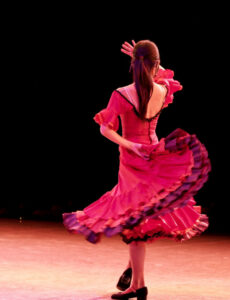 Mercedes Ramírez is one such escapee who never forgets, but who continues to lose herself in dancing the flamenco after reaching these shores, expressing her countrymen’s pain and sadness as nothing else could. She goes on to reach the top level of competitive dance, and it’s the records of this success that so capture the attention of Sonia years later, being herself a naturally talented dancer. And Miguel, who knew Mercedes personally, is the one person who can answer the deep longing and burning questions that have haunted her.
At just under 600 pages, it’s not a book for the faint-hearted – I got a whole cardigan knitted while I read it! I found the account of this war between compatriots and brothers both heart-rending and compelling reading, softened and made more palatable by the delicacy of the central romance and the devotion of some of the main characters, saving it from being too depressing. At times though it became horribly reminiscent of the terrible wastage and heartbreak of the wars ravaging our world right now. So many lessons to be learned.
Sickened and sickening
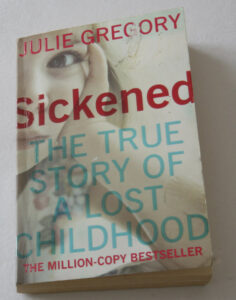
Sickened: The True Story of a Lost Childhood is one of those books that shocks you to the core but is at the same time compelling reading. How can it be that a young and vulnerable child presents to so many professionals and yet behind the scenes endures such appalling misery? And this story is real not fiction.
Julie Gregory was in thrall to her disturbed mother, Sandy. She spent her entire childhood being investigated for symptoms of ill health because Sandy insisted she should do so. Many of the tests were invasive and traumatising. Her mother took her from doctor to doctor looking for ever more serious diagnoses; she even took steps to induce symptoms. And before each professional Julie obeyed Sandy’s instructions, playing her part of the ailing daughter to perfection.
In addition, life at home was chaotic and damaging, with both her parents physically violent, and her mother repeatedly blackmailing the family with claims that she was about to take her own life.
It was only when Julie was 26, had left home, and was attending psychology classes, that she finally understood that her mother had fabricated her illnesses and even induced some of them. She had her own methods of compelling Julie to lie to doctors to substantiate her claims of alarming symptoms. When she was thirteen, Julie did once blurt out to a nurse that her mother had made her ill that time, but she was not believed and they ‘sedated the truth’ out of her. She buried much of what happened deep in her subconsciousness and it took years of therapy and painful work on her part to address the reality and deal with the trauma.
Curiously, for a long time after she’d left home she retained a visceral need to stay in touch with her mother.
I am a half-formed larva without her … I speak to her as if nothing has happened, as if everything is fine. I still try to extract love from her. I still take her suicide calls in the middle of the night and try to talk her out of the gun or the overdose from two thousand miles away. I am the only one who can save her. I could not live with myself if my mother died because I refused to do what she trained me so well for.
She kept quiet. But when she eventually felt able to visit Sandy face to face and saw history repeating itself with an under-nourished 11-year-old relative of her current boyfriend she knew she must act to save this girl succumbing to her mother’s manipulations; from becoming yet another victim of Munchausen’s by Proxy (now known as Fabricated or Induced Illness).
 It’s seven years now since I published my novel on this issue (Killing me Gently) but this real life account of the devastating impact of this condition (Sickened) resurrected some of the emotions I felt trying to get inside the skin of someone who could do such horrific things to an innocent child. Sickened. No wonder it’s been described as one of the world’s most hidden and dangerous forms of child abuse.
A brave and disturbing book.
The power of storytelling
 Well, I didn’t expect that! To get an endorsement of my personal modus operandi amongst my serious study books! But hey ho … there it was:
Story is the precious gift that thrusts spirituality from the theoretical and into the grit and honesty of the everyday world.
In Praying like Monks, Living like Fools, Tyler Staton uses stories to trace his own growth and journey from a thirteen-year-old lad pacing round his school premises praying for his classmates, to his present life as the lead pastor of a church in Oregon and director of the 24-7 Prayer movement in the USA. And that connection with real life experiences – his own and others’ – certainly made his philosophising more palatable and compelling for me. And it made his book stand out amidst the stack I’ve been ploughing through on the topic of prayer, some of them definitely not for the faint-hearted it has to be said!
It also reminded me of my own early days of lecturing, forty years ago. I quickly became aware of the appeal of a story in getting an audience listening and engaging. And as an empirical researcher in medical ethics, out in the real world listening to real people grappling with very troubling issues, I had a veritable wealth of stories coming my way (suitably anonymised, of course).

It was also what drove me to write a series of novels set in the world of medical ethics. By entering into the lives and emotions of fictitious characters, the reader is challenged to contemplate the important questions of right and wrong, interests and responsibilities, in a meaningful way. All the principles and theories and esoteric jargon can be horribly off-putting; woven into and interpreted through relatable life and suddenly everyone gets it, and most people have a viewpoint.
Stories open so many doors.
End of an era …
 Ever since I first conceived the idea of writing a series of novels set in the world of medical ethics back in the early 1990s, I’ve collected information on potential topics in paper files. Anything that might help to inform or inspire or authenticate, in it went.
Dilemmas worthy of a book of their own included …
ORGAN DONATION AND RETENTION
ABORTION
ASSISTED DYING
FACTITIOUS DISORDER IMPOSED ON ANOTHER
ASSISTED CONCEPTION
ANOREXIA
GENETIC INHERITANCE
INFORMED CONSENT
GENDER DYSPHORIA …. and so on.
Some ran into two bulging files; others barely opened the spines of the folder. And the total width extended over the years to 20 inches of paper!
But the time has come to empty the drawers of my filing cabinet and accept the passing of an era. Because, of course, digital recording gradually overtook manual. Plus my own plans for future novels shrank. I’m retaining one fat folder on one last topic which I haven’t entirely ruled out for a last novel, but otherwise into the recycling bin they go.
I’ve had to psyche myself up to this radical clear out, but when it came to actually binning them it was surprisingly painless. And after all, the raw material has contributed to eleven published books; it has done its job.
 A fresh new start for the next phase of life!
Who needs proofreaders?!
Well, this was most definitely a first!
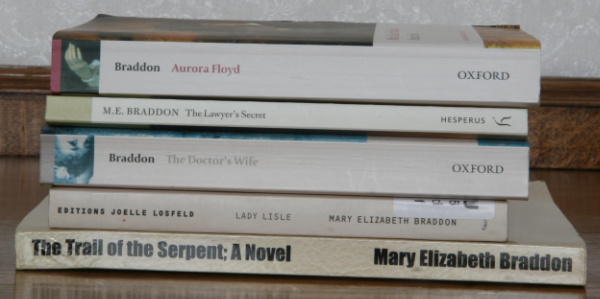
I’m a fan of Mary Elizabeth Braddon‘s unique style of writing (she published Victorian Sensational fiction in the 19th Century) but her books are rarities now, so until recently my own collection was limited to three which I reviewed eight years ago on this blog. I recently had a yen to read more so decided to buy two online – from two different sources.

The first one, The Trail of the Serpent, duly arrived but instantly sent the antennae quivering: it was in a plain utilitarian cover …? I’d paid real (but not much) money for it so I did a quick flip of the pages and instantly discovered that … eeeek … it’s liberally littered with typos and weird subheadings and divisions.

Apparently – according to a paragraph of tiny text inside – the publisher, General Books, takes these rare books and, using Optical Character Recognition to reproduce them, make them available at low cost. Knowing how annoying typos can be, the company generously offer a free digital copy of most of the books too, but I only discovered that after I’d finished the hardcopy, so didn’t pursue that option.
I approached the book as something of an unusual challenge, resisted the temptation to correct it, and was amazed to discover that, even for a proofreading fanatic like me, it’s possible to make sense of very distorted text. I persisted to the end, and it was an enjoyable enough tale of a miscarriage of justice, an exceeding devious crook, and some fun characters like a finger-spelling detective who can hear but can’t speak, identical twins, two foundling children, and a crazy old woman or two! Braddon’s writing carried the day.

The second volume, Lady Lisle, duly arrived. Ahah, neat volume, attractive cover. Recognisably normal. Looking good. Except … hmmm … text on the spine upside down …? Am I getting paranoid? But no! Yoiks! … it’s all in French!!! No overcoming that obstacle, I’m afraid, so it goes to a member of my family who’s fluent in the language.
I might be more circumspect and read the small print in future before I buy!
Debates, amendments, votes and decisions
Sorry! But the topic has reared its head again!
After years of debate and evolving proposals, The National Assembly in France has voted to create a right to assisted dying subject to strict conditions. France is the latest country to vote for legalising the practice, and their decision comes just days after Jersey’s law passed its final stages.
With more and more democracies deciding in favour of terminally ill people having choice in the timing and manner of their deaths, what should the UK do, do you think? Similar lengthy debates have been going on here for years, and an amended version of the Bill is due to return to Parliament in London in September. Will it succeed where earlier versions failed? Who knows?
My novel on the subject, Right to Die, came out in 2008, and I’ve repeatedly written about it on this blog ever since, as it has hit the headlines again and again. Feelings still run high. It’s not going away. How can this emotive issue be resolved to respect legitimate but widely-divergent sensitivities and viewpoints and beliefs and experiences, and safeguard some of the most vulnerable in our society?
Can we learn from other countries? Well, given that the Netherlands have been practising assisted dying for over 24 years now, perhaps watching how those precious boundaries are eroded is part of what is tying the hands of our own law-makers. There will always be powerful detractors, but the voices of those living the nightmare of terminal illness are powerful too. And their experiences can’t be undone. Or postponed.
A Divided Inheritance
It’s always something of a thrill to find a new-to-me author whose writing I enjoy. This time it was historical novelist Deborah Swift.
Before undertaking a Creative Writing Course, Deborah worked as a set and costume designer for theatre and TV, and something of her eye for the artistic and for visual detail shines through her descriptions of dress and settings. She’s thorough in her research too and has put her love of pottering around in archives and museums and old buildings to good use – no mean undertaking given that she’s tackled a considerable number of periods of history in her 19-so-far novels.
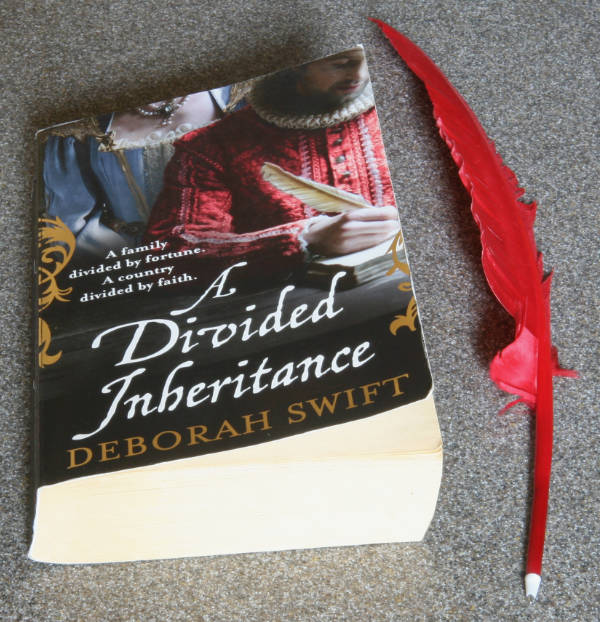
In A Divided Inheritance she’s delved into the 16th–17th century, and chosen a very dark backcloth of history. This was an era when the English king, James 1 (James VI in Scotland), forbade Catholicism and enforced punitive laws against those who refused to attend Anglican services here; whilst in Spain, the monarch Felipe III signed an edict ordering the entire Muslim population to leave his country on pain of death. By 1613, it was estimated, 400,000 people had been forcibly expelled from Spanish territory. Swift colours in the foreground vividly with her capture of the finer qualities of swordsmanship, the elegance of velvet doublets and fur-lined cloaks, the squalour and stench of insanitary housing, the barbarity of the slave trade.
It’s a meaty tome: over 500 pages of tiny text. At its heart is Elspet Leviston, daughter of a lacemaker, who has devoted her life to working for the family business. It’s only when her father’s will is read that she learns the house and half the business go to his bastard son, Zachary Deane, a stranger whom she had thought to be her cousin. Her arranged marriage falls through when her intended husband, a wealthy furrier, discovers she’s not who she purported to be, and now Elspet is facing destitution and homelessness. Zachary has no interest in the lace-making business except for the money it will bring when it’s sold – anticipated revenue he begins to squander in Europe, not improving his education as his father intended, but learning to fence expertly. Desperate, Elspet tracks him down to Seville in Spain and begs for his mercy and help.
Spain opens up a new life to her when she enters the fencing school of Señor Alvarez to await Zachary’s decision, but all her dreams come tumbling down when first the government’s army invade their premises and issue ultimata, and then both the master-swordsman himself and Zachary reveal they are not who they purported to be.
But underlying that tale, is something much more profound. Swift has given her characters emotional depth, subtly exploring the influence on behaviour of role models and affection and belonging, and though the principal antagonists are thwarted of their hearts’ desires, they find a freedom and inner peace independent of their outward circumstances. Somehow more satisfying than a happy-ever-after fairytale ending, and much more fitting given the brutal realities of that era.
Psychiatric scandals
We’ve probably all heard about the historical barbaric treatments and unauthorised clinical trials and experimentation meted out to psychiatric patients, which led to big inquiries and the radical reshaping of modern medical ethics on issues like informed consent and autonomy.
Vulnerable mentally ill people were systematically destroyed with mind-altering drugs, extreme forms of electro-convulsive treatment, operations on their brains, and horrific research on mind control. Many of these procedures were irreversible; patients were seriously damaged; some died. Unscrupulous clinicians went to extreme lengths to disguise or cover their tracks. Governments were complicit in the name of national security and international competition.
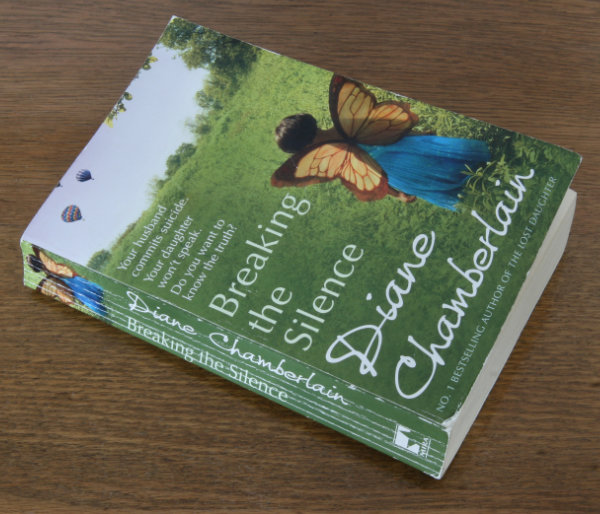
It’s a topic that offers big potential for novelists. Diane Chamberlain is one such. In Breaking the Silence, she’s woven the issue through the eyes of a psychiatric nurse, Sarah, in the 1950s, who finds herself in an advanced facility where the lead clinician has a reputation as a genius offering cutting edge therapy, and conducting innovative research, but who is in fact unscrupulous and maniacal. Alongside this is a present-day tale of a young girl, Emma, who’s in the house alone with her stepfather when he shoots himself dead. The child, believing her chattering made him do it, simply stops speaking, and her mother, Laura, and therapists struggle to unlock the key to her extreme response. When Laura’s father, begs her on his death bed to visit an elderly lady in a retirement home who has Altzheimer’s, the scene is set for these two time-lines to converge.
 Though the story appealed on the grounds that it explores medical ethical issues, from a literary point of view I read it at the wrong time. Successfully dovetailing two stories, two time-frames, requires a deft touch, and it was a shame I read it too soon after Robert Goddard‘s Painting the Darkness. (reviewed last week) His writing is so brilliant and he has woven a first person account into a third person narrative with so much more immediacy and verve, never losing momentum. However, Chamberlain is herself a psychotherapist, so she handles the medical aspects of her storytelling with more assurance and I enjoyed that element of the book.