Restorative Justice
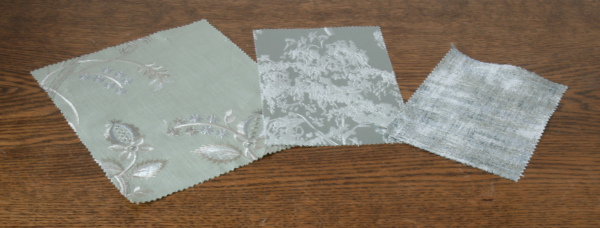
Odd isn’t it how often something in fiction jumps out at you because it resonates with things happening in your real life? I’ve been searching for the right fabric for curtains for the dining room for some time now and have recently whittled the choice down to three swatches. This is the week of the final decision.
So, one of the main characters in Forgive Me by Susan Lewis instantly took on an extra dimension for me. Rebecca is artistically gifted in interior design, and runs a very successful business in Kensington. Her second husband, Marcus Huxley-Brown, is a handsome and powerful man, a financier, son of a former trade minister. But behind the facade her life is a nightmare because Marcus turns out to be both abusive and controlling, destroying her confidence, and leaving her terrified of the repercussions if she steps out of line. When he’s eventually sent to prison for multiple counts of fraud and insider trading, she sees her one opportunity to escape and she seizes it, taking her daughter Cara and an attache case full of money and incriminating documents.
 She leaves behind all evidence of their London lives, adopts a new name, Claudia Winters, renames her daughter, Jasmine, and is aided and abetted by her mother, Marcy, who sells up and moves in with them. It’s a new life in a pretty place in Somerset, far from her old home in London, but… she’s constantly looking over her shoulder, knowing that Marcus will have men paid to hunt her down. His pride will not suffer her desertion lightly. When they buy up a beautiful but rundown Georgian coach-house, I could relate to Claudia’s delight in restoring it to its former glory. I was choosing the fittings and fabrics with her!
The local people are friendly and welcoming and in spite of her terror, she’s drawn into their company, and warm friendships build. Word of her skills travels and she is soon inundated with work, and well integrated into this new social circle. Gradually she begins to relax her guard.
She even manages to explain away the vague sense of someone having been in the house as the remnants of her paranoia. But when petrol is thrown through the front door and the house torched, all her old guilt and terror return. She knows Marcus is behind this but who did he pay to commit this atrocious deed? She convinces herself it’s all her fault that Marcy is terribly burnt in the fire: she was the one who married this monster; she was the one who dragged her mother into this secret life; she was the one who allowed her mother to be alone in the house nursing a cold while she went to her daughter’s concert rehearsal the night the arsonist struck. She can never forgive herself.
Her new friends, who include lawyers and detectives, do their best to support the family but Marcy herself is crushed by the shock and horror of her trauma and the serious disfigurement she will have to endure for the rest of her life. She retreats into herself. But one of the lawyers, Dan, seeing the devastating psychological impact, uses his professional expertise in an effort to coax Marcy out of the dark place she has shrunk into. He runs a process called Restorative Justice designed to bring the perpetrator of a crime together with their victims, and he begins to work with Archie, the nineteen year old arsonist who has lived a deprived and crime-ridden life, encouraging him to write to Marcy.
 It takes time for Dan to feel that these letters would be helpful for Marcy, so he stores them up until he sees the evidence of Archie forming a relationship with her in his mind, caring about her, and expressing genuine remorse. Claudia has serious reservations about the whole idea; she is full of rage and wants nothing but retribution for this youth who has wrecked her mother’s life. But Marcy has her own ideas, and little by little she comes out of her dark place and is intrigued by this boy who has led such a sorry life.
Her forgiveness and compassion are redemptive for Archie, and the two establish a firm bond which transcends class and culture, trauma and retribution.
It’s a warming tale of goodness and forgiveness triumphing over evil, but the most moving parts are Archie’s letters, interspersed throughout the book with the narrative of Claudia’s life, and the insights into Marcy’s innate kindness and generosity of spirit. There’s a little too much improbable romance for my taste, but the core elements of the Restorative Justice process are fascinating and heartening. Susan Lewis manages to make me care for Archie and his crazy mother as well as for Marcy – the skill of an accomplished author.
Cross Bones
 Who isn’t watching with trepidation the unfolding picture in the Middle East right now?
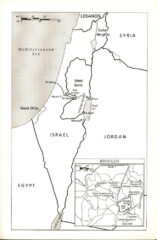
So, when I opened Cross Bones and saw a map of that famous outline of Egypt, Israel, Jordan and Syria; an inset map of Jerusalem; swiftly followed by three quotes from Holy Writ: the Jewish Holy Scriptures, the Christian New Testament, and the Koran, I knew this was the book for me right now.
 Let me hasten to clarify, though, this novel is nothing to do with the current conflict, and indeed was published back in 2005. But still …
Depart from evil, and do good. Seek peace, and pursue it, (Psalm 34:14)
feels like a quote for any age.
Dr Temperance Brennan is one of Kathy Reich‘s trademark characters: a forensic anthropologist for North Carolina and Quebec, based in Montreal, specialising in murder, suicide, accidental and sudden and unexpected deaths.
My job is to restore the identity death has erased.
Based on the author’s own experience in this role – yes, she knows what she’s talking about, and it shows!
At the outset, the body of Avram Ferris, a 56-year-old Orthodox Jew, is discovered in a storage cupboard in his business premises. The on-scene assessment: death by self-inflicted gunshot. But his family is adamant he would never have taken his own life. His body is in an advanced state of decomposition from being in a very hot cupboard and being partially eaten by hungry cats locked in with him, limiting what can be deduced from the scene, and leaving a multitude of questions to be asked. But there’s one major obstacle – a solid phalanx of four of his fellow religious compatriots with strict kosher rules to observe in relation to this body.
The age old struggle between dogma and pragmatics.
But this case is way more complex and politically volatile than at first appears. A mysterious photo slipped to Tempe by an unknown man, a stolen skeleton, a first century cave containing 24-26 skeletons, an ancient shroud, a first century family tomb, missing reports, trashed rooms, more deaths – all indicate deeper issues and sinister intent. Islamic extremism, ultra-Orthodox Jewish taboos, ethical dilemmas, religious fanaticism, confound the picture – could this really be a holy relic with the potential to upend the most basic tenets of Christian faith? We are taken to so many idiosyncratic phenomena, down so many potentially unrelated blind alleys, I for one was grateful for periodic summaries of the state of play.
It’s the stolen skeleton, affectionately named Max, that screams out to Tempe. Three friends are involved in its survival – one of whom is the dead man from the cupboard, who transported it and hid it after his friend, Lerner, stole it from the Musee de L’Homme in Paris. The third man is a devout priest, Morissonneau, who lied about the bones, went against his priestly conscience, and kept them hidden in his Abbey, all to prevent a potential scandal destroying the church. Now he too is dead – soon after Tempe visits him.
Religious fervour breeds obsessive actions.
And those very bones – sacred or not – now lie on her bench. Scientific analysis pinpoints a middle-aged white male of average stature. With someone else’s molar tooth glued into his mouth. Carbon dating reveals the bones date back 2,000 years – the hairs on her neck stand up. This case is deemed potentially ‘explosive’. Mitochondrial DNA … well, is he related to ‘Mary’ in the family tomb?
… international incidents can arise from the most harmless of circumstances.
It’s in the Holy Land itself, that melancholy and conflicted piece of our planet about which she’d read so much, that Tempe and her detective lover, Ryan, find the answers. The mega-theories crumble one by one. Those ‘old reliables’, mundane greed and revenge, are found to be behind all these sinister happenings.
The forensic detail in, and research behind, this tale are mind-blowing. Not many readers will be at ease with words like onomastics, prosopography, paleoepigrapher, polymorphisms, amelogenin markers, etc. Nor will most be up to speed with the generations of conflict in the Middle East. Throw in a smattering of French, Hebrew, Greek … well, you get the picture. But for me these details, and the esoteric language, serve to authenticate and give authority, making the subversive elements of the tale at least plausible to an open mind. A much more erudite challenge than Dan Brown’s The da Vinci Code.
Freedom of speech
Words are my currency so I was instantly captivated by a news item on Monday which took me to an interview with Sir Salman Rushdie.  He was talking about his new book, Knife, and I was struck by a comment that language is his knife, the tool through which he cuts open to reveal the truth, enabling him to fight back against the physical knife which so savagely wounded him. Losing an eye, nearly losing his life, has not stopped him from speaking up about what he believes to be important. I might not always agree with him, but I do respect his right to state his opinion.
And hearing his determination made my mind tick faster in relation to a growing concern I have about the effects of words, free speech, peaceful protest, and the tensions that can be created, particularly where the speaker is eloquent and articulate. Somehow it’s becoming much more difficult to uphold freedom of speech.
Just this past week,  I’ve been
listening to Vicky Beeching openly admitting to being gay at the age of 35 … losing her career as a Evangelical Christian singer songwriter as a consequence;
reading JK Rowling‘s defence of speaking her mind on the matter of gender transitioning … at the expense of her popularity;
watching Dr Hilary Cass drawing attention to the weak evidence underpinning the treatment of gender dysphoria … and attracting negativity.
Just three among many orators and writers, male and female, defending themselves against the abuse and condemnation and even death threats they’ve received for speaking their truth.
But, of course, words can also be used as weapons for ill. Receiving hate mail; watching fanatical preachers peddling condemnation and intolerance; seeing or hearing of ruthless zealots bent on purging the world of certain idea; reading vile slogans daubed on walls; these all chill the blood. I refuse to add links which might oil the engine of publicity for these people and their causes, but you know they exist.
Reflections this week, coupled with developments in my own life, make me want to add my mite by appealing to people everywhere – not just on the world stage, but in lesser everyday arenas – to respect the rights of others to have a considered view, and to express it without threat or abuse. My own experience of being sanctioned for subscribing to certain ideas is small fry when compared to Rushdie’s attempted murder, but I know what it feels like to be branded and punished for my words. This is not the mark of a civilised or compassionate society. But curiously, the more people try to silence me, the more powerfully I see how essential it is to stand up against oppression and bullying.
I prefer a quiet life, but not at all costs.

Just One Look
Both life and literature are throwing rather a lot of angst my way at this moment so I’m going to share something positive without baggage this week.
It’s possible to find solace in a beautifully crafted piece of fiction, even when the subject matter is not exactly sweetness and light. I can get lost in the work of a master-craftsman and emerge feeling soothed and ready to face the fray. Literature as therapy.
And for me, Harlan Coben is a past master at creating plots within plots that unravel one after the other, keeping the reader guessing until the very end. I defy anyone to guess the final twist in Just One Look.
 US Attorney Scott Duncan’s speciality is prosecuting corrupt politicians in the Garden State of New Jersey. Eebie jeebie. How many are there?! Enough to keep a team of hotshot lawyers in work? So why, after resolutely refusing to talk to anyone since his arrest, has an assassin for hire, real name unknown, who has killed an estimated one hundred people, asked to see him specifically?
The prisoner leans forward: What I am about to tell you will change your entire life.
And that information? That he was the one who had killed Scott’s sister, Geri, aged just 21, fifteen years ago. That’s the prologue so I’m not spoiling the tale for you.
Thereafter the story line splits in several directions.
Grace and Jack Lawson are a happily married couple with two children whose sense of security is suddenly threatened when a photo from Jack’s past appears in a bundle of newly developed pictures. The young woman with Jack has a giant cross across her face. Then Jack is tailed … is felled and abducted … and is now missing. Given a complete lack of interest from the police, Grace sets about trying to find him, and discovers secrets and a past about which she knew nothing. We have to wait 200 pages to see what their connection is to the Scott Duncan of the prologue.
Eric Wu is a devilishly clever killer who will stop at nothing to stay free after a life of crime and prison. Via his multiple online presences he uses vulnerable people to further his own ends, and now he has Jack and Grace in his crosshairs.
Jimmy X – real name James Xavier Farmington – is a faded rock singer who’s looking for some kind of forgiveness from the parents of 18 children who died in a stampede at a concert – known as the Boston Massacre. Grace was herself seriously injured in the crush and still bears the scars, but she has next to no memory of the event. However, she does remember the singer visiting her in hospital. The Jimmy X Band broke up after the tragedy, but Jimmy himself has now reappeared in a minor role. What is his connection to Jack Lawson?
Coben has the knack of carving a potted biography of each character, and we know everyone is hiding something. I found myself trusting no one. But the ending still took the rug from under my feet.
There are two clever passages that I must share:
The kid working – Grace’s use of the term working being overly generous here – behind the counter had a white fuzz pellet under his chin, hair dyed a color that’d intimidate Crayola, and enough piercings to double as a wind instrument.
The office, if you could call it that, had that Early American Hurricane look going for it.
Another rollocking read by a master storyteller. Try as I might to analyse his technique, I remain in awe of his skill. But just the wondering is a welcome distraction from reality. Therapeutic indeed.
‘Honour killing’
 The title alone, No Safe Place : Murdered by our father, instantly captures something of the terror of being born into a family where violence is the norm. But this is no work of fiction; it’s a true story – a story so horrific that the identities of the two girls at its centre have had to be concealed. It is told by Bekhal Mahmod assisted by a legal reformer, Dr Hannanah Siddiqui.
Bekhal Mahmod was one of six siblings born into a Sunni Muslim family in Iraqi Kurdistan. Though living conditions were primitive, her early years were happy in the bosom of her extended family. But suddenly, when she was just six years old, the father she had adored and respected began to subject her to beatings and abuse as he enforced his strict misogynistic rules. Six years old.
At the age of about eight, she was genitally mutilated by her elderly, half-blind grandmother, pinned down by her own mother and aunt, with no explanation, no compassion. The shaking hand managed to sever a nerve with the open razor and cause serious haemorrhaging, but the women promptly threw scalding vegetable oil over the area to cauterize it, using nothing more than beetroot to treat the child’s raging fever. She waited a further six years for an explanation as to why this had been done to her.
Some girls die from blood loss or severe infections …
But hey, never mind – because it’s all about ‘honour’, right? Such is the mentality of some of the men in our family.
From that time on Bekhal knew she wanted to flee from this culture, this religion, the oppression, violence and control.
As she grew, and as she challenged the status quo, so the violence escalated. The soles of her feet were burned with a red hot metal scraper. Her bottom was thrashed with a hosepipe whip. Extreme verbal abuse left her feeling worthless and unloved. She was partially suffocated by her father sitting on her face. She witnessed a teenage neighbour being killed in a vat full of steaming tar. Another girl who lived nearby was killed by her father scalding her from head to toe in boiling water.
‘That’s what happens when they don’t listen to their fathers,’ her mother warned her.
Yet another father locked his daughter alone in the house and bombed it with hand grenades.
 Still there was no mention of the term ‘honour killing‘ in Bekhal’s hearing. But the fathers were known as heroes in their community.
The perpetrators are proud. In their warped minds they’ve ended the shame and reinstated their family’s honour. It gives them power.
It was not until she was ten that Bekhal was able to go to school … a strict religious all-girls school, and this became a blessed form of escapism, and a place where she experienced approval and affection.
Then, suddenly and secretly, the family all moved to London.The culture shock was massive. But the tragedies of life in Iran reached across the miles when they learned that Bekhal’s beloved and beautiful cousin, Avin, was so desperately unhappy that she had committed suicide. And though the abuse, sadness and inhumane violence continued, Bekhal’s rebellion also escalated as she experimented with clothes, make-up, tobacco, weed, alcohol … if she was going to be abused anyway she might as well earn the beatings! But not even her miscellaneous efforts to numb the pain could prevent depression and self-harm claiming this teenage girl, drawing her inexorably towards a suicide attempt.
I can’t even try to kill myself without getting a beating.
Her father and uncle stepped up the vigilance and she was overtly threatened with death if she persisted in flouting the strict rules of their culture.
If I had my way, you’d be turning into ashes by now.
Their solution? To force her into an arranged marriage with a much older cousin in Iraq – at just fifteen years of age. Terrified, she ran away, making herself a target for ‘honour killing’. She was trapped.
If I run away, I’m dead; if I go home, I’m dead.
To Bakhal’s horror, in an effort to restore his family’s collective reputation, her father swiftly married off his two younger daughters, Banaz and Payzee, by force, to much older men. But two years later, aged only nineteen, Banaz walked out on her husband saying he had beaten and raped her; and she wanted to marry someone else, a young man from a different tribe who was not a strict Muslim, and therefore deemed ‘unsuitable’. More ‘shame’ on the family. She too must now die.
 In 2006 when Banaz was twenty, she vanished. Though she had reported the violence and the threats to the police on five occasions, the system failed her, and she was brutally raped, tortured and murdered in a so-called ‘honour killing’, her body stuffed in a suitcase and buried in the garden of a disused house far from the scene of the crime. Bekhal was devastated.
Seven male relatives were convicted, her father and uncle among them, though the police stated that there were up to fifty men from their community involved in the murder or the cover-up. Bekhal’s own evidence was crucial in securing the convictions and for her own safety she was put into witness protection with a new identity. Even so she has spent, and will spend, the rest of her life looking over her shoulder, conscious that the unrepentant men who killed her sister and continued to boast of their ‘honourable’ actions in prison, have her high on their hit list still.
This landmark case in the Old Bailey shone a spotlight on the horrors being perpetrated in the name of honour, generating a powerful movement to end such brutality in this country. It also exposed multiple failings on the part of the police to protect Banaz from repeated attempts on her life and a catalogue of abuse, with both these authors working tirelessly to introduce new legislation to protect vulnerable women and girls: to be known as ‘Banaz’s Law‘. Films have been made, interviews recorded, courses run, based on this remarkable and tragic story. This book is but one cog in the wheels of change. A sobering and harrowing read.
Hitting the headlines
As I mentioned last week, it’s astonishing how frequently medical ethical issues hit the news. Evidence, evidence! I hear you cry. OK. More detail it is. But of course, do bear in mind that the media rely on sensation to sell papers.
I’d prefer to show you the actual headlines, but given the legal issues around copyright, I’ll just list a few recent ones this year alone.
 * Starmer will allow assisted dying vote
* Petition spurs MPs to tackle assisted dying
* France will allow at-home dying for terminally ill
* UK travel to assisted dying clinic falls to 12-year low
*Fears that fertility unit has destroyed embryos
* NHS chiefs accused of covering up clinic’s embryo destruction

* Gender identity is a religion, so why is Scotland legislating on it?
* UK’s only trans judge quits over fears she has politicised the role
* School nurse states not all people who give birth are women
* Caitlyn Jenner: Trans women are not women
* Italian trans man found to be pregnant after mastectomy
* Late-term DIY abortions will rise if law changes
* New late abortion guidance tells health staff to avoid reporting women to police
 * 20,000 prostate cancer cases missed in Covid
* Children still suffering effects of lockdown
* Patients suing NHS over missed cancer diagnoses rise by 50pc
* Hospitals told to drop physician associates
Every one of these issues raises so many questions, and such a range of challenges. Every one indicates the appetite of the public for this kind of information. Every one could easily spark a storyline for another novel in my series. And sometimes indeed fiction is more believable than truth.
Will I? Won’t I? … time will tell!
(Thanks to Shutterstock for the two question images)
Ethical issues: egg freezing
As I’ve mentioned before, it’s rarely that the subject of medical ethics is far from the news. Just in the last couple of weeks we’ve had assisted dying, gender identity, abortion. But the one that jumped out at me was fertility treatment.
 Last month patients at two clinics were told that their embryos might not be viable because a faulty solution was used. Now we learn that a major NHS fertility centre near London has been reported to the police and had their license suspended because of fears that embryos have been destroyed due to potential contamination of processes and equipment. Investigations by police and fertility regulators are underway; new security measures are in place, and affected patients have been contacted.
Given the high degree of control and regulation and safety checks, it’s hard to see how this could have happened on the scale alleged. Given the huge significance of what is being done in the creation of new lives, can there be any more serious breach?
Imagine … going through all the trauma of retrieving eggs, creating embryos, perhaps knowing this is your last ditch hope of ever being a parent, and then finding it has all been in vain. All hope has gone. Because of clinical or human error. And then finding the NHS staff are also accused of a cover up.
Aside from the actual news, there has also been airing of a fascinating BBC programme on the subject: Egg freezing and me.
 As many as one in six women struggle with their fertility in the UK, and egg freezing is one of the fastest growing treatments. Nowadays patients are seeking the procedure for a whole variety of reasons: when they are not ready to become mothers; when there is no suitable partner on the horizon; when their biological click is ticking too fast; when medical conditions mean their fertility is compromised; when they are about to undergo treatment that will render them infertile; when they have transitioned. But simply wanting help is no guarantee that it will be available: access varies. Clinics vary. The accuracy of statistics provided to patients varies. The number of rounds of treatment on offer varies. The cost alone puts the treatment beyond the reach of many.
 There are immensely complex questions relating to this treatment.
Should there be age limits?
Should there be a limit to the number of rounds offered, the number of eggs retrieved or frozen or thawed or used?
Should single parenthood be encouraged?
How honest about efficacy should clinicians be?
Should healthy fertile women be encouraged to keep their options open in this way?
Is it kind to encourage hope when the odds of success are very poor?
Should the service be available to trans men?
How honest should clinicians be when mistakes happen?
The list goes on.
I’m impressed that the BBC tackled this subject, and that a number of women were prepared to share their experiences so openly. These are highly sensitive treatments with life-altering consequences. Society must keep asking the hard questions.
NB. For anyone contemplating fertility treatment the Human Fertilisation and Embryology Authority has issued a statement in response to the BBC programme.
Psychological thriller meets family saga
Ever since I decided to write one myself (Killing me Gently) I’ve been fascinated by the structure of, and driving force behind, psychological thrillers. Family sagas tick another of my boxes.  Plus I’ve read Louise Jensen before, so The Fall caught my attention when it came out recently. It’s set against the background of the effects of Brexit, the pandemic, and the current economic instability, which makes it feel real and immediate.
Beth and Kate are 40 years old, and identical twins. They both have 15-year-old daughters who have been inseparable … until a secret drives them apart. Now one of them, Caily, is in a coma in hospital following a fall from a bridge. The police think she was pushed – her cousin’s DNA is under her nails.
But everyone in the family is harbouring a secret. Some of them dread Caily recovering consciousness. What will she remember? What did she know that put her in such danger? Will relationships survive if she regains her memory; if she talks?
Someone is leaving gifts for her. How are they getting in? Why bring her bloodied ballet shoes into hospital?
Where has the handsome farmhand Travis gone so suddenly? Why does he reject Caily’s interest so violently?
Who are these men who lurk in the shadows, and drive Range Rovers, and threaten people in their own homes?
The story is cleverly conceived and skillfully unravelled, and I did like the echo in the first line of each chapter of the last line in the preceding one. Other stylistic choices niggled me somewhat, but hey, this author has had considerable success, so she’s allowed some idiosyncrasies. And she certainly kept me guessing as one after another character came under the spotlight with their guilty secrets and mixed motives and reasons to fear Caily recovering her memory and speech. A page-turner and a salutary tale about the impact of deception and lies on relationships.
Chick lit? Hardly!
I’ve never been into what used to be called chick lit, now more properly light romance – ‘refined sugar for the brain’ – but realised this week it was presumptuous of me to dismiss it without a fair trial. It’s been a rather fraught week with a lot to exercise my mind, so I needed something undemanding, and this seemed as good a week as any to give it a whirl. One name came to me: during lockdown I attended lots of on-line book festivals and a bubbly author with a lovely Irish accent impressed me with her charm and eloquence – Marian Keyes. I raked around and … yep, found one of her novels. I’ve since read her biography and apologise unreservedly for classifying her so glibly. In reality her books defy genre and sell in their thousands.

This Charming Man is billed as dealing with serious issues but is light reading with plenty of humour, so it should be the just sort of thing I can dip into for distraction that won’t bog me down in angst. … or so I thought.
The ‘charming man’ in question is charismatic politician Paddy de Courcy. Word is out that he’s getting married, and there are four women in particular who have every reason to feel powerful reactions to this fact. The tale is told through their eyes with clever changes of font and style to anchor their stories.
Stylist and fashion guru Lola Daly has a vested interest because she’s his current girlfriend – or thought she was – but she’s certainly not the bride-to-be. Devastated by the news, she vanishes to a rural retreat to try to get perspective. From childhood she’s had a real fear of abandonment, but it keeps happening. What did she do wrong to lose Paddy? Was her Dad right: Never trust a politician? She’s left feeling worthless, her confidence in shreds, and this spills over into her work life, leading to her quitting city life and settling for a very different kind of existence in a rural backwater, while she tries to regain her self respect and confidence.
Journalist Grace Gildee is desperate to get a story on Paddy de Courcy from the inside and thinks Lola would give her a real scoop. But even big money won’t tempt Lola to talk. Then Grace is asked … no, ordered to go and interview the new fiancee in her professional capacity. She can’t! She insists she can’t! Her integrity would be compromised because of her personal connection to Paddy de Courcy. But she’s given no choice; she has to go. The bride-to-be herself will brook no other.
Grace’s twin sister Marnie is one reason for her resistance. Paddy was her first love, and she can’t forget him. But Paddy de Courcy has had a devastating effect on Marnie’s life. Her tale unravels as she sinks further and further into alcoholism.
And then there’s the fourth woman, the real bride-to-be, Alicia Thornton, determined to be the perfect wife. Someone with her own scores to settle. Who has her eye on the ultimate prize.
 Well, this is certainly no ‘refined sugar’! Keyes took a long time writing it and says from the outset that it honours all women who are the victims of domestic abuse. But, whilst abuse certainly lies at its core, the book deals with far more issues than that: alcoholism; cross dressing; press harassment; Irish politics; racism; addiction, ageism. Gritty, dark, troubling, but woven through with light touches and even outright comedy.
It’s not my kind of reading (and it’s a veritable door-stopper at almost 900 pages long!!) but I take my hat off to a very talented writer. I shan’t make the mistake of dismissing such literature so lightly in future.
Covid drama
Hot on the heels of the drama about the Post Office scandal, comes one about the Covid pandemic.  Breathtaking is based on the book by Dr Rachel Clarke which I reviewed during the crisis, and Rachel herself worked with the brilliant Jed Mercurio and Prasanna Puwanarajah (two doctors turned TV writers) to create this series – three powerful episodes. She cried writing it; she cried making it; she cried watching it. Small wonder. The scenes she witnessed, the emotions she experienced in real life, will be forever etched in her memory. I can only dimly imagine the pain of reliving the pandemic this intensely.
For us the programme is raw and unflinching in its portrayal of the horror. Much of it is seen through the eyes of consultant Abbey Henderson, (played by Joanne Froggatt, best known as a maid in Downton Abbey) a young mother of two, who gives her all to patients and staff, all the while knowing her best simply isn’t good enough in these unprecedented circumstances. Because …
..there simply aren’t enough staff to cope with the overwhelming deluge of sick people;
..protective equipment is inadequate and in short supply;
..front line staff are using bin-liners and visors made my schoolchildren;
..care has to be rationed, decisions made about who lives or dies;
..death statistics are astronomical;
..triaging is ineffective;
..colleagues are dying;
..testing kits aren’t available;
..there is no vaccine, no cure;
..relatives are excluded;
..bad news has to be given over the phone;
..government reports and advice don’t match what’s happening at the coalface;
..false reassurances are being issued by the political and medical leaders;
..terrible decisions are being made with dire consequences;
..guidelines and policies, both local and national, simply don’t square with clinical assessment.
On and on it goes, wall-to-wall catastrophe, tragedy, disaster.
The drama certainly brings to life the terrible burden on NHS staff, exhausted and crushed by the horrors they are seeing daily, the terror of the unknown, but it captures too the beautiful moments where human empathy and sensitivity shine through the despair – a doctor playing his violin for a dying patient; rules being bent to allow a young mother to see her two little girls one last time; distraught staff hugging each other on the changing room floor; staff lining up in the corridors in silent tribute to a dead colleague.
It traces the disastrous decisions made by the government, rendered the more vivid and poignant by footage of the actual briefings and the real politicians and advisors we remember all too vividly standing at those podiums, giving false information, obfuscating, trotting out platitudes. Who can ever forget the Barnard Castle scandal? Or the prime minister proudly commending himself for shaking hands with patients and staff indiscriminately, and going without a mask? Or those photos of partying in Downing Street? Coming as it does after the massive coverage relating to the Covid Inquiry and the exposure of political failures and abuses, it’s hard to watch again the false information and hypocritical assurances about ‘protective rings’ and ‘doing all in our power’ and relaxing lockdown for Christmas. Harder still now we know those making the rules were flouting them brazenly themselves, taking the public for fools.
Emotional viewing but spectacularly effective filming. And something of Rachel Clarke’s own humanity and empathy is embedded in it. This drama must surely win prizes and be a catalyst for change. The official Inquiry is supposed to help us learn lessons for future pandemics, but at times it has degenerated into farce. Perhaps bringing the reality into the lives and living rooms of the public through a TV programme will be a more effective instrument in minimising the mistakes and protecting people in the future. We can only hope so.