Currently, as I’m sure you know, assisted dying is banned in all forms throughout the British Isles and carries a potential maximum prison sentence of 14 years. Repeated attempts have been made to legalise assisted suicide, without success, but this week the Isle of Man, a self governing UK Crown dependency, has come a step closer to becoming the first part of our islands to legalise it for terminally ill and mentally competent people. And Scotland is hard on its heels with the formal introduction of a new bill to their parliament on 27 March.
The Rewrite Man
I know little of the world of writing for screen and stage, apart from a minor dabble during my creative writing course many many moons ago. So I was intrigued by a book written by an actual scriptwriter, narrating a story about a Hollywood scriptwriter who comes to the rescue of a film director stranded in the south of France battling with a third-rate production.
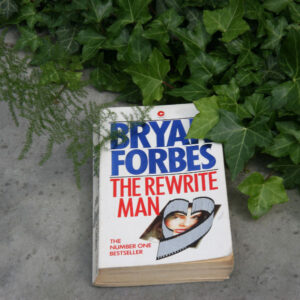 The book is The Rewrite Man, published way back in 1983. I picked it up in the magical National Trust bookshop I told you about a few weeks ago. The author is Brian Forbes who himself had vast experience of every aspect of motion picture production as author, actor, screen director and producer; indeed one of the most respected directors in the world. And married to the famous actress Nanette Newman to boot. We’re in safe hands: this is a man who knows exactly who and what and where and how.
Harvey Burgess is an empathetic man, and his friends use him as their chosen confidant, the laundry basket for all their soiled linen … like some neutered father confessor available for free consultations at any hour of the day or night. We listen over his shoulder to a drunken phone call from France begging him to join the team to rescue a film from certain disaster. As the narrator, he takes us with him as he flies to Europe and becomes immersed in a world that changes his life and priorities for ever. It’s Harvey’s job to re-write the script about the French Revolution, and bring the story to life.
Director, Martin James, is the man who made the fateful call, unwittingly revealing that he’s besotted by one of the young actresses, his protegee, Laura Taylor. He’s a man with a Midas touch for mediocrity, and a would-be Professor Higgins accent, who gives the impression that he had bought a do-it-yourself Rex Harrison kit, but had never quite worked out the instructions. But Martin trusts Harvey to be a safe pair of hands protecting Laura from any competition.
And there’s plenty of competition – Laura is a very beautiful girl. Harvey himself falls under her spell and begins a passionate and obsessive relationship even though he knows Laura has other boyfriends of longer standing. He knows their time together is limited to the duration of the film’s production, but he quickly realises that he’s in deeper than he’s ever been before.
When he’s no longer needed for the film script, and instead accompanies the body of a colleague back to the States, he’s convinced they will stay in touch. But his letters go unanswered; his calls are not returned; her contact points are cut off. Though he does all in his power to track her career and her whereabouts he draws a blank. Until, that is, tragic news arrives from an unexpected source.
Forbes certainly knows how to create vivid characters and lively dialogue. He writes the scenes he clearly sees, weaving a tale of obsession and jealousy with skill and verve. It’s very much of its time, but it’s always useful to read good writing and this was a benign diversion from the pile of books I’m reading on death and dying!
Corpse de Ballet
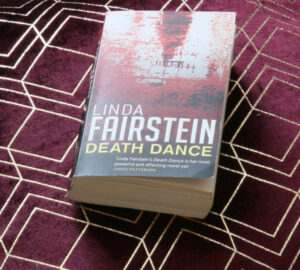 The opening is routine bread-and-butter work for Alexander Cooper from the Manhattan District Attorney’s Office: a case of two female Canadian tourists drugged and raped by a Turkish doctor. It’s the eighth book in Linda Farstein‘s Alex Cooper thrillers so she’s established her credentials.
Alongside her role dealing with sex crimes, Alex pulls strings to get involved officially in a much higher profile case: a famous Russian prima ballerina, Natalya Galinova, who goes missing, and is found dead at the bottom of a filthy air circulation shaft in the very palatial opera house where she had been performing – killed with thousands of people milling about both in front of house and backstage. Her skull is split into pieces, her neck twisted obscenely, multiple massive internal injuries, hands tied behind her back so nothing to break the 120mph fall, her famous legs grotesquely broken and bent, blood everywhere. She was alive when she was thrown over the edge. The perpetrator had made her take off one of her pointe shoes prior to the fall; the ribbons used to tie her hands.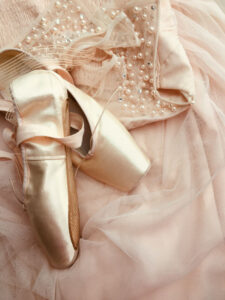
Dramatic incidents follow swiftly – a man is electrocuted by a manhole cover; a teenager falls from a velvet swing in the theatre. In an industry that thrives on superstition, there’s a growing sense of the show being jinxed.
Alex and her long-time friends and colleagues, NYPD’s Mike Chapman and Mercer Wallace, are introduced to the amazingly intricate and vast warren of the opera building with its miles of corridors, anterooms, secret lifts and staircases, and sophisticated machinery that makes the magic on stage possible, much of it known only to an elite few.
I watched a ballet in the middle of reading this book, Death Dance, and was rivetted by the scene changes and clever effects in a way I’d not been before. The split second timing, the dangers, the skills of those handling the electrics and mechanics … the potential for things to go catastrophically wrong. Knowing that unseen hordes of people contribute to the seamless perfection we pay to see.

Detail by detail Alex et al piece together a murky world of voyeurism and greed, of obscene wealth and total lack of morality, of competition and ruthless drive. Impossible to guess the outcome but the inside look at a world of outward glamour and artistry is fascinating. And I love the lively believable dialogue and banter between the three friends; the wry humour, the veiled insults. They would give their lives for each other.
There’s a special skill in creating series and keeping tabs on character’s histories and features. Farstein does this brilliantly.
Literary genius
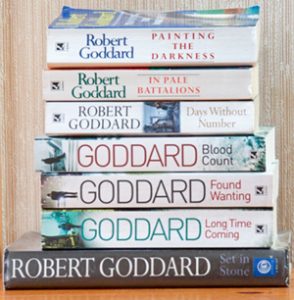 One of my most favourite novels is Past Caring by Robert Goddard, and since reading it I’ve collected a goodly number of his books on my shelves. They’re lengthy and intricate and absorbing though, so I only select them when I have the luxury of enough time to opt out of other commitments, or when I want a literary treat, or escape from reality.
The weather cancelled a couple of diary engagements recently so I seized the opportunity to indulge in a Goddard feast.
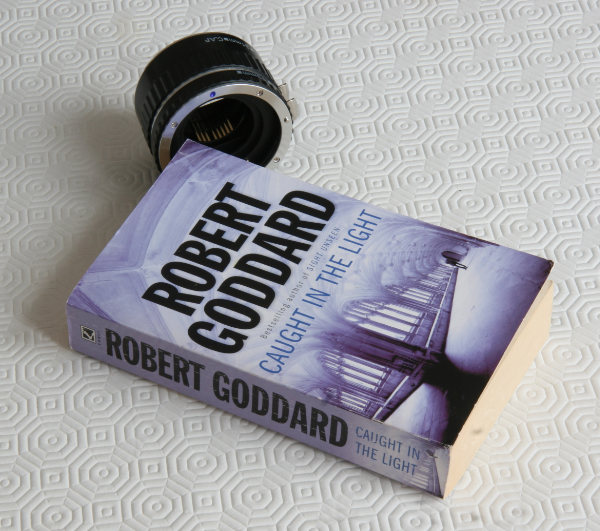 This time it was Caught in the Light … and I’m instantly captivated. He manages to convey an atmosphere of period brilliantly, moving effortlessly between the seventeenth century and the present. His plotting is spellbinding, layer upon layer of intrigue, and whether it’s a sinister menace, or a romantic interlude, or a psychological minefield, he grabs your attention and compels you to keep those 445 pages turning. A truly superb storyteller.
 Photographer Ian Jarrett is in Vienna for a few days on an assignment when he meets and falls in love with a stranger in a red coat standing against a snowy background: Marian Esguard. So utterly captivated is he that he returns to London, leaves his wife, tells his daughter, and goes to meet Marian. But she never appears. She seems to have completely vanished. What’s more the six films of photographs he took are blank. What is going on?
So fixated is he that he vows not to take another picture until he can photograph Marian again. So, not only has he lost his wife and home, and his lover, and his dreams, now he is without a job. His single-minded search for her takes him back into history, and into a dangerous world of unscrupulous men and dabblers in the darkness of a disordered mind.
I became a ghost, hunting a ghost, haunted by a past I couldn’t forget and a future I couldn’t give up.
 He is joined in his search by a Harley Street psychotherapist, Daphne Sanger, who is looking for the same woman, a client who spun her a very different story. Given the circumstances she agrees to breach her ethical code of conduct and share a vivid account of what this missing woman is enduring. Lies and deceit and betrayals abound. Everything swirls dangerously out of control. A man is strangled. Jarrett is caught up in this web of deception, trapped between the enigmas of the part and the greed and revenge of the present.
As the real truth unravels, and his existence is reduced to the narrowing circle of his search for his missing obsession, he becomes increasingly cagey.
There was secrecy bedded in my soul now, a furtiveness about my every word and thought.
And just when you begin to believe he’s about to realise his dream, the entire picture blows up in his face, and he has to acknowledge that he’s a mere puppet in an elaborate plot, his whole life being demolished around him. No one seems to be who they claim to be, yet he is the one who seems pathologically paranoid and deluded … except that he knows for sure he’s not, and he’s utterly determined to call the chief tormentor to account. And to save his sixteen-year-old daughter. But he’s at the mercy of a ruthless enemy who will stop at nothing to exact revenge. Murder, kidnap, suicide: it just keeps getting worse.
 I’d love to reveal the amazing detail of what is really going on, but I absolutely can’t risk spoiling your enjoyment of this incredibly complex story. It’s a masterclass in writing. And whether its the origins of photography, or 17th century historical detail, or the medical facts around haemophilia, or the underpinnings of psychological derangement, the author writes with authority and assurance, never flaunting his research, but weaving fact and fiction together seamlessly with a sure hand.
As critics have already said, when it comes to duplicity and intrigue, Goddard is second to none. He’s a master of manipulation … hypnotic … unputdownable … spellbinding. Genius.
Nordic Noir
 Tove Alsterdal is one of Sweden’s most highly acclaimed suspense writers. Her novel We Know You Remember was named Best Swedish Crime Novel of the Year in 2020 and was awarded the Glass Key Award for Best Nordic Crime Novel in 2021. Time then, that I read it.
The setting is a remote landscape in Sweden that is both expansive and melancholy. It provides a strong atmosphere of mystery and darkness against which murder, rape and unsolved cases take on sinister and suspicious dimensions, which Alsterdal uses to great effect.
When Olof Hagström (now 37) returns to the house where he grew up he makes a gruesome discovery: his father Sven dead in the shower, the water still running, a single gash across the top of his abdomen severing an artery. Olof is in the process of leaving the scene, when a neighbour appears and contacts the police.
He’s instantly apprehended … because Olof has history. When he was only 14, after days of questioning, he had confessed to the rape and murder of Lina Stavred. The girl was 16. She’d been strangled with a branch and her body thrown into the river, they said. But no body was ever recovered. No conviction. No trial. His name never published. The lad was a minor. He was sent away. But everybody knew.
And ‘everybody’ included Eira Sjödin (aged 32) who grew up in this remote place. She’s now a police officer, combining a demanding job with caring for her mother Kerstin, who has advancing dementia. She’s called in on the case of the dead man in the shower, and memories come flooding back, memories from 23 years before … when she was only nine herself.
Olof is soon released by the police with cast iron alibis to support his innocence of his father’s death, but that doesn’t stop malicious gossip spreading about his past. And even when the real culprit is apprehended, the ill-feeling against him persists.
The nearest neighbours are Tryggve and Marianne Nydalen. Their son Patrik, and his wife Sofi, are staying with them within sight of Sven’s house. City-girl Sofi is afraid of the forest, the presence of evil she senses, but she makes herself walk through it every day to swim down by the secret beach in 17 degree water. And that’s when she sees a curtain flutter in the old man’s house … a light inside … a shadow … a movement … darkness filling the whole window. Something has to be done. She has children; they can’t have a rapist/murderer living next door. ‘Why should a person like that be allowed to move freely and not me?’
 Years ago, her father-in-law, Tryggve Nydalen, was one of seven youths who gang raped a girl, served a year in prison, then changed his name. Was he also responsible for the murder of Sven a generation later – silencing him? The police haul him in for questioning.
Then Sven’s house (Olof’s childhood home) is attacked with stones and bottles, burned to the ground during a lightning storm. Olof himself, alone in the house at the time with his father’s dog, is found buried in the wood, still alive but severely injured and unconscious. The boys responsible for the arson are adamant they hadn’t chased him into the forest.
The current and historic murders become inextricably interwoven as parallel lines of enquiry get underway. When a body is found in the water, speculation is rife. Could this be that of Lina, the teenage girl who vanished 23 years ago? It’s certainly the body of someone who met a brutal end. The forensic teams start searching, artefacts emerge, fingers start pointing away from Olof, towards people Eira knew well in her youth. Back towards a time when she was a young girl hearing the whispers, aware of the tensions, but kept in the dark. Now she’s discovering far more about her friends and relatives than she ever bargained for, and suddenly clearing the name of the 14-year-old Olof holds unnamed threats and horrors.
But her local knowledge is invaluable. She sees things no one else even thought of. She must juggle the emerging facts with a conflict of interest she initially dare not share with her superiors. As a police officer she must stand up for truth; as a relative she isn’t obliged to give evidence and can protect those closest to her.
In the end it’s a thread on social media that leads her to the truth of what really happened all those years ago. A speech pattern. Words spoken unthinkingly, incriminating unknowingly.
It’s a cleverly plotted, well-written fiction, loosely woven from real-life cases, a compelling tale of miscarriages of justice, revenge, and sacrificial love. Well deserving the accolades and awards.
With the End in Mind
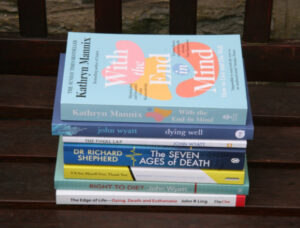 It’s not often that I find a book of which I can say, I love everything about it. But With the End in Mind is one such. It’s a particular treasure too, given that it’s the last in my pile on death and dying, a topic I’m researching for a forthcoming presentation.
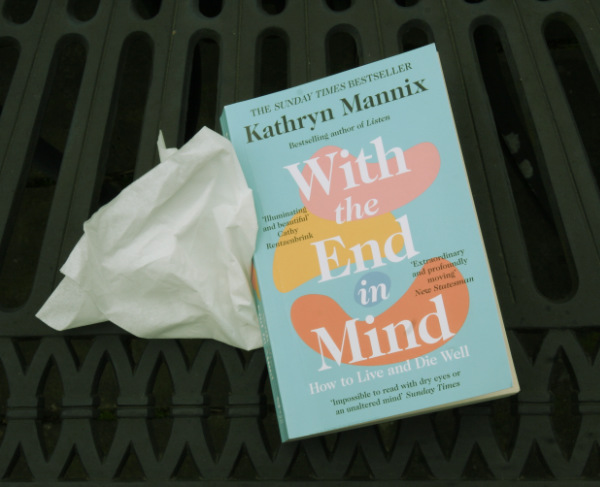
The author, Kathryn Mannix, is one of those people I would love to have sitting beside me at a long dinner! She positively oozes wisdom and experience and humility and compassion and empathy.
She’s worked as a cancer care doctor, a palliative care consultant, and a qualified Cognitive Behaviour therapist. Impeccable credentials for a book which is aimed at helping people become more familiar with the process of dying, to feel comforted and inspired, to be less afraid and more inclined to discuss their own dying. It’s a profoundly moving book, full of wisdom and softness and perceptiveness, beautifully written and haunting in its impact.
Dr Mannix uses stories to illuminate the lessons about life and death – composites of people she has encountered in her long career, but she renders each one totally three dimensional and real. Whether they are young or old, inherently likeable or initially rather demanding or difficult, this doctor respects and cares for them as precious individuals of infinite worth. I shed tears; I felt grateful; I looked deeply into my own experiences as a health care clinician and researcher; and I was challenged to re-consider my own ideas about death.

She has reminded me of the importance of active listening, or not making assumptions, of slowing down to walk alongside those who are suffering, to start where they are.
I was nearing the end of this book when a friend who was jointly-with-his-wife responsible for designing and maintaining this very website died in the early hours of Wednesday morning last week. He leaves behind a grieving wife and a devastated young primary-school-age daughter. I can only hope he was looked after by someone as special and wonderful as Kathryn Mannix. And I echo the words of one of the elderly women Kathryn cared for, a woman with multiple pathologies: ‘If I could, I would give some of my years to younger people‘ – in my case to Tim. If only it were a transferable asset. All I can do is thank him publicly for his kind and expert help and service over the years, and surround Keren and Elizabeth with love, compassion and care.
Eighteen Seconds
Storyteller Louise Beech, or more formally Louise Jane Lady M Puffbrains Beech, endured a traumatic childhood and chaotic life until she was fifty, at which point she severed all connections with her mother. Her memoir, eighteen seconds, tells her painful story.
 Why eighteen seconds? It’s a phrase her mother used:
I wish you could feel the way depression does for eighteen seconds. Just eighteen seconds, so you’d know how awful it is.
Writing is Louise’s safe place, her creative outlet. After years of not being heard and hiding the horrors of home, writing about the bad times, giving voice to her emotions, has proved cathartic.
I still turn to my stories to escape reality. Fiction has been like a filter. A way to let in difficult feelings, gently, bit by bit, in small paragraph-sized lumps so they are easier for me to digest.
And because her writing is the mechanism by which she shares her deepest self, initial rejection of her novels feels personal. Later publication at the age of 44, selection for shortlists and prizes, positive reviews – all these things confirm her private dreams, and give her the acceptance she always craved.
Hers is a story of sexual, psychological, physical and narcissistic abuse – abuse which was largely ignored or overlooked.
We were the masters of silence, of doing as we were told and staying quiet, of putting up and shutting up, so how could anyone have known?
Her mother, Patricia/Trish, was beautiful but troubled and not the caring nurturing person the children wanted and needed. An alcoholic, depressive narcissist, she constantly belittled and insulted her four children, and tried to foist them onto others, so that she could ‘have a life‘. But despite manipulating situations to get her own way, depression haunted her, and she made several attempts to end her life, including a spectacular fall from the Humber Bridge which she survived, but with catastrophic injuries.
It was as a consequence of these suicide attempts, and prolonged stays in psychiatric institutions, that Louise and her siblings knew the value of being secure with someone reliable and safe and nurturing who wasn’t drunk or depressed: their maternal grandmother. For much of their childhood too, Louise was also mother to her twin sisters and her brother. She herself suffered on and off from eating disorders, and began to bury things too traumatic or painful to understand or to face.
Their father was an engineer and musician, a remote figure, probably autistic, who beat his wife and took little interest in his children. When Louise was eight, without consulting him, Trish left, taking the children with her. He vanished eight years later and didn’t reappear for 26 years. Left alone Trish simply found a string of other unsuitable men and lurched from one to the next, caring nothing for the impact on her children or their safety. The girls have largely blocked out the sexual abuse they suffered.
It’s a shocking tale courageously told. A tale of a mother who drank and jumped, but whose children paid the price.
She stood on the grenade, but the shrapnel hit her offspring.
Masque of the Gonzagas
The scenery is sumptuous – baroque splendour, lavish musical events, glittering jewels, fabulous artistic masterpieces, gilded barges. Decadence writ large. It’s the beginning of the seventeenth century (think the era of Charles 1) and Northern Italy is in a state of religious and political unrest.
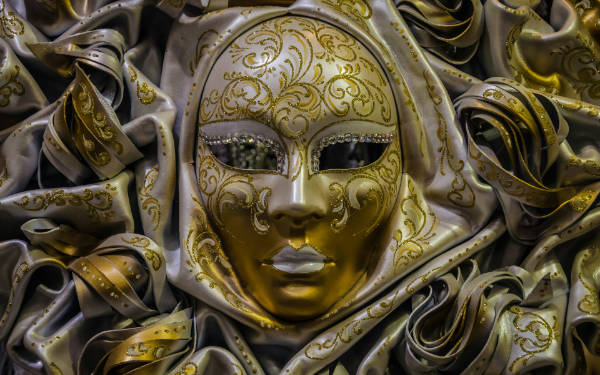
At 29, Vincenzo Gonzaga, 4th Duke of Mantua, is rich, feared and beloved enough to pursue his own pleasures unfettered, gathering around him the finest painters, musicians, singers, women anywhere, in his relentless search for perfection. Even his wife tolerates his endless infidelities, his mistresses, his illegitimate children. And when he proves incompetent in the political and military arena, he becomes yet more obsessive in his quest for supremacy in music and art.
Much of the story is seen through the eyes of his intimate and principal courtier, Ottavio, known as ‘the crooked one’ because of his spinal deformity, fiercely loyal to his master, protective, and a shrewd observer. ‘The Duke’s love is more dangerous than his hatred, for it makes a prisoner of you.‘ And indeed even girls he has violated sing his praises and adore him.
 The setting is the Mantuan court, a pernicious place to be.
Whisper, gossip, all these mediocrities in their court dresses trying to justify their existence by bringing others down.
And splendid and opulent though life inside might be, outside the palace walls it’s a time of great brutality and inequality, the air tainted by disease and death. The Duke’s whims and demands become increasingly unreasonable and excessive, an incomprehensible mix of profligacy and meanness. He will smother visiting musicians with riches and jewels whilst keeping his own world-famous composer and Maestro in poverty, almost killing him with overwork.
But his supremacy is short-lived. Physically he fades from the golden being of his youth to a paunchy, balding pathetic figure. He gambles away a fortune; his amorous advances become more predatory and grotesque and unwelcome.
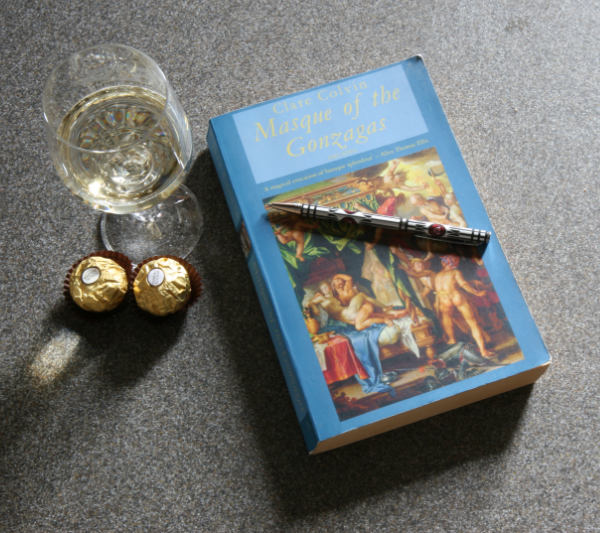
This ambitious sprawling novel, Masque of the Gonzagas, is full of references to historical events and famous names in Rennaisance art and music, the product of extensive and meticulous research.
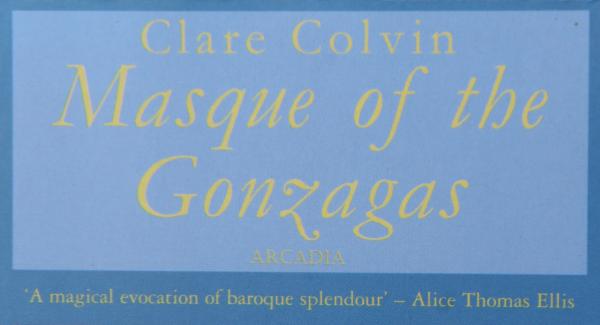 The essential ingredients for page-turning are there too – murder, rape, revenge, secret marriages, witchcraft – but somehow … hmmm, somehow the plot feels fragmented … it fails to engage … the story lines peter out, especially after the death of the 4th Duke. I wanted to love it, but for me its strength lies in the author, Clare Colvin‘s excellent command of English and evocation of Northern Italy and a lavish bygone age. A less expansive time frame and concentration on fewer key players would have suited me better, I think.
NB. A masque is a form of festive courtly entertainment that flourished in 16th and early 17th century Europe
Treasures in unexpected places
 From the moment you approach the Gibside National Trust property near Gateshead there are treats in store.
Enter reception for your tickets … hello? A couple of shelves of second-hand books to browse while you wait in the queue! But the staff soon let you know there’s more in store …

Nearby a dedicated wooden building set aside for readers. Not just your average random collection of romances and thrillers with the odd gardening tome thrown in … oh no. A sofa and a big squooshy chair … shelves all round the room packed with used books … packed yes, but nothing random about them. All sorted carefully by genre and then by author – someone who clearly knows their stuff. Utopia!
 No one hovering putting on the pressure to move along, or to pay up, either. Browse away, friend, to your heart’s content … and when you’re ready, just when you’ve run out of time, simply pop your money in the honesty box., and take home your stash of books with all your memories.
But there’s a wonderful world outside that cosy spot just waiting to fire your imagination too. Think Jane Austen heroines … approaching for the first time … the avenues of mature trees …
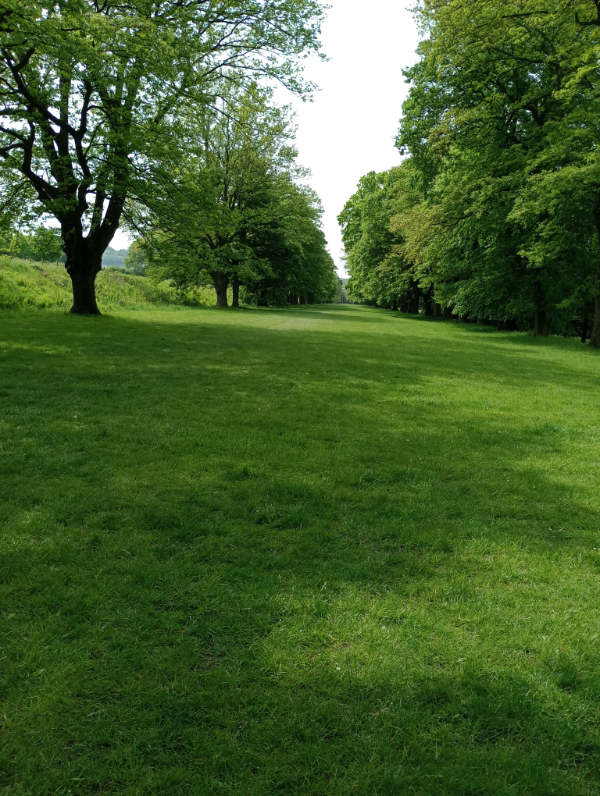
the orangery …

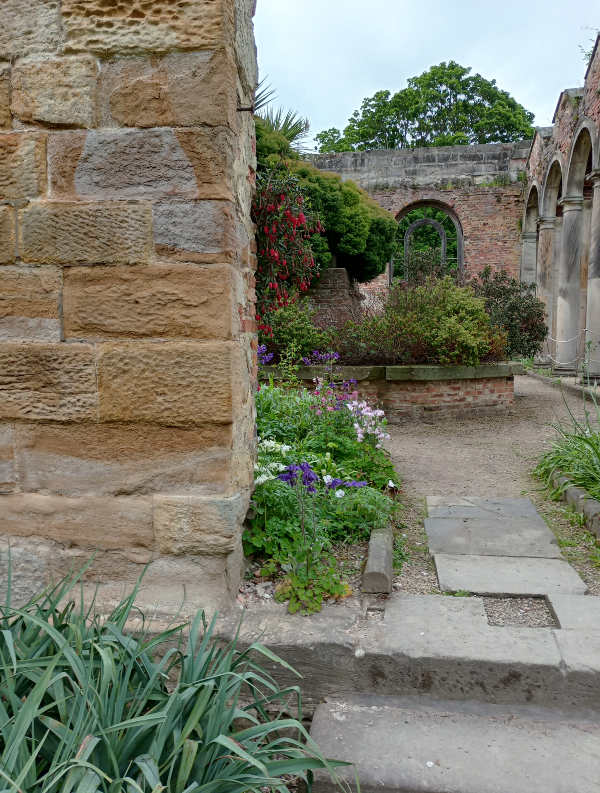 the chapel …

the magnificent Palladian edifice … no, that ‘s not the main house, just the stables …

ahhh, there it is, the mansion house itself … a ruin now certainly, but the mind easily replaces windows and roofs, fills those three storeys with luxury and elegance and good taste ….
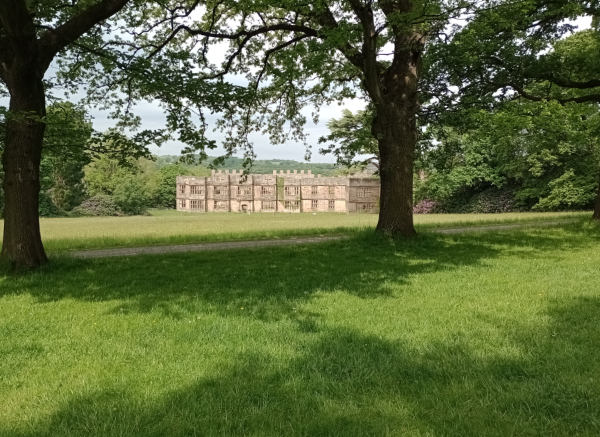
And it’s all set in acres and acres of Georgian landscaping. Beautiful woodland walks …
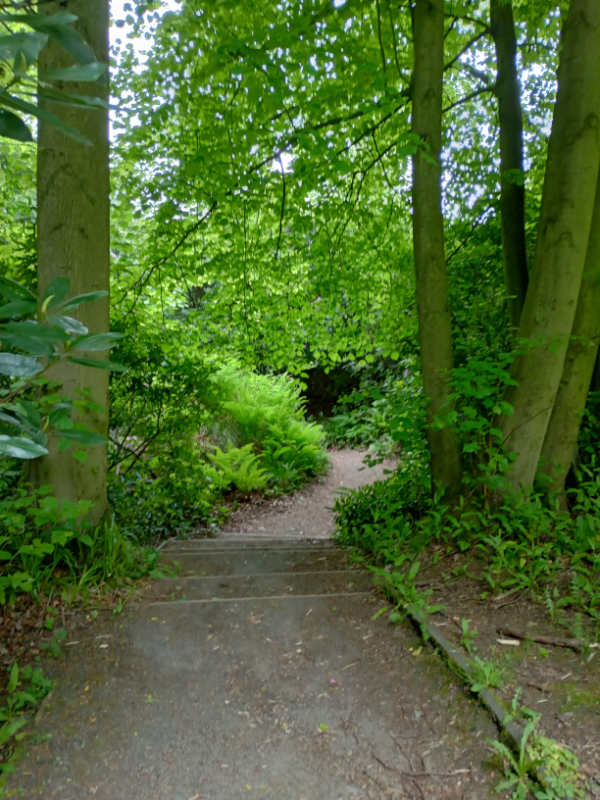
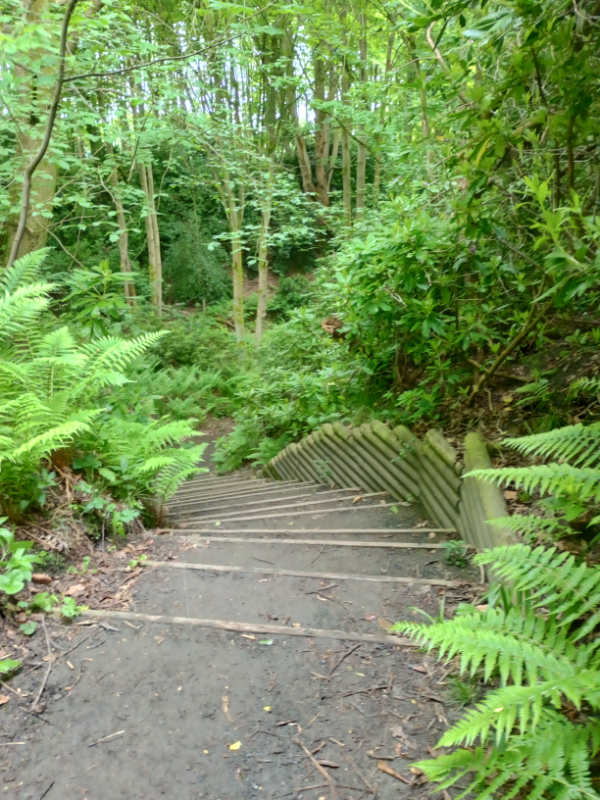 An absolute joy with the sun filtering through the lush growth, clever design beckoning the walker down mysterious pathways, into tantalising copses. The history and secrets of the estate and the families who called it home, coupled with the assault on the senses of so much beauty, sent my imagination into overdrive.
And would you believe it, there’s even a tiny cottage nestling in the woods, now used for therapy!
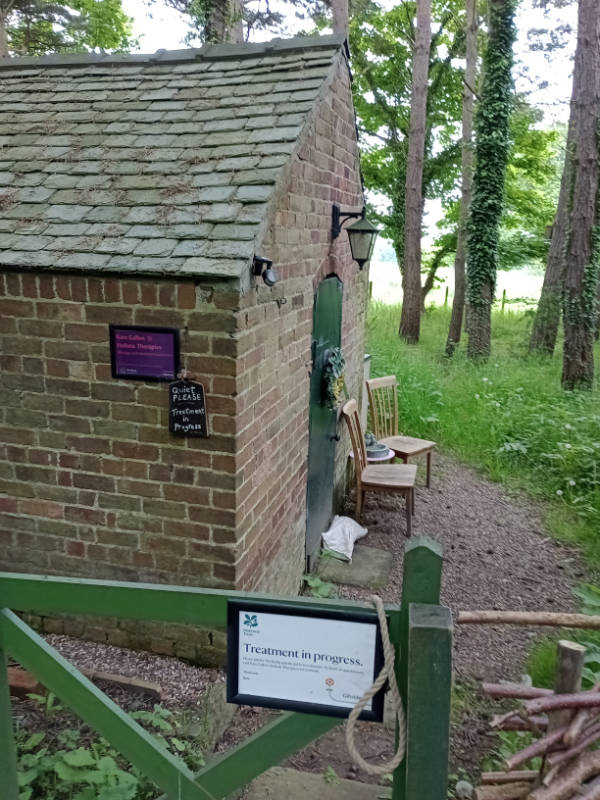
The whole experience was a reader/writer’s dream. And just the tonic I needed after a stressful few weeks.
Disability and Assisted Dying
The topic of a good death just won’t go away, will it?! But this week there’s tangible progress to report.
But of course, as ever, these attempts to change long established laws in such a sensitive and nuanced area, prompt strong opposition from some parts of the medical profession, disability and human rights groups, and religious communities, with concerns that it might put pressure on vulnerable people to end their lives for fear of being a financial, emotional, or care burden on others, compromise the ethical standards of the medical profession, and create fear and mistrust among the patient population.
 So, I was fascinated by a BBC documentary, Better off Dead?, which devoted an hour to the topic on Tuesday this week (14 May, 9pm). It was written and presented by actor and disability rights activist, Liz Carr, who is herself disabled and in a wheelchair. A recent poll found that 73% of Britons support doctor-assisted suicide for the terminally ill, but Liz and many other disabled people fear their lives will be put at risk if it is legalised. She says:
Too many disabled people will have had the experience of someone, often a complete stranger, telling them, ‘if I was like you, I’d rather be dead’.
But she says with a grin, disabled people are the toughest people out there! To which her friend adds, ‘Cockroaches! Evolved for survival!’ And Liz certainly comes across as a feisty, articulate, and knowledgeable campaigner.
The pandemic cast a bright light on the inequalities in care, and the practice of ‘Do Not Resuscitate’ orders being placed on the medical notes of older or disabled patients, without their consent, also implies a low value is attributed to their lives. This documentary challenges the assumptions behind these actions, and shines a light on the many grey areas in this often one-sided debate. Seen through the eyes of those being discriminated against, it packs a hard punch.

In the course of making the programme, Liz also travelled to Canada to explore the repercussions of some of the most permissive euthanasia laws in the world, laws which include people who are disabled, not just the terminally ill. For me, seeing the illustrated information pack for children explaining what MAID (Medical Assistance in Dying) means in simple language, chilled the blood.
A palliative care specialist drew attention to the paucity of such care, and her cry to protect the vulnerable struck a particularly deep cord when we had this vivid image of assorted people with disabilities in front of us. Why don’t we hear more about the serious underfunding of this service, I wonder? Is this where we should be devoting our energies?
Even if there are to be changes in the UK law – which seems highly probable, they won’t be 100% safe. They can’t be. But the more practical question is: How safe is acceptable?
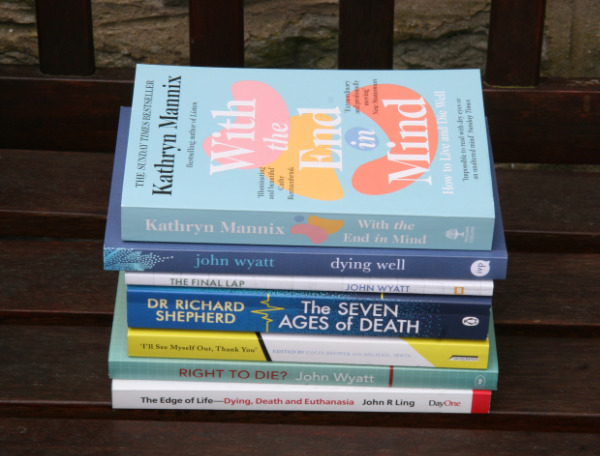
Back to my pile of books on the subject which I’m ploughing through systematically. But now with this niggle about disabled people’s perspective a much bigger alarm call.
The Seven Ages of Death
For reasons I won’t go into at this stage I’m back to thinking about death. (I can hear my children groan – they maintained it was my obsession when they were growing up because my research focused on it for many years.) Anyway, in the process I’m hovering up books on all sorts of aspects of the subject.

The first one I want to share with you is The Seven Ages of Death by Richard Shepherd.
I’m instantly intrigued. It starts with that classic speech from Shakespeare‘s As you Like it:
All the world’s a stage … through to Sans teeth, sans eyes, sans taste, sans everything,
and the author uses it as his framework for a vast amount of material accrued from years of clinical experience as a forensic pathologist. It takes us through each of the seven stage of life, from infancy to extreme old age, by means of cases he has investigated, liberally fleshing the facts out with biological and medical explanations alongside personal thoughts and experiences. Delightfully engaging and readable. Well, for me at least (but I suspect my medical background helped here).
 His is a fascinating profession working alongside the dead and their grieving relatives.
Death is my life.
Here is the spirit of compassion and scientific discovery.
Grief walking into my office is a familiar sight, but still it never fails to affect me. The office is a place where paperclips and lists and calendars are devoted to the smooth running of our daily lives and yet here is an emotion so immense that it mocks the most carefully planned filing system.
It’s certainly a case of ‘in at the deep end’. Even the most hardened detectives quail at the prospect of entering the mortuary and seeing a tiny scrap of humanity lying on the stark metal bench, minus any soft comforting wraps or toys. What’s more, everyone knows the victim had no say, no choice, in what happened to him. And indeed, there can be a frightening tension between the rights and interests of the parents and those of the baby. This is vividly conveyed by the case of a father who had a deep distrust of conventional medicine, but who failed to recognise a metabolic disorder that would have been picked up on routine tests. The child died at just 6 months of age with nothing more telling externally than a severe case of nappy rash. The collision between the father’s right to reject medicine and the baby’s right to survive is brutal in this case.
We see this conflict too in examples of older children who are the subject of accident or murder by parents who lack the resources or skills to cope. And there’s often a fine line between an accident and murder as Shepherd vividly illustrates with a case of a seven-year-old girl who was reported to have run away from home, and been found in a park apparently strangled by her necklace. But why were her tiny trainers free from mud? And why was her bag neatly packed with grown-up essentials? Because her mother set the scene to cover her crime.
 A similar fine line separates the deaths of two teenagers who were camping in a tent. They apparently dragged the smouldering remnants of a cheap barbecue into the tent to warm themselves. The girl’s body showed the clear signs of carbon monoxide poisoning but the boy’s body was found at the foot of cliffs a distance away, with a much lower level of carbon monoxide in the blood. Was it deliberate or a tragic accident? Shepherd takes each tiny piece of evidence and painstakingly pieces a story together. That’s his job. And he must remain calm and resolute in the face of all the other professionals wanting precise and rapid results yesterday. And in the face of the powerful reactions and grief of the bereaved families.
It’s his eagle eye that sees beyond an accusation that a young man pushed his older brother off a wall resulting in a fatal head injury. Never mind the witnesses who corroborated the ‘pushing’ story, Shepherd noticed something odd about the victim’s legs. There was something much more sinister behind this fall than anyone had ever contemplated; something which had far-reaching consequences for this bereaved family – an inherited disorder carried by the mothers and biding its time in the sons.
When it comes to the thirties apparently it’s very often extreme behaviour that kills this cohort. Shepherd introduces a high-profile case to illustrate this; that of Gareth Williams –the so-called ‘Spy in the Bag’. Shepherd was the third pathologist to examine Gareth’s body – already badly decomposed when it was discovered squeezed into a padlocked hold-all in a very hot bathroom in his flat, with the keys to the padlock beneath him inside the bag. At this point a different kind of post-mortem examination comes into play: a psychological one. The victim was found to have spent thousands on women’s designer dresses, shoes and wigs, to have been into bondage and being restrained in tight places. Shepherd meticulously weighed up the evidence to form his considered judgement and presents a compelling argument for auto-asphyxiation in spite of the conspiracy theories abounding in this front-page case.
 Such was his reputation that Dr Shepherd was also consulted in the case of the scientist Dr David Kelly, a UK expert in weapons, who was found dead shortly after being publicly humiliated in the matter of the missing Weapons of Mass Destruction in Iraq during Tony Blair’s time as prime minister. The detailed records of what Dr Kelly’s wife said, and the evidence of severe psychological stress Dr Kelly was under, are harrowing and extremely powerful, illustrating the compassionate understanding of humanity alongside impressive medical knowledge that characterise the author’s own modus operandi.
But he is also refreshingly and bruisingly honest in his reflections about his own mistakes and personal issues – drinking, smoking, weight-gain, and he admits to both his own limitations and those of forensic medicine itself. As he gets older he’s also quite brutal about the effects on health and wellbeing which accompany the ageing process. He gave me biological permission to be less than I was, and not to beat myself up about it! I liked that!!

I’m a fan of the BBC series Silent Witness and Forensics: The Real CSI, both based around forensic pathology, and this book took me through the same process of deeply insightful detective work to reveal the lives as well as the deaths of those who end up on the post mortem table.