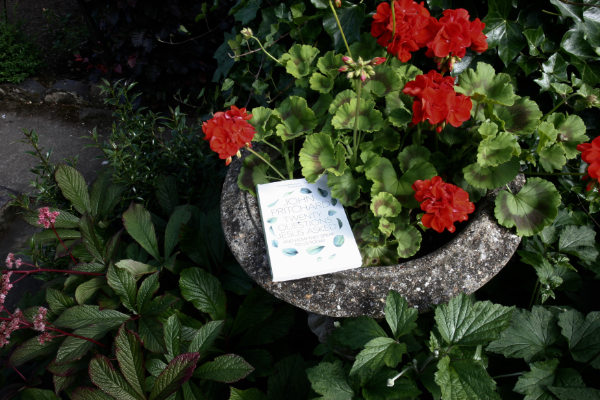
The Accidental Husband
 The Accidental Husband by Jane Green describes itself as ‘women’s fiction’ or a ‘family drama’. I picked it up in the fabulous secondhand book room at Ushaw I mentioned a few weeks ago.
In essence it tells the story of two women – Sylvie in the UK, Maggie in California, USA – both living in stunning homes, with beautiful children, and a handsome, devoted and wealthy husband. The envy of their friends. Maggie lives in a world of Porsches and massive houses and expensive jewellery; a glamourous and controlling perfectionist. Sylvie is used to living frugally but her many talents have created a lovely home and life for them all. Then one day a secret is revealed that shakes both women to their very foundations.
WARNING: THE REST OF THIS POST CONTAINS SPOILERS
Sylvie’s daughter Eve is on a short holiday to New York with her best friend when she meets up with Maggie’s daughter, Grace. Grace invites her to the family home in Connecticut where Eve sees a picture of the whole family and recognises Grace’s father. Her step-father!
At the same time, back in England debt collectors arrive at Sylvie’s house and remove her husband’s Harley-Davidson. When she protests that they must have the wrong Mark Hathaway, they show her the paperwork which lists two addresses for him, and a wife called Maggie. A Google search confirms that he has indeed got another family in California.
For Sylvie the timing of this couldn’t be worse; she already has a teenage daughter with serious eating problems and a mother lying in a medically induced coma, possibly on her deathbed. The revelation for Maggie drops publicly in front of all the women she is seeking to impress. And Mark? Well, suddenly he is now unavailable to both; his phone switched off.
The shock of discovery and the implications for their families brings these two very different women together: Sylvie, wife of 11 years, laid-back, hard-working, responsible; Maggie, wife of 22 years, self-centred, controlling, ultra-organised, obsessed about perfection. Now united in the blurred world of bigamy.
And gradually they uncover a tissue of lies and deceit, financial problems on a collossal scale. There is a warrant out for Mark’s arrest: not just for bigamy, but fraud, embezzlement, grand larceny. How could he have got away with this for so long? Suddenly both women are the object of pity and humiliation, they and their homes beseiged by reporters and camera men. Money dries up, social contacts dwindle, and they’re forced to examine their own values and priorities and friendship circles. Both struggle to deal with the fall-out for their children too, their daughters in particular reacting powerfully. The only person who truly understands the depths to which they have sunk is their co-wife.
The errant husband is eventually arrested on a beach in Santa Monica for being drunk and disorderly. For their daughter Eve’s sake, Sylvie borrows the money to bail him out of prison and lets him stay in her guest room. She wants nothing from him, no explanations, no apologies, only the possibility of helping Eve. But Eve is in the grip of her anorexia, blaming Sylvie for everything, and she runs to the USA where her condition nose-dives resulting in two cardiac arrests.
This extreme situation throws the two mothers together and gradually the whole family begin to claw back their lives and establish new boundaries, new relationships.
 Though there are literary aspects which niggled for me, overall I was sufficiently interested in the many issues Green tackles – volatile parenting, pathological anxiety, food disorders, body dysphoria, empty nest syndrome, family dynamics – to stick with it.
And the moral of the tale?
It’s summed up best by Maggie’s youngest, Buck:
… blaming doesn’t get you anywhere. It keeps you stuck. Blaming stops you from moving on with your life.
If at first you don’t succeed …
Oh wow! I’ve been reading about assorted famous and hugely successful authors whose work was rejected multiple times before someone saw their true potential… and feeling decidedly sub-standard!
JK Rowling, (Harry Potter and the Philosopher’s Stone)
Rejected by 12 publishers. Now one of the most successful series in history.
William Golding (Lord of the Flies)
Rejected by 20 publishers. Became a classic.
John Grisham (A Time to Kill)
Rejected by 28 publishers. He’s since written over forty books, selling a collective 275 million copies worldwide, translated into 42 languages.
Stephen King (Carrie)
His debut novel was rejected 30 times. He famously threw it in the fire but his wife rescued it! Published 65 books and known as the ‘King of Horror’!
Kathryn Stockett (The Help)
Rejected 60 times. The debut novel went on to spend over 100 weeks on the New York Times bestseller list.
Agatha Christie (The Mysterious Affair at Styles)
Struggled for 5 years before being accepted for publication. She is the best-selling fiction writer of all time, her novels having sold more than two billion copies.
Jack Canfield and Mark Victor Hansen (Chicken Soup for the Soul)
Rejected by over 140 publishers. 500 million copies sold world-wide since.
Rejection is an inescapable reality in a writer’s life, but it still hurts. I am clearly not made of sufficiently stern stuff: I gave up trying to find a literary agent to represent me after three rejections! Puny!!!
Fiction illuminating ethics
As most of you will know, all my novels explore ethical issues in medicine in an accessible form. So my antennae twitched big time when I saw a trailer to Playing Nice, a series on ITV/STV where a couple were being told that the little boy they had brought home from the hospital was not their biological son.
It’s a psychological thriller set in the fabulous landscape of the Cornish coast with its rugged cliffs and crashing waves (my homeland!); not altogether believable but it doesn’t need to be to hold the attention and exercise the mind.
 In a nutshell:
Theo was born prematurely and cared for in a Neonatal Unit (again, my world!!) alongside another baby boy, David, and somehow the boys have been swapped. The children are now three years old so this discovery tears at their very roots. When the scenario moves from the formal legal to the personal with the appearance of the other father at their door, apparently keen to negotiate a mutually agreeable arrangement, there are big questions to be answered, and it soon becomes clear that the two couples are worlds apart – temperaments, home circumstances, material possessions, approach to parenting, expectations. Different in every way except that all four adults love these children – who’re played by two enchanting little boys! The ensuing unequal legal and psychological battles eat away at relationships and undermine trust, and the underhand shennanigans lead to dangerous and threatening situations.
 Irrespective of the limitations of the adaptation, the storyline offers plenty of challenge:
Would you give up a child whom you’ve raised for three years?
Does biology trump years of nurturing and loving?
Whose interests take precedence?
Who should decide?
Can such situations ever be resolved satisfactorily without involving professionals?
What factors in a person’s background should be regarded as rendering them unsuitable to parent a child?
Is it fair to instantly suspend the professionals caring for the babies who were swapped?
Should there be a formal inquiry?
Does a history of mental illness sway the decision?
At what age should the child have a casting vote?
Does/should a higher standard apply to parents taking a non-biologically related child into their homes?
And so on, and so on. Questions raised not just by circumstances as improbable as in this drama, but in cases of fostering and adoption, of child abuse, or indeed in any circumstance where vulnerable children are involved or at risk. OK, the critics and nitpickers will gripe, but nevertheless the drama serves a very useful function, so I salute JP Delaney who wrote the book on which it’s based, and Grace Ofori-Attah who adapted it for the small screen.
Terrifying history as fiction
Before We Were Yours by Lisa Wingate is a bestselling 2017 novel, at once sobering and compelling, based on a notorious true-life scandal. A tale of children – real live babies and young girls and boys – being traded for money.

From 1920s to 1950 a social worker called Georgia Tann facilitated the adoption of thousands of children. But this was no regular professional procedure in the course of her work; she orchestrated the abduction of these infants and youngsters from poor families, kidnapping often in broad daylight, gave them new names (to help prevent birth families tracing them), and sold them to celebrities and people with political influence. And she charged exorbitant fees for doing so, adding extra for deliveries out of state.
 Whilst in the so-called ‘care’ of orphanages belonging to the Tennessee Children’s Home Society those little people were kept in terrible conditions, abused, terrified, half-starved. They were tied to beds and chairs, beaten, locked in cold dark cupboards, molested. But on special days they were bathed, dressed in proper clothes, fed good food, and paraded before potential parents. Entirely fictitious background stories were spun about them, stories of their exceptional pedigrees and privileged background. And all the while they were on display, they were under dire threats as to what would happen if they dared misbehave or tell tales about their real identities or conditions in the home. That fear remained with them and kept them silent even after their adoptions.
 Miss Tann also duped women in maternity wards into signing surrender papers while they were still under sedation. She told parents their babies had died when they hadn’t. And in addition, she headed up a network that under her watch allowed or intentionally caused the deaths of as many as 500 children and infants.
How did she get away with it, and for so long? Well, it has transpired that she had law enforcement agencies and family court judges in her pocket. She seemed untouchable. And in the end, she died of cancer before she could be brought to answer the charges against her.
This much is true.
 But Lisa Wingate has used fictional characters to bring the horror of this scandal to life.
The Foss children and the Arcadia were formed from the dust of imagination and the muddy waters of the Mississippi river. Though Rill and her sisters exist only in these pages, their experiences mirror those reported by children who were taken from their families from the 1920s through 1950.
The year is 1939. The poor but close-knit Floss family live a magical life on the Mississippi on a shantyboat built by her father Briny. Queenie is her mother. When Queenie is taken to hospital during an extremely difficult birth of twins, the children are left unattended on the boat, and it’s then they are all abducted by the river police and taken to Memphis to a children’s home.  Rill Foss is 12, and feels ultimately responsible for her three younger sisters and a brother, but she is powerless to prevent them being split up and either given to different families or disposed of. All except one of them have their mother’s blonde curly hair and blue eyes putting them much in demand. Their story (told by Rill) fills alternate chapters and is told with immediacy and the brutal clarity and honesty of a child wise beyond her years.
Woven alongside her account, is the present day story of Avery Stafford, a federal prosecutor in Maryland, and her growing awareness of the attrocities perpetrated decades before and the lifelong legacy borne by its victims. Her father is a well known senator and all her privileged life has been spent surrounded by wealth and fame. She has recently come home to support her father while he receives treatment for cancer. His mother, Grandma Judy, to whom Avery feels very close, is losing her grip on reality and now lives in a very upmarket care home. But there are ugly protests swirling about inequality, threatening the standing of the Stafford family, so they redouble their efforts to stay in touch with the less-advantaged. In the course of visiting a more mediocre care home, Avery is accosted by a woman, May Crandall, who appears to think Avery is someone she knows. And on her bedside table is a photograph of four laughing women, one of whom looks remarkably like Grandma Judy.
For my part I should have preferred the links to become apparent much later; it’s obvious from very early on who these old ladies are. However, hats off to the award-winning author, herself a former journalist, for giving us a harrowing glimpse inside this scandalous period of American history. But it leaves one wondering, scared even, about what other terrible crimes have been, or indeed are, being perpetrated in plain sight. And what if anything we are doing about them. What, for example, about the ongoing reports of the Ukranian children – many blonde, blue-eyed – who have been forcibly abducted by Russian troops, standing at over 20,000 according to one source? 20,000 innocent children!
What are we doing about it? What should we do?
Our dear old NHS
Dear NHS: 100 Stories to Say Thank You does what it says … well, almost.
 Early in the Covid-19 pandemic, no less than 109 celebrities responded to a request to contribute a short entry thanking the heroes manning the fort of our National Health Service.

The entries include personal anecdotes, poems, short stories, letters, catalogues of encounters with hospitals and individuals that have left a lasting impression. Almost all write well and gratefully. And in these post-pandemic days of strikes and desperately long waiting lists and assaults on staff and shortages of resources and people, it’s perhaps helpful to be reminded of the compassion and dedication of the 1.5 million health-related employees who underpin our very British institution.
I can do no better than share a few excerpts.
Dame Emma Thompson
We can clap and we can whoop and holler our gratitude from the rooftops, and we should, and we do – but after this we all have to insist that whatever goverment is in place takes immediate action to recognise The Indispensables by raising their wages. By listening to what has been and is being learned, and what we now know is essential to have in place for the next time this happens – which the science seems to suggest, is inevitable.
Our NHS was created after a great crisis – a world war. After this crisis must come a great and deep reckoning who and what do we really value and how do we protect, nurture and support them.
Benjamin Zephaniah
The NHS is for life, not just for emergencies.
Peter Capaldi
… probably the greatest idea anyone has ever had: the NHS.
Katie Piper
Your compassion, empathy and dedication goes way beyond your job role. No lunch breaks, clock watching or legging it out of the door the minute the shift ends. Staying on past the end of shifts to hold hands, working unpaid overtime. Care and compassion is the driving force always at the forefront of your exhausted minds …
You are the backbone of our country; take you away and we all fall down.
Andrew Marr
Our hospitals run on taxpayers’ money, world class training and inspiring dedication. But beyond all that, they run on humour, amd humanity. It isn’t the buildings or the awesome technology that we stand to applaud when we clap for the NHS. It’s the grit, the realism and the gutsy humour of the exraordinary people who keep it going.
Nick Hornby
[Asked by people why he doesn’t choose private treatment for his severely autistic son with multiple medical problems; why he doesn’t ‘want the best for him’?]
… the NHS is the best for him. This is not ideological or emotional commitment speaking; it’s a fact. My son’s problems and conditions have been acute, yes, but also taxing, puzzling amd sometimes right at the edge of the range and reach of current medical knowledge. In Britain, at least, the only people likely to know are the staff at the big teaching hospitals. We couldn’t go anywhere else, because nowhere else would have been good enough.
Mark Haddon
… the NHS is one of the most principled, humane, generous and efficient institutions in the world, and one of the few remaining reasons I feel proud to be British, despite the drip, drip, drip of privatisation by politicians and businesspeople wanting to push it gradually closer to the hellscape of an American medical system where people go bankrupt because they have cancer.
Jojo Moyes
I believe the NHS serves a greater purpose in the British psyche than just caring for our health. It reminds us that there is such a thing as the common good, an idea of true service … something way beyond the desire of making money or progressing up a career ladder – and that sense of goodness.
Greg Wise
From the receptionists to the nurses, oncologists, radiographers, therapists – everyone we came into contact with met us with kindness, compassion, humour, expertise and, above all, a profound sense of humanity.
… Let our support grow, and grow. Treasure, nurture and applaud forever.
Though each story was unique, some themes recurred:
– care of familes not just the patient
– staff not ridiculing or scolding or turning patients away even when they’re to blame
– service free to all no matter their wealth or status or merit
– consistent compassion, empathy, kindness, dedication.
OK, there were occasional glancing references to imperfections in the system and rogue carers. And yes, you sceptics out there, these were all famous folk who might well get excellent care because of their celebrity. Nonetheless, let’s not forget the huge surge of gratitude during the pandemic, the awareness of indebtedness, now that that particular crisis is past. What are we doing NOW to truly value the people and organisations that give us this amazing access to free first-class medical care? Have we forgotten so soon?
Thou shalt not covet …
 I do love a glimpse of the libraries and desks of other writers, so I couldn’t resist a few snaps of the ones at the magnificent Thirlestane Castle, dating back to the sixteenth century, and set in the Lauderdale Estate in the Scottish Borders.
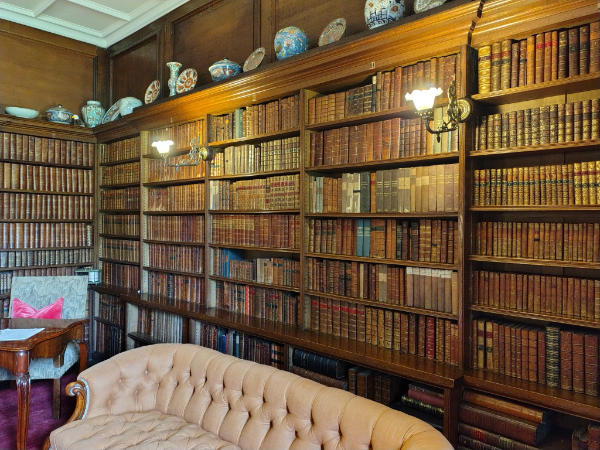
The library shelves are packed with tooled volumes of yesteryear, but each stack has a letter of the alphabet at the top, and each book has its numbered space in the rows below. Elegant Dewey Decimal classification, huh?!
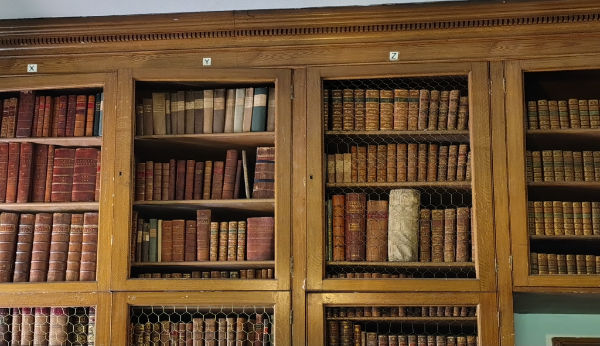
So when number B11 went off to New Zealand its absence was duly noted; and when it was returned generations later it resumed its rightful place!
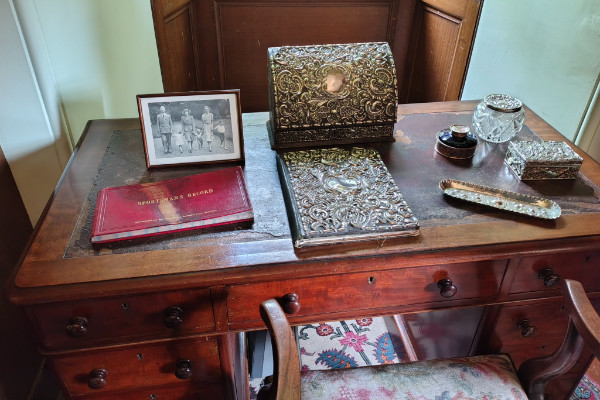
And how’s this for a desk to work at, in front of a wonderful view of the tranquil setting? It’d require a deal more care and respect than my modern equivalent, that’s for sure.
The Invisible Woman
Don’t put your daughter on the stage, Mrs Worthington,
Don’t put your daughter on the stage
The lyrics of Noël Coward‘s famous song were echoing in my head as I read Claire Tomalin‘s detailed description of the perils and hardships of the acting life for women and children in the 1800s in her biography: The Invisible Woman. Actresses were equated with exhibitionism and sin, but Tomalin draws out the virtues and dignity and courage of families who eked out a meagre living from this occupation and the extreme hardships they endured in so doing.

The invisible woman of the title is Ellen/Nelly Ternan, who was put on the stage as a toddler along with her sisters, by their mother, Frances/Fanny Jarman herself an actress. No less a personage than Charles Dickens took a keen interest in the family and did what he could to protect and sponsor them. There was nothing remarkable in this initially since he was known for his philanthropic actions, and he himself was a married man with ten children.
[He had] a genuine wish to do good by reclaiming lost innocents.
But at the same time he was indulging a need of his own, a curiosity about another world, and particularly a world of pretty young women who existed on the margins of society.
So when, after his son caught him out and about with a young lady, he suddenly separated himself from his wife of 22 years, Catherine, blaming her (a mental disorder; a long standing wish on her part to go their separate ways; deep incompatibility), everything changed. And pretty innocent Nelly Ternan, a girl 27 years his junior, was the reason. He was infatuated by her and went to inordinate lengths to establish a relationship with her without leaving a trace. So successful was he indeed in the latter mission, that Tomalin admits she has struggled to piece together the fragments from here and there, and some of what she has recorded is speculative though based on strongly suggestive evidence.
Before his liaison with Nelly, Dickens himself had already established a complicated life with frequent absences, extensive travels, multiple abodes, and these now helped him to obscure his split life and rendezvous with Nelly. A diary which Dickens somehow mislaid has since been found and reveals that he managed somehow to spend a third of his time with or near Nelly, one third at his main country residence and his social circle, and one third serving his adoring public.
I am here, there, everywhere, nowhere.
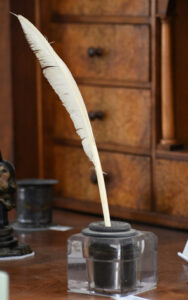 Given that Nelly was a billed actress, the muse of Dickens, and sister-in-law of Anthony Trollope‘s brother, it’s remarkable that she has been omitted from the many biographies and accounts of the famous names of her day. But such was the fear of scandal or disgrace at the time, and Dickens had all to lose. His reputation was very high indeed. He himself did much of the work in obliterating his middle-aged obsession from the records, with his consummate skill in reconstructing history and the world around him to fit with his will and wish, obliging and expecting everyone else to conform to his account of things. He easily deluded himself when the facts didn’t suit him.
Dickens had no difficulty in throwing out high-sounding phrases when the situation demanded … He used every weapon to get his own way.
Nelly herself was a complicated and resourceful woman who was very nearly crushed by the weight of Dickens in her life. Small, pretty, and well deveoped, she was only a moderate performer though a good mimic, but was naturally clever and read voraciously. It was flattering for a ‘nobody’ to be courted by a distinguished and famous older man.
The love of the great man, which must have seemed to promise so much when she was twenty, had become both destructive and a barrier cutting her off from any future of her own … he had also become a millstone round her neck.
Even after his death everyone colluded with the myth about his virtuous life.
[They remained] intent on giving the world an image …
which, if not sanctified, was at least most scrupulously sanitized.
The nation mourned and sang his praises.
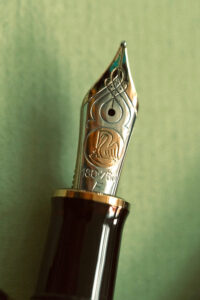 Nelly was now free. Free to reinvent herself as a cultured, well-read literary lady, with enough to live on comfortably, initially abroad where society was notably more relaxed about single women with unknown or questionable antecedents. She shed twelve years from her official age, and before long in Oxford she had a brief dalliance with a young man many more years her junior, George Wharton Robinson, an undergraduate destined for the Church, before returning to a busy social whirl in Europe. But she became quickly bored with a life without purpose and five years after meeting him, she married Mr Robinson, dissuaded him from entering the Church, and instead they together acquired a boy’s school in a seaside town.
[She was] altogether more impressive than the usual wife of a
Margate schoolmaster; and she knew it.
Two children of her own followed, only Nelly herself knowing that she was in her forties by this time. Indeed she shed a further two years in the 1881 Census, a reduction of fourteen years, making her two years younger than her husband! At last she had found happiness and purpose in her life, and she could use her acting skills to good effect both with her children and her pupils. And indeed subsequently she returned to the stage as an actress again.
Strange then that she should choose this time to drop hints to select people about her time as Dicken’s mistress. But so she did. However, her revelations gained little traction and in time the couple again fell on hard times and plummeted down the social ladder once more. After George’s death the two remaining Ternan sisters grew very close again, and indeed lived together until their deaths within a few months of each other. It was only then that her son, Geoffrey, discovered amongst her papers information that revealed his mother was not the person she had claimed to be; it damaged him cruelly.
The rewriting of history is a central theme in this whole story, since Nelly, too, almost succeeded in her attempt, also abetted by Georgina [Dickens’ sister-in-law] and with the support of her sisters. Likewise many Dickensians … have been determined to maintain the version of Dickens they regard as accetable, even … when they know it to be untrue.
Meticulous detective work, elegant writing, and plenty of illustrative photos, make this book, by one of the best female biographers of our time, absorbing and fascinating.
Unseen acts of kindness
On Sunday evening this week a young friend of mine died, at home, surrounded by her family, as she wished. She’d been having treatment for advanced cancer for two years and was on palliative care for three weeks. Staff from our local hospice had been coming in and out to care for her three times a day, and during the last week, over and above their care sessions, they twice stayed with her for two hours allowing the family secure time out. This all happened unseen and unheralded. So kind and compassionate.
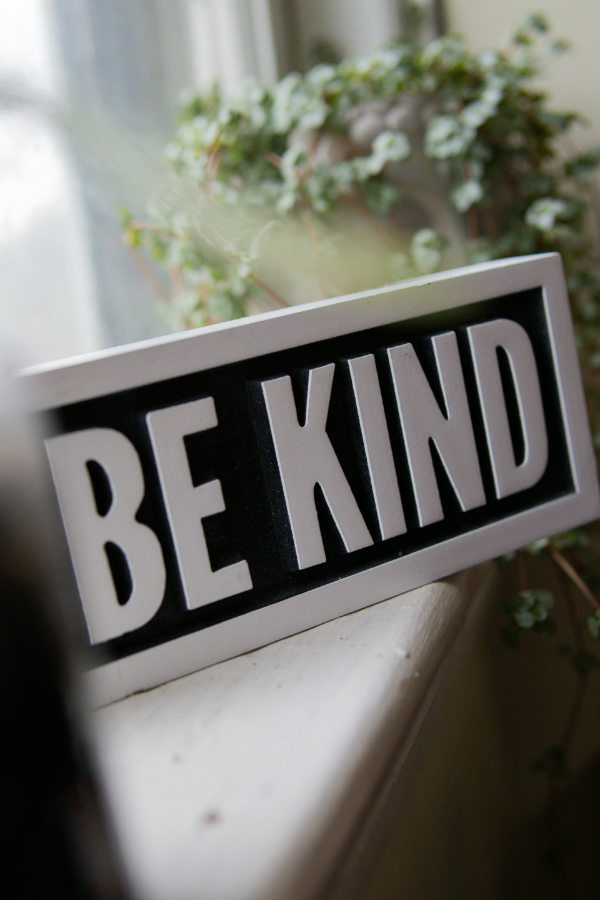
On Friday night my son-in-law booked into a hotel in Northumberland in readiness for an early start running the Rat Race 100 mile ultramarathon from Bamburgh Castle to Edinburgh Castle. In his case it was all in aid of Alzheimer’s Research UK, and he was astonished when the proprietor gave him a generous donation to the cause. Another kind act, unseen and unheralded.
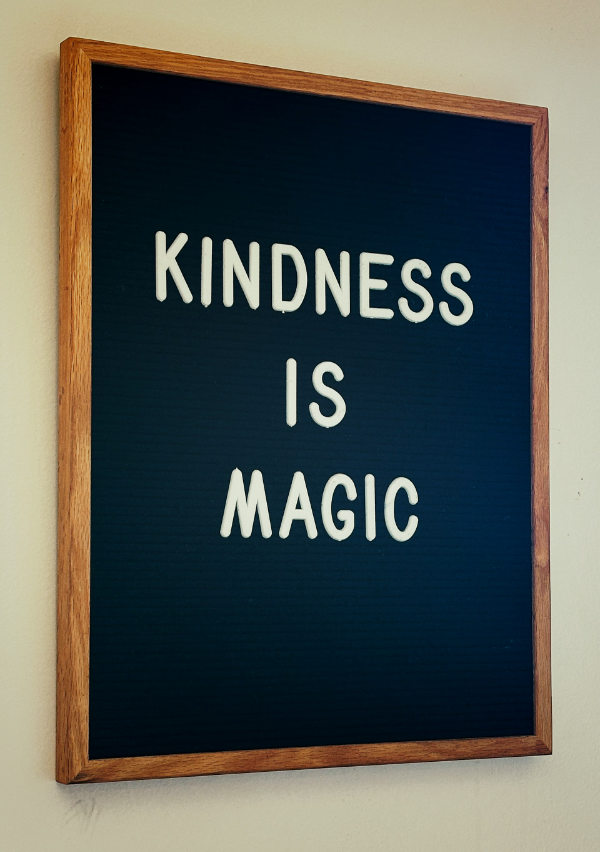
Just two examples of the thousands of lovely quiet acts of kindness that rarely make the headlines, but warm the cockles of the heart and make a huge difference to the recipients and the world we live in.
In these times where every news bulletin brings us tales of barbarity and inhumanity, let’s celebrate the enormous amount of generosity and kindness in the world, part of its charm and effectiveness being its quiet unsung nature.
The darkest side of life
Hello, my name is Shy Keenan, I was born and broken in Birkenhead, and was abused from infancy by a network of every kind of pervert … I entered the world unwanted and was beaten, sold, swapped, photographed, filmed, left for dead, betrayed, ignored and booted into adulthood; at which point I was branded the problem and left completely on my own.
 This book, Broken, has to be one of the most difficult reads I’ve ever encountered. To learn about horrific and ongoing sexual exploitation of young children through the eyes of one not old enough to have the vocabulary to describe her ordeals, wrenches something deep inside from its sockets, and gives it a painful twist for good measure. Then to find she is repeatedly and catastrophically let down by the authorities stirs something primitive and dark.
Trouble began for Karen/Shy long before she was even conceived. Her immature birth parents were so badly behaved and out of control that they were both sent away to a special mixed boarding school for maladjusted children in Sussex –- where they met. Theirs was a volatile relationship essentially bonded by their common love of stealing. After a shotgun wedding and just 14 months after her first child (by a different boy) was born and then taken away from her, Jennifer, gave birth to Karen/Shy, in 1963. Their life of crime continued unabated and the baby was frequently left alone in the squalid flat. It was there that her aunt found her: a red-raw and emaciated baby in a rancid cot.
Despite numerous attempts to shore up this dysfunctional and chaotic family, the marriage failed and her future stepfather, Stanley Claridge, came on the scene, 17 years older than Jennifer, the product of a depraved childhood in care, emerging as a drunken, violent and abusive adult. And extremely keen to become a ‘daddy’ to Jennifer’s young girls.
The sexual abuse, not only by Stanley, but also by other men, started when Karen was about three years of age, and her sister Denise a year younger, made the more appalling by extreme physical abuse from both adults. Frequent severe beatings rendered Karen partially deaf and with poor eyesight before she even went to school. But – and this is an incredible aspect of this extraordinary story – somehow Stanley managed to persuade the authorities it was Karen who was the problem; a recurring theme.
 Efforts were made to ‘treat’ her so-called promiscuity but she rebelled against the injustices and eventually, at the age of 9, she was sent to stay with Nanny and Grandpa Wallbridge (he was a retired Quaker reverend minister) in order to cure the precocious sexual proclivities Stanley alleged she had. Under their strict but fair rules her true personality emerged, trust blossomed, and at last someone believed in her innocence. It was an idyllic time in her life.
Sadly though, the reprieve was all too short, and after almost a year her mother, though she thoroughly disliked her eldest daughter, managed to manipulate the situation to get Karen back in the family home in order to claim extra benefits. The perverted behaviour began all over again. By the time she was 14 she had suffered three miscarriages and been in intensive care with a venereal disease.
It seems absurd to think that no one would question why an 11-year-old should have an STD, but no one seemed unduly concerned.
Then Stanley somehow contrived to get her sent to a psychiatric ward where she was started on powerful sedative drugs, which in turn then gave him more control of her. He began to arrange for men to come to the house to rape her; he took her to the docks where she was filmed with multiple strangers doing all sorts of sickening things to her, and the pictures sold on the black market. When the situation began to slip out of his control again, he contrived to get her taken back into psychiatric care on a trumped up charge.
 There followed a series of spells in assorted care homes, but far from helping her, they were the scenes for further abuse, both physical and sexual. Having been labelled by Social Services as a sexual tease, assumptions were made each time she reported abuse, and she was never believed – not even when Stanley admitted to his crimes in his letters to her. The distraught child repeatedly ran away seeking refuge from the horrific abuse and organisational failures. And one place ended up becoming her true haven: the stream where Grandpa Wallbridge had once taught her to wash away her troubles.
When Shy’s mother became disabled by a stroke, Stanley soon became disillusioned with caring for her and helped her to die. Shy grieved sorely in spite of her mother hating her. all her life. Then her sister Denise turned against her. Bereaved and feeling totally alone, Shy fled to London and, entirely without means or shelter, began a life of crime, sleeping on the streets. Initially she simply stole to survive, but gradually her personal moral code was eroded and she became both ‘greedy’ and ‘arrogant’. Forging signatures bought her untold wealth and for a time she became a social chameleon, hobnobbing with the uber-rich, living a life of luxury. No one knew her real name, age, or history; she had effectively reinvented herself. The high life lasted several months before she was caught, identified as a juvenile, and returned to care.
Throughout her childhood, every time she tried to tell her story, her Social Services report was raked up to turn the blame onto her: she was an attention seeking, sexually promiscuous liar with now a long history of criminal behaviour. Having escaped from a padded cell in a care home, at her lowest ebb yet, with nowhere to go, desperate and alone, she found herself on top of a 15-storey block of flats, ready to end it all. It was a turning point. When she was talked down by a scared young police officer, she mentally said goodbye to the old Karen and consciously turned her face towards a better way of life.
But the authorities hadn’t finished with her yet. She was charged for all her stealing offences in London, remanded in a Liverpool prison, before being sent to Holloway in London. At her trial, she was sentenced to up to two years at a different prison in Essex – a hell all of its own.
In spite of her good intentions, her life was simply a struggle to survive. At the age of 17, in desperation, she married a man she hardly knew, and moved to Germany with him. But after a year she was back in London on her own.
I was like another person, trapped inside the shattered remains of an old human being, trying to make all the broken parts work and survive day to day. I was like a human ghost ship drifting on a wild and treacherous sea, with the hull ripped away and nothing left inside of it.
 After a lifetime of being betrayed and abused and let down, it was very hard for her to learn to trust anyone. So, she did what she could to start again: she hid her identity, and began living a law-abiding life, avoiding any contact with the authorities. But the years of being drugged and sexually attacked took their toll; something snapped and she sank into a very deep depression. From absolute rock bottom, she took life one tiny step at a time through her twenties and early thirties gradually finding enjoyment through music and her motorbike, with help from MIND (the mental health charity), all the time protecting her identity fiercely.
As the years passed she eventually, little by little, came out the other side and became a new, happier, grounded person, going on to be a wife, a mother, a songwriter, and a fierce advocate for abused victims.
But there remained the matter of Stanley – now in his 70s and still abusing children, some of them still in nappies. Incredibly, though armed with incontrovertible evidence, when Shy contacted every agency and organisation she could, from care homes through to the House of Lords, no one responded to her plea for something to be done to stop this monster and his gang of paedophiles. So, as a last resort, she sought support from a victim support charity, One in Four, who helped her contact the media. It came at a heavy price. Going public meant she could kiss goodbye to her musical ambitions, but she simply could not abandon those innocent children.
The prestigious BBC programme Newsnight took up the story; so moved were the team that an unprecedented 60-minute special was created. It was the catalyst for finally, finally getting action for the child victims of sexual abuse.
It was not until 2002 that Shy finally had her day in court at the trial of the paedophiles who had made her own childhood so broken and frightening. And it was there that she found that at last she was believed.
With the massive support her case generated and the awards the story attracted, she changed her plans entirely. She put all she had learned towards forging a new career, launching Phoenixsurvivors.com to stop paedophiles and help their victims. She qualified as a private investigator and studied criminal psychology, building a team of dedicated child protection advocates backed up by a support network. Together with Sara Payne, mother of murdered Sarah, she established the first ever centre of excellence in this field and the first ever Phoenix victim support retreat. And she became something of a celebrity.
But sadly her success as the CEO of a flourishing organisation was not the happy ending we might wish for this traumatised woman. Still more tragedy followed. Her 14 year old son took his own life. Then, during the pandemic, she had three bleeds on her brain and had to fight her way back to some level of independence. Just how much horror can one person bear? And yet she can still say:
I am a Phoenix, rising from the ashes of a broken life, an ongoing survival in progress.
Ongoing study
As regular visitors know, my serious challenge this year is to discover more about the historic man, Jesus of Nazareth, who walked in the dust of the Middle East over 2000 years ago, and hopefully disabuse my mind of erroneous ideas I’ve picked up from childhood on. I’ve previously commented on my progress, but you might have been forgiven for thinking I’d given up the task. Not so, guys, not so.Turns out it’s a colossal task.
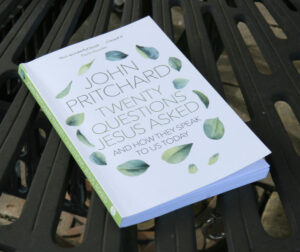 Sharing the extent of my research would be boring in the extreme, but I do want to mention one book that has engaged my thinking at a different level. It’s Twenty Questions Jesus Asked: And How They Speak to Us Today, by John Pritchard. The author, now retired, has been a regular pastor, an Archdeacon, and a Bishop; a teacher and writer and all-round challenger of Christians anywhere.
It’s an easy read, each chapter focusing on a single question Jesus is reported in the gospels to have asked.
What are you looking for?
Why are you afraid of?
Who do you say that I am?
What do you want me to do for you?
What are you discussing with each other?
He – Pritchard not Jesus! – begins each chapter with a lively firsthand account of the relevant incident, as if from an eye-witness at the time. And, as with fiction in any genre, that approach is both engaging and immediate. Once you’re pulled in, he turns the spotlight slowly round to focus on you the reader, challenging you to think how the question would and does make you feel if directed at you today. Clever and effective. And he leaves pointers for reflection and contemplation at the end of each chapter, so setting a measured pace. Though it’s light and accessible reading, there’s no rush to gallop through, meditation and personal engagement are part of the suggested process.
The rest of my pile of books requires more intense concentration, so this one lightened my mood and gave me material for reflection, which was just what I needed at this juncture when there’s a lot going on in life. Helps to provide perspective. And the ‘So What?’ element is why I’m studying this topic after all. How strong/justified are my foundations? What difference does/should it all make in my life?