The Story of a Heart
The exquisite engineering of a beating heart has yet to be matched
by anything built by human hands

Eight months ago I wrote about Dr Rachel Clarke narrating the story of a young girl, Keira Ball, involved in a devastating car crash in the Westcountry, whose heart was given to a 9 year old lad, Max Johnson, in the north of England.
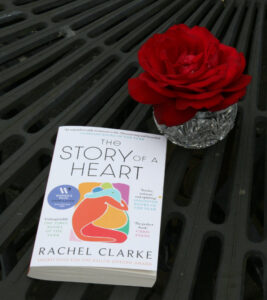 I’ve just been readiing the book from which those extracts were taken: The Story of a Heart. It has been reviewed in glowing terms:
Rachel Clarke is a physician who is also an uncommonly good writer.
Profoundly moving and at the same time wildly inspiring. A beautiful humane book.
This unconventional narrative biography fizzes with respectful, indefatigable and eloquent respect for life.
This is the most beautiful and riveting book: written with such humanity, empathy and knowledge, such tact and drama and eloquence.
And it’s all of those things. The author personally interviewed the families and a number of the principal players in the evolving drama, and the resulting poignant narrative takes us inside their lives, their thoughts, their actions, bringing the whole experience vividly to life…
…the vivacious active Keira, riding her beloved horse, giggling with her sisters, enchanting everyone with her radiant smile. Now, after the accident, still outwardly a beautiful unblemished little girl with golden curly hair and a perfect child’s face, radiant with the promise and potential of youth … luminous. … She looked so perfect, not broken at all.
…an underweight, ashen-faced Max, with huge eyes and white blond hair, his massively enlarged heart making even breathing a struggle, the prospect of simply not waking up at times more attractive than this precipitous decline.
…the essential aloneness of Keira’s dad, Joe, with no one to share the full unravelling horror of his youngest daughter’s prognosis, the awful consequences, the momentous decisions, because his wife is still unconscious in an adult ICU following the accident.
 …the courage and brisk approach of Keira’s 11 year old sister, Katelyn, so utterly confident Keira would want her organs donated. Yet, subtly checking the heart below her hand on her sister’s chest; watching for the least sign of sentience while the doctors test for brain stem function.
…the mounting horror for Max’s parents hearing the scary diagnosis and grim statistics relating not just to his current medical condition but also to the risks associated with heart transplants, success rates, life expectancy, prospects of comorbidity.
…the impact on staff –
the ICU nurse receiving Keira into a small rural hospital in Devon;
the radiologist scanning her brain intimately, confirming unequivocally that all mental activity has ceased;
an unnamed compassionate nurse tucking a teddy, soft and cuddly, in beside Keira’s inert and unresponsive body.
…the harrowing moments for Loanna, Keira’s mum, being wheeled from the adult ICU where she is still recovering herself, to spend uniquely precious time with her little girl for the first and last time.
She was absolutely broken.
…the reverential moment of honour while a theatre full of staff pause to pay tribute to this small person who is giving incredible gifts to other desperately sick children around the country.
…the silent and lonely vigil of Joe, watching from the shadows as his daughter’s precious organs are loaded into a fleet of four ambulances to be driven to the recipients.
He has chosen, simply, to bear witness.
…the surgeon calmly dealing with a powerful arc of blood from an unexpectedly severed artery in Max’s chest while he is disconnecting the damaged heart, the minutes of viability of the new heart ticking inexorably by.
…the abundance of invisible kindnesses that prepare Keira’s body ready for her family afterwards, restoring her from surgical donor back to cherished human being. All the rituals signifying You are loved. You mattered then, and you matter now, and you will matter always, and forever.
 A fusion of pharmacology and engineering has kept the little girl in a kind of limbo, and her organs in an optimal condition; and then maintains that foreign body functioning in the chest cavity of an unrelated young boy. But the language of medicine, though relentless in its detail, omits certain facts. In so many significant ways, Rachel Clarke has captured these softer aspects of dedicated care and respect for life, whilst not neglecting the science. Alongside the personal story of Keira and Max, she weaves in medical information and historical precedences. She pays tribute to those past and present who together have made the miracle of this shared heart possible. And she occasionally dips into the deep ethical questions of the status of patients whose brain stem has ceased to function: are they being kept alive by ventilators or are these machines pumping oxygenated blood around corpses? What defines the essence of life?
It’s a masterpiece, richly deserving of all the accolades and awards it has received.
Long Time Coming
It’s bonanza time this month! I’ve been indulging in a second Robert Goddard mystery. Why? Well, I’m recovering from a fall and damaged jaw, and somehow the other two authors I tried simply didn’t have the power to deflect attention away from the pain and awkwardness of my situation.

Long Time Coming worked that magic.
As always with Goddard, it’s intricately plotted with a background of historical accuracy – this time the Irish situation and conflicts in the 1940s – plenty of false trails, deceit, betrayal and skullduggery. Throughout the novel, two different timeframes alternate: 1940 and 1976, with a flashback to 1922 and a forward projection to 2008 at the end to bookend the narrative.
We’ve poked a stick in an anthill, you and I. Stand still too long and we could get badly bitten.
Stephen Swan is a geologist working in the USA in the oil industry. When he returns to Paignton in Devon to check how his morther is coping, two years after his father’s death, he’s told his uncle Eldritch Swan is not dead as he’d always been told, but alive, just out of Portlaoise Prison in Ireland after 36 years, and currently staying in his mother’s guesthouse! His crime seems to be shrouded in mystery, but by accepting release from political internment, which implies renouncing principles which were once held dear and firm, he becomes a pariah to the men he’s served and fought alongside.
Now assorted people – an Irish journalist, a solicitor, an unknown client – are hinting at a lucrative deal if Eldritch will tell his story, but he’s adamant he will not.
Stephen is appalled to discover from his uncle that slave labour in Congolese diamond mines long before he was born had indirectly furnished his father with the unexpectedly large inheritance that had allowed him to buy the Paignton guesthouse and live in comfort. Stephen feels tainted by association with those long ago decades of oppression and exploitation, massacres and mutilations. And now his uncle is asking him to become involved in searching for proof that some famous stolen artwork painted by Picasso belongs to the daughter of Eldritch’s old boss.
I loved the description of Picasso’s work:
… nudes twisted out of shape; portraits with dismantled features; still lifes in which nothing was still; collage-like assemblies of disparate objects; colourful explosions of form and figure.
It’s then that Eldritch shares enough of his past to show Stephen an audacious and sophisticated plot/crime committed as Europe went into the war in the early 40s, that had remained undetected and was quite unrelated to the accusations that put him in prison unjustly. Only trouble is, Stephen quickly sees that he can’t actually rely on anything his uncle says.
 As the story unravels, Stephen begins to piece together the truth, and as his own position is compromised and threatened, and his emotions engaged, he discovers that there are circumstances where expedience must take precedence over justice. That Governments and diplomats and the IRA work to different rules from normal civilised society. That lives and freedoms are sometimes deemed expendable. That silence is sometimes a price worth paying. And his uncle has been, and still is, a victim of them all.
As ever Goddard’s skill as a storyteller blows my mind. Not only is he a master of language, but the way in which he keeps so many threads, all anchored by history, interwoven and overlapping, coherent and sound, is astounding. And alongside all the dark elements he even incorporates a gentle romance. When it comes to duplicity and intrigue, he is indeed in a class of his own.
Blood Count
Robert Goddard is a master at convincingly weaving fiction through a period in history, and can always be relied on to give a compelling picture of a time and place alongside his intricate plotting.
 Blood Count is set in the 1990s during the Bosnian War and the subsequent pursuit and trials of the principal war criminals. Interlacing the fictional characters with the real, and authenticating their lives with reference to actual places and events known to us through our newsfeeds if not our own travels, brings them alive.
Thirteen years ago, successful transplant surgeon Edward Hammond performed a life-saving liver transplant on a Serbian gangster, Dragan Gazi. He was paid an eye-watering amount of money for doing so. Gazi is now standing trial at the international court in The Hague (ICTY) for horrific war crimes – persecution, deportation, imprisonment, expropriation, extermination, and the slaughter of thousands of people in the Balkan civil wars. Hammond feels a heavy burden of guilt for having saved the life of such a man, paving the way for him to commit such atrocities.
Now he faces blackmail by ruthless people. Unless he tracks down Gazi’s hidden ill-gotten fortune for daughter, Ingrid Hurtado-Gazi, his reputation and career will be ruined by allegations of his having been complicit in the murder of his wife, Kate, mother of his daughter, Alice.
But the search for the man holding Gazi’s money leads Hammond deeper and deeper into Europe and a dark world of blackmail, torture, assassination and death. He himself spirals further and further into a tissue of lies and deceit, and what started as a search for a missing accountant becomes a battle to stay alive as the body count rises.
You’re a frightened man with a lot to be frightened of.
The picture that unravels reveals horrors he had never envisaged, and gradually the intention to comply with Ingrid’s greedy demands in order to save his reputation, metamorphoses into something much worthier: handing over concrete evidence of terrible crimes to the authorities. Because, before his arrest, Gazi had hidden cassettes covering his nefarious actions between 1995 and 2000 in Belgrade as an insurance policy, and they come into Hammond’s possession. But by this time he’s a wanted man himself, stripped of all the advantages of status and wealth and reputation, and somehow he has to evade his remorseless hunters, and deliver the crucial evidence to The Hague.
Just to complicate things still further, there’s someone else who has a vested interest in these tapes: Zineta, the mother of Gazi’s illegitimate son, who was taken away by his father and given up for adoption. She’s desperate to see her boy again. In the tapes, she sees her chance to blackmail the man who was instrumental in the abduction. And once more Hammond finds himself being double-crossed and facing psychopaths who will stop at nothing to get the evidence that incriminates them. His own moral compass is again in question.
The previous eleven days had changed him. He could never go back to what he was before. He had become an exile from himself.
Gradually, gradually, a more accurate picture emerges. And though a top villain is apprehended, and a serious security risk avoided, Hammond is left fretting and regretting the appalling price that has been paid for this outcome.
 The battle to win back his principles and do the right thing gives him a temporary sense of freedom that’s been hard won, but that integrity looks very much like stupidity when pitched against the devious cruelty of an unscrupulous and amoral group of people. Again and again, in true Goddard style, just when the main protagonist thinks things are resolving, betrayals and counterplots take him and us further away from a conclusion.
Once again Hammond becomes instrumental ln saving the war criminal, Gazi – unwittingly and unwillingly maybe, but no less crucially. But he is enveloped in shame: Gazi’s captivity has lasted less than a year. How can he ever explain all this to his unsuspecting daughter, Alice, whose peace of mind was the prime reason he became embroiled with one of the most notorious perpetrators of ethnic cleansing in the former Yugoslavia in the first place?
It’s a disturbing read bringing to life the atrocities committed in the Balkans, but as usual, told with Goddard’s skill and thoroughness and flair.
Without a Trace
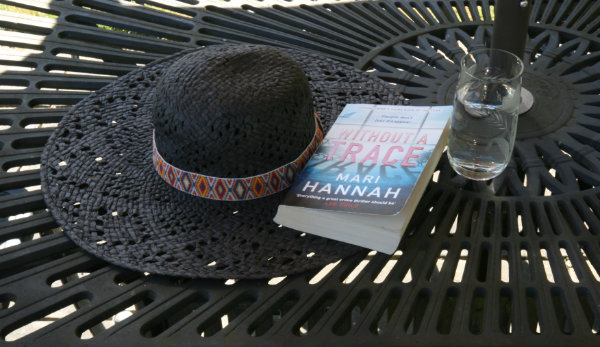 Mari Hannah is a new author to me, but I noted that she was a probation officer and that her partner is an ex-murder detective, so I was intrigued to see what she would make of a police procedural novel, Without a Trace. There’s nothing quite like actual real life experience to convey authenticity.
The first paragraph hooks us in immediately: DCI Kate Daniels of the Murder Investigation Team, Northumbria Police, is in a major incident suite in London, almost 300 miles from her home patch, staring at an enormous electronic screen as the names of 315 passengers and crew on a transatlantic aircraft are uploaded. The plane has, without warning, and with no Mayday transmission, vanished from radar 150 miles from New York’s JFK, and Kate is inwardly rehearsing a pack of lies that would give her access to an investigation well outside her jurisdiction.
Because booked on board Flight 0113 was a professional colleague from her team, psychologist and profiler Jo Soulsby, who also happens to be her soulmate and lover. But just days before they had had a serious disagreement and Jo had walked out, and bought that fateful ticket to America. Kate is wracked with guilt for having put her work above domestic happiness and driven Jo away. If only she could speak to her again and make reparation. And it’s this desperate need that drives her in her search to prove against all reason and logic that Jo didn’t actually board that fated plane and is somewhere still breathing, still waiting for her.
But Kate has an even bigger motivation driving her. She’s very much a hands-on officer, used to chasing dangerous fanatics, prepared to die for a just cause, and her heart bleeds for the hundreds of relatives, friends and colleagues of those on board who will never see their loved ones again. So she launches herself into the hunt for the criminals responsible, by-passing convention, pulling strings, invading other people’s territories, courting danger in the criminal underworld, whatever it takes to bring the villains responsible to justice. The consensus view is that a bomb had been planted on board, so she sets things in motion to scrutinise all the London Heathrow airport personnel who might have been involved, even going under cover herself in the baggage-handling shed.
But then she receives information which indicates she’s looking in completely the wrong direction. What’s more, after a beating by an informant’s thug, Kate is not functioning as she should, chunks of memory are eluding her. And it’s then that one of the senior detectives on her team, Acting DI Robson, is brutally killed, and his body tossed from a moving vehicle, and suddenly the whole squad and their families are in grave danger. So now Kate owes it to Robson’s wife and son to hunt down his assassins. And she’s prepared to defy all the officers sent to protect her in order to do so – to lie, to employ any subterfuge necessary. But with each move the potential grows for more lives to be lost; these are ruthless operators with no regard for the sanctity of life, rival drug lords playing for absurdly high stakes in terms of power as well as money..
It’s unusual in my experience to have the whole complicated chain of events spelled out systematically at the end of the book. I’m not sure if I liked it, but it did answer a few outstanding questions. And it followed on nicely from my consideration of the real-life downing of Pan Am 103 I shared with you last week.
Lockerbie: Our Story
Following on from my post last week about the dramatisation of the Lockerbie disaster, it seems only right to draw attention to the reality for families and friends.
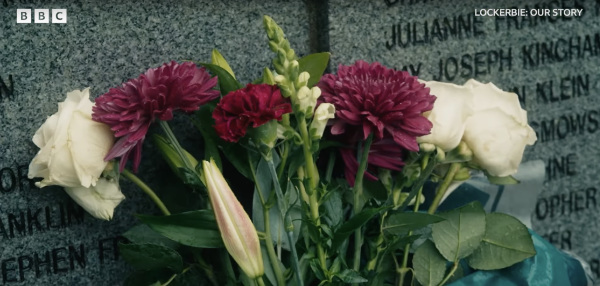 This week BBC2 aired a programme called Lockerbie: Our Story, in which loved ones remember both the incident and the individual people who lost their lives in the UK’s worst terrorist attack. It’s profoundly moving.
The clips come from far and wide, reflecting the diversity of the passengers who occupied the seats on that ill-fated plane. A skeleton picture of the Pan Am 103 flight shows which seats the different people were allocated; bringing to life those innocent men, women and children walking down the aisle, stashing their cases, their Christmas gifts, into overhead lockers, strapping thermselves into those specific seats. And in between the stories that same eerie skeleton 747 is shown roaring into a dark sky unknowingly bound for disaster.
The interviews with parents, siblings, sons, daughters, girlfriends, friends, capture eloquently the devastation for those awaiting their loved ones for Christmas, seeing the 9 o’clock news, or phoning the airline for an update on timings only to be told, ‘That flight will not be landing …’ Even listening second-hand, the stunning horror is palpable. And the ongoing grief and loss since that fateful day over four decades ago is quietly but effectively conveyed, more in the brave acceptance than any overt display of emotion.
Though there is the occasional reference to the politics behind the catastrophe, and to the fact that numerous warnings were received by the authorities that this flight was the target for a terrorist attack, leading those in the know to transfer their tickets to other flights, the overwhelming thrust of the programme is how much the bereaved want their loved one’s memories not to be tainted or overwhelmed by the way they died. They were so much more than the event that killed therm. And those left behind deeply want good to prevail, not evil.
The Bombing of Pan Am 103
It’s indelibly etched on my memory: the night the Pan Am flight 103, en route from Frankfurt, Germany, via London Heathrow to New York City in the USA, came down in Lockerbie, a small town in SW Scotland, on the evening of December 21 1988, killing all 259 men, women and children on board, and 11 residents on the ground. Because we lived it; we knew people connected with those caught up in the horror. Lockerbie is only 70 miles from where we live. We’ve visited the memorial sites since and been profoundly moved by the atmosphere that still clings to them.
The six-part series, The Bombing of Pan Am 103, airing on BBC1, captures aspects of the investigation I was unaware of, however, or knew only sketchily. Like the sheer humanity and dedication of the locals in Lockerbie, who went way beyond the call of duty to care for the passengers of that ill-fated flight, and to cherish their families. Like the dedication of the local police, used to dealing with bike theft, who committed themselves body and soul to this massive and gruelling investigation and to supporting its victims. Like the sheer scale and complexity of the operation.
Although the drama is necessarily truncated, enormous effort has been taken to make it as authentic as possible. It conveys many of the facts that made this one of the worse air disasters of all time and one of the most complex investigations. The debris from the plane was scattered over 850 square miles. 5,000 responders combed the countryside for clues. Investigators traversed the globe interviewing over 10,000 individuals in 16 countries. Enormous quantities of pieces of evidence were painstakingly collected and labelled, enabling the reconstruction of much of the 747, the bodies of the victims, their suitcases and possessions, and the bomb.
Somewhere in the mountain of detritus a tiny fragment was found which led the team to establish that the bomb had been placed inside a Toshiba radio. Another small fragment embedded in a distinctive shirt led to the identification of the timer that triggered the explosion. Following meticulous work by multiple agencies and organisations, police eventually tracked down the person who bought the clothes which were packed around the bomb – in a shop in Malta. This led to the identification and arrest of two Libyan operatives.
Quite how the various international organisations cooperated is unknown but the film does portray battles and tensions and failures in communication that give some indication of the power struggles, tensions and emotional overload. I loved the moment when a slick FBI agent arrives from the USA and finds the headquarters in Scotland are based in a rural primary school!! The Senior Investigating Officer may be a quintessential Scot from a low key force in sprawling Dumfries and Galloway, but he’s well able to retain mastery of the situation, which he does in a delightfully understated way.
This is a powerful and intensely moving portrayal which resurrected a lot of memories for me, and I can’t bring myself to recount some of the most macabre details we heard of. But the knowledge that those families are still grieving the enormous loss and the horror of those sights and sounds, still fighting for justice, stirs deep emotions. The BBC are right to remind us.
1979
Having drafted an overview of information so far on my big study of the historic Jesus, (phew!!) my brain was spinning so I needed some light relief.

International bestseller queen of crime Val McDermid can usually be relied on to keep the pages turning, but in this case it was much more the story behind her writing 1979 than it was the fictional tale of journalist Alison Burns – a woman in a man’s world, chasing big scoops to make her name in the newsroom – that grabbed my attention.
When the pandemic struck the UK at the beginning of the decade and life as we know it ground to a halt, Val was writing this novel, relying on access to people and sources to keep the historical detail authentic. She had herself been a journalist, living and working in Glasgow in 1979, and she knew she needed to study the archives of the main newspapers of that era. A lesser writer would have succumbed to the temptation to put it all on hold; take a break. Not Val McDermid. She pays tribute to the many people who supplied the information she couldn’t get for herself, who helped her get the detail right, and to her partner, Jo Sharp, who kept her sane and motivated when writing seemed impossible in the face of all that was going on in real life.
The result is an unusual-for-her tale; I didn’t recognise her familar brilliant prose. Alison Burns teams up with a new colleague, Danny Sullivan, to deliver a baby, investigate a terrorist threat, and pursue a case of money laundering on an eye-watering scale. Along the way they make powerful enemies and uncover information that could wreck careers. All does not end well, but Allie Burns is established as a principal character in yet another series of McDermid crime series.
Books galore!
I love visiting unusual historic houses and Ushaw in Northumberland certainly rates as that! But who knew it was a haven for book lovers to boot?!
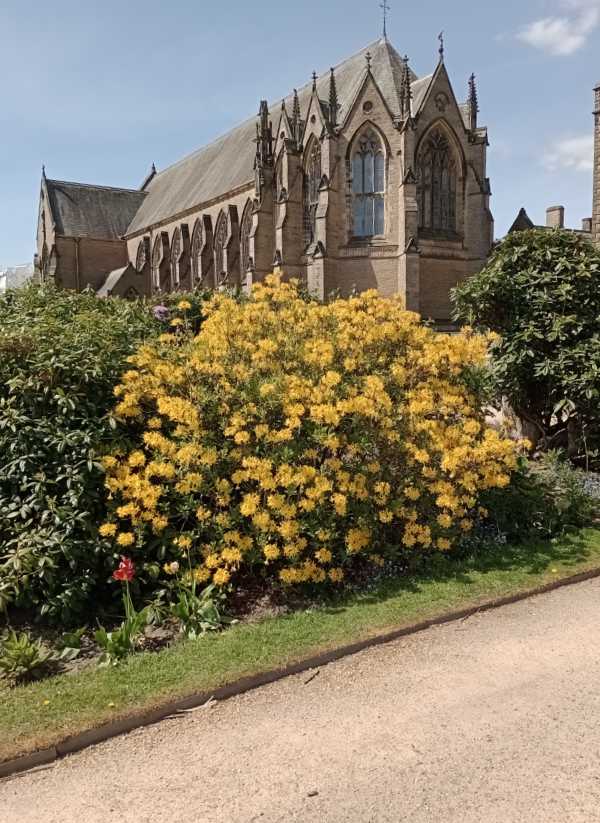
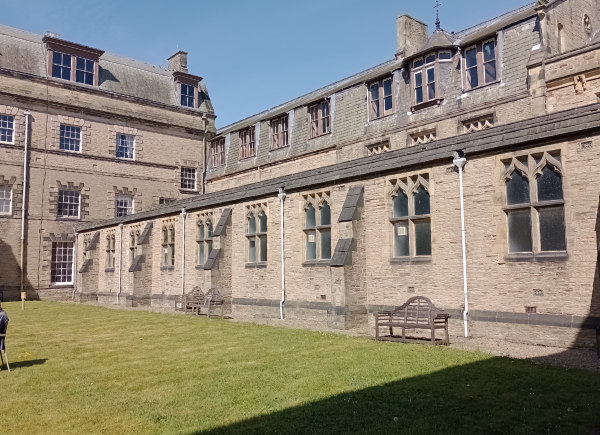 More than 200 years ago, when Catholicism was outlawed in England and Wales, Ushaw was built as a seminary to train priests, although how they kept its construction quiet escapes me. Secluded and peaceful, the Georgian period country manor and several chapels – now open to the public – retain reminders of their days as a school for boys and a training college for young men destined for the priesthood.

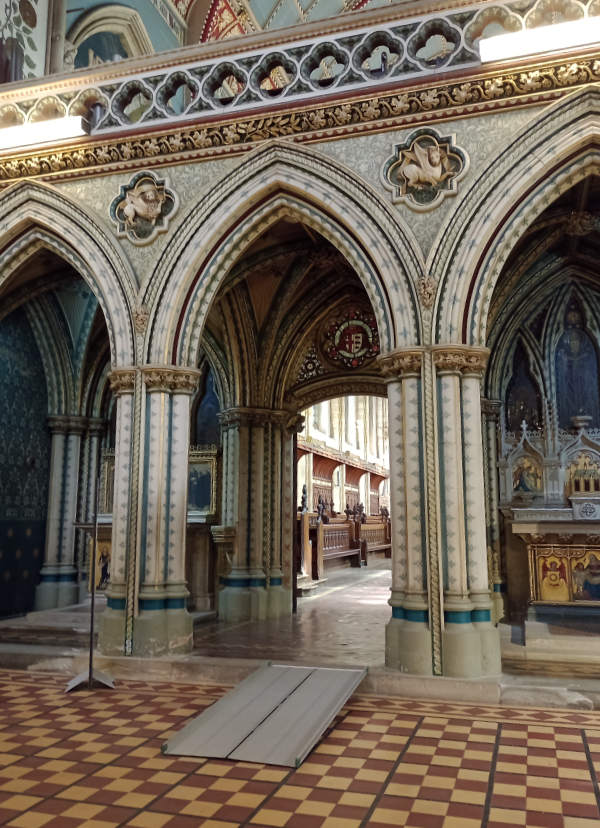
There’s an atmosphere of serenity and quiet inside with so much beauty and opulence as well as historical records and exhibitions to browse through. All very orderly and beautifully maintained, with evidence of ongoing attempts to extend and improve and modernise.

The grounds are extensive and a delight to roam in, but it was sobering to hear how few volunteers they have to maintain them, and to learn that arson, theft and vandalism have left scars on the property which would take a fortune to rectify – a fortune they don’t have.
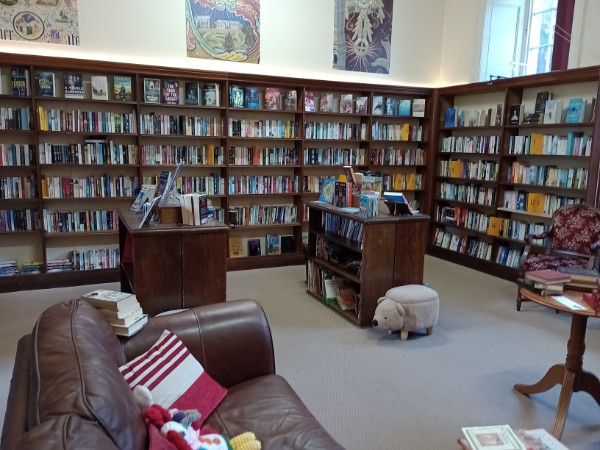
But for the purposes of this blog I want to share the amazing secondhand book room. It’s neat but cosy and inviting, with shelves full of books on all sides, methodically arranged by genre, and alphabetically within that framework. Unmanned, it relies on the honesty of visitors to leave a suitable donation with only basic guidelines as to how much. A pearl of a place. And plenty of chairs to accommodate weary bookworms. I was in my element.

The Hour I First Believed
Imagine you’re a high school nurse, sitting quietly listening to a troubled student. It’s April 1999. It’s lunch-time, that hour when the maximum number of youngsters gather in one place. Suddenly, without warning, all hell breaks loose. Two teenagers both known to you, now armed with guns and knives and bombs, are laughing and taunting as they systematically shoot the children around them with apparently carefree abandon. You crawl into a dark cabinet, but you can still see and hear their deadly progress, and you expect any moment to be blasted out of existence. When you eventually emerge, bodies litter the floor and the student you were with is missing.
Or imagine you are the spouse of the woman hiding in the cupboard. You too normally work in the same school, but you’re currently miles away organising the funeral of a relative. The developing news of the massacre is running continuously on TV, but you have no way of knowing if your wife, your colleagues, are alive or dead.
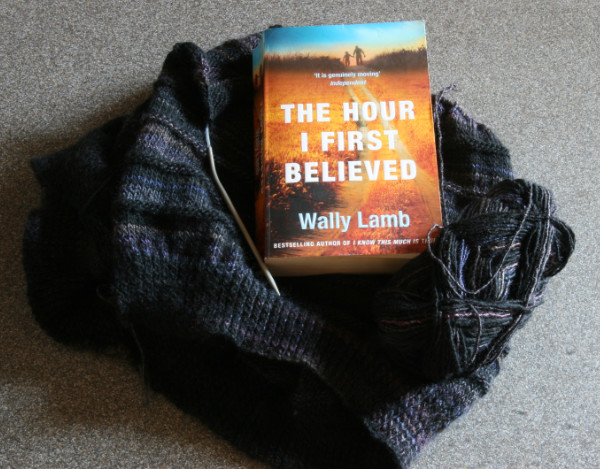 We’ve all read and heard about the Columbine High School massacre in Colorado in 1999, but Wally Lamb takes us inside the school on that fateful day, inside the lives of those for ever marked by these terrifying events.
In a nutshell so as not to spoil the story for future readers …
Both Caelum Quirk, the narrator, a creative writing teacher, and his wife Maureen, though not physically hurt, are seriously traumatised by the experience and seek professional help. They move right away from the scene of the crime and pick up the threads of Caelum’s earlier life, but they both develop dependencies which in turn lead to further tragedies, mounting financial worries, and an unravelling of their family history which brings both solace and heartbreak.
Although The Hour I First Believed is essentially a work of fiction, it feels much more than that. By weaving reality throughout the story – with actual names and words and excerpts from the killers, and reference to well known individuals, and historic events like the destruction of the World Trade Centre on 9/11 and hurricane Katrina – Lamb has given the whole narrative a sense of historic accuracy and credibility, allowing him to explore and examine real tragedies such as war and natural disasters and violent crimes more meaningfully.
Why did he choose this tricky route? For two reasons. First, because he felt a responsibility to name the Columbine victims, both dead and injured, and to acknowledge the strength and suffering of those traumatised by the event. And second, because, having spent 29 years in high schools, he was both frightened and confused by the twisted logic of the two boys who slaughtered those innocent children, and wondered if he would have acted as courageously as some colleagues did. His overarching hope back in 2008, was that the book in some small way would help to broaden understanding and maybe prevent future tragedy. Sadly events since have rather questioned that.
As with I Know This Much is True, I personally found the book overly complicated by the inclusion of long documents and lateral stories (it’s 632 pages long), but I take my hat off to any author who researches meticulously and makes me believe in his story. And perhaps a couple of sentences from early in the book, describing Caelum’s experience of teaching creative writing, capture what he has achieved:
‘Look, don’t just stare at the pages. Become the characters. Live inside the book,’ he’d tell his students.
They’d sit there, staring back politely at the alien from Planet Irrelevance.
Master of suspense
With a number of appointments scheduled this week involving lengthy waits, I turned to one of my favourite authors for a book to slip in my bag to absorb my attention. And once again Robert Goddard was not found wanting, doing what he does so brilliantly yet again in Out of the Sun – an apt title for so much skullduggery and conspiracy and dark doings.
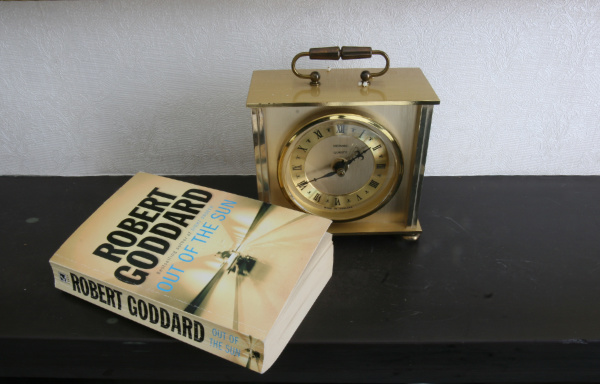 Harry Barnett gets a call out of the blue to say his son David Venning is in a coma at the National Neurological Hospital. But … Harry didn’t know he even had a son! David’s mother Iris is adamant she didn’t call him, and she’s equally sure only she and David knew Harry was his father.
Then it transpires that David was found in a locked hotel room following an overdose of insulin, and the notebooks containing his groundbreaking work are missing. He’s a diabetic anyway so suicide is not an unreasonable option, but there are far too many questionable aspects surrounding this case, not least relating to two other scientists who also worked for the same company as David, Globescope (a Washington-based socio-economic forecasting corporation) who have died in suspicious circumstances – one under a train, the other from carbon monoxide poisoning. And then there’s the fact that all three of them, as well as four other top-ranking academic-prodigies/employees, were sacked from Globescope recently, and the others are all now in hiding.
Unravelling the mysteries surrounding the son he never knew consume Harry, taking him to foreign lands, and into danger as well as unfathomable realms of mathematics and sciences he’s never even heard of. Everyone agrees David was obsessed by his discoveries; on the brink of something earth-shattering some would say. But Harry’s instincts take him down completely the wrong path and nearly get him killed. And when he does finally begin to understand just who was behind the murders he finds himself facing moral quandaries beyond his imagining, and surreal experiences that defy logic.
Conspiracy. Concealment. Confusion. They were the prevailing echoes.
Interwoven with the tensions is a tender but tentative love story, and a thread of moral questions about if and when it might be appropriate to remove the mechanical ventilation from David, and who should decide. The specialist is confident that there’s no realistic prospect of recovery from such a profound coma, and those who know him as an outstandingly clever mathematician agree he would certainly not want to be living life with severe brain damage. However, Harry’s heard there’s a new wonder drug that might save him and he’s part of the race against time to procure it … but he’s not the one footing the bill for David’s medical care.
With short snappy chapters, a racing twisting plot, blind alleys and shocking revelations aplenty, this proved to be exactly the right choice for filling in all those tedious waiting times, even if I was completely out of my depth with the mathematical complexities which lie at the centre of the plot. I can only take my hat off to an author who tackles such immensely complicated topics with such skill.