James Patterson
It’s a long time since I read a novel by prolific author James Patterson*, but I picked this one up in the National Trust property bookshop a few weeks ago. It’s 7th Heaven and it’s a real page turner. Short chapters, cliff hangers aplenty, fast paced action, electrifying twists and turns, and a completely unexpected finale.

Detective Lindsay Boxer, attorney Yuki, medical examiner Claire, crime reporter Cindy – aka The Women’s Murder Club – are immersed in two high-profile cases. The first involves the disappearance of the golden boy son of a high profile and hugely wealthy governor. The boy, Michael Campion, has a serious congenital heart defect. He was last seen entering the home of a prostitute, who eventually confesses that he died in flagrante, and she and her boyfriend butchered his body and packed it into plastic bags which they disposed of in a dumpster miles away. But there is not a single shred of evidence to back up her allegation.
The second case concerns two college youths with aliases of Hawk and Pidge, who target extremely wealthy couples, tie them up, steal their jewellery and cash, and then burn them and their properties to the ground using an untraceable accellerant. Four couples have perished in these horrific circumstances so far. But the fires leave no clues.
Lindsay and her partner Rich Conklin are relentless in their pursuit of these ruthless murderers; Yuki is equally persistent in her prosecution of the prostitute. Told in parallel the cases unravel at pace and reveal such chillingly devious minds that must surely outwit the reader as well as the investigators. Just what I needed to take my mind off real life problems, and remind me of the power of accomplished novel-writing.

* On this occasion he writes with Maxine Paetro
Drama illuminating medicine
As you know I’m a great fan of fiction and drama being used to bring the issues of medicine to a lay audience. It was my raison d’etre for writing my own fiction. So I was immediately grabbed by a series on BBC Radio 4 this week in which Dr Rachel Clarke brings one such topic to life: organ donation and transplantation.

Screenshot
‘This is a tale of a boy, and a girl and a heart they share.’ It tells of 9 year old Keira, fatally injured in a car accident, becoming the donor for nine year old Max, a lad with a desperately diseased heart. It’s harrowing in parts, and I wept listening. A doctor herself, Rachel Clarke is someone I’ve long admired (she’s been mentioned several times on this blog) and her voice is pitch-perfect for this story. She knows all about walking alongside people in their darkest hours, about conveying devastating news, and about putting one’s own feelings to one side in order to do an immensely difficult job.
 Intriguingly the narration weaves in historical detail about medical innovations that preceded this modern day miracle, making it possible, but those breaks provide welcome relief from the heart-wrenching emotion of the main story.
A couple of years ago I was personally involved in a transplant situation, and the profound emotions generated are not something I feel able to talk about. This programme offered space and privacy for a cathartic reaction, so I’m doubly grateful.
Shakespeare’s stamping ground
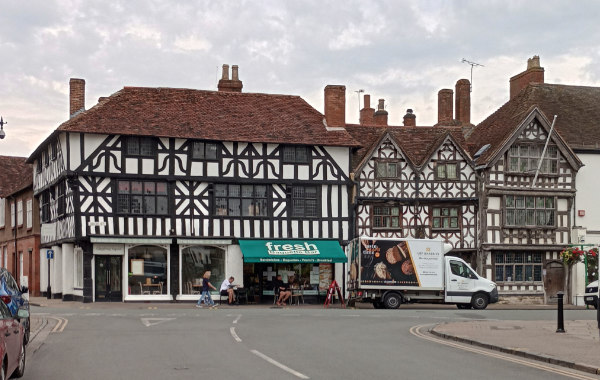 It’s over two years since I visited Stratford upon Avon for the first time, out of season and briefly, so I was thrilled to go again last week and stay for three days, time enough to explore the town and its significant sites.
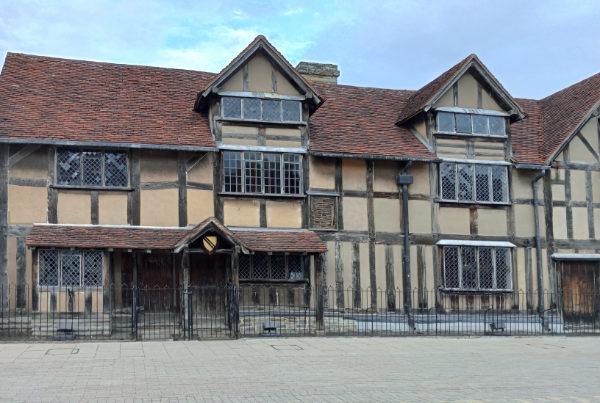
I’ve come away hugely impressed by the preservation of so many ancient places, the excellence of the guides, the sympathetic exhibitions, and the imaginative ideas which bring Shakespeare alive for the masses. For once health and safety concerns have not put barriers between us and history.
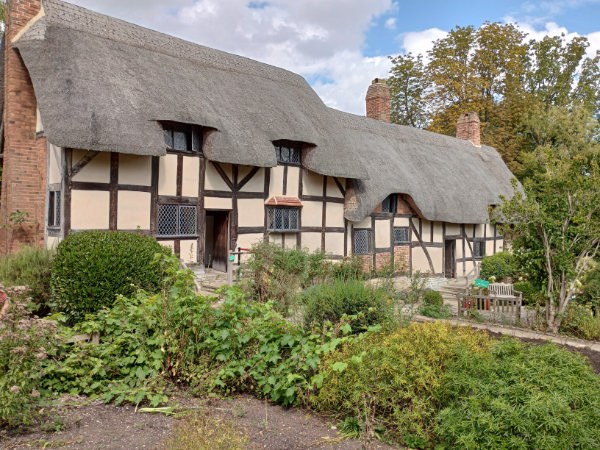
It’s eight centuries since William Shakespeare (1564-1616) trod the streets of the town of his birth and yet we can still wander through the rooms he played in as a child, pace the actual stone floor where he and Anne Hathaway spent their courting days, and stand on the site of the huge house he bought for his growing family. Some of the roofs look decidedly iffy; you can see daylight through floorboards, staircases are very uneven; some ceilings are low and walls uneven; but you can explore the houses and touch the very wood and stone the great man would have touched 800 years ago.

On all sides there are references to Stratford’s most famous son. Streets, pubs, shops, public buildings, boats, bear the names of his family or his characters. The world renowned Royal Shakespeare Company regularly puts on his plays in the iconic theatre.  For the more faint-hearted mini sketches are played out against the backdrop of his birthplace. Statues of the writer himself and his fictional characters abound. And all against the beautiful architecture and pretty river scenes that make up Stratford itself.
I learned so much about the man and his family, even though a surprising number of facts remain unknown.
Did you know, for example, that a phenomenal number of current sayings came from his pen, including rude insults?
Did you know he actually invented a large number of words that are still current today?
Did you know that his family line died out with his grandchildren?
Did you know that he needed a special licence to wed his pregnant fiancee because he was only 18?
Did you know that his son-in-law, Dr John Hall, would have held frogs over the open mouths of patients with sore throats – the creatures emitted a juice with antibiotic properties (discovered scientifically many many years later)? Hence ‘frog in the throat’!


It’s magical and evocative and fascinating and highly recommended.
Jeffery Deaver thriller
Jeffrey Deaver was just a name to me; until now I hadn’t read any of his many novels. But in my efforts to empty some of my groaning bookshelves his thriller The Steel Kiss was next in line. 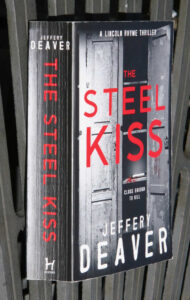 I confess I gulped when I felt its thickness – 600+ pages, but hey, I have a stack of wool to knit up into garments for refugees abroad so it’ll add to the pile substantially if I just apply myself to knitting while I read.
We’re instantly dragged into the story wide-eyed and aghast when police officer Amelia Sachs is diverted from tracking a murder suspect, by the screams of a middle-aged man falling into the moving gear machinery of an escalator in a New York shopping mall. The suspected criminal she’d been following escapes. But now she and her team, including disabled criminologist Lincoln Rhyme, have a new crusade on their hands – seeking substantial compensation for the destitute widow and son of the unfortunate man who are in grave danger of ending up living in a relative’s garage in some obscure backwater.
But this was no simple case of faulty machinery. The killer Sachs was chasing is someone who can make terrible things happen by remote control; turning ordinary household objects into murder weapons. Electrocuting, burning, frying people in their own homes; causing cars to seriously malfunction causing horrendous fatal ‘accidents’. And this relentless man with a gruesome agenda is watching their every move.
What did I like about this book?
Fast pace.
Feisty distinctive and memorable characters – two in wheelchairs; one police officer who was a fashion model. The killer has an unusual condition, Marfan Syndrome, which makes him unusual though he still manages to elude capture.
Periodic updates of case profiles which help to summarise where we are in the mounting horror.
Increasing complexity as the killer uses new techniques and the case against him reveals a backstory and motivation.
I got a pile of hats made effortlessly!
What did I like less?
Some speech patterns are difficult to decipher.
Technical language is hard to understand.
So, not a volume I’ll be returning to my bookshelves, but I learned some valuable lessons about writing from it.
MI5 – keeping our country safe
 Thames House is the headquarters of MI5, an imposing eight storey high edifice a few hundred yards from the Palace of Westminster.
Stella Rimington joined MI5 in 1965 and during her career worked in counter-subversion, counter-espionage and counter-terrorism, directing all three branches in turn. She was appointed Director-General of the whole of MI5 in 1992, the first woman ever to hold the post, and was awarded the prestigious Dame Commander of the Order of Bath in the 1996 New Year Honours.
 In 2004 she published her debut novel with the principal character based on herself: At Risk.
Liz Carlyle is an agent-runner in the counter-terrorism group based at Thames House, ten years into her term of service, anxiety her constant companion; to be effective she must herself be placed at risk. Her life is dominated by her work; unpredictable, stressful and shrouded in secrecy. By nature and inclination she is totally suited to the task.
… her quiet sage-green gaze masked an unflinching determination. A hunger for the fierce, close-focused engagement of the chase.
She dresses in nondescript clothes calculated to be non-memorable in any environment, always low profile even in success. It’s a lonely path, work-intensive, below the radar, the lives and security of all her agents and contacts in her hands, national security her daily preoccupation.
As soon as relationships become demanding or complex, she must end them.
She had found herself unable to compromise her independence in order to accommodate the emotional needs of a lover.
That this cycle led to her denying her own emotional needs she was well aware. Each parting was an excision, a scalpel’s downstroke, for which the only cure was immersion in work.
 And now she has ‘an invisible’ on her patch; the ultimate intelligence nightmare – a terrorist who, because he or she is an ethnic native of the target country, can cross its borderds unchecked, move around that country unquestioned, and infiltrate its institutions with ease. As soon as we know that, each new character becomes an instant suspect.
Painstakingly Liz and her colleagues piece together a picture of two people who have traumatic experiences in their past that have precipitated them into fanaticism and vengeance. Both have had training in weapons and killing. Both have managed to travel to the UK and close to their ultimate target. But along the way they have killed innocent people, and the combined skill and weight of all the relevant services responsible for counter-terrorism and law and order is being amassed. It’s a race against time to outwit this deadly pair; time marked by a fast-approaching sinister anniversary. Curiosity, tension and dread keep the pages turning, and I for one didn’t anticipate the twist at the end which challenged me to consider how I would react in these circumstances, just how robust my own moral code would be.
It’s chilling to absorb the cold dispassion of trained suicide bombers and assasins; sobering to feel the weight of responsibility MI5 and MI6 and the police force carry to keep us safe; awe-inspiring to see how they sift and search and second guess and deduce to stay a step ahead of the most devious and devilish minds and prevent the most heinous massacres; scary to see how personal agendas and self-interest can pervert even the most disciplined. Stella Rimington has done us all a service by giving us insights into this secret world in such a rivetting and accessible form.
Edinburgh International Book Festival
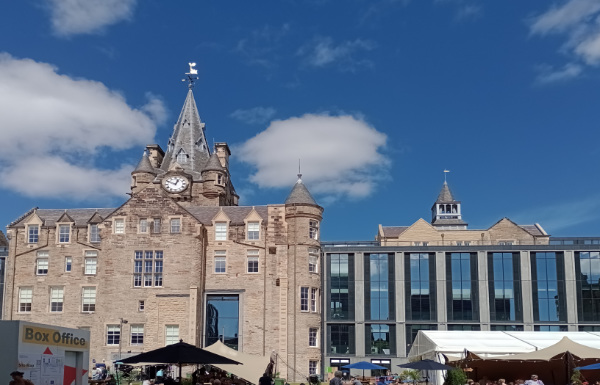 Wow! The Edinburgh International Book Festival has found itself a spectacular home this year!
The magnificent building which housed the old Royal Infirmary has been converted into a multi-award winning development known at the Quartermile – a mix of commercial, residential, leisure, retail, university properties. And the Book Festival is tucked neatly in at the back. My limited photographic skills and equipment can’t capture the whole panorama but a few simple shots taken in brilliant August sunshine will hopefully tell their own story.


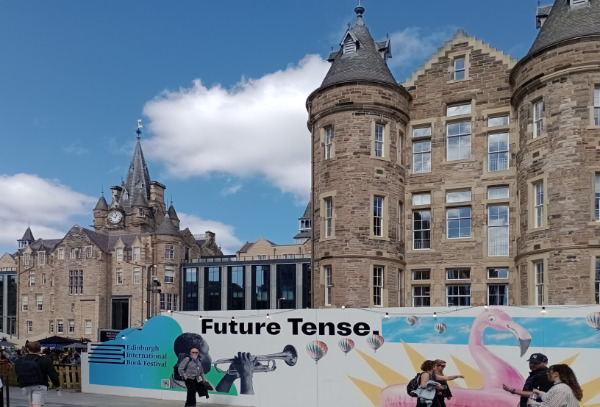

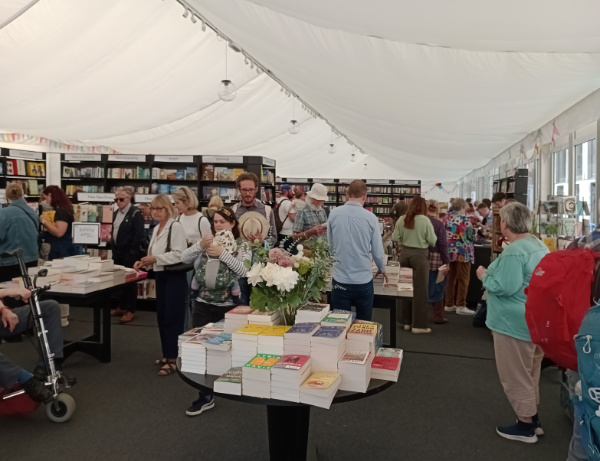
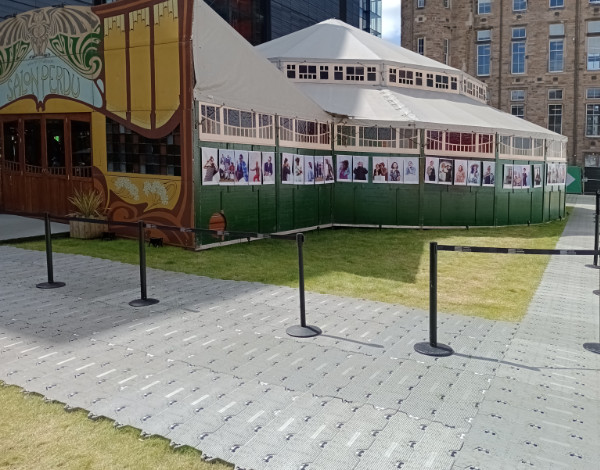 As you can see, the world of books is still very much alive and kicking!
Gender issues in sport … again!
Yep, it’s back on the agenda.
Remember Caster Semenya‘s involvement at the Rio Olympic games way back in 2016? I wrote a piece for this blog about the ethical dimensions that rumbled on for ages.  Now here we are years later with another case involving sex chromosomes and justice in sport.
But let me just say this: there’s so much good about the big international sporting events bringing people together from around the world in a healthily competitive arena. Clear rules of engagement, close scrutiny of performance, awesome talent on display, national pride, the best taking on the best … So let’s not lose sight of the big picture by homing in on a single disturbing case.
Because the vast majority of athletes at the top of their game are competing on merit, when there’s a clear violation of the standards of fairness and equality expected and taken for granted in high level sport we are justifiably outraged. The authorities organising the event are challenged. Sometimes individuals are excluded or medals removed. Sometimes not.
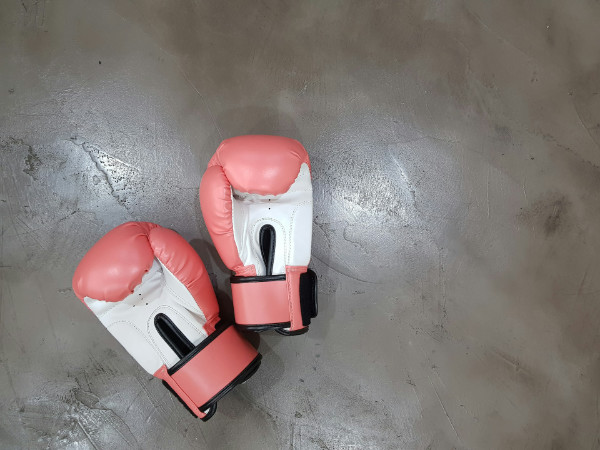
This past week in the Paris Olympics in the women’s welterweight boxing, Italy’s Angela Carini was forced to abandon a fight after only 46 seconds because she feared for her life. Opposite her in the ring was an Algerian boxer, Imane Khelif, who has failed sex tests in the past, and who was removed as recently as last year from the World Championships after failing a testosterone test. The power behind Khelif’s punches was such that Carini’s physical safety could not be assured.
In this case the president of the International Olympic Committee appears to be confused as to the real issues of biology here, but there are plenty of people spelling out the facts of the case. This is not a matter of a transgender competitor; rather of differences in sex development and tests demonstrating that two competitors in female boxing (the other one is Taiwan’s Lin Yu-ting) have XY chromosomes – which denote maleness. Simply being raised as a girl and having a passport identifying them as female, is not – or surely should not be – enough to qualify someone to enter into one of the most dangerous arenas at the highest level as a female. One article reported in Science Daily in 2020 documented that on average men punch 162% times harder than women. It figures.
But hey, I’m not on the inside of this story. What do I know? Only what’s reported in the media. Whose story is the correct one? I can only deal with what I’m reading and hearing, and form my opinion based on that. So feel free to correct me if you know more.
 As I see it, the IOC has attempted to ‘dial down’ scrutiny of the match, TV coverage was minimised; nevertheless debate on the subject has gone viral with the inevitable distortions and sensationalisation that brings. Celebrities as well as sports commentators have joined in the furore over the injustice of this incident. Widespread vitriol, hate and calls for justice have followed. My own observations tell me this was an unfair fight.
But through it all Khelif insists: I am a woman. Her father says she’s a woman. Her country says she’s a woman. She believes she has every right to fight for a medal for her country. Some reports state that she was born with Swyer syndrome which is a form of intersex. That’s as may be, but in other circumstances I would not condone a person with XY chromosomes smashing into a person with XX chromosomes in order to subdue and crush them: my instinct is to apply the same rules in sport.
But whose rights take precedence here? What do you think?
The self-appointed righteous judges of this world have a long history of casting stones at those who are ‘different’ even where this is through no fault of their own. So, If Khelif is simply following a dream after a lifetime struggling with the tricks nature has played on her, I hope she can find some fair and fulfilling way to achieve her goals.
Rankin short stories
Best selling Scottish author Ian Rankin began his life as a writer with short stories, and he still tends to write short stories in between full length books to try to get the big characters out of his head and system. It’s a format he likes; a good discipline experimenting with narrative voices, structure and economy with words. There’s no place for fat on a story: it has to be lean and fit.
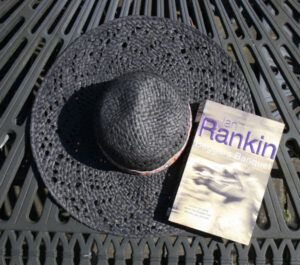 But I have to confess the essence of a good short story eludes me. What exactly constitutes ‘pared back’? I’m not sure. I remember being mystified by that part of my writing course. When it works perfectly I can see what’s needed, but much of the time I just don’t get it.
However, there’s a lot going on in our house right now so I wanted something I could dip into. These stories, spanning a decade or more of Rankin’s illustrious writing career, just filled the spaces in between appointments and activities.
The tales in Beggars Banquet are crime stories and cleverly constructed with devious plots – indeed several have won prestigious prizes. These ones have been collected from magazines, radio and journals.
The best ones for me were the Detective Inspector John Rebus tales – probably because I know his backstory so he comes as a rounded fully-fledged character. I especially appreciated his take on politics: His attitude had always been: don’t vote, it only encourages them. And I can still enjoy those occasional sparkling sentences. My favourite this time was:
The tenement stairwell smelt of deep-fried tomcat.
But I’m in no rush to repeat the exercise any time soon. Give me a 600 page doorstopper that drags me in, engages my emotions, keeps me guessing and turns the pages without effort.
Jackdaws
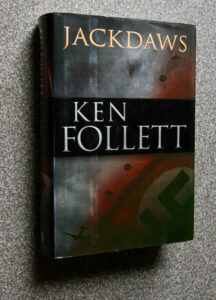 Having enjoyed Ken Follett’s novel Whiteout way more than expected, I raked another one from the back of my shelves: Jackdaws. A hefty 450 page hardback so not for the faint-hearted. It was well worth the effort.
The story is set in the dangerous final days of the Second World War. D-day is approaching and for one of Britain’s most effective operatives in northern France, senior agent Major Felicity (Flick) Clairet, the stakes have never been higher. She’s responsible for sabotage behind enemy lines and is no stranger to fear and danger, but she’s ruthless, clear-thinking, and paranoid about security; one of the survivors.
The centre of the proposed action is a large telephone exchange sited in a beautiful chateau near Reims which the Germans have enlarged to provide connections between the French and German communication systems, and a base for the Gestapo regional headquarters. It’s of enormously significant strategic importance; if it were destroyed, German communications would be crippled.
But when Flick and her husband, Michel – a Resistance leader – try a direct head-on assault, things go horribly wrong. On this occasion the intelligence supplied by MI6, had been inaccurate. Her team is destroyed, lives are lost, her husband is missing, confidence is temporarily shaken. But she remains resolute in her determination not to let the sacrifices be in vain.
Time is not on her side. She assembles a small group of women: a flirt, a murderess, a safe-breaker, a female impersonator, two aristocrats, one awkward, the other entitled – all unprofessional, but each with certain skills Flick needs. Code-named Jackdaws, these six women will attempt a daring infiltration under the very noses of the Germans, impersonating cleaning staff. An agents’ course normally takes three months; Flick has just two days to teach this motley band of women basic security rules: how to parachute, how to use weapons, and how to kill people without making a noise. Then they will be parachuted into France to blow up the telephone exchange.

Terrific tension is created by parallel accounts of the British team preparing to take out the telephone exchange and the German Major Deiter Franck infiltrating the French Resistance, as the countdown days are ticked off one by one. The descriptions of torture techniques, and the brutality of war, are both vivid and sickening, but the enormous courage of those who worked in enemy territory is breathtaking. It’s a shockingly mesmerising and totally gripping tale, bringing with it a fearful awareness of the price that was paid for the peace we take for granted.
Exactly 50 women were sent into France as secret agents during WWII; of these 36 survived. The other 14 gave their lives in service. This book is dedicated to them.
Deadly viruses
 It’s Christmas time. A chance to take a break. Or perhaps not …
Oxenford Medical is a small pharmaceutical company doing research on deadly viruses. Security is extremely tight. The vast nineteenth century house in Scotland is nicknamed the Kremlin, because of its double fencing, razor wire, uniformed guards and state-of-the-art electronic security. So when two doses of an experimental drug, an antiviral agent, go missing from a locked refrigerated unit in the maximum security lab, director and security chief Antonio Gallo fears for her career, the company’s reputation, and public safety.
So where is the missing lab technician, absent without leave, pretending his mother is alive long after her death? Why didn’t they know his conscience was troubled by the use of animals in the lab? When they do find him, it’s already too late; he has met with a gruesome death at the hands of a killer haemorrhagic disease. The question now is: how can Toni and her team minimise the damage caused by the virus he released by rescuing an infected rabbit?
With these questions still swirling, and a storm raging, Toni dares to prepare to celebrate Christmas with friends, and unwind after all the tensions and stresses, leaving a skeleton staff to ensure the lab is safe. But first the phones go down. Then a gang of three men and a woman gain entry into the Kremlin, disguised as an emergency crew of workmen come to repair the phones. Their real mission? With a mixture of brutality and skill they manage to steal a large batch of the deadly virus itself.
When the news reaches her, Toni is already frustrated and fully occupied by a change in her personal arrangements because, instead of a restorative spa break with friends, she must unexpectedly care for her mother who has dementia. But catching the thieves, and retrieving the virus, have to take precedence; her mother just has to tag along too.
 A freak blizzard, multiple accidents, and fractured communication make catching the crooks an extra-fraught exercise. A persistent reporter is nosying around, dogging Toni’s steps, sniffing a big story. Her angry ex-partner is bent on thwarting her efforts to deal with the crisis. She needs all her diplomacy and ingenuity to out-manoeuvre everyone standing between her and her end goal.
But who is responsible for this daring heist? It has to be someone with insider knowledge about the electronic security system surely. The chase leads her to the home of the Professor who developed the anti-viral drug, with whom she has recently made an emotional connection. There she finds the crooks holed up and holding his whole family captive. It’s a race against time to prevent the virus getting into the hands of a master-criminal bent on mass destruction.
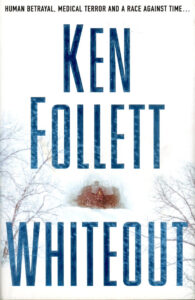 The last time I read a Ken Follett novel I was unimpressed. This one, Whiteout, is a tense thriller with plenty of twists and turns which kept me glued to the pages. And it challenged me to think through the ethical dimensions related to medical research and priorities.
Curiously the author succumbs to some pretty basic errors of writing, which I found irritating, but hey ho, I still enjoyed the tale. In a lesser name they would have attracted criticism, but I guess when you’re a household name you can afford to break the rules.
And after being immersed in a frozen world of snow and ice, it was actually quite pleasant to emerge to July rain and grey skies … and glistening black roads!