I Know This Much To Be True
I can’t begin to comprehend the horrific damage inflicted by the teenager who went on a murderous rampage in Southport last summer. Nor the effect of a lifetime of contemplating the gravity of his crimes while he lives out his sentence of at least 52 years in prison before he can even be considered for parole. But I’ve been exercised by news reports that say he’s autistic and mentally ill and has a long history of problems he’s inflicted on so many families, including his own.
And then there’s the man with paranoid schizophrenia who killed three people in Nottingham in June – we now know he didn’t get the essential anti-psychotics he needed to prevent him becoming violent.
Details from both cases, and the deficiencies in their management, make horrific and deeply troubling reading, If only … If only …
So, an advert for a novel about a young man with paranoid schizophrenia – I Know This Much is True by Wally Lamb – jumped out at me.
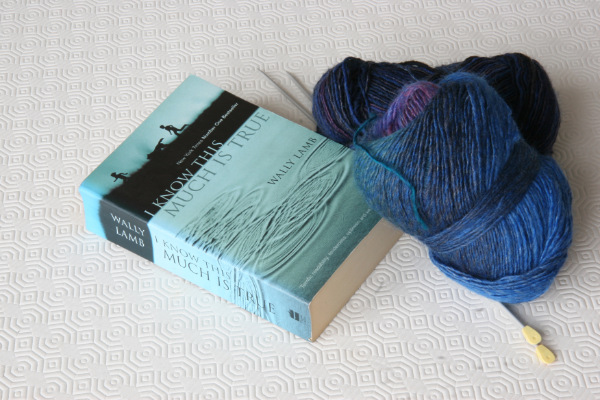
But oh wow! Oh dear! Little did I know when I ordered a copy, that it would turn out to have 897 pages of dense tiny text! A mighty doorstopper and no mistake. I had to force myself to keep going.
Dominick and Thomas Tempesta (later Birdsey) are identical twins born six minutes apart, in different years. They grow up in a tumultuous household with a weak mother and domineering step-father who both serve to exaceberate their sibling tensions and rivalry. Then Thomas develops paranoid schizophrenia, and Dominick promises his dying mother he will always care for his twin brother. But as Thomas reels from crisis to crisis, his twin is torn between love and resentment. Then on October 12 1990, Thomas uses a ceremonial Gurkha knife from WWII to amputate his own right hand in the Three Rivers public library in Connecticut, adamant that Dominick must not overrule his decision not to have the hand sewn back on.
‘It was a religious act! A sacrifice!’
Until this incident Thomas has been under the care of one psychiatrist for his mental illness for years, so when he’s admitted to a maximum security wing with a new team of professionals, Dominick is incensed and determined to get him out. But then he meets Dr Patel, an anthropologist as well as a psychologist, who gives him insights into what it feels like to be living in Thomas’s head.
The weight of the world is on his shoulders. He can trust almost no one. … Your brother is alone in the universe. Lost to his twin, lost to a conventional life. He is afloat in a world of evil and malignant power, his mettle tested at every turn. Thomas is, in effect, starring himself in his own hero-myth.
But Dominick – as his brother’s mirror, his healthy self – is the equivalent of a control group, with unique access and insights into Thomas’ thinking by virtue of their shared biology and shared history. He has the potential to provide a key to Thomas’ recovery.
For once, he had a doc who hadn’t majored in indifference.
Under her guidance, Dominick begins to retrieve childhood memories that might be significant, early schizophrenic episodes and decompensations, and in so doing Dr Patel recognises that there are two Birdsey boys lost in the wood, and maybe, just maybe, one of them is calling to her, and she can save him.
It’s not only a long book, but a complex one. Embedded in the text are several story lines including a whole autobiography by Dominick’s maternal grandfather, a really unlikeable egotist, revealing the troubled and often violent and abusive history in their family. Could these ancestors be the explanation for why he and Thomas were as they were?
There was much about this book I disliked, but I persisted to the end looking for answers to Dominick’s questions about his origins, about inheritance, about justice, about God. And some of them were answered. And for the record, Thomas is nothing like the disturbed boy who massacred children in Southport, or the mentally ill man who took three innocent lives in Nottingham; any harm he inflicts is only on himself.
Have we learned the lessons of the Holocaust?
 Lest we forget.
And repeat the mistakes of the past.
‘The only thing necessary for the triumph of evil is for good men to do nothing.’

The serious challenge for 2025
I might have mentioned before that each year, alongside all my other reading, I try to tackle one big issue in an effort to better understand the foundations of Christianity, and to challenge the beliefs and notions I’ve inherited or picked up in my long life. Topics to date include things like inspiration; the place of doubt versus certainty; questions about homosexuality; the role of women in the church. It’s been a sobering and humbling experience, and driven a coach and horses through some cherished ideas along the way. But I like to think I’m now more honest and humble about what I believe and how I live/ought to live.

So, this year my thinking has led me to explore who the real Jesus was, and why it matters. Many things suggest to me that the church has developed its own pictures and stories, and each culture and generation and new wave of scholars has overlaid them with yet more layers of interpretation. But who was the person known as Jesus of Nazareth in the Middle East in the first century AD, and what was he like, and is he indeed someone I want to follow, and if so, what should that look like? And as before, I’m very very aware that what I discover might require me to change my personal world-view and religious stance. And might indeed upset some people who have certain expectations of me.
Three weeks in and I’m feeling somewhat overwhelmed by the sheer volume of literature on the subject, ranging from the way-out bizarre, through the well-worth-delving-into, to the totally-out-of-my-depth-erudite! So, in an effort to save my sanity I’ve drawn up a plan for all the different aspects of Jesus’ life I want to examine, and marshalled the stack of books I want to read on the topic into some kind of order (sample shown above).
Back to it!
Talking with Serial Killers
During my decades as a researcher I spent some years carrying out profoundly draining interviews with respondents who were grappling with deeply emotional issues relating to loss and grief, so  I know a little of the personal cost to the listener of engaging with great damage and disturbance. Even so, I can only imagine the trauma of sitting opposite serial murderers who have repeatedly carried out the most sadistic and barbaric crimes against innocent victims. Christopher Berry-Dee, a world-renowned investigative journalist, has interviewed at length over 30 of the world’s most notorious killers, and recorded some of their stories in Talking with Serial Killers.
His modus operandi involves building up a relationship with a killer over many years of correspondence until they begin to trust him, researching their history, and meeting with as many people as he can who know/knew the offender. With dangerous individuals such as these, this inevitably means negotiating a path through a lot of red tape.
For each case, I take an in-depth approach, spending an enormous amount of time getting to know the unique qualities of each individual, rather than depersonalising them with generalities based on their crimes. While I develop an empathy for my subject, I always take care not actually to sympathise to the extent that their dramas start playing in the theatre of my own mind. It is a constant balancing act between identification and analysis.
His analysis evokes strong responses. It’s deeply disturbing to read of police inability to track these criminals despite a trail of numerous assaults and murders, or their failure to follow up on inconsistencies and blatant lies. The unscrupulous standards and incompetence of some officers or lawyers took my breath away. It was equally chilling to hear about young women and girls hitch-hiking and accepting lifts from strangers, of naive and vulnerable learning-disabled young people being caught in the nets of these murderers, and perhaps worst of all, to read of serial murderers being released to kill again … and again … and again.
The detail is sickening and certainly not for the faint-hearted.
One rather feels that even Stephen King could not better that scene in one of his horror novels.

Each killer has a chapter devoted to them, relating the background and relationships which were instrumental in forming their characters. Their crimes are recorded from multiple sources including their own descriptions and admissions, but particularly fascinating for me were the sections giving psychiatric, medical and forensic explanations for why these murderers performed in certain ways.
So, who were these villians, and what singles them out as exceptional amongst killers – the world’s most evil murderers as the strapline has it? A few basic details must suffice for this post.
Arthur John Shawcross took the lives of 53 human beings; Henry Lee Lucas confessed to at least 190, although it’s commonly agreed that he exaggerated the number.
John Martin Scripps travelled internationally, and with cold-blooded efficiency, killed innocent strangers using butchering techniques learned in prison to dispose of their bodies, and then went on shopping sprees using their credit cards. He was only 36 when he was executed in Singapore.

When Michael Bruce Ross was convicted after 11 brutal sexual assualts and 6 murders, all carried out before his 28th birthday, the state had to debate the relative merits of consecutive life sentences versus execution by electric chair, because the latter would involve costly repair work on the long disused chair itself, and redecoration of the witness viewing area and death house suite!
The multiplicity of errors and lies and unethical/illegal behaviours amongst the police, lawyers and legal fraternity in the case of Ronald Joseph DeFeo Jr, accused of killing 6 members of his family, makes for such confusing reading that, despite the author’s analytical reporting, I was unclear in the end just who had done what. And yet a man’s life is at stake here.

Similarly there seem to be serious flaws in the case against Daniel Clark, accused of killing a number of prostitutes more correctly attributable to his co-accused Carol Bundy. Witnesses and attorneys were bribed or coerced; statements and evidence tampered with or withheld or ‘lost’; alibis ignored. Bundy, herself totally untruthful and most certainly guilty, was given a deal to testify against Clark in return for her own life.
It was somehow particularly difficult to read the story of a woman, Aileen Carol Wuornos. Only about 2% of the USA’s felons who have been condemned to death are females. Abandoned as a baby, abused as a child, regularly beaten with a studded belt, a mother at 14, married to a man 49 years her senior, Wuornos was given to fits of uncontrollable rage. In just over a year she scattered a trail of middle-aged male corpses (at least six) across the main highways of central Florida, shooting each of them several times, leaving their naked bodies many miles away from their abandoned cars, robbing them of all their possessions. It was loyalty to her lesbian lover that made her finally confess.

Kenneth Allen McDuff didn’t just kill over 15 victims; he savaged them in unspeakable ways – savagery that turned the stomachs of even veteran police officers.
And so it goes on. Tales beyond imagining, minds depraved way beyond our comprehension. Collosal sums of money are needed to ensure these ultra-dangerous individuals are securely detained and safe from harm by themselves or other inmates. The average stay on Death Row is 11.3 years. In California alone there are up to 500 inmates awaiting execution at any one time; in Texas that figure is over 450.

A disturbing and challenging book by any standard.
Letters from Helfenberg
In 2002 several large trunks of family correspondence between Dresden and Cambridge, were discovered in the attic of a red-brick, semi-detached house near Girton College in Cambridge. They had lain undisturbed since 1952, neatly tied into bundles with string. Most were written in old German handwriting.
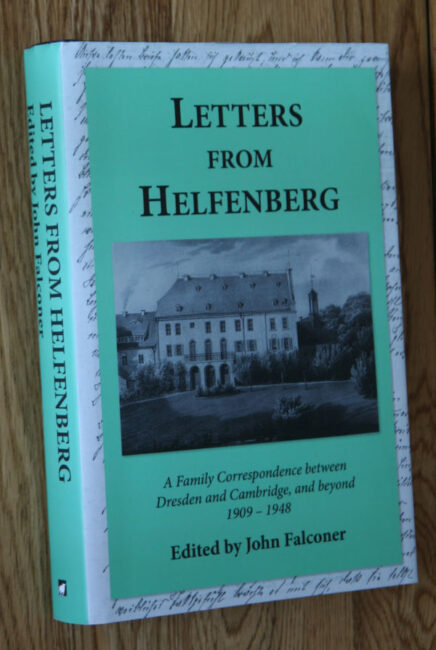
The letters (well over 1000), spanning three generations of a German/English family and half a century of great turbulence, were painstakingly translated and edited by a member of the fourth generation, John Falconer, (a teacher of classics) in a book entitled Letters from Helfenberg; Helfenberg – at the centre of the story – being a rather grand four-storeyed house and farm estate east of Dresden, owned and leased to them by the King of Saxony.
The book is liberally illustrated with evocative photographs of the family and their home across those years, bringing them to life; powerful reminders to me of old photos of my own forebears at a similar time.
The story begins in 1909, when a young Cambridge classicist, William Duke, travels to Germany for a semester’s post-grad study; there he meets Gertrud von Lippe who’s in Berlin for a season taking lessons in English and French in an attempt to improve her education. Their acquaintance is brief but clearly memorable because they agree to correspond, each writing in the other’s language and returning the letters with corrections and comments to improve their linguistic skills.

But other relatives enter into the exchange of letters, and when in 1911 Duke gets engaged it’s to Gertrud’s younger sister Johanna not Gertrud herself. It’s a measure of the formalities in etiquette that Johanna doesn’t even know his first name when she accepts his proposal!
This is not yet another tale of Nazi persecution, but an intimate portrayal of the effect of the two great wars on this family. And even with the benefit of our hindsight it’s chilling to read about the first hint of coming trouble between Germany and England, of the false hopes and propaganda that divert attention from the reality of what’s brewing.
When the young couple marry in 1913 and Johanna moves to England, her parents’ letters pick up the story of life back in her homeland. Gertrud is by this time a semi-permanent invalid limited by her chronic heart condition and lonely without her baby sister, so she’s delighted when Johanna travels to Dresden with her first child Margaret at only 6 months of age. But it’s a tricky time to be in Germany, and while she’s there William writes of the distinct probability of war breaking out. Nobly he gives her the choice of whether to stay in Germany or return to England.
I give you free choice: nevertheless i should like you to come back while it is still possible. It is at times like this that the difficulties of an international marriage surface so vividly!
Johanna is torn but decides to return. However, even before she can arrange things, a letter sent to William, postmarked 1 August 1914, is returned unopened – the first concrete sign that the war has begun. What a conflict for this mixed-race family with divided loyalties, captured by these two excerpts.
Johanna to her brother in the field:
You can imagine that it hurts me if the English cannons are shooting at my own brothers.
Her youngest brother Karl:
It was a strange feeling for me that from now on these [English] guns must protect my little sister against me.
Johanna feels the separation from her birth family acutely when first Karl is killed in action in 1916, and the following year her eldest brother Fritz, both of the deaths conveyed in a letter from Gertrud. The letters from Germany also movingly capture the terrible state of the country after the war: revolution leading to abdication of the Kaiser and declaration of the Republic, social division and hyperinflation, occupation by France and Belgium, strikes, political unrest.
Gertrud was the family philosopher, and after her death in 1922 the tone of the correspondence changes significantly, the men in the family being more preoccupied with political issues, farming and local unrest, and the price of everything. But one by one these correspondents too die (their father in 1924, mother in 1927, and William Duke aged only 42 in 1929).
The family’s tenancy of Helfenberg ends in 1930 after almost 30 years. The story could well have come to a natural end there, but Johanna’s brother Walther’s letters from Germany, and Johanna’s exchanges with her two daughters survive and give a glimpse into life as the two countries once more move towards another conflict, and the women occasionally make trips to the Fatherland.
Draconian postal restrictions from 1939 onwards mean that only the briefest of messages (max 25 words, restricted to family news) between the two countries are possible, and there follows almost six years of silence from Germany.
In time there are happy highlights from England – both Johanna’s daughters become classics teachers (Cambridge University and a school in St Andrews in Scotland), Johanna remarries, and Margaret moves with her family to Scotland. But in Germany Johanna’s niece Renate reports a very bleak picture indeed. Tragedies have befallen the German side of the family, alluded to in a brief post-war message from Renate, but once she’s sufficiently recovered from the emotional and psychological suffering, she pours out her feelings in some amazingly upbeat letters to her aunt recounting some of the evils they are still enduring in 1946-7. She calls it the great desolation. The country is destitute and lawless, with bureaucrats controlling Berlin, which she describes as one great concentration camp.
Yes, it wasn’t for nothing they told us that once more we would envy the dead, and I’ve finally reached that point myself.
The world indulges in the accounts of our atrocities, but about what is going on (in post-war Germany), nobody utters a word.
And indeed I was deeply shocked to read these accounts.
So too was Margaret:
I’d no idea of the details of the economic destruction of Germany, e.g. the confiscation of all her interests in all countries, whether allied, central powers or neutrals, and the entire break-up of her organisation.
Helfenberg, the hub of the family, was expropriated from its royal owners, subdivided, and neglected for the next sixty years. Renate and her parents later safely resettled in West Germany and the story ends in Berlin in 1948.
It’s a sobering read and I can only imagine the pain for John Falconer reading these letters from and about his relatives. But it’s pervaded by immense courage and I leave these assiduous letter-writers to conclude with their own philosophy.
William to Johanna:
It is by unions such as ours that more and more strong chains are forged which bind the two great peoples tighter and tighter together.
William to Johanna at the end of the war:
I think the right line is to hope that the general joy is at the prospect of international brotherhood and the cessation of war, and not at the triumph of one nation over another.
Gertrud:
What a good thing it is that the future is hidden from us in thick veils!
 Our family have wonderful friends in Germany ourselves and both sides would echo these sentiments.
In celebration of women writers
2024 marked the 100th edition of Mslexia, a magazine for women who write, to which I’ve subscribed for many years. So as we turn into a new year, I thought I’d share a few random snippets from the journal, with thanks to all the contributors who researched and wrote about them.

It’s a truth not always recognised that women writers have many extra hurdles to overcome because of their role as caregivers to children and parents, alongside juggling domestic duties and paid employment and maintaining a writing profile, as a number of surveys have demonstrated. But perhaps Ginger Rogers sums it up most neatly: she did everything that Fred Astaire did but backwards and in high heels!
 Martin Amis said his stepmother, novelist Elizabeth Jane Howard, would be busy gardening, cooking, staring out of the window, and then suddenly disappear into her study where she would furiously hammer out her stories for an hour: a ‘think, think, think, WRITE’ routine. But she would have written twice as much as his father Kingsley Amis in a whole day.
We tend to look at established and best-selling authors as having everything buttoned up. But it was reassuring to me to read that crime-queen Val McDermid after 39 novels still says that around two thirds of the way through she loses faith in the novel, the writing feels flat, the plot makes no sense and she wonders why anyone would be remotely interested and read it. Happily she’s a consummate professional and wouldn’t dream of missing a deadline so she ploughs on and regains confidence as she goes.
It’s striking how many writers are willing to expose their own vulnerabilities whether its mental illness, infertilty, abuse, being controlled, losing babies, being bereaved, being financially insecure, abandoning security, being in the public eye, stage fright. I’ve benefitted greatly from their revelations and honesty.
 Mary Wesley published her first bestseller at the age of 71, and went on to write ten more, only stopping at the age of 84. There’s inspiration for you.
Did you know that the mental effort of serious stints of writing entails deep concentration and requires the same kind of nourishment and rest as a strenuous run? My GP did many years ago; he diagnosed my body’s need for extra thyroxine because of the intensity of my work as a researcher/writer, and prescribed accordingly.
Heidi Thomas (screen writer for the long-running TV series, Call the Midwife, has a wonderful philosophy, gleaned from her seven years as a Quaker. It’s Let us see what love can do, because, she believes, so much more can be accomplished by kindness or patience or compassion … The real depth of the show, set in London in the 50s and 60s, comes from a belief in service to others; the secret of its success is sincerity which pervades all aspects of making the programme, and decency. It shows.
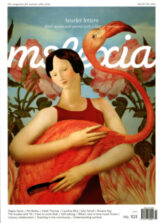 Poet Degna Stone sums up the true value of reading: The characters and their narratives each changed me in some way, And that’s why we read, isn’t it? To experience new ideas that will help us to see the world differently. Or to experience a familiar feeling told from someone else’s perspective.
Author Chioma Okereke puts it slightly differently:
Reading isn’t just a sanctuary from the real world, but a therapeutic activity that enriches our knowledge and provides us with insights beyond our lived experiences … increases our capacity for empathy, through the process of seeing the world through a relatable character.
A whole lot of wisdom comes in my quarterly packages from Mslexia. Here’s to a wiser and more compassionate and peaceable 2025.
Peace in a troubled world
At this time of festivity and celebration for many of us
let’s remember all who are caught up in conflict and oppression and hopelessness.

Christmas greetings
Christmas blessings to you all whatever your circumstances.

If you are currently facing devastating loss or grief,
may you be given the strength and courage to go on.
If your life is a spiral of stress and anxiety,
may you find a way through to a calmer, more peaceful place.
If you are subject to oppression or rejection or abuse,
may you be helped to a place of safety and security.
If life is currently treating you kindly and you have all you need,
may these blessings continue, valued and appreciated.
If you are fortunate enough to enjoy a super-abundance of health and resources,
may you have the generosity to share wisely.
If you are in a position of power,
may you use it for the greater good and towards a fairer world.
‘Let there be peace on earth and let it begin with me.’

Down by Tobacco Docks
 It’s pre-Victorian times; the late 1800s. Sanitation is rudimentary, disease is rife, living conditions appalling, new factories are polluting the air in the cities. But children’s working hours have just been reduced to no more than 10 hours a day, and Parliament has decreed that all youngsters should attend school between the ages of 5 and 10 years.
Maria Bertram and her young siblings, Daisy and Willy, live with their widowed mother in Kelly’s Yard, an impoverished and overcrowded area of London, barely managing to obtain the essentials. Their’s is a close-knit community with their own codes of conduct. So, they are cautious and protective when strangers move in.
In a stable block overlooking the yard, Steffan Tremain and his drunken womanising father eek out their days living far below their former means and status before bankruptcy and prison reduced them. Steffan is a shy and unhappy lad, reluctant to integrate, but he warms to the gentle hand of friendship Maria extends.
And then a young woman, Rose Cranfield, is found murdered, her body tangled in foul-smelling ropes and heavy chains in the nearby docks alongside her penny farthing bicycle. Rumours abound:
she had been living a clandestine life in Kentish town, alleging she was a newspaper journalist on the verge of exposing a web of deceit in a local town planner’s office;
she was a courtesan to gentlemen of means;
she had come to the area looking for her unfaithful lover who had now strangled her.
… so which was she?
To Maria’s disbelief and horror, Steffan is arrested for the murder in the middle of the night, betrayed to the police by his drunken father. She’s determined to clear his name and shows her mettle by defying all who would prevent her getting involved.
She’s also set on discovering the truth behind the rumours that Kelly’s Yard is about to be demolished. Already employed in the company whose architects’ department is drawing up plans for the future in her area, she swallows her pride and puts up with petty rules, dictatorial management, a lecherous senior, and an inscrutable but loose-lipped colleague.
 The strength of this book, Down by Tobacco Dock, lies in its depiction of life in the East End of London in the 19th century. Sally Warboyes brings to life the fierce loyaties, the gritty strength, the resourcefulness of a people eeking out a living with no handouts, no benefits, no security and no social services. The rat catcher, the rag and bone man, the mattress filler, the foul-mouthed Daisy … all contribute to the vivid picture of an age and place so far from our own, more than compensating for any weaknesses in the plotting and literary lapses. And a salutary reminder for us of the blessings we take so much for granted today.
The dark side of psychiatric illness
I have an ambivalent relationship with psychiatry which goes back sixty years. But that was probably what drew me to the book I’ve just finished reading.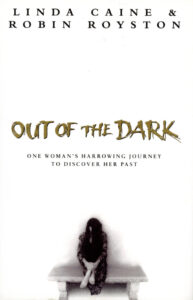
Out of the Dark is a moving account of one woman’s descent into depression and suicidal ideation and her struggle to return from that dark place with its sense of overwhelming hopelessness. The two narrators are Linda Caine and her psychiatrist/psychotherapist, Dr Robin Royston.
On the face of it Linda has everything: health, financial security, a beautiful home, a husband she loves who loves her, two healthy children, talents and hobbies, a strong faith, good social networks. But she becomes increasingly aware of a periodic detachment from reality and a desire to escape from the frightening place she is sinking into.
It’s as though my mind has slipped out of gear and is running in neutral.
Thanks to a church friend she’s saved from killing herself and taken into the mental health sector. Thereafter it takes years of patience and care to unravel the mysteries of her mind.
She grew up along with her three siblings in Rhodesia/Zimbabwe in Africa when apartheid was causing major unrest. Her mother, who was never very motherly, left them when Linda was eight, and had no further contact with them. In time her father married a black woman, who was not kind to Linda, and they became social outcasts. When Linda became pregnant her father threw her out, and she went on to marry a violent man.
When the book opens Linda is a woman in her thirties, happily married to a lawyer, Chris, whom she has known since primary school, and they have two children. But Linda is becoming increasingly disturbed by bad dreams, absences when she simply tunes out of life, and a growing conviction that death would be a welcome release. She clearly needs help.
 Sometimes I see myself lying beneath the water, staring up through the fingers of a hand, spread across my face, over my mouth and nose. At other times, I see a pair of eyes staring furiously at me; eyes that want me dead; eyes that look straight through me as though I don’t warrant the space I take up. In the back of my mind, I keep telling myself, if I’m not better next week I can always commit suicide.
Her psychotherapist, Dr Robin Royston likes Linda:
She isn’t manipulative, or self-seeking. She has no hidden agenda. She wears her pain apologetically, as though she doesn’t want anyon’e sympathy or help.
But he’s intensely concerned about her because, not only does she seem devoid of hope, but she’s not getting better. He knows that deep and powerful psychological factors are at work but has no idea what they are. Though Linda has no identifiable psychiatric disorder, he is certain that the answer to her problem lies within her. She’s struggling to cope with the everyday stresses of life, and unless this is ameliorated she will become suicidal again.
Linda is like her horse (which had colic and died) – deeply wounded, walking round and round in agony. She can see no reason for her pain and no treatment that can take it away. I have to keep her on her feet, to keep her moving forward. The answer lies within her. It invariably does.
It’s as though there’s something in her mind that wants to get out but each time we move closer she just falls apart.
 Then Linda suffers a major breakdown and needs to be admitted to the psychiatric hospital. The accounts of her experiences as she’s dragged further and further down into a black vortex of terror make disturbing reading. It takes endless patience and skill to help her explore and share the traumas from her past, some of which have been denied so comprehensively for so long. The cost to both patient and therapist is captured in the two perspectives running side by side. It is by no means a linear progression to recovery and Linda returns to the hospital a number of times, and again and again regresses in her behaviour to an alarming degree, damaging both herself and the fabric of the building around her. I lost count of the number oif times she smashed windows!
The secrets in her African childhood and adolescence are buried so deep that to reveal them may destroy her completely, but gradually a picture emerges which explains everything. From a very young age she had suffered appalling abuses and her only survival mechanism was to dissociate herself in order to survive. Now, as an adult, her mind ‘slides away’ when things trigger powerful negative feelings, she becomes absent and unaware of the present. Dr Royston knows that painful and frightening though it may be, and no matter how uncertain the consequences, Linda herself must be helped to face the repressed memories and learn to live with them if she’s to find the will to live. But each memory renders her extremely vulnerable, and there are no guarantees that the team will save her from herself or her suicidal feelings. They put their professional judgement on the line in some of the risks they take with her.
Psychotherapy doesn’t create perfect people with perfect lives. It just helps us to cope with what we have.
But gradually, gradually, they bring her to a place where she is honestly facing the horrors of her past, there are no more unaddressed issues, and Linda takes the last step in choosing to allow a faith healer to cleanse her life of the demons that have haunted her for so long. The family are restored and reunited, ready to up sticks and start a new life in sunny California.
We’ve probably all been aware of the negative press around repressed memory, and the damage caused by attributing present trauma to past abuse, but I felt I learned such a lot from this account, and have a deeper respect for the work of people like Dr Royston and his team.